









Binance Research: AI-Related Token Prices Surge, Top Five AI Tokens by Market Cap Outperform BTC and ETH
TechFlow Selected TechFlow Selected
Binance Research: AI-Related Token Prices Surge, Top Five AI Tokens by Market Cap Outperform BTC and ETH
Interpreting the latest data and developments in AI x Crypto.
 Navigating Web3 tides with focused insights
Original author: JieXuan Chua, CFA
Translation: Kate, Mars Finance
Key Takeaways
• Over the past few months, interest in artificial intelligence ("AI") has risen, as evidenced by Google search trends and surging prices of AI-related tokens.
• In 2023, funding for Web3 projects related to AI surged to $298 million—more than the total funding for AI projects from 2016 to 2022 ($148.5 million).
• AI-related tokens generally performed well in 2023, with the top five AI tokens by market cap significantly outperforming BTC and ETH, posting gains ranging from 200% to 650% for the year.
• We have observed several emerging trends and real-world use cases arising from the convergence of AI and cryptocurrency—from driving growth in decentralized physical infrastructure networks ("DePIN") to creating more interactive consumer-facing applications. We highlight some notable developments in this report.
Introduction
2023 proved to be a landmark year for artificial intelligence ("AI"), as the transformative power of AI became increasingly evident—especially through the widespread adoption of AI chatbots such as OpenAI's ChatGPT, Google’s Bard, and Microsoft’s Bing Chat. ChatGPT in particular highlighted the potential of AI, reaching a milestone of 100 million users within just two months.
This achievement surpassed major social media platforms like TikTok and YouTube.

Figure 1: ChatGPT is one of the fastest-growing apps, reaching 100 million users two months after launch
Source: demandsage, Binance Research
More importantly, AI has also begun reshaping the crypto space—both in terms of practical applications and heightened investor interest in AI-related tokens. The convergence of these two disruptive technologies has quickly become a prominent topic within the industry. Building on our previous report that outlined AI use cases in crypto, we now revisit this evolving landscape. Given renewed interest in the sector recently, we examine the current market conditions and explore new developments.
Market Conditions
In 2023, public interest in AI rose significantly, clearly demonstrated by a sharp increase in global Google searches for "artificial intelligence." This surge reflects growing public engagement with AI-related topics. The rise is largely attributed to the popularity of AI chatbots, the launch of new AI tools, and increased media coverage and public curiosity about AI.

Figure 2: Google search interest in AI spiked sharply in 2023, far surpassing "crypto" and "Bitcoin"
Source: Google Trends, Binance Research, as of December 31, 2023
Note: Numbers represent search interest relative to the highest point on the chart for a given region and time period.
In contrast, search interest for "crypto" remained relatively stable throughout the year, showing a slight decline from January to May, followed by stability and a modest uptick toward year-end. Search trends for "Bitcoin" mirrored those for "crypto," but with greater volatility. Fluctuations in Bitcoin interest may be linked to several high-profile events, including Ordinals/BRC-20, potential spot ETF approvals, and the upcoming 2024 Bitcoin halving. These events contributed to price increases in Bitcoin, reigniting public interest.
Overall, search trends reveal a clear divergence between rapidly rising interest in AI and relatively stable interest in Bitcoin and crypto—indicating that AI has been capturing public attention at an accelerating pace, with no clear signs of waning interest so far.
Strong Investor Interest
The AI sector also demonstrated strong investor interest in 2023. Despite an overall decline in funding amounts, AI's share of U.S. startup financing increased by 230% year-on-year, accounting for approximately 26%. This growth occurred against a backdrop where both AI and non-AI sectors experienced funding downturns. However, AI showed remarkable resilience compared to the broader market.
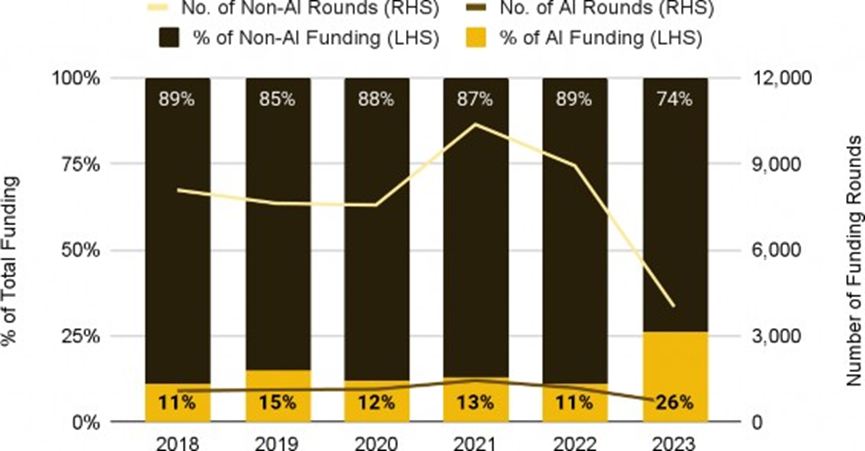
Figure 3: AI’s share of U.S. startup funding doubled in 2023*
Source: Crunchbase, Binance Research, as of August 29, 2023
*Note: Latest data for 2023 has not yet been released. Readers are advised to consider this limitation when interpreting the analysis.
Compared to 2022, non-AI sectors saw an absolute funding drop of 65%, while AI funding declined by only 6%.
Additionally, when considering funding rounds, non-AI sectors experienced a 55% reduction, while AI saw a 45% decrease. The relatively smaller declines in AI funding and funding rounds suggest that despite an overall downward trend in funding since its 2021 peak, investor interest in AI applications remains relatively high. It may also reflect continued confidence in the long-term potential and viability of AI technologies and applications.
Moreover, the AI sector within Web3 experienced explosive growth in funding in 2023. According to Rootdata, the total funding for AI projects from 2016 to 2022 amounted to $148.5 million, whereas funding in 2023 alone reached $298 million. This 2023 figure is double the total funding over the previous seven years, reflecting a surge in AI’s appeal during the year.
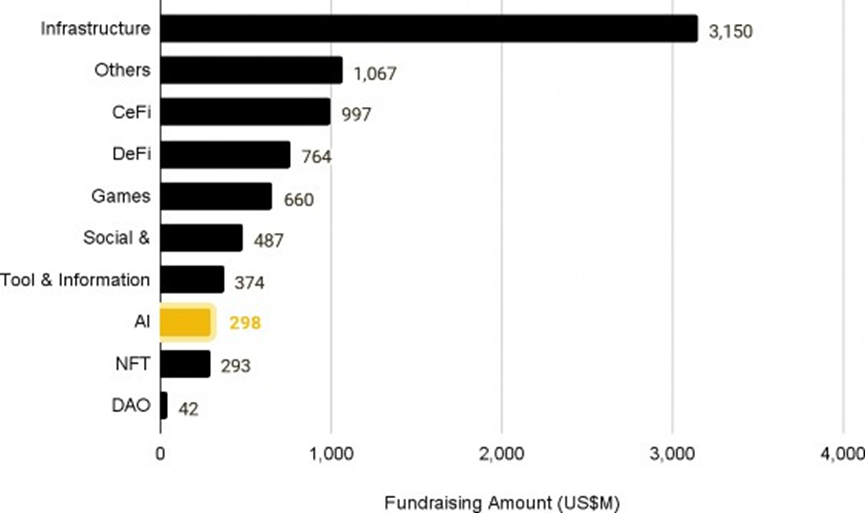
Figure 4: AI project funding reached $298 million in 2023, ranking seventh among Web3 sectors, accounting for 3.7% of total Web3 funding
Source: Rootdata, Binance Research, as of December 31, 2023
Compared to other Web3 sectors, AI project funding of $298 million ranked seventh in 2023, exceeding NFTs ($293 million) and DAOs ($42 million). This funding accounted for approximately 3.7% of total Web3 project funding in 2023. While 3.7% may seem modest, this significant funding growth highlights increasing recognition and perceived value in the sector, especially considering that AI only began gaining notable traction in 2023.
Strong Market Performance
From a price perspective, AI tokens also outperformed the broader market, experiencing substantial rallies over the past quarter and year. Growing interest in the sector contributed to the strong price performance of AI-related tokens.

Figure 5: Over the past three months, AI tokens ranked as the second-best-performing category
Source: Dune Analytics (@cryptokoryo_research), as of January 2, 2023. AI tokens include: AGIX, CTXC, FET, OCEAN, ORAI, RNDR
According to a Dune dashboard aggregating performance of representative tokens across different narratives/sectors, AI tokens ranked second in performance over the past three months. Note that while the original dashboard included meme coins, we have excluded them from our analysis due to their relatively low market caps leading to disproportionately large percentage gains.
When comparing the top five AI tokens by market cap with BTC and ETH, it is clear that AI tokens significantly outperformed major cryptocurrencies in 2023.
These AI tokens posted annual returns ranging from 200% to as high as 650%. In comparison, BTC ended the year up 150%, while ETH rose 44%.
However, it is important to note that BTC and ETH have significantly larger market caps than these AI tokens. Therefore, it is natural for BTC and ETH to show smaller percentage gains. This comparison primarily aims to highlight the strong recent performance and growing momentum of AI tokens.

Figure 6: In 2023, the top five AI tokens by market cap significantly outperformed BTC and ETH, with gains ranging from 200% to as high as 650%
Source: CoinMarketCap, Binance Research, as of December 31, 2023
Overall, AI has gained tremendous traction. Adoption of AI applications has been accelerating, drawing sustained interest from both investors and retail participants. Additionally, AI tokens have shown consistently strong performance. Beyond these trends, there are emerging AI x crypto innovations worth discussing, detailed in the next section.
AI x Crypto Developments
Surging interest in AI has driven growth in AI-related crypto applications, paving the way for continued innovation in the space. In this section, we delve into some of the trends and real-world use cases emerging from the convergence of AI and crypto. From driving growth in decentralized physical infrastructure networks ("DePIN") to creating more interactive consumer-facing applications, we highlight some notable developments in the field.
AI x DePIN
Large language models, deep learning, and various AI applications heavily rely on the computational power of graphics processing units ("GPUs"). However, over the past year, surging interest in AI has led to extraordinary demand for GPUs, resulting in chip shortages. Without easy access to GPUs, the high cost of computation could deter researchers and startups involved in AI-related research. This is where decentralized computing networks (a subset of DePIN) come into play. They offer an alternative to existing solutions dominated by centralized cloud providers and hardware manufacturers. Consequently, we have also witnessed strong growth in this sector, driven by GPU demand.
Considering that GPUs are not always running at 100% capacity, decentralized computing networks aim to connect individuals with idle computing power to those who need it. This is achieved by building a two-sided marketplace that allows suppliers of computing power to earn rewards from buyers. Examples of such networks include Akash, Render, Gensyn, and io.net. Moreover, pricing on decentralized computing networks is competitive because suppliers incur little additional cost when contributing computing power to the network.
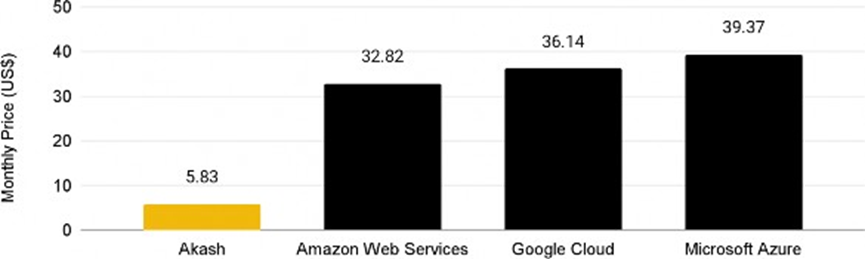
Figure 7: Pricing on decentralized computing networks is competitive
Source: Cloudmos, as of January 2, 2024
Note: Pricing is for 1 CPU, 1GB RAM, and 1GB disk
By offering potential solutions to real-world problems, decentralized computing networks have ridden the wave of AI growth, with increasing activity on their platforms.

Figure 8: Number of rendering jobs on the Render Network increased in 2023
Source: Dune Analytics (@lviswang), as of December 31, 2023

Figure 9: Active leases on the Akash Network surged in Q4 2023
Source: Cloudmos, as of January 3, 2024
AI x Zero-Knowledge
Smart contracts are known for their efficiency due to code-based automation. However, their predefined nature can sometimes lead to inflexibility, especially in unforeseen complex scenarios. This is where machine learning (ML), a subset of AI, can bring significant improvements. ML models, trained on extensive datasets, have the ability to learn, adapt, and make highly accurate predictions. Integrating these models into smart contracts can unlock a wide range of adaptive and flexible capabilities.
A major challenge with such integration is the prohibitively high computational overhead of on-chain ML computations. This leads to the concept of zero-knowledge machine learning ("ZKML"). ZKML combines zero-knowledge proofs with machine learning. In this setup, ML computations are processed off-chain, while ZK proofs are used to verify the integrity of these computations without revealing the actual data. By leveraging ZKML, smart contracts can effectively harness the power of AI while maintaining the security and transparency of blockchain technology.

Figure 10: ZKML combines zero-knowledge proofs with machine learning, performing computation off-chain and verification on-chain
Source: Binance Research
A notable development is ZK Predictor, launched by Upshot in collaboration with Modulus Labs. This tool enables Upshot to use Modulus’ ZK circuits to verify asset valuations without exposing proprietary intellectual property. It could help develop automated market makers ("AMMs") optimized for long-tail asset pricing, AI-driven on-chain index funds with cryptographic proof of operations, or theme-specific prediction markets that enhance and validate crowd-sourced pricing signals. Other ZKML applications include price oracles. For instance, Upshot feeds its AI model complex market data to assess the value of long-tail assets like NFTs. Then, Modulus' technology verifies the correctness of these AI computations, packages them into proofs, and submits them to Ethereum for final validation.
These examples are just the beginning of countless applications supported by ZKML. As the technology is still in its infancy, more mature and widespread ZKML applications are expected in the coming years.
AI x Consumer dApps
Over the past year, we have observed increasing AI integration in consumer-facing decentralized applications ("dApps") to enhance interactivity and user engagement. This trend is transforming how users interact with platforms, offering personalized and immersive experiences. By leveraging AI, these dApps transform users from passive consumers into active participants.
One example is AI-powered user-generated content ("UGC") platforms like NFPrompt. As the name suggests, AI UGC refers to content created by users with the assistance of autonomous systems. This can be achieved by setting a set of rules that automatically generate outputs, incorporating some form of randomness into the algorithm. In other words, users input a set of rules or constraints (e.g., patterns, colors, shapes), and the AI generates content based on this framework. By involving users in the creative process, AI UGC platforms establish a more participatory relationship between users and the platform, while enabling users to produce unique, one-of-a-kind, and infinitely scalable content.
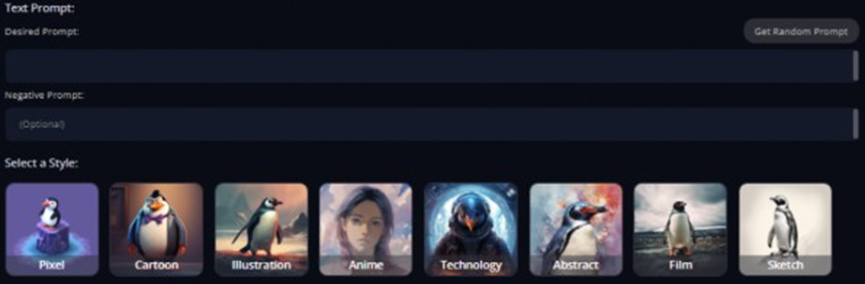
Figure 11: Generating NFTs using text prompts on NFPrompt
Source: NFPrompt
Beyond content generation, AI integration could profoundly impact Web3 gaming or virtual worlds, where character interactions are more dynamic and dialogues more realistic. Sleepless AI’s games “Him” and “Her” serve as excellent examples. By using AI, gameplay emphasizes customized and realistic conversations, providing more personalized experiences and fostering deeper emotional connections, thereby enhancing user retention.

Figure 12: “Him” and “Her” use AI to deliver immersive experiences
Source: Sleepless AI
AI x Data Analytics
Accurate market data is key to understanding industry trends and essential for investors to make informed decisions. However, instances of real transactions, such as wash trading, can artificially inflate sales and distort actual volume. By integrating AI into analytics to filter out noise, data outputs can be more accurate. This is widely achieved through AI and machine learning ("ML"), where large volumes of data are input to identify wash trading patterns or anomalies. The end result is a more accurate depiction of market activity.
Take BitsCrunch as an example—a blockchain-based AI-powered NFT analytics platform that uses AI and ML to detect fake or suspicious transaction patterns in real-time, delivering accurate data. The use of AI/ML enables the platform to analyze vast datasets with relative ease, allowing it to distinguish between genuine trading volume and inorganic volume. This, in turn, supports better decision-making.

Figure 13: Wash trading metrics analyzed by BitsCrunch
Conclusion
The convergence of AI and crypto has sparked great excitement about the potential of these cutting-edge technologies to redefine the digital landscape. The growing popularity of AI-centric tokens and rising online search interest reflect the ongoing acceleration of the AI narrative.
Admittedly, we have not yet reached mass adoption. Many AI-driven crypto projects remain in early stages of development, while others may primarily cater to niche audiences. However, the increasing number of tangible use cases is an encouraging trend, signaling positive momentum for long-term growth. With this in mind, investors need to balance the allure of AI hype with an understanding of the risks involved in investing in such frontier technologies.
Join TechFlow official community to stay tuned
Telegram:https://t.me/TechFlowDaily
X (Twitter):https://x.com/TechFlowPost
X (Twitter) EN:https://x.com/BlockFlow_News
 Binance Research









