









Bankless: Re-examining Ethereum's Rollup Roadmap
TechFlow Selected TechFlow Selected
Bankless: Re-examining Ethereum's Rollup Roadmap
Countdown to the Cancun Upgrade: What New Narratives Await for the Ethereum Ecosystem?
 Navigating Web3 tides with focused insights
Author: Arjun Chand, Bankless Guest Writer
Translation: Sharon, BlockBeats
Editor's Note: Recently, the flourishing Solana ecosystem has sparked renewed discussions within the Ethereum community about ecosystem development and blockchain scalability. With less than a month until the Cancun upgrade, Ethereum scaling is now an unmistakably clear future. In this article, Bankless guest author Arjun Chand revisits Ethereum’s rollup development roadmap. BlockBeats translates the full text below:
Ethereum scaling has long been one of the most debated topics in crypto. After much speculation, the community settled on a rollup-centric roadmap for Ethereum’s evolution. But why was this path chosen?
With blockchains like Solana surging back into prominence, it’s a perfect moment to re-examine why the Ethereum community chose rollups and modularity as its path toward global scale.
Today’s piece highlights the key ideas and developments that guided Ethereum’s scaling efforts toward a rollup-centric roadmap. Let’s dive in.
Ethereum’s Vision for Decentralized Scaling
Ethereum’s ultimate goal is to become a globally coordinated financial layer. To achieve this, it must support diverse applications and remain accessible to all types of users.
In 2020, Vitalik highlighted an urgent issue on the Ethereum network: he paid $17.76 in gas fees just to place a bet on Augur. These high fees signaled that Ethereum struggled to scale amid growing demand. As a result, it became a platform “for the few, not the world,” deviating from its original vision.
The problem was clear—Ethereum needed to process more transactions at lower costs. However, the solution was complex, requiring careful balancing of multiple factors.
A primary consideration was optimizing three properties: decentralization, security, and scalability. Together, these form the “scalability trilemma”—the so-called impossible triangle every blockchain faces.
The scalability trilemma can be seen as a balancing act—improving one property often comes at the expense of another.
Over time, many blockchains branded as “Ethereum killers” have tackled this trilemma by sacrificing decentralization and security in pursuit of scalability.
However, compromising decentralization was never an option for the Ethereum community. This is because decentralization is closely tied to security and enables neutrality, censorship resistance, and permissionlessness—qualities as fundamental as those in the scalability trilemma.
In Ethereum’s hierarchy of needs, if decentralization, security, and scalability represent “physiological” needs, then neutrality, censorship resistance, and permissionlessness could be considered “safety” needs. Together, these layers constitute Ethereum’s foundational requirements.
Recognizing these priorities, the Ethereum community adopted a long-term development approach. This strategy may sacrifice aspects of the scalability trilemma in the short to medium term but allows Ethereum to grow strong enough to serve humanity.
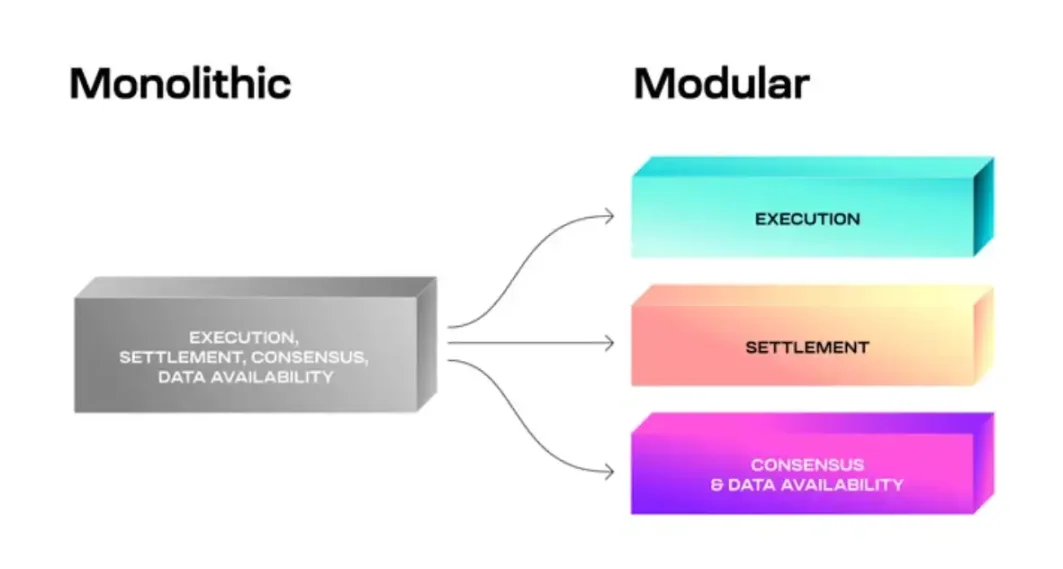
This strategy is known as modular blockchains. It involves executing transactions on Layer 2 scaling solutions—specifically, rollups. Since these transactions occur off Ethereum, they can be faster and cheaper. Yet, because their data is posted back to Layer 1, they inherit Ethereum’s robust security.
Why Rollups for Scaling Ethereum?
By late 2020, the Ethereum community largely agreed to adopt rollups as the primary scaling solution for the near to medium term, forming a rollup-centric roadmap. Key factors that made rollups the preferred choice include:
1. Forward compatibility with Eth2 (PoS)—Companies behind rollups like Arbitrum and Optimism launched in 2018 and 2019, respectively. At that time, Ethereum still used PoW, while PoS was still in proposal stages. Rollups are compatible with both PoW and PoS, giving the Ethereum developer community flexibility regarding critical network upgrades such as the transition from PoW to PoS.
2. Technical feasibility—By 2020, rollups had made substantial progress. As Vitalik noted in his forum post, Optimistic Rollup teams (like Optimism and Arbitrum) launched testnets in early 2020 and published mainnet launch roadmaps for 2021.
Meanwhile, zkRollups like zkSync and Loopring were already live and serving users on mainnet, albeit with limited functionality. This momentum gave the Ethereum community confidence in the maturity of rollup technology and its potential to effectively scale Ethereum starting in 2021. In contrast, other scaling solutions like execution sharding would take years to materialize.
The urgency to adopt rollups intensified further due to Ethereum’s state during the previous bull run. Gas fees hit record highs, costing users tens of dollars per transaction. Some applications, especially non-financial ones, were forced to shut down due to high fees.
Together, these factors solidified the Ethereum community’s commitment to rollups as the scaling strategy for the foreseeable future, recognizing both their immediate impact and long-term potential.
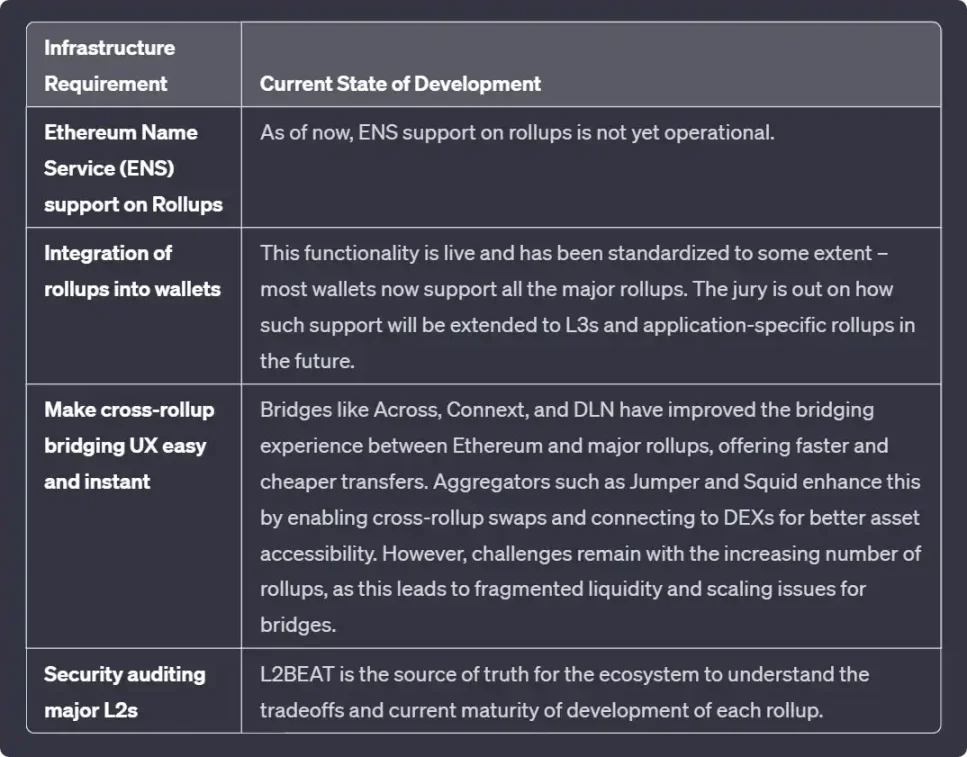
While the direct benefits of rollups are evident, the multi-rollup ecosystem also introduces challenges. From a user perspective, the Ethereum community raised several key questions. Below is an overview of progress made in addressing them.
Current State of Ethereum’s Rollup Roadmap
We now live in a multi-rollup ecosystem, where many rollups have achieved significant progress.
In this setup, Ethereum scales via rollups, acting as the settlement and data availability layer. All rollups inherit Ethereum’s security for transaction finality and data storage.
In terms of security, Ethereum is undoubtedly one of the most secure blockchains in the ecosystem. Over 33.5 million ETH secures the network, providing over $67 billion in economic security at current ETH prices ($2,000 per ETH).
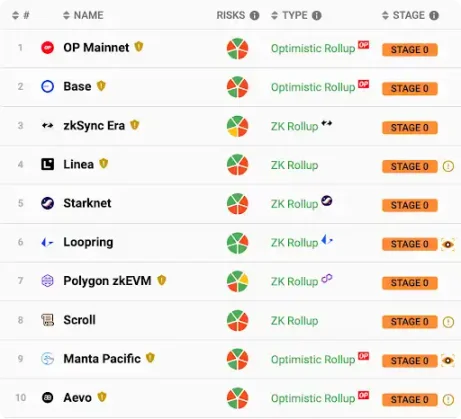
However, with L2 TVL exceeding $16 billion and collateral at record highs, the community has expressed concerns about centralization of rollup sequencers and MEV extraction by operators. Despite attracting large user bases, as shown in L2BEAT’s maturity analysis, most of these systems remain in early development stages.
Another key area seeing active development is enhanced data availability. Central to this effort is Danksharding, a core feature in Ethereum’s “Surge” phase. Danksharding aims to drastically reduce the cost for rollups to verify transactions on Ethereum, significantly boosting scalability. Toward this end, innovative projects like Celestia and EigenDA are focused on providing cheap, decentralized data availability layers for rollups.
Before full Danksharding implementation, the Ethereum community is deploying proto-Danksharding (EIP-4844) as an intermediate step. This introduces simplified versions of Danksharding concepts, such as blobs. Proto-Danksharding is expected to be implemented soon, while full Danksharding will take several more years.
Conclusion
The goal of scaling Ethereum into a global financial layer remains distant—but we’re steadily progressing. Most excitingly, the community remains aligned on the roadmap and vision, with some of the brightest minds working together to turn this vision into reality.
Looking ahead, the potential for thousands of specialized rollups to emerge is immense—each serving unique use cases and driving innovation. This evolution will enable Ethereum to become the global financial layer it aspires to be, supporting a wide range of applications and users. All these rollups will pay fees to settle and secure their data on Ethereum, further strengthening Ethereum’s cryptoeconomic security.
Join TechFlow official community to stay tuned
Telegram:https://t.me/TechFlowDaily
X (Twitter):https://x.com/TechFlowPost
X (Twitter) EN:https://x.com/BlockFlow_News
 Bankless









