








Binance CEO's Key Points at Taipei Blockchain Week: The Financial Pillar of the Next Two to Three Decades Will Be Built on Blockchain and Artificial Intelligence
TechFlow Selected TechFlow Selected
Binance CEO's Key Points at Taipei Blockchain Week: The Financial Pillar of the Next Two to Three Decades Will Be Built on Blockchain and Artificial Intelligence
Richard Teng discussed his personal experiences, the future of cryptocurrency adoption, and Binance's community role at Blockchain Week Taipei.
 Navigating Web3 tides with focused insights
Source: Binance
Translation: Kate, Mars Finance
Key Takeaways
-
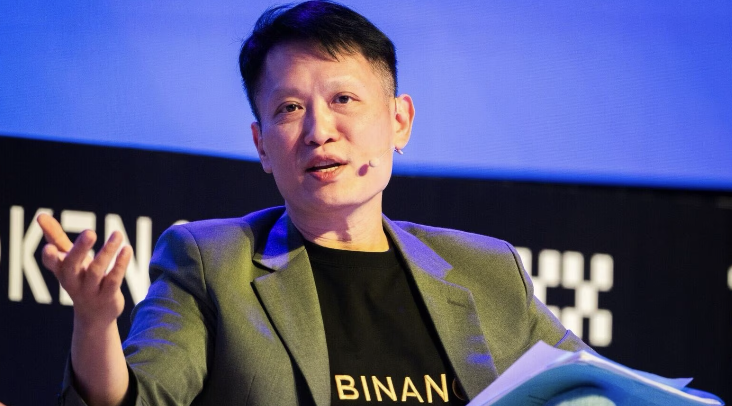
On December 14, 2023, Binance CEO Richard Teng participated in a fireside chat at Taipei Blockchain Week.
-
Some of the topics Richard was most interested in included his personal journey, the future of crypto adoption, and the role of the Binance community.
-
As Binance continues into its new chapter, our commitment to users remains our top priority. We are also shifting toward becoming a compliance-led organization, combining these two priorities to ensure a strong and sustainable future.
Below is a summary of Richard Teng’s responses to selected questions during his talk at Taipei Blockchain Week on December 14, 2023. Please note that this article has been edited for brevity and clarity.
On Becoming CEO
What does your new position mean for Binance? What changes can we expect from this transition?
Richard: First, I feel deeply honored. CZ, the leadership team, and my colleagues have placed their trust in me to lead this very important team. I take this responsibility extremely seriously. Our user base continues to grow—we now have over 167 million users worldwide, and that number is growing rapidly.
From day one, I’ve set three core commitments. First, remain user-centric. This principle has made us the world’s largest cryptocurrency exchange over the past six years, and it will continue to drive us forward. User protection is sacred, and we take it very seriously.
Second, collaborate with global regulators to uphold industry standards. The direction of crypto development is clear: you will see more regulation. Third, I want to work closely with global and local partners to embrace Web3 and accelerate crypto adoption. The more we build our ecosystem, the better life becomes for everyone.
Personal Journey
How does someone go from being a regulator in Singapore to CEO of Binance? What have you learned along the way?
Richard: I wasn’t your typical traditional regulator. Even during my time at the Monetary Authority of Singapore (MAS), I was involved in developing Singapore into a financial services hub. For me, it’s two-dimensional: you must ensure risk management while supporting growth. If you only focus on risk management, you won’t be able to support highly dynamic growth. Balancing both is crucial.
Early in my career, I was fortunate to contribute to building Singapore as a financial center—developing wealth management, asset management, insurance sectors, and our exchanges. I gained firsthand experience in how things should be done right. At the time, I worked at the Singapore Exchange (SGX), and later I was recruited by the Abu Dhabi Global Market (ADGM) to serve as CEO.
Once again, I had the opportunity to build a new financial center—which wasn’t easy. I was responsible for both business development and regulatory functions, and how to balance the two. In 2017, I became one of the first regulators globally to explore cryptocurrency, and I said, “This will be the future of finance.”
To achieve mainstream crypto adoption, you need two things. First, clear regulations. With transparent rules, the industry knows how to operate, and users gain confidence. Second, with clear regulation, you bring in institutional investors—and that’s critical. They bring new assets, liquidity, users, products, and research, all vital for mass crypto adoption.
On Regulatory Collaboration
What are the biggest challenges in regulatory collaboration? How should the industry respond?
Richard: Beyond internal stakeholders, you must engage three key external groups. First, policymakers and regulators. Second, your partners. Third, your users—if no one uses your platform, you are nothing. Regarding the first group, there remains a knowledge gap in understanding crypto technology and its potential. These are conversations we’re having globally. When many jurisdictions want to start regulating crypto, they come to us—this shows the existing knowledge gap.
Traditional media still associates cryptocurrency and blockchain with scams and illicit funds. Yet, if you look at the data, the amount of illegal funds flowing through crypto is only a small fraction of those moving through fiat channels. Cryptocurrency is a traceable technology—easier to track than fiat money. The appeal of the technology is evident.
We’ve conducted numerous training programs for law enforcement and regulators. Last year, we held sessions for law enforcement agencies in Taiwan. This is part of our educational outreach and collaboration. We aim to dispel myths and misconceptions surrounding crypto, so we can build this industry stronger and more vibrant.
On Institutional Adoption
Over the past year, we’ve seen many institutional players embracing crypto. Do you think this will trigger the next wave of mass adoption? Where do we stand today?
Richard: Even since 2017, my argument has always been that two dimensions must align for mass adoption. First, we’re now seeing clearer regulation—momentum here is accelerating. Second, we’re witnessing strong momentum in institutional adoption. Top 100 financial institutions, even regional ones, are showing increasing interest.
I believe the pillars of finance over the next two to three decades will be built on blockchain and artificial intelligence (AI). These will define future trends—an undeniable shift. Technology will continue self-improving, including crypto. We’ll see many exciting use cases and projects, making the space even more powerful. It took us quite some time to go from 1% to 5%, but going from 5% to 10% or 20% will happen much faster. With institutions joining, new pools of capital, liquidity, users, research, and products will emerge—the pace of adoption will accelerate significantly.
On Binance Web3 Wallet
How important is the Binance Web3 Wallet within the broader Binance ecosystem? What can we expect from it next year?
Richard: We continuously innovate across different user segments, and the Binance Web3 Wallet is one such area. It allows people to access Web3 through a simple interface. One of Web3’s main challenges is UI/UX. Our Web3 wallet addresses many of these issues, making it secure, easy to use, and accessible. We’ll keep innovating.
Recently, we launched collaborations with institutional and VIP traders—a tri-party agreement allowing our traders to customize arrangements with financial institutions and mitigate counterparty risks. We’ll keep experimenting with new models to meet the needs of our community, users, and institutions. We look forward to all these partnerships and the valuable feedback from our community. I enjoy speaking with our community because every time we do, it makes us reflect: “Can we do better? Where else can we strengthen and improve?”
On the Binance Community
What are your thoughts on the Binance community? How can Binance leverage its strength to attract more people and create a better experience for everyone?
Richard: There was a period when U.S.-related issues loomed over us like dark clouds. Over the past two years, some potential partners were waiting on the sidelines, hesitant to collaborate. Now that we’ve resolved these historical issues with U.S. authorities, many partners are lining up to join us in advancing Web3 and crypto.
Our user base has remained strong and never abandoned us. They’ve consistently shown trust and confidence in us, which means a great deal. After resolving the U.S. matter, our user base continued rapid growth, now reaching 167 million. Post-resolution, net inflows have been very strong. Users continue to trust us. Our community supports us—that’s what makes us strong.
We pay close attention to our community, our users, and their feedback. We will continue doing so. As I mentioned, we are a user-centric organization—and that won’t change. However, we are also evolving into a compliance-led organization. By managing both aspects well, we aim to ensure sustainability and prosperity for the next 60 years.
Join TechFlow official community to stay tuned
Telegram:https://t.me/TechFlowDaily
X (Twitter):https://x.com/TechFlowPost
X (Twitter) EN:https://x.com/BlockFlow_News
 @binance









