








Gods Unchained removed by Epic, ImmortalGame halts P2E development: Web3 gaming still faces major hurdles to mainstream adoption
TechFlow Selected TechFlow Selected
Gods Unchained removed by Epic, ImmortalGame halts P2E development: Web3 gaming still faces major hurdles to mainstream adoption
Just as spot Bitcoin ETF applications face numerous hurdles, Web3 gaming encounters challenges and regulatory barriers within the traditional gaming market.
 Navigating Web3 tides with focused insights
Author: Zen, PANews
With recent improvements in the secondary market, project teams, investors, and retail participants are growing increasingly confident about the return of a "raging bull market" in 2024. As a sector heavily backed by investment institutions, Web3 gaming has drawn sustained attention and high expectations in recent years. According to a recent report by Fortune Business Insights, the global blockchain gaming market is projected to reach $615 billion by 2030, with a compound annual growth rate of 21.8% during the forecast period from 2023 to 2030.
However, Rome wasn’t built in a day. The Web3 gaming industry currently faces restrictions and suppression from regulatory policies and traditional Web2 gaming standards, while simultaneously enduring prejudice and bias from conventional gamers. Creating killer applications and attracting mainstream players remains a long and difficult journey. The quiet delisting of top-tier blockchain game Gods Unchained from Epic Games and the halted development of ImmortalGame—despite having raised millions in funding—underscore this reality.
Gods Unchained quietly removed from Epic Games Store due to "P2E" being classified as "AO"
As one of Immutable’s flagship titles, the trading card game (TCG) Gods Unchained holds a leading position in the Web3 gaming space. According to DappRadar, the game achieved $55 million in transaction volume during Q3 of this year, second only to Axie Infinity’s $90 million. To attract a broader base of traditional PC gamers and TCG enthusiasts, Gods Unchained launched on the Epic Games Store in June. The game’s executive producer, Daniel Paez, described the milestone as “impossible to overstate,” noting its availability on one of the world’s largest PC gaming platforms.
Gods Unchained was quietly removed from Epic, and ImmortalGame halted P2E development—Web3 gaming still faces major hurdles entering the mainstream
However, shortly after launching on the Epic Store, Gods Unchained was quietly taken down. Three months ago, users began posting on Reddit asking why they could no longer find the game on the platform, with some confirming it had been removed due to being considered gambling-related. However, Epic Games has shown openness toward crypto games and continues to strategically list blockchain-based titles, many of which remain available on its store.
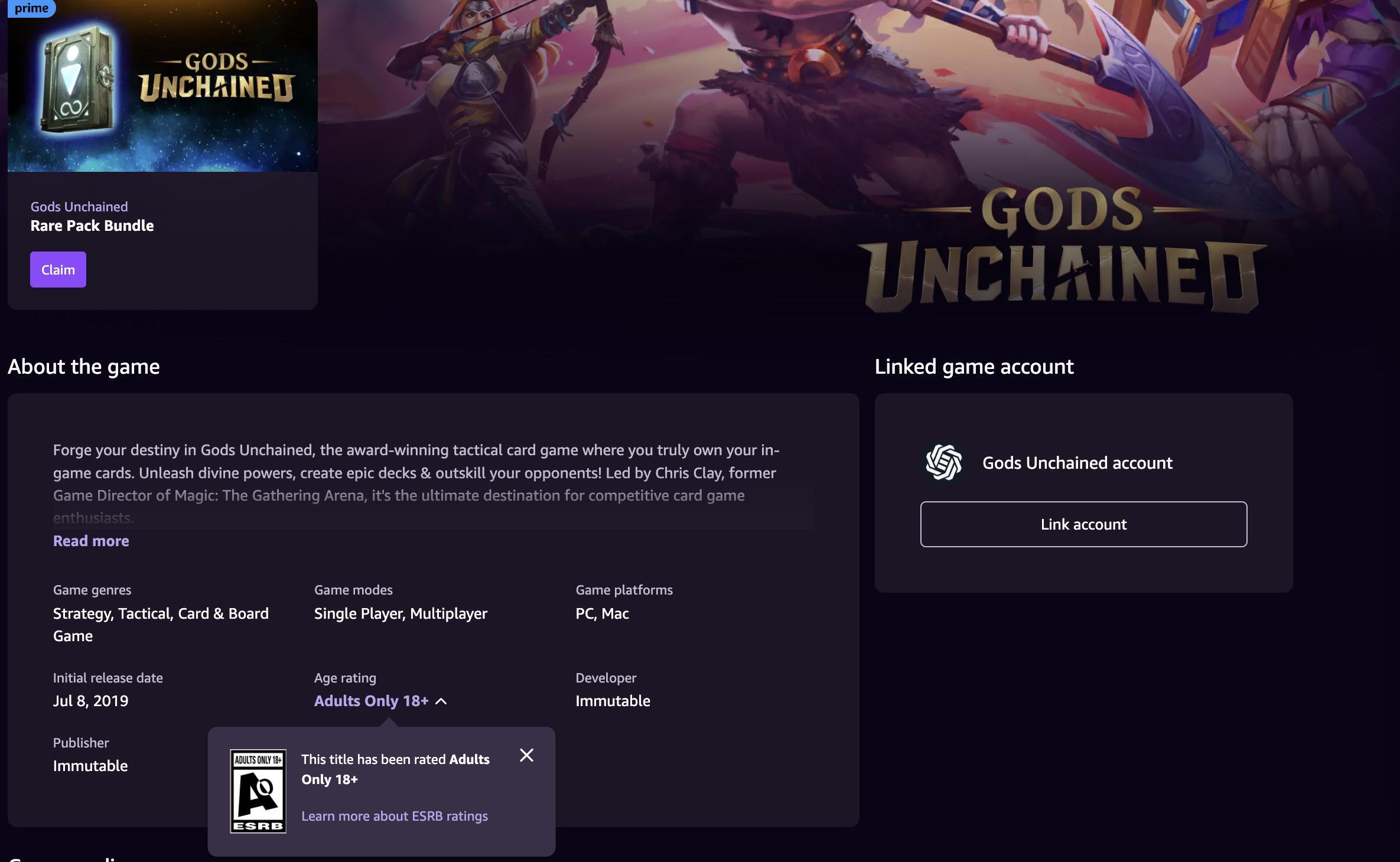
The sudden and unexplained removal of a leading Web3 game like Gods Unchained left many puzzled—until recently, when the reason finally emerged. It turns out that Gods Unchained was rated “Adults Only (AO)” by the Entertainment Software Rating Board (ESRB), and Epic Games does not allow any game rated AO by ESRB on its platform.
The ESRB is a self-regulatory body that rates video games and other entertainment software sold in North America. Established in 1994, its rating system has become a familiar and trusted tool for parents assessing whether a game is suitable for children. The ESRB system is voluntary, and “AO” is the highest possible rating, typically indicating content such as prolonged intense violence, explicit sexual material, or real-money gambling—intended solely for adults aged 18 and over. An AO rating generally means exclusion from mainstream visibility: Microsoft, Sony, and Nintendo prohibit AO-rated games on their systems or devices; Twitch bans live streaming of such games; and most major retailers refuse to carry or sell AO-rated titles in stores or online.
According to Decrypt, a representative from Gods Unchained said the game’s play-to-earn (P2E) mechanics were the reason for the AO classification. The team is now working closely with the ESRB to appeal the decision. When questioned about the delisting, ESRB stated that its evaluation criteria include whether a product offers rewards in real currency, prizes with real-world value, or items redeemable or convertible into real money (such as gift cards or cryptocurrency), and whether cash spending is required to qualify for such rewards. ESRB also clarified that any game allowing players to earn assets with “real-world value”—including cryptocurrencies or NFTs—may receive an AO rating, potentially leading more blockchain games to be removed from mainstream platforms like Epic.
Under ESRB procedures, once a final rating is issued to the publisher, the developer can either accept it or revise the game and resubmit for re-evaluation, restarting the entire process. However, according to ESRB’s stance, unless Gods Unchained essentially “self-censors” by removing its blockchain features and reverting to a traditional TCG model, it will likely remain under the AO label and unable to return to the Epic Games Store. Notably, other Web3 games currently on Epic have not applied for ESRB ratings—they either use the International Age Rating Coalition (IARC) system (e.g., Illuvium rated IARC 12+) or remain unrated and default to Mature (17+). Additionally, not all platforms require ESRB ratings; Steam, for example, allows games without mandatory ESRB approval.
Interestingly, Gods Unchained officially launched on Amazon Prime Gaming on December 5th—landing on another major platform within half a year. Prime Gaming members will receive exclusive in-game items monthly. On Amazon’s product page, the game is clearly labeled with an “AO” rating, consistent with Amazon’s obligations as a member of the ESRB Retail Council (ERC).
P2E Chess Game Immortal Game Abandons P2E and NFT Development
While Gods Unchained was grappling with ESRB over its play-to-earn model, another Immutable X-based indie title, Immortal Game, announced it would abandon P2E mechanics and halt development of NFT collectibles. Immortal Game initially aimed to transform chess into a Web3 experience featuring NFTs, play-to-earn rewards, quests, and a marketplace. In September 2022, the developers secured $12.2 million in Series A funding from investors including TCG Crypto and Kraken Ventures, bringing total funding to $15.5 million.
Immortal Game stated that the team originally adopted crypto technology to reward its community but discovered that financial incentives were being exploited by cheaters, undermining the core gameplay experience. In an official statement, the team said: “We found that offering large sums of cash without sufficient safeguards encouraged serious cheating on the platform, damaging the experience for legitimate players who want to enjoy fair and secure chess online. We’ve listened carefully to these players and take their feedback seriously. The unintended consequence of introducing monetary rewards was an increase in unfair behavior, and we decided we could no longer stand by.”
Immortal Game emphasized that it will continue exploring Web3 and decentralized technologies, particularly anti-cheat mechanisms and community engagement. However, its primary focus moving forward is improving the chess platform to ensure a fair and enjoyable environment for all players. In a key update on December 11, Immortal Games discontinued support for CMT tokens, though NFTs will still be usable in the game’s “Immortal” mode. Going forward, the developers plan to merge the “Immortal” and “Ageless” modes into a single, streamlined “Immortal” mode to simplify gameplay.
Chess has nearly a 2,000-year history, and enthusiasts of this classic competitive game tend to be traditional, nostalgic, and conservative. Last year, when chess grandmaster Alireza Firouzja was announced as Immortal Game’s official ambassador, the promotional videos and posts sparked widespread skepticism and backlash in the Reddit chess community, with top-voted comments criticizing “crypto scams” and “NFTs.” In hindsight, choosing chess as the theme meant targeting a niche audience of “tech-savvy yet chess-loving” users—an overlap too small to sustain broad appeal. To reach a wider base of chess fans, abandoning Web3 elements may have been a necessary compromise for Immortal Game.
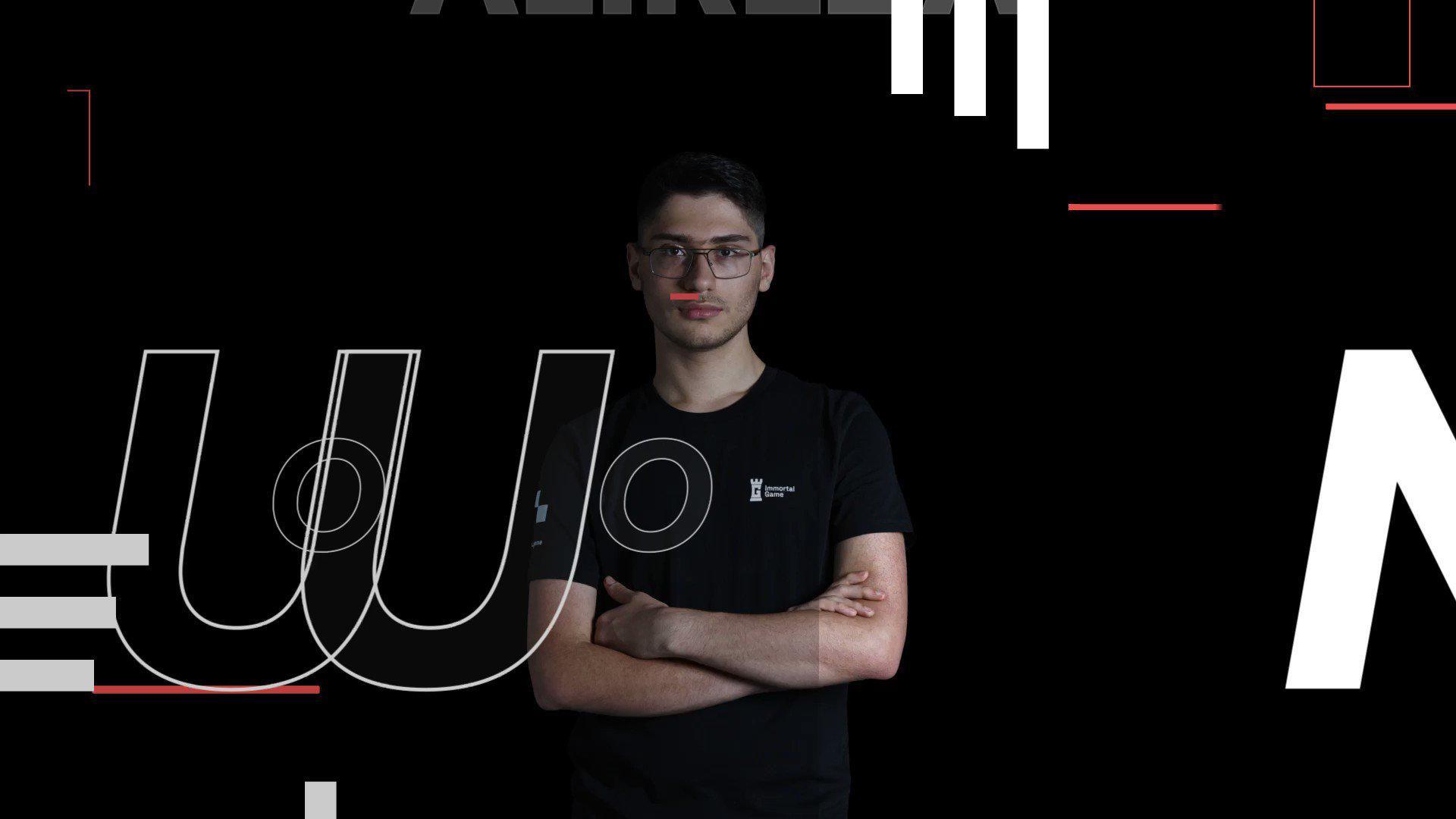
Alireza Firouzja promoting Immortal Game
In fact, indefinite suspensions or outright cancellations of Web3 games are not uncommon. According to a report by Game7, a decentralized community focused on blockchain gaming, a staggering 157 blockchain games ceased development in 2022 alone, and 43 more were terminated by November 2023. George Isichos, a core contributor at Game7, noted that many of the projects halting development this year struggled to secure further funding and were often initiated before 2021. Most discontinued games came from smaller studios, while shutdowns among “AA” or “AAA” titles remained rare. Game7 defines “AA” studios as those with funding between $10 million and $25 million, and “AAA” studios as those with over $25 million. Compared to projects that failed due to lack of funding, Immortal Game’s unique trajectory—a well-funded Web3 game pivoting away from its original vision—evokes particular regret.
Conclusion
Mainstream gamers are crucial to the sustainable growth of Web3 and blockchain gaming—a view widely shared across the industry. But compared to the anticipated bull market, the day Web3 games truly win over mainstream audiences may still be far off. According to a global Web3 gamer study published last year by Coda Labs, traditional gamers exhibit strong resistance toward cryptocurrency and NFTs, scoring them 4.5 and 4.3 respectively on a 10-point scale. Moreover, during bull markets, as investors shift focus to other sectors, interest among Web3 users in Web3 games may actually decline.
Daniel Paez, Vice President and Executive Producer of Gods Unchained, believes mainstream adoption isn’t essential for survival. Instead, the longevity of Web3 games hinges on prioritizing player experience over blockchain features. “The gaming market is much larger. You build communities where players share experiences, rather than user bases united only by holding the same digital assets.” He added that Web3 games seeking “longer lifecycles” will ultimately need sustained mainstream engagement, since selling content and experiences to players forms the foundation of the gaming industry.
Beyond enhancing gameplay and optimizing user experience, Web3 gaming faces challenges and regulatory barriers in the traditional gaming market—much like the uphill battle for spot Bitcoin ETF approvals. As these new technologies continue to penetrate and reshape the gaming landscape, both developers and regulators must respond more proactively.
Join TechFlow official community to stay tuned
Telegram:https://t.me/TechFlowDaily
X (Twitter):https://x.com/TechFlowPost
X (Twitter) EN:https://x.com/BlockFlow_News
 PANews









