








How Did the "Ethereum Killers" and New Public Blockchains Perform During the "Inscriptions Boom" Stress Test?
TechFlow Selected TechFlow Selected
How Did the "Ethereum Killers" and New Public Blockchains Perform During the "Inscriptions Boom" Stress Test?
Poor performance may indeed cause missing many use cases, but lagging or even crashing will lose everything.
 Navigating Web3 tides with focused insights
Author: Terry, Baicai Blockchain
As the inscriptions craze spreads from Bitcoin to other blockchains, a large number of corresponding "inscription projects" have recently emerged on Ethereum, Solana, EOS, TON, and even IOST, Conflux, and other public chains. On-chain activity has surged, in a way undergoing an extreme stress test.
So how did these public chains, which often boast high TPS and high performance, actually perform during this extreme stress test?
01 Congested Bitcoin, a Feast for Block Producers
First, let's look at the Bitcoin network at the center of the inscription frenzy, whose most obvious change is "network congestion and soaring fees."
Inscriptions are similar to NFTs, allowing users to record various data onto the blockchain. However, since Bitcoin transaction fees are paid based on data size, inscription users tend to set relatively low transaction fees.
This also means they are willing to wait longer for confirmation, making inscription transactions easily replaced by more urgent Bitcoin transfers.
Under these circumstances, the massive influx of inscription transactions willing to queue up has flooded Bitcoin's mempool (the area storing all valid transactions not yet officially added to the network).
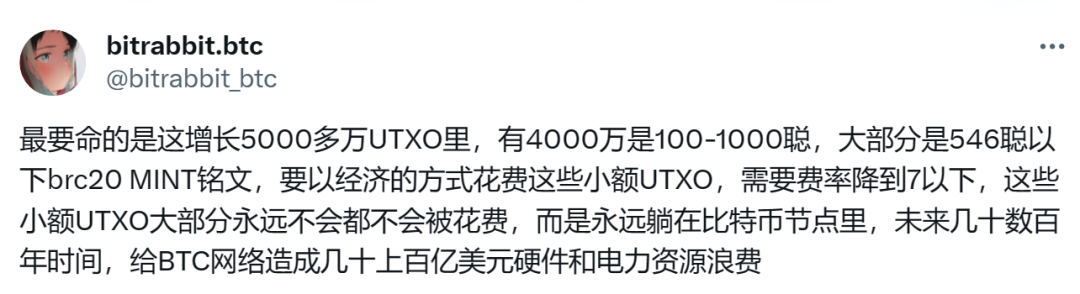
According to statistics by crypto KOL bitrabbit.btc, Bitcoin accumulated 87 million UTXOs over its first 14 years, but after BRC20 trading began on April 24, it surged to 140 million within about seven months. Of the more than 50 million newly added UTXOs, 40 million were tiny transactions of 100-1000 satoshis.
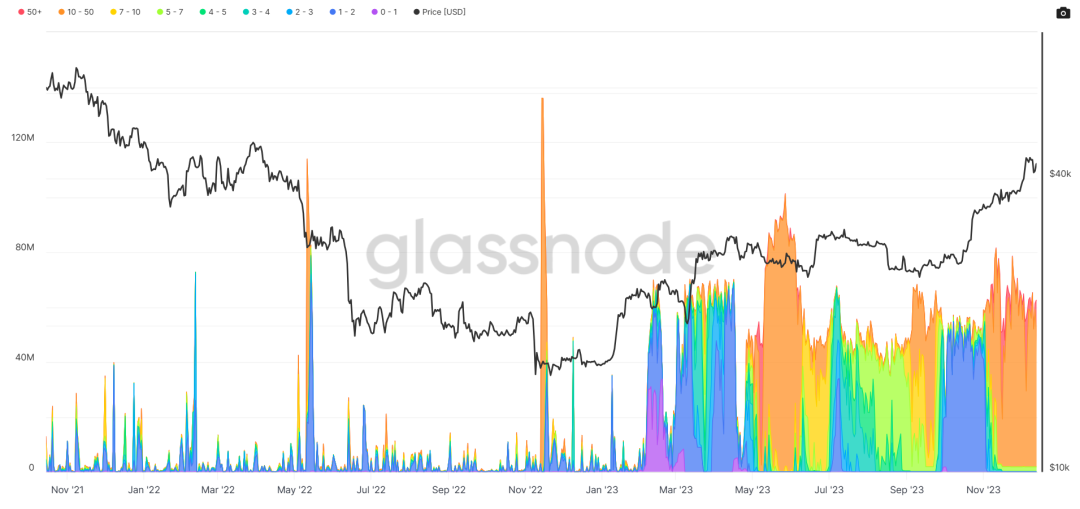
As shown in the chart above, since their launch in February 2023, inscriptions have been the primary consumer of Bitcoin block space, with the Bitcoin mempool operating at full capacity since February and remaining so ever since.
This has caused the Bitcoin network to be unable to clear its mempool, which remains at historically high levels since records began.
Given current conditions on the Bitcoin network—especially its anti-dust attack measures that require each UTXO to contain no less than 546 satoshis—the vast majority of pending small-value inscription transactions are effectively spam akin to DDoS attacks and may never get packaged into blocks and broadcasted.
"Most of these small UTXOs will never be spent but will remain forever inside Bitcoin nodes, causing tens or even hundreds of billions of dollars' worth of hardware and electricity resource waste over the next several decades or centuries."
This is also why Bitcoin Core developer Luke Dashjr publicly criticized ORDI, inscriptions, and BRC20—"Inscriptions are exploiting vulnerabilities in Bitcoin Core to send spam messages to the blockchain."
However, for block producers, the inscription boom has undoubtedly brought a season of abundance. According to OKLink statistics, before November, transaction fee income accounted for only 2%-5% of block producers' total block rewards.
Since the resurgence of inscription mania in November, fees as a share of total income for block producers have steadily increased, rising above 10%, reaching over 20% on some days, and hitting a recent peak of 25.84% on December 14, significantly boosting block producers' earnings.
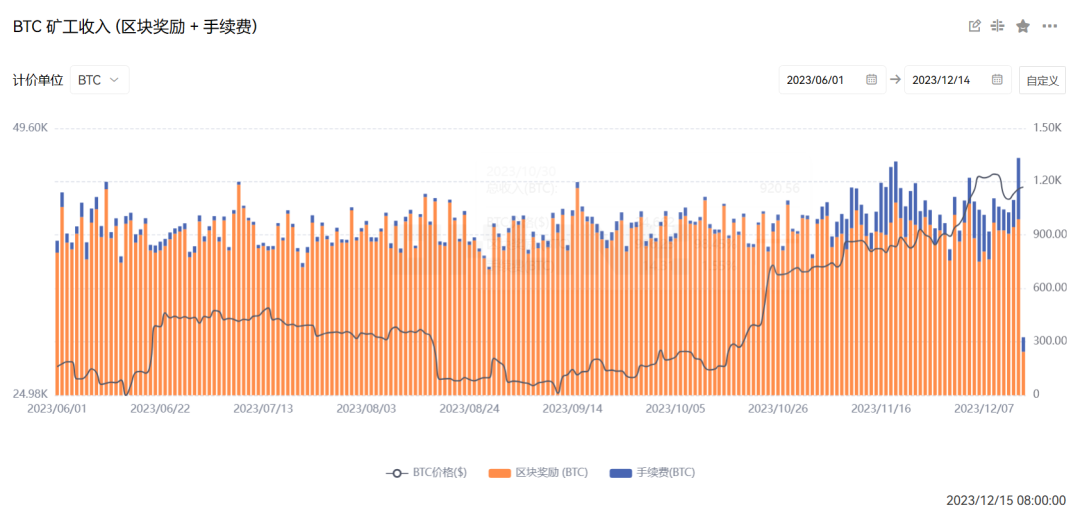
Additionally, Dune data shows that Ordinals inscriptions have generated a total transaction fee revenue of 3,615 BTC (approximately $150 million) for block producers.
No matter where inscriptions go in the future, their emergence and popularity are deeply tied to the block producer community—as Bitcoin undergoes repeated halving cycles reducing block rewards, coupled with the growing scale of the entire Bitcoin network, the ecosystem incentives required to maintain Bitcoin's secure operation are objectively increasing, necessitating expansion beyond block rewards.
Thus, the emergence of Ordinals comes at just the right time. At minimum, the new possibilities enabled by programmability could help explore alternative incentive models for block producers as block rewards continue to decline in the future.
02 How Did the 'Ethereum Killers' and New Public Chains Perform?
After the explosion of the Bitcoin inscription ecosystem, although there were jokes in the market mocking doing inscriptions on Ethereum and other smart contract platforms as "self-downgrading," the inscription craze quickly spread from Bitcoin and Ethereum to many other public chains.
Besides PoW chains like BCH, other smart contract platforms also jumped in, spawning numerous copycat inscription projects while experiencing a true test of their capabilities.
-
Ethereum: Gas Fees Rise From Bottom Levels
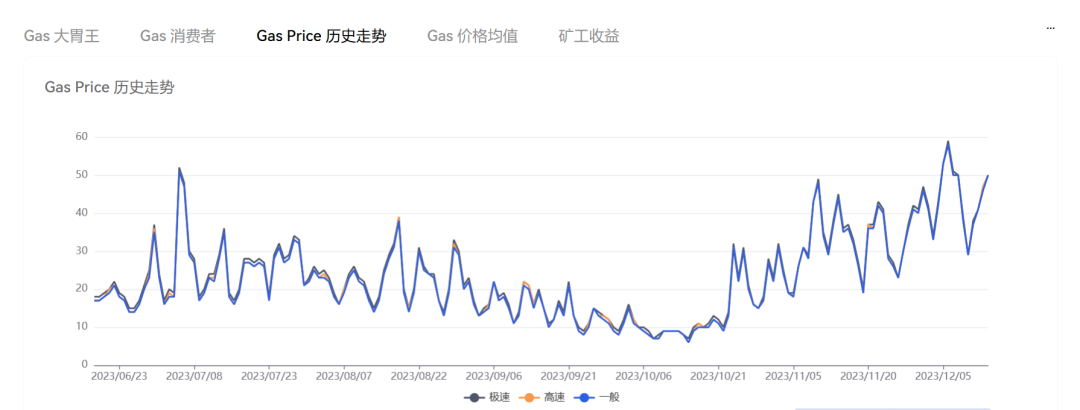
Before this surge in transaction fees driven by popular inscriptions like ETHS, on-chain transaction costs on Ethereum had been gradually declining since mid-year, hitting a 2023 low of $1.4 around October 14, with Gas falling below 10.
But starting in late October, as wealth effects from Bitcoin inscriptions spilled over, ETHS began a new wave of enthusiasm, and Gas started rebounding from its lows, rising steadily to current levels of 30-50, still within a normal and acceptable range.
It allows non-financial and arbitrary data to be written onto the Ethereum blockchain, as long as file sizes do not exceed 96 kilobytes, enabling users to etch any type of file. According to its creator, while currently limited to images, this will change in the future.
In fact, ETHS engraving utilizes Ethereum's so-called "calldata," which is cheaper and more decentralized than using contract storage, potentially even giving rise to a new Layer 2 narrative—compared to other L2 solutions (like ZK, ARB), ETHS achieves lower Gas costs without requiring network switching.
-
EOS: Severe Congestion, Transfers and Minting Intermittently Suspended
On December 9, the EOS network launched the eoss minting event inspired by Ordinals, causing a sharp spike in on-chain activity on the EOS EVM chain, with transaction counts suddenly surging past 17 million, exceeding the cumulative historical transaction volume of the chain.
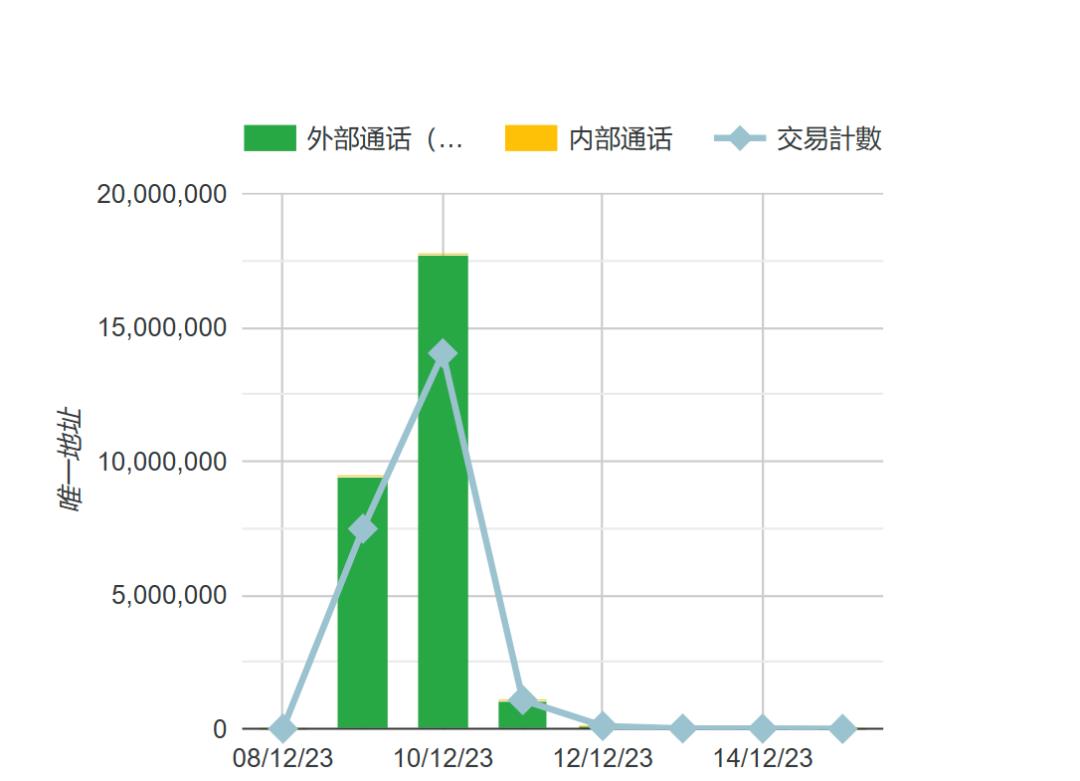
Due to the surge in on-chain activity, EOS experienced severe slowdowns in transaction processing, resulting in prolonged delays across the network, with millions of transactions left waiting.
-
TON: The 'Fastest Blockchain' Caught Off Guard
Previously planning to apply for a Guinness World Record as the "fastest blockchain," claiming to handle over one million transactions per second, TON blockchain also suffered a setback during the inscription boom.
After introducing Tonado, a protocol inspired by Bitcoin Ordinals, leading to a surge in activity, the network experienced prolonged transaction processing delays.
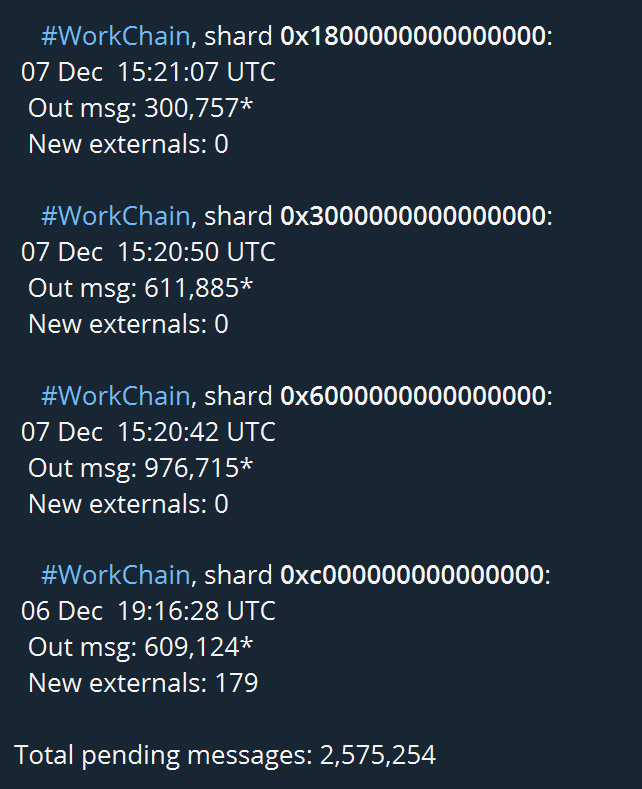
According to monitoring data from blockchain status bot dTON, on December 7, TON had over 2.5 million transactions waiting to be processed, and transaction processing speed dropped to less than one per second.
This situation forced cryptocurrency wallets Wallet and Tonkeeper on TON to suspend services temporarily.
-
NEAR: Smooth, But With Unique Moves
While user feedback indicates NEAR offers a very smooth inscription experience, its inscription market trading mechanism is somewhat unique:
Inscriptions are encapsulated via official tools into NRC-20 tokens on the NEAR chain, then traded on DEXs like Ref—an unconventional approach indeed.
-
IOST: A Feast for Scientists
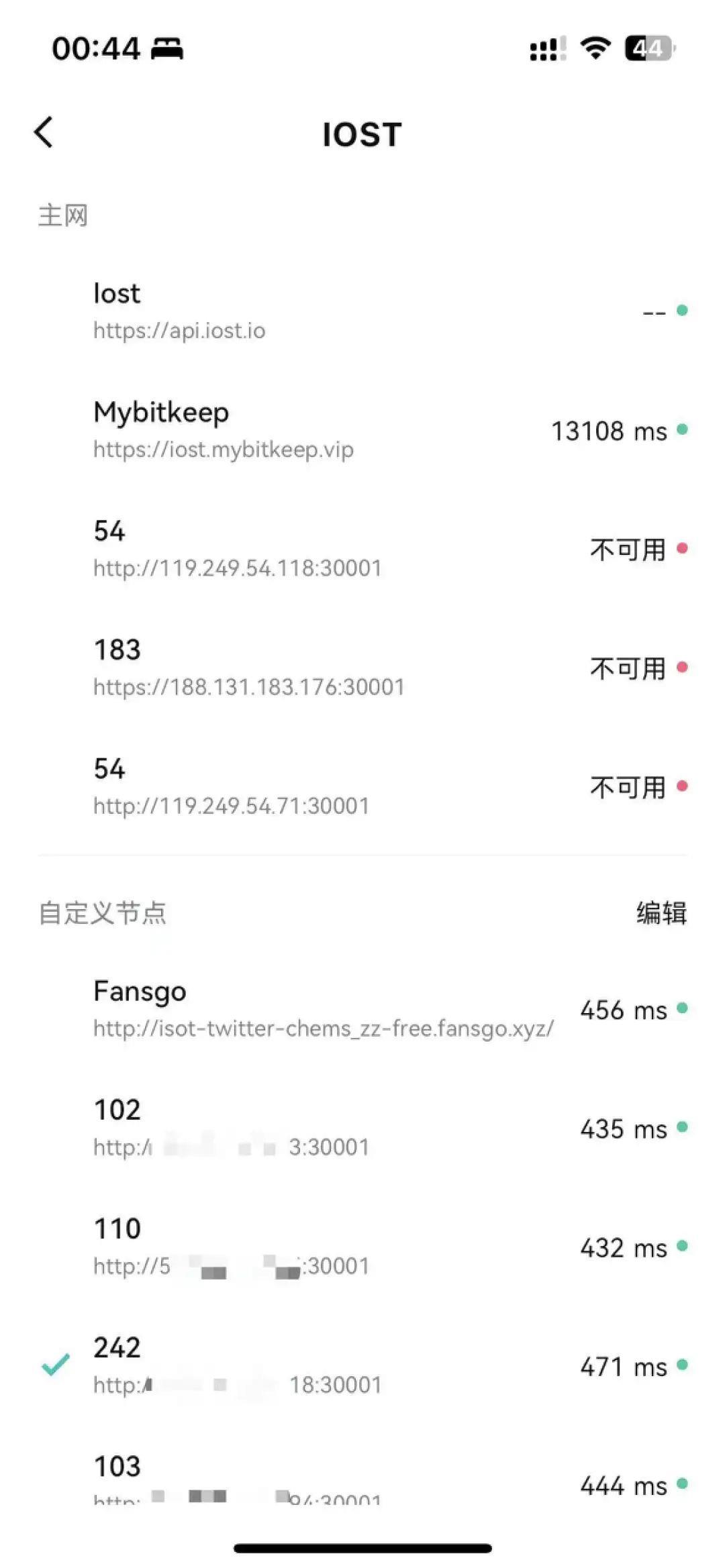
Moreover, during last night's inscription minting on IOST, the "fair launch" was widely criticized, almost turning into an exclusive event for experts ("scientists"), leaving ordinary users with little chance to participate successfully. Twitter user @chems_zz reported running over a dozen private IOST nodes, all performing poorly.
03 Summary
Overall, in this round of inscription stress testing, regardless of how impressive their advertised metrics usually are, these so-called high-speed, low-cost high-performance public chains repeatedly stumbled or performed poorly under the inscription wave, starkly revealing their true capabilities under extreme stress.
In contrast, Bitcoin and Ethereum, despite mainnet congestion and skyrocketing transaction fees, maintained consistently good transaction execution performance.
Time reveals the truth—the declining appeal of high-performance narratives in recent years is closely related to this: ultimately, what matters most for a public chain is providing a stable environment for transactional liquidity.
Being behind in performance may cause you to miss many use cases, but experiencing lag or even downtime means losing everything.
Join TechFlow official community to stay tuned
Telegram:https://t.me/TechFlowDaily
X (Twitter):https://x.com/TechFlowPost
X (Twitter) EN:https://x.com/BlockFlow_News
 白话区块链
白话区块链









