








Crypto Market Year-End Review 2023: Recapping the Memorable Major Events of the Year
TechFlow Selected TechFlow Selected
Crypto Market Year-End Review 2023: Recapping the Memorable Major Events of the Year
Year-end review: Let's take a look at the major events in the crypto space each month over the past year.
 Navigating Web3 tides with focused insights
Author: Xiaoyan
Editor: Harry
As we approach the end of 2023, only about 20 more days remain before we close the book on this year.
For the entire cryptocurrency industry, this has been a particularly unusual year—one that many feel has passed both slowly and quickly. It feels slow because the market performance hasn't reached what many had hoped for, making life tough for crypto enthusiasts. Yet it also feels fast, as one headline after another kept coming—before you could fully process one news item, the next was already unfolding, leaving little time to react or digest.
Today, let's take a look back at the major events in the crypto world month by month throughout 2023.
January (Bitcoin price: $23,125.13)
Year starts with a bang! SEC launches deep investigation into DCG, Genesis parent company

In January 2023, media reports revealed that federal prosecutors in New York and the U.S. Securities and Exchange Commission (SEC) were investigating Digital Currency Group (DCG) over internal fund transfers within its lending subsidiary, Genesis. According to sources, DCG received document requests and interview demands from the U.S. Attorney’s Office for the Eastern District of New York. Unnamed insiders further disclosed that the SEC was also conducting an investigation into DCG.
Beyond Genesis, DCG is also the parent company of CoinDesk, the cryptocurrency exchange Luno, Grayscale Investments (a digital asset management firm), and Foundry Digital (a crypto mining services provider). Perhaps due to the sheer number of subsidiaries, DCG found itself caught in a financial crisis.
Even before the FTX collapse, the implosion of hedge fund Three Arrows Capital (3AC) had already severely damaged Genesis. According to 3AC's liquidation documents released in July 2022, Genesis Global Trading, Genesis’ brokerage arm, had lent $2.36 billion to 3AC. Genesis filed a $1.2 billion claim against 3AC, which DCG eventually covered.
Notably, the early-year turmoil saw new developments by year-end. In filings submitted to a New York bankruptcy court on November 28, 2023, Genesis stated that DCG agreed to repay the outstanding $324.5 million loan by April next year, and Genesis retains the right to pursue any unpaid amounts.
Coinbase ordered to pay $50 million fine
Also in January, the New York State Department of Financial Services (NYDFS) announced that Coinbase would pay a $50 million penalty for violations of New York financial services and banking laws, and invest another $50 million in compliance improvements. According to NYDFS, Coinbase had numerous compliance "deficiencies" related to anti-money laundering (AML) requirements, along with issues in user login verification and transaction monitoring.
Perhaps due to FTX’s collapse, U.S. regulators have increasingly turned their attention to the crypto sector.
February (Bitcoin price: $23,141.57)
Blur token launches, injecting massive liquidity into NFT markets
In February, the NFT market saw a welcome surge—driven largely by the launch of the Blur token.
Blur’s standout feature was its bid-mining mechanism, which allowed a large number of users to receive BLUR airdrops and significantly boosted liquidity in the NFT market. This peak in NFT activity had a profound impact on the future development of the NFT space. The surge in trading volume created ideal exit opportunities for NFT “whales” (large institutional holders and KOLs who often held blue-chip NFTs at very low costs).
Afterward, as these major players exited, interest waned and Blur’s promotional momentum gradually faded.
March (Bitcoin price: $27,511.71)
Banks collapse amid financial panic
March was destined to be a turbulent month for the U.S. banking sector, as it faced a severe bank run crisis—stock prices plummeted, and several banks collapsed.
Notably, crypto-friendly banks Silvergate Bank, Silicon Valley Bank (SVB), and Signature Bank all failed. SVB and Signature Bank’s collapses are considered the second- and third-largest bank failures in U.S. history.
The domino effect came quickly. On March 11, stablecoin issuer Circle admitted that part of its funds were held at SVB, sparking market panic. USDC depegged, and cryptocurrency prices plunged. Ironically, this banking crisis reminded crypto investors of Satoshi Nakamoto’s original vision behind Bitcoin.
April (Bitcoin price: $29,233.21)
Multiple favorable policies introduced as Hong Kong shows strong commitment to Web3 development

In April, the Global Blockchain Summit was held in Hong Kong, accompanied by the introduction of multiple supportive policies. These moves demonstrated Hong Kong’s clear determination to embrace Web3 and signaled its friendliness toward cryptocurrencies to the global crypto community. Subsequently, more companies began applying for licensed operations in Hong Kong.
Ethereum completes Shanghai upgrade

On April 12, seven months after Ethereum’s “Merge” upgrade, the network underwent the Shanghai upgrade alongside the Capella hard fork. The Capella upgrade enabled validators who hadn’t initially set withdrawal credentials to do so, enabling withdrawals. This brought staking withdrawal functionality to the execution layer, allowing stakers to withdraw up to 18 million ETH locked since 2020 from the Beacon Chain to the execution layer—either full principal or just staking rewards—thus unlocking liquidity for staked tokens.
While the Shanghai upgrade didn’t reduce gas fees directly, implemented EIPs—EIP-3651, EIP-3855, and EIP-3860—helped lower gas costs for developers and block producers. More importantly, this marked the final key step in Ethereum’s transition from proof-of-work (PoW) to proof-of-stake (PoS).
After the upgrade, while some early stakers did initiate withdrawals, overall net deposits still exceeded outflows, and both staking volume and validator count continued to grow rapidly.
May (Bitcoin price: $27,210.35)
Meme coins and “dog coins” dominate the scene
Starting in late April, the entire crypto market became a stage for meme coins and speculative “dog coins.” The broader market rebounded, retraced, and peaked in early May—with Pepe coin standing out most prominently.
The Pepe project posted its first tweet on April 5 and launched the Pepe token on April 15. Its advantages were clear: no private sale, giving everyone equal access; no burn tax, meaning no tokens destroyed during transactions; and relinquished contract permissions, enhancing decentralization.
On May 6, Pepe was listed on Binance, reaching its all-time high market cap before gradually declining.
June (Bitcoin price: $29,500.06)
SEC sues CZ and Binance
On June 5, the SEC filed lawsuits against Binance, Binance.US, and CEO Changpeng Zhao (CZ), alleging violations of federal securities laws by offering and selling unregistered securities to U.S. investors.
On June 6, the day after suing Binance, the SEC filed another lawsuit against Coinbase, accusing it of listing and trading digital assets deemed securities without registering as a broker, national securities exchange, or clearing agency.
We’ve previously detailed the connections and differences between these two cases, so we won’t repeat them here. Interested readers can refer to earlier coverage.
Layer2 begins its rise
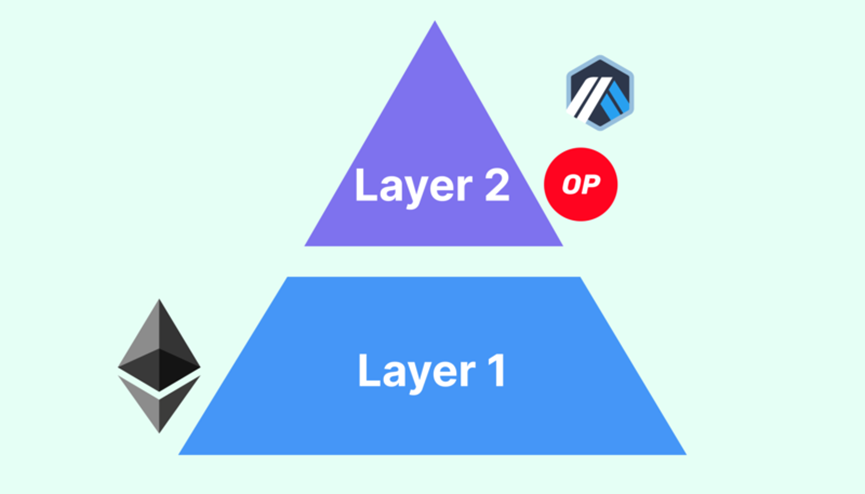
On June 12, Ethereum co-founder Vitalik Buterin wrote in a blog post that Layer2 scaling is a critical technical shift for Ethereum’s long-term sustainability. If Ethereum is a kingdom, then Layer2s are its city-states—their growth determines the fate of the realm.
Take Arbitrum, for example. As the largest project by total value locked (TVL) in the Layer2 ecosystem, Arbitrum accounts for over 50% of the entire Layer2 TVL. As Layer2 technology matures, it’s reasonable to expect continued growth in TVL across Layer2 networks.
July (Bitcoin price: $29,232.25)
Hacking spree continues—total losses from security incidents surpass $400 million

July was truly a chaotic month, with both the number and financial impact of security incidents rising sharply compared to June. Even when viewed across the entire year, July saw an unusually high number of hacking attacks—over 30 notable incidents involving a total of $415 million in losses.
Examples include MultiChain losing $210 million due to abnormal outflows; vulnerabilities in older versions of Vyper leading to attacks on multiple Curve pools, resulting in $61.7 million in losses; Alphapo’s hot wallet being drained of $60 million; CoinsPaid losing $37.3 million; and Poly Network suffering a $10.1 million loss—all representative cases.
August (Bitcoin price: $25,940.78)
Base surges in, reshaping the Layer2 landscape
In August, cryptocurrency exchange Coinbase announced the launch of Base, an Ethereum Layer2 network built on the Optimism OP Stack. While Base will be incubated internally at Coinbase, it plans to become fully decentralized in the future.
The announcement immediately dominated headlines across social media, and partner token $OP surged 40% in three days. Base is the second Layer2 network deployed on OP Stack after Optimism Mainnet and aims to become part of the Superchain. However, Base officials confirmed they won’t issue a native governance token and will use ETH for gas fees.
Bitcoin ETF approval delayed again
Also in August, the SEC once again delayed its decision on approving a Bitcoin ETF. The word “again” is key—this wasn’t the first time the SEC had rejected or postponed a Bitcoin ETF.
A Bitcoin ETF is an exchange-traded fund based on Bitcoin. Buying a Bitcoin ETF means indirectly owning Bitcoin, with identical returns. The ETF tracks Bitcoin’s price in real time: when Bitcoin rises, so does the ETF, and vice versa. If approved, Bitcoin ETFs could have profound positive impacts on the crypto industry. First, they’d lower investment barriers, attracting more retail and institutional investors and bringing in significant capital inflows, increasing demand for derivatives. Second, traditional fund managers could gain indirect exposure to Bitcoin through ETFs, effectively expanding the pool of Bitcoin investment capital.
BNB price plunges to lowest level since July 2022
Starting August 17, BNB’s price began a sharp decline. Within 24 hours, it dropped 5.34%, falling from $230.85 to $218.51.
This drop drew widespread attention and caused anxiety among investors. Indeed, the rapid fall quickly brought BNB to its lowest level since July 2022. Despite maintaining a market cap of $36.44 billion—ranking among the top 10 cryptocurrencies—the downward trend was unmistakable.
September (Bitcoin price: $26,962.56)
Token2049 kicks off grandly in Singapore
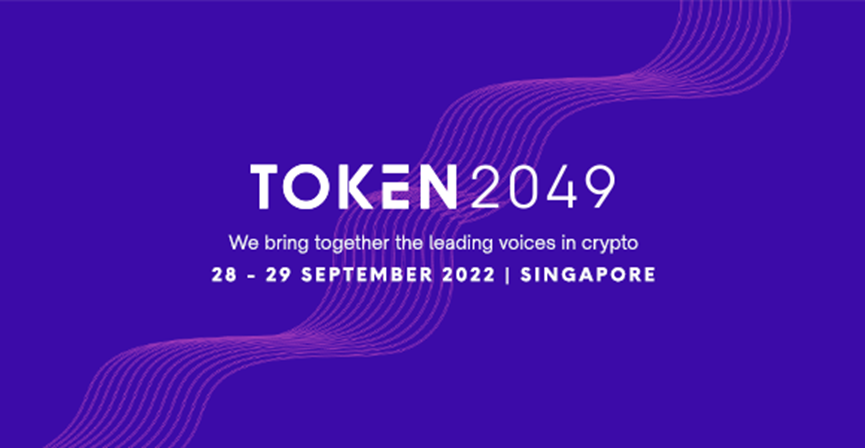
From September 13 to 14, Token2049 officially opened at Marina Bay Sands in Singapore.
Token2049 is widely regarded as a premier event in the industry, holding immense influence across Asia and globally. The conference focuses on trending topics such as evolving global regulatory landscapes, the convergence of crypto and AI, blockchain scalability, multi-chain networks, and protocol interoperability.
DWF Labs emerges as a dark horse in crypto

DWF Labs, founded in June 2022, is a Web3 investment firm claiming to be one of the world’s leading crypto market makers. It says it has provided market-making services for over 50 exchanges and projects and traded approximately $1.5 trillion in digital assets in 2021, including projects like Mask Network, YGG, Synthetix, TON, and Radix.
In truth, prior to 2023, DWF Labs had never gained mainstream attention. But starting this year, it made frequent appearances in market-making roles, drawing significant scrutiny. This skepticism peaked in September. During the “Web3 Connect” forum at Token2049, DWF Labs was invited to join panel discussions with three other market makers (GSR, Wintermute, and OKX). Afterward, GSR tweeted that “DWF Labs isn’t qualified to sit at the same table—they lack genuine market-making capabilities and experience, as well as real investment intent.” Wintermute CEO Evgeny Gaevoy liked the tweet and added that they wouldn’t collaborate with DWF Labs either. OKX remained noncommittal.
October (Bitcoin price: $34,639.77)
SBF trial begins, revealing FTX case details
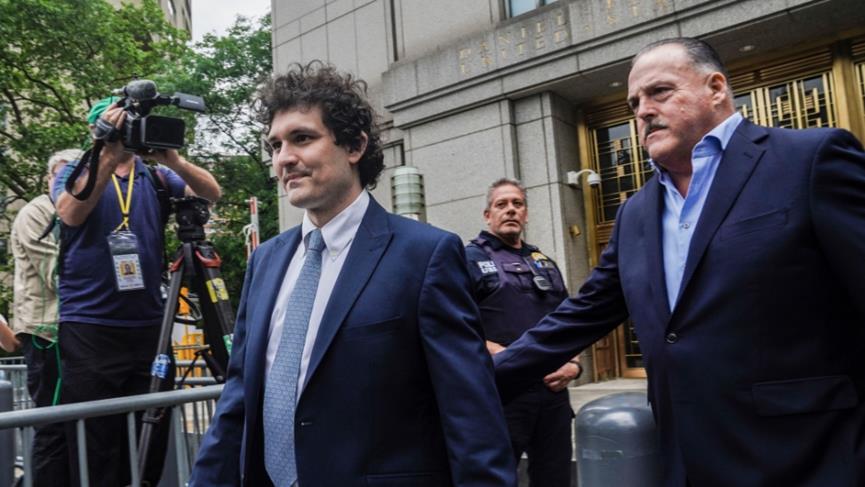
On October 4, Eastern Time, the SBF trial officially began its first day at a federal court in Manhattan, New York.
The collapse of FTX brought down former crypto tycoon Sam Bankman-Fried (SBF), forcing him to face a trial that would determine his fate. During the proceedings, many details about the FTX case came to light. For instance, Assistant U.S. Attorney Nathan Rehn stated that SBF was deeply dishonest during the founding and operation of FTX, once ranked the world’s third-largest crypto exchange—he “lied to the world,” only revealing the truth to his girlfriend and close friends.
November (Bitcoin price: $37,723.96)
SBF convicted on all 7 counts

After 15 days of testimony and four-and-a-half hours of jury deliberation, the jury found SBF guilty on all seven charges, including wire fraud, conspiracy to commit fraud, and money laundering conspiracy. With the “second shoe dropped,” all charges against SBF were upheld, confirming his conviction. Legal experts estimate that even with lenient sentencing, SBF could face at least 30 years in prison.
Fed pauses rate hikes again but leaves door open for future increases
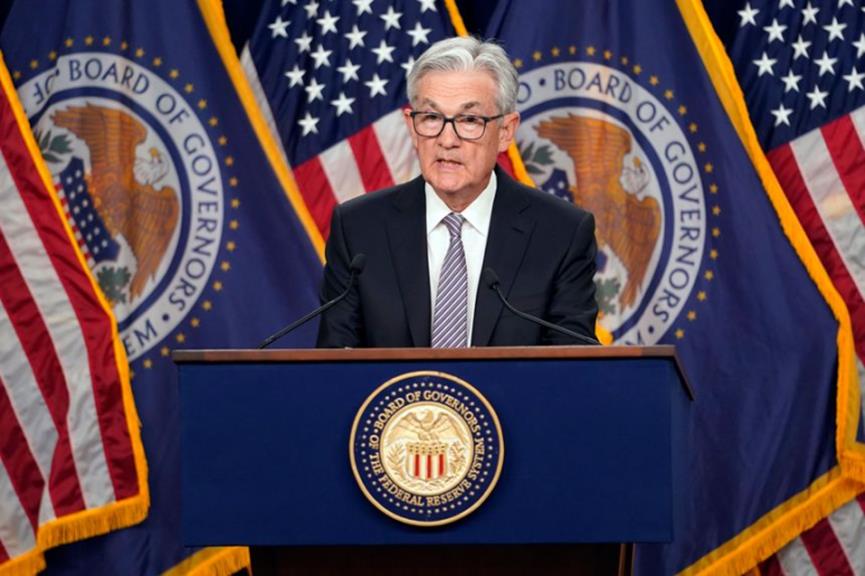
As early as October 2023, several Fed officials made dovish statements supporting a pause in rate hikes. On November 1, the Federal Open Market Committee decided to keep the target range for the federal funds rate at 5.25%–5.50%, pausing hikes once again. Fed Chair Jerome Powell said at the post-meeting press conference that inflation remains far above target and that the Fed is neither considering nor discussing future rate cuts.
However, on November 9, the Fed shifted tone, adopting a hawkish stance and stating that it may raise rates further if needed to achieve its long-term goal of reducing inflation to 2%.
Legal battle ends—CZ pleads guilty

In the early hours of November 22, the U.S. Department of Justice announced a settlement with Binance during a press conference. As part of the deal, Binance and its CEO Changpeng Zhao (CZ) pleaded guilty to federal charges. CZ stepped down as CEO and faces potential imprisonment, while Binance must pay a record $4.368 billion fine—the largest penalty ever levied by the U.S. Treasury.
According to media reports, Zhao reached an agreement with the DOJ, agreeing to plead guilty to criminal and civil charges. In exchange, the deal may allow the company to continue operating. Additionally, Zhao will retain majority ownership of Binance. Later that day, Zhao posted a $175 million bond and was released pending sentencing, which is scheduled for February 24, 2024, at 1:00 AM Beijing time.
December (Bitcoin price: ????)
That concludes our recap of the major crypto events from the first 11 months of 2023. There were many stories—some positive, some negative, some bullish, some bearish. With just over 20 days left until the end of 2023, what new headlines and trends will emerge in the crypto world? We’ll just have to wait and see.
Join TechFlow official community to stay tuned
Telegram:https://t.me/TechFlowDaily
X (Twitter):https://x.com/TechFlowPost
X (Twitter) EN:https://x.com/BlockFlow_News












