









C罗 promotes a "blockchain scam"? A roundup of celebrities entangled in crypto class-action lawsuits
TechFlow Selected TechFlow Selected
C罗 promotes a "blockchain scam"? A roundup of celebrities entangled in crypto class-action lawsuits
This article will review some celebrities who have been prosecuted for their involvement in cryptocurrency projects.
 Navigating Web3 tides with focused insights
Author: Huo Huo
Recently, football star Cristiano Ronaldo has been hit with a class-action lawsuit in the United States by several virtual asset investors. He is accused of promoting NFTs issued by Binance (BA) and is being asked to pay at least $1 billion (approximately 7.1 billion RMB) in compensation.
According to TechFlow Post, up to now, Ronaldo is not the first celebrity involved in negative news related to cryptocurrency. Since the crypto market crash in 2022, reports about celebrities participating in crypto-related scandals have continued to rise.
So why is Ronaldo being sued? And which other celebrities have encountered crypto troubles? Today, TechFlow will review some of the celebrities who have faced lawsuits due to their involvement in crypto projects.
Christiano Ronaldo (Cristiano Ronaldo)
Cristiano Ronaldo, the famous Portuguese footballer commonly known as CR7 in China, was named in a $1 billion class-action lawsuit filed on November 27, according to an Associated Press report. The legal documents were submitted in Miami, USA, and targeted not only Ronaldo but also F1, Mercedes, Major League Baseball, and other prominent figures or organizations. Ronaldo specifically faces allegations for promoting NFTs issued by BA.
What kind of partnership exists between Ronaldo and BA?
In June 2022, BA announced an exclusive long-term partnership with Ronaldo, launching plans to release a series of NFT collectibles. BA stated that all NFTs would be personally designed by Ronaldo, and Binance NFT (BN) would serve as the exclusive platform for sales.
At the time, Changpeng Zhao (CZ), then CEO of BA, said: "Ronaldo is one of the greatest footballers in the world, whose influence extends beyond sports into becoming a multi-domain icon. Through his authenticity, talent, and charity work, he has built one of the most loyal fan bases globally. We are excited to offer his fans a platform where they can form a closer connection with Ronaldo."
He Yi, co-founder and COO of BA: "We believe the metaverse and blockchain represent the future of the internet. We are honored to collaborate with Cristiano to help more people understand blockchain and demonstrate how we're building Web3 infrastructure for the sports and entertainment industries."
Ronaldo also stated: "I fully understand the importance of my relationship with fans. I want to use NFTs to bring them unprecedented new experiences. I believe my fans will love this project just as much as I do."
In November 2022, Ronaldo's first NFT collection was launched. Ronaldo himself participated in global promotional activities for the NFT sale, aiming to popularize Web3 among more fans through NFT campaigns.
The first NFT series featured seven dynamic images across four rarity levels: Super Rare (SSR), Ultra Rare (SR), Rare (R), and Normal (N). Each NFT depicted a significant moment in Ronaldo’s life—such as his iconic bicycle kick—and his youth in Portugal. Different tiers came with different perks.
Then in July 2023, the two parties launched their second exclusive NFT collection, the NFT GOAT series, officially titled ForeverCR7: The Goat. It included 20 designs honoring Ronaldo’s career total of 838 goals, offering collectors four distinct rarity levels.
On October 11, they conducted a third collaboration, releasing the CR7 ForeverZone NFT series. At the core of this launch were 50,000 mystery boxes, each containing a unique CR7-themed NFT. Buyers had chances to win autographed footballs, jerseys, golden ticket NFTs signed by Ronaldo, or even a personal meeting with him.
In total, Ronaldo collaborated with BA on three NFT projects. Unfortunately, on November 23, BA was fined $4.368 billion in a regulatory case, and CZ stepped down. A few days later, Ronaldo and others received the class-action lawsuit.
The plaintiff (SEC) claims that Binance partnered with high-profile individuals like Ronaldo to steer users toward large, insecure investments. In the lawsuit, it states: "Evidence shows Binance’s fraud reached such heights because of the active assistance and support from some of the world’s wealthiest, most powerful, and best-known organizations and individuals—like defendant Ronaldo—who helped promote and sell unregistered securities."
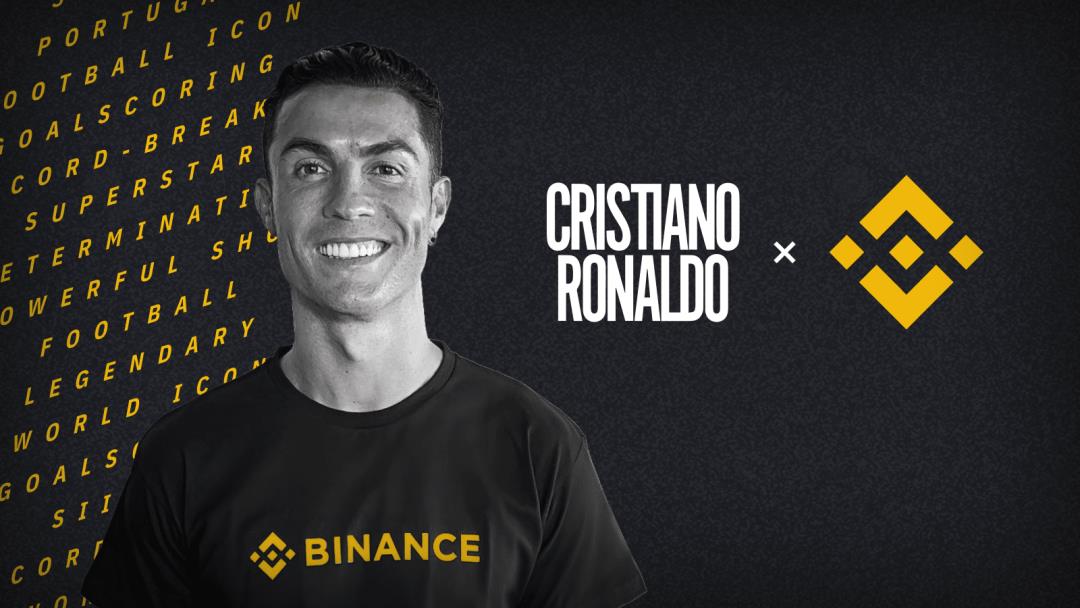
Poster of Ronaldo endorsing BA
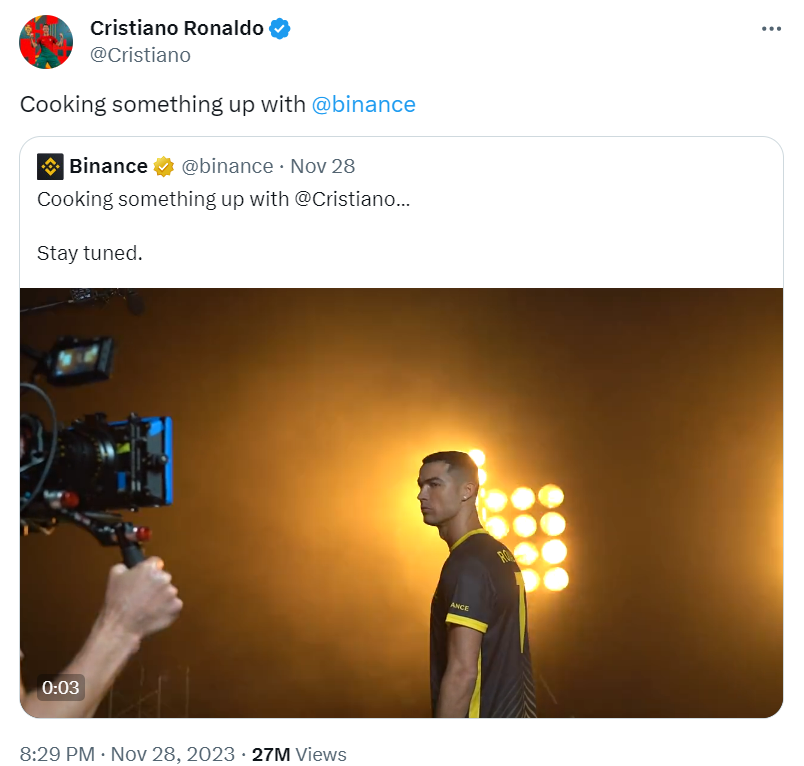
However, according to the latest update on December 1, Ronaldo may settle the lawsuit for $750,000. Despite government action, the partnership between BA and Ronaldo remains intact, and Ronaldo recently tweeted about working on new things with BA.
Elon Reeve Musk
Elon Musk, CEO of Tesla and SpaceX, has publicly declared himself a passionate supporter of cryptocurrency. He personally holds Bitcoin, Ethereum, and Dogecoin, and both Tesla and SpaceX hold Bitcoin on their balance sheets.
From March to May 2021, he briefly supported using Bitcoin as a payment method for purchasing Tesla vehicles—the first automaker to accept Bitcoin.
However, he has been drawn into legal trouble involving Twitter and Dogecoin. Due to frequent tweets about cryptocurrencies—especially Dogecoin—each of his statements has caused notable price fluctuations in Dogecoin.
One tweet alone caused Dogecoin’s price to surge 1100% within less than two days. Later, however, Musk called Dogecoin a “scam” during an interview, causing its value to plummet. Then he claimed he would send a Dogecoin to the moon, sending prices up 15%. Subsequently, Dogecoin surged 336% over several days, briefly surpassing Ford Motor Company in market cap. After Musk became CEO of Twitter, he replaced the company’s blue bird logo with Dogecoin’s mascot, triggering another spike of over 30% in Dogecoin’s price.
Repeatedly, Dogecoin’s price rose and fell with his words—clearly showing his strong influence over its volatility.
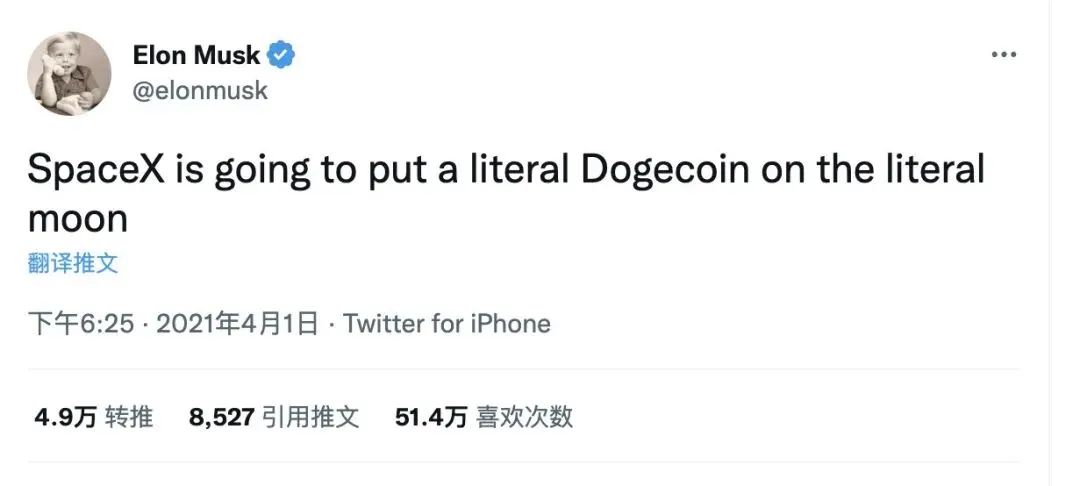
In June 2022, Musk, SpaceX, and Tesla were accused by Dogecoin investors of involvement in a crypto scam, facing a $258 billion lawsuit.
This class-action lawsuit alleges that Musk manipulated Dogecoin between May 2021 and June 2022 using his public profile. Plaintiffs (Dogecoin investors) claim losses totaling $86 billion. Additionally, the suit demands Dogecoin trading be classified as gambling and calls for bans on unauthorized promotion of Dogecoin. Reactions within the crypto community were mixed—some dismissed it as absurd, while others noted serious concerns raised in the complaint.
Musk and his companies did not respond initially. On April 3, 2023, Musk filed a motion requesting dismissal of the $258 billion Dogecoin lawsuit. His lawyers described the investors’ claims as “fantasy fiction,” arguing that his tweets about Dogecoin were harmless—even silly—but not fraudulent.
Kimberly Noel Kardashian
Next, let’s look at another celebrity—the American reality TV star Kim Kardashian.
On October 3, 2022, the U.S. Securities and Exchange Commission (SEC) charged Kim Kardashian for posting about EthereumMax Token on social media, including a link to the platform, thereby directing investors to purchase the token. She failed to disclose receiving $250,000 in promotional fees, violating federal securities law’s anti-touting provisions.
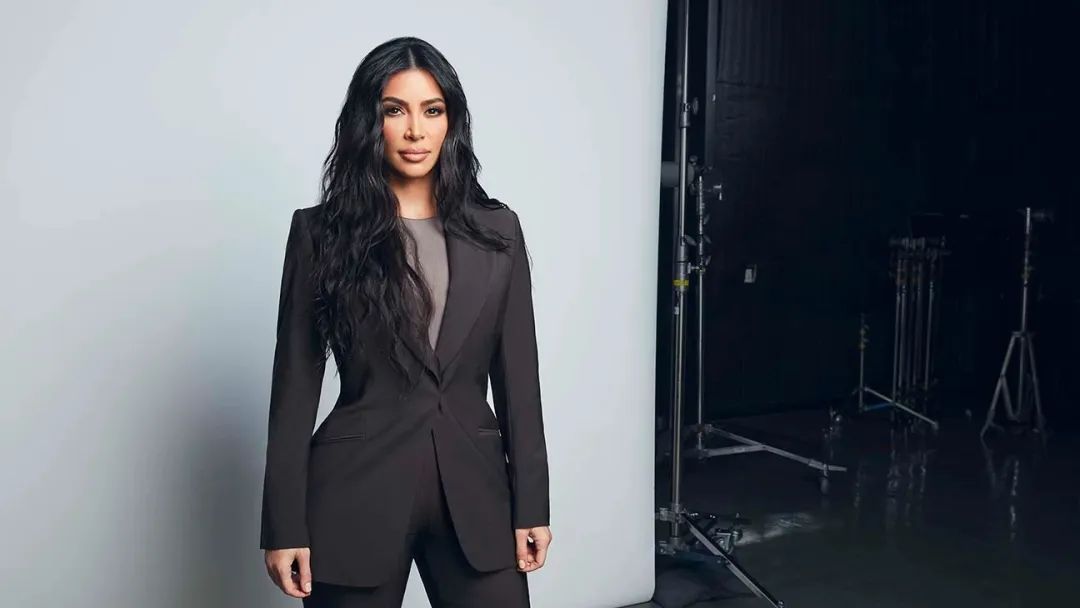
Kim Kardashian
In June 2021, amid a booming crypto market, Kim Kardashian, a member of the famous Kardashian family with 225 million Instagram followers, jumped into the bull run. She posted promotional content for EthereumMax Token leveraging her status as a top influencer.
In her post, she wrote: “This is not financial advice—just sharing something my friends told me about EthereumMax Token!” She added the word “ad” in the hashtags.
EthereumMax at the time was unrelated to ETH; instead, it was an independent project built on existing crypto technology.
Four months later, on October 3, 2022, the SEC charged Kim Kardashian for touting a crypto asset security offered and sold by EthereumMax without disclosing her compensation. It was later revealed that Kardashian received $250,000 to promote EthereumMax. Although she labeled her Instagram post as “advertisement,” this was insufficient for regulators.
Kardashian subsequently agreed to settle the charges, paying $1.26 million—including approximately $260,000 in ill-gotten gains (her promotional fee), pre-judgment interest, and a $1 million penalty—and committed to refrain from promoting any crypto tokens for three years.
Paul Pierce
Like Kardashian, former NBA star Paul Pierce was also fined for promoting EthereumMax.
Paul Pierce, a legendary player for the NBA’s Boston Celtics, played 15 seasons in the league, won the NBA Championship in 2008, and was named Finals MVP. After retiring in 2017, he became one of the franchise’s all-time legends.
On February 18, 2023, according to U.S. media outlet TMZ, former NBA player Paul Pierce was fined $1.409 million for improperly promoting a crypto token, despite having earned only $244,000 in compensation for the promotion.
In its announcement charging Pierce, the SEC stated that his specific offense was promoting and touting EMAX (EthereumMax) tokens on social media. However, he failed to disclose the compensation he received for the endorsement and made false and misleading promotional statements, including sharing a screenshot of an account showing massive holdings and profits, without revealing that his actual holdings were far lower than shown. Additionally, Pierce directly linked to the EthereumMax website in his tweets, which provided tutorials on buying EMAX tokens.
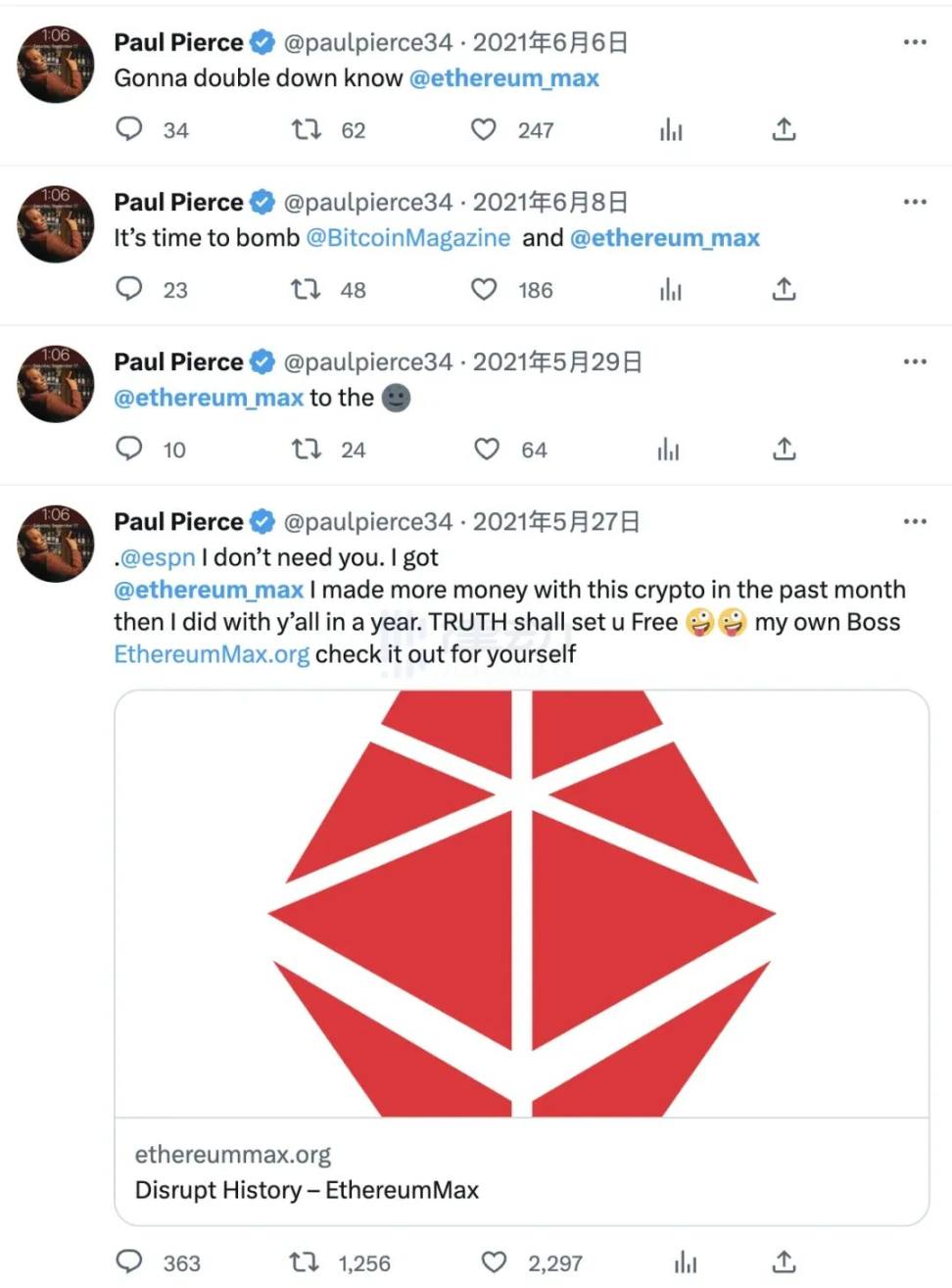
According to findings by the SEC investigation team, Pierce did not disclose to the public that he received EMAX tokens worth over $244,000 as payment when he posted tweets on Twitter.
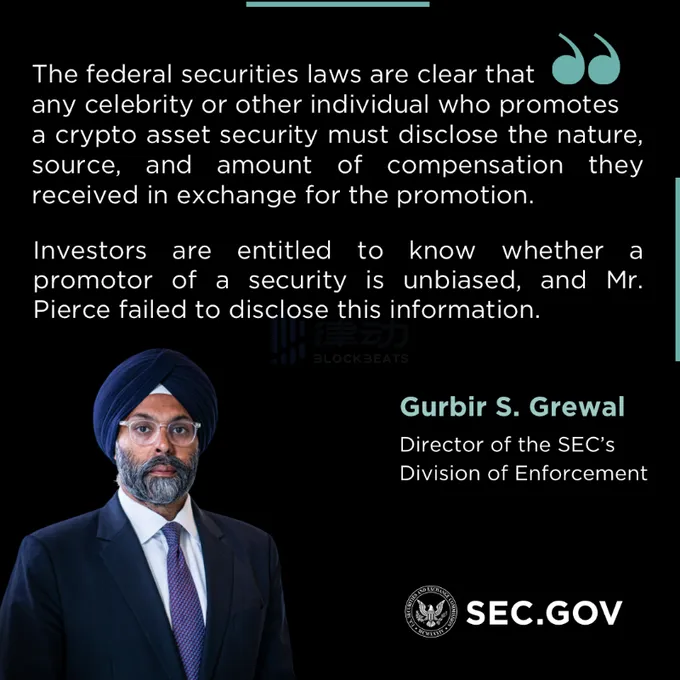
Translation: Federal securities laws clearly require any celebrity or individual promoting crypto asset securities to disclose the nature, source, and amount of compensation received. Investors have the right to know whether promoters are impartial, and Mr. Pierce failed to disclose this information.
Faced with SEC allegations of violating federal securities law’s anti-touting and anti-fraud rules, Pierce did not contest the findings and agreed to settle by paying $1.409 million in fines, disgorgement, and interest, and refraining from promoting any crypto assets for three years.
Celebrities Who Promoted FTX
At the end of 2022, after FTX collapsed—deepening the crypto bear market—it brought legal troubles to numerous celebrities who had previously promoted FTX or its affiliated projects.
Following FTX’s bankruptcy, a class-action lawsuit filed in Florida, USA, named several high-profile individuals as defendants—including comedian Larry David, renowned American football quarterback Tom Brady, his supermodel ex-wife Gisele Bundchen, basketball stars Shaquille O'Neal and Stephen Curry—for publicly promoting FTX. The plaintiffs (FTX customers) alleged these celebrities fraudulently marketed unregistered securities to the public, resulting in billions of dollars in investor losses.
For example, in FTX’s Super Bowl ad in February 2022, comedian Larry David starred in a commercial depicting him slowly catching up on humanity’s greatest inventions—like the wheel, light bulb, coffee, and democracy. Though David eventually realizes FTX offers a safe and easy way into crypto, he sadly missed out on investing. The ad ends with the tagline: “Don’t be like Larry.”
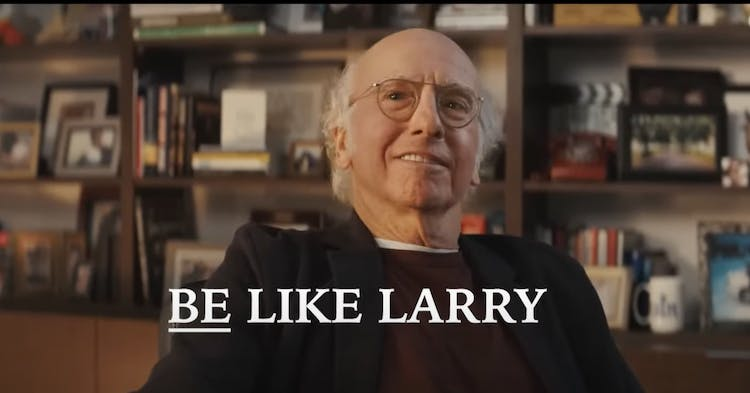
Photo Credit: YouTube Screenshot
Looking back now, perhaps everyone should have followed Larry’s example.
Another example is NBA Golden State Warriors star point guard Stephen Curry, a three-time NBA champion, two-time MVP, philanthropist, and entrepreneur.
In August 2021, Curry became a brand ambassador for FTX. In an advertisement, he said: “I’m not a crypto expert, nor do I need to be—because with FTX, I can safely buy, sell, and trade crypto assets.”
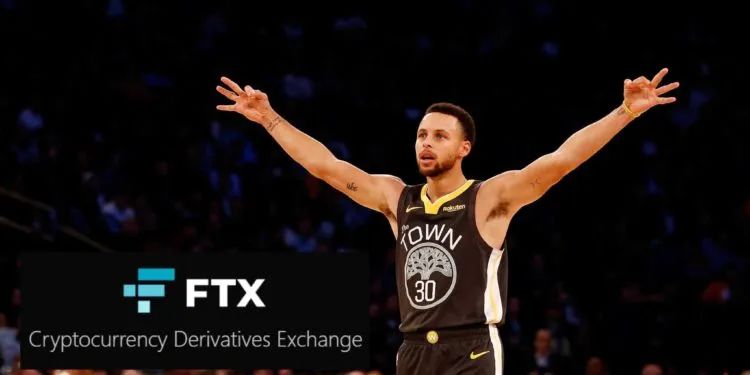
Although some celebrity lawyers argue the lawsuit is “nonsense,” and courts generally don't hold endorsers liable for promoting companies later found to have misconduct, given the scale of this case and number of involved parties, these celebrities and organizations continue to face scrutiny and potential liability.
Celebrities Who Endorsed Yuga Labs NFTs
Similarly, celebrities who endorsed Bored Ape NFTs also faced collective legal action.
In November 2022, celebrities including Madonna, rapper Snoop Dogg, comedian Kevin Hart, talk show host Jimmy Fallon, singer Justin Bieber, and basketball star Stephen Curry faced a class-action lawsuit for promoting Bored Ape Yacht Club NFTs and parent company Yuga Labs.
According to two plaintiffs, Yuga Labs colluded with celebrities to artificially inflate Bored Ape NFT prices and deceive fans into investing. The lawsuit, filed in Los Angeles federal court, seeks $5 million in damages.
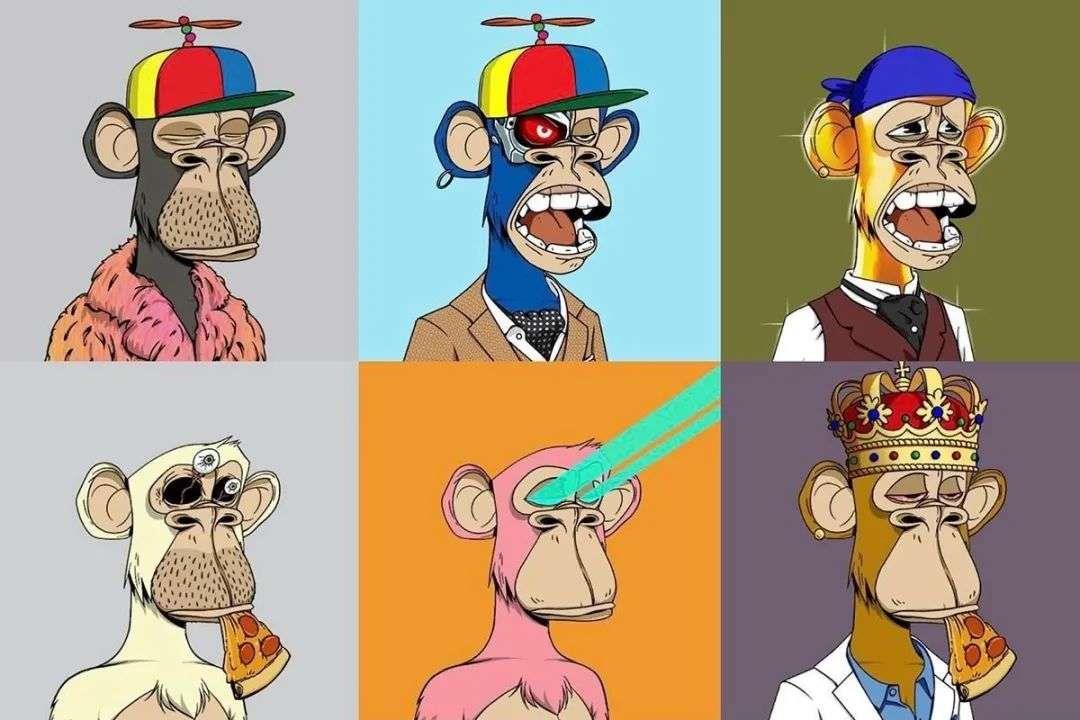
Bored Ape NFT
A representative for Yuga Labs called the claims “opportunistic and parasitic,” adding, “We firmly believe these allegations are baseless and look forward to proving so.”
Later, however, a federal judge in California dismissed the lawsuit, stating investors 'should have conducted reasonable due diligence before placing bets aligned with the spirit of the times.'
However, the judge noted that plaintiffs’ attorneys could amend their claims and refile the lawsuit.
Chen Lingjiu
A celebrity in China has also faced legal action related to crypto.
In September 2023, the Hong Kong-based crypto exchange JPEX scandal involved up to HK$1.6 billion, primarily affecting victims from Hong Kong and Taiwan. Chen Lingjiu, the regional spokesperson for Taiwan, was implicated. Initially questioned as a witness, his status changed after victims filed lawsuits alleging his promotions were misleading and induced investment.

Chen Lingjiu (real name: Chen Zhihao) is a Taiwanese singer-songwriter and television host. He began as an online musician in 2009 and signed with Rock Records in 2013.
After the JPEX collapse, his agent stated on October 2 that the agreed endorsement fee was 10 million TWD (about 2.37 million RMB), but the payment was never made. The contract was terminated in July, and Chen himself invested around 15% of his personal assets into JPEX, making him a victim as well.
Nevertheless, many investors filed complaints with prosecutors accusing Chen of violating banking laws, claiming they chose to invest solely because of his endorsement, only to fall victim to fraud. As a result, Chen was upgraded from witness to suspect.
His level of involvement remains under further investigation by prosecutors.
Summary
It is clear that apart from isolated cases of regulatory oversight, most celebrities facing lawsuits were involved in projects that collapsed, causing massive investor losses.
Regarding these international figures, SEC Chair Gary Gensler once stated: "These cases remind celebrities that under the law, when they promote securities, they must disclose who paid them and how much. They must not lie to investors. When celebrities endorse investment opportunities—including crypto asset securities—investors should carefully assess whether the investment suits them and understand why the celebrity is backing it."
The SEC emphasized at the end of its statement: Gensler is watching you!
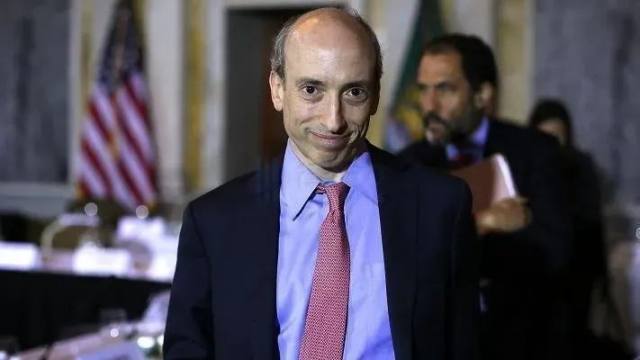
It’s understandable that celebrities get sued after projects fail. During bull markets, crypto firms spend heavily on marketing to attract retail investors and drive valuations higher—splurging on ads during major events and hiring globally recognized film, music, and sports stars to endorse their products.
These cases also serve as warnings: Celebrities must exercise caution when partnering with and promoting projects, clearly disclosing risks. Meanwhile, investors should not blindly trust celebrity endorsements. Always DYOR—do your own research—conduct thorough investigations, and participate only after fully understanding the risks involved.
Join TechFlow official community to stay tuned
Telegram:https://t.me/TechFlowDaily
X (Twitter):https://x.com/TechFlowPost
X (Twitter) EN:https://x.com/BlockFlow_News
 白话区块链
白话区块链









