








Crypto Legal Expert on the Current State and Trends of Regulation in the U.S. and Asia
TechFlow Selected TechFlow Selected
Crypto Legal Expert on the Current State and Trends of Regulation in the U.S. and Asia
Is the United States tightening regulations or adopting more lenient policies toward cryptocurrency compared to Asia?
 Navigating Web3 tides with focused insights
Compilation: HashKey Capital
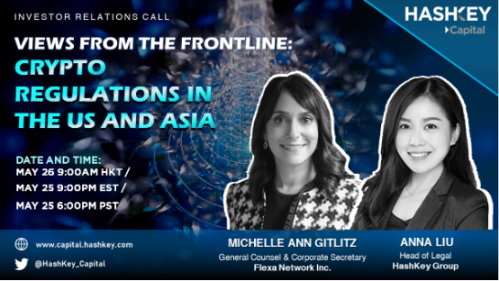
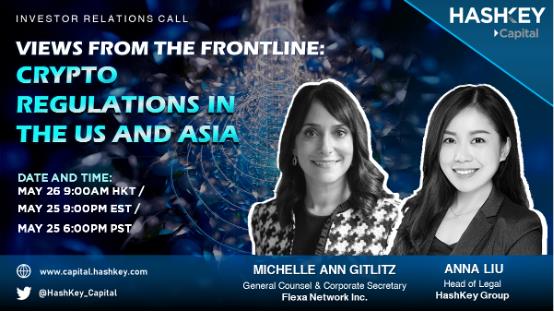
In this IR Call, HashKey Capital invited two seasoned legal experts from the industry—Anna Liu, Group General Counsel at HashKey, and Michelle Ann Gitlitz, General Counsel at Flexa Network—to share cutting-edge insights on the past, present, and future of crypto asset regulation in the U.S. and Asian markets.
Q: In Asia, which institutions regulate activities related to crypto assets and digital assets?
Anna: Over recent years, crypto assets have experienced rapid growth across Asia, inevitably drawing attention from regulators. Many Asian countries recognize the benefits of adopting cryptocurrencies—such as lower remittance transaction costs—but are also concerned about money laundering and terrorist financing risks, prompting governments to implement stricter regulations to protect consumers. Currently, regulatory requirements for crypto assets vary significantly across Asia, with a "one jurisdiction, one policy" approach. Today, we'll focus on Hong Kong and Singapore:
a) Hong Kong: Depending on the regulated entity, oversight is divided among several agencies:
Hong Kong Monetary Authority (HKMA): The central bank of the Special Administrative Region, responsible for determining whether digital assets qualify as “currency.” Thus, HKMA has jurisdiction over stablecoins and plays a key role in ensuring financial stability and ecosystem integrity.
-
Securities and Futures Commission (SFC): The primary regulator of Hong Kong’s financial markets, overseeing virtual assets that fall under securities or futures categories.
-
Financial Services and the Treasury Bureau (FSTB): A policy-making bureau of the Hong Kong SAR government responsible for formulating financial and treasury policies, and providing general industry guidelines.
b) Singapore: The Monetary Authority of Singapore (MAS) has established an independent regulatory framework combining core functions of a central bank and financial regulator. It sets licensing frameworks and specific requirements for companies applying to conduct virtual asset business.
Q: In the United States, which institutions regulate crypto and digital asset-related activities?
Michelle: a) I call it the “alphabet soup” of regulators—there are various state and federal agencies in the U.S., each aiming to enact and enforce laws related to crypto assets.
b) The U.S. operates under a dual regulatory system involving both state and federal levels (e.g., New York City and Arizona have different regimes).
c) Federal-level regulators include the U.S. Securities and Exchange Commission (SEC), Commodity Futures Trading Commission (CFTC), Office of the Comptroller of the Currency (OCC), Financial Crimes Enforcement Network (FinCEN), Internal Revenue Service (IRS), and others:
-
SEC: Regulates securities; considers most tokens as securities and classifies the majority of cryptocurrencies as such.
-
CFTC: Oversees certain commodities; currently does not regulate spot crypto markets directly, though debate continues over whether it should regulate spot crypto trading.
-
OCC: As part of the Treasury Department, oversees banking regulations, placing stablecoin regulation within its purview.
-
FinCEN: Ensures crypto assets are not used for terrorism financing or other illicit financial flows.
-
IRS: Requires individuals to legally report and pay taxes on crypto transactions.
-
Consumer Financial Protection Bureau (CFPB): Requires crypto businesses to fully disclose information to consumers.
-
Federal Trade Commission (FTC): Enforces advertising standards for financial products offered by crypto firms.
d) Each state has distinct laws—for example, state-level Money Transmitter Acts regulate payment services and entities receiving money or value-bearing instruments.
e) Under the Biden administration, there's been strong encouragement for inter-agency collaboration, with more regulators choosing to cooperate. However, there remains no overarching guidance or white paper on cross-agency coordination.
f) Is there a “super-regulator” above all others? This idea has been widely discussed but not yet formally adopted. The Presidential Working Group on Crypto Assets once proposed designating either CFTC or OCC as the top-tier regulator for the crypto industry, but no final decision has been made.
Q: Hong Kong and Singapore are undergoing transformations in crypto asset regulation. How did we regulate before, how do we regulate now, and has market sentiment toward crypto regulation shifted?
Anna: For Hong Kong, we're transitioning from previously lenient policies toward a more standardized regulatory regime. There are currently no regulations aimed at restricting the development of crypto assets per se, but the SFC maintains strict oversight over trading of security- and futures-type crypto assets.
a) To date, Hong Kong’s crypto regulation can be categorized into three main areas:
I) Regulation of fund management firms: Fund management is a licensed financial activity under Hong Kong Type 9 license, defined as “asset management or securities.” Managing a fund investing solely in crypto assets (not classified as securities) is currently not considered a regulated activity and doesn’t require a Type 9 license. However, if a firm already holds a Type 9 license and plans to manage a crypto asset fund (which the SFC refers to as virtual assets), it falls under SFC supervision. The SFC regulates such activities through licensing and additional conditions.
Regulatory threshold: If a fund invests more than 10% of its total asset value in virtual assets, it must apply for SFC licensing. Below 10%, managers only need to notify the SFC. Exceeding 10% triggers mandatory application for enhanced regulatory status.
II) Regulation of fund distributors: To distribute funds in Hong Kong, entities must first obtain a Type 1 license (for securities trading). Funds are considered collective investment schemes and thus classified as securities, regardless of whether they invest in traditional securities or crypto assets. Since January 2022, HKMA and SFC have imposed additional requirements on virtual asset fund distribution, including sales only to professional investors, maintaining formal KYC procedures, conducting proper due diligence on virtual assets, and ensuring full disclosure of risks and information to clients—indicating tightening oversight. Type 1 license holders engaging in crypto fund distribution must comply with these new rules.
III) Regulation of platform operators: Crypto trading services for non-security tokens are not directly regulated by the SFC. Currently, the SFC uses a “opt-in” approach: centralized online trading platforms offering at least one security-tokenized asset must register with the SFC and obtain Type 1 and Type 7 licenses. As Asia's leading digital asset financial services group, HashKey Group has already obtained preliminary approval to operate a virtual asset trading platform in Hong Kong.
b) In Singapore, crypto asset regulation has steadily evolved over the past few years. Cryptocurrencies are not treated as legal tender equivalents but are instead classified based on their characteristics—either as regulated products (digital payment tokens, capital market products, or e-money) or unregulated utility tokens restricted to functional use cases. Let me elaborate on two major regulatory frameworks:
I) Securities and Futures Regulation: Under this regime, crypto assets may exhibit features similar to traditional capital market instruments.
II) Payment Services Act (PSA): A new regulatory regime requiring payment service providers to register and obtain licenses. The issuance of e-money and Digital Payment Token (DPT) services are linked to cryptocurrencies. Initially narrow in scope, DPT services were expanded significantly starting January 2022 to include DPT transfers, custodial wallets, and facilitating DPT exchange even when the provider doesn’t own the funds or tokens. More service types are expected to come under regulation in the future.
Q: How did the U.S. regulate crypto assets in the past, and what is the current regulatory landscape?
Michelle:
-
The core U.S. regulatory framework hasn't changed significantly.
-
To determine whether a crypto token qualifies as a security, courts and the SEC still apply the 1946 Howey Test.
-
Regulators like FinCEN have guided market compliance with the Bank Secrecy Act since 2013, extending its reach to cover cryptocurrency as a medium of exchange.
-
Enforcement actions by various regulators have increased over time. For instance, the IRS issued a subpoena to Coinbase in 2016 to investigate potential tax evasion among users.
While no new comprehensive legislation has emerged, existing rules continue to be revised and reinterpreted. As of May 2022, the U.S. had not enacted any new crypto-specific laws (unlike in Asia).
Q: Why do global regulators seem to have a love-hate relationship with crypto assets?
Michelle:
A) That phrase captures it well. High-profile incidents like Silk Road—an underground darknet marketplace shut down in 2013 and later saw $1 billion in Bitcoin moved anonymously before being seized by U.S. authorities—have often associated crypto assets with negative headlines and criminal connotations.
But Michelle counters this perception: the arrest of Silk Road suspects was actually made possible by the FBI’s powerful blockchain analysis capabilities. Had cash been used instead, catching them would have been nearly impossible—cash leaves no traceable ledger, making it far harder to track illegal activity. From this perspective, blockchain transparency is actually good news for law enforcement.
B) Another reason is that new technologies—or any emerging phenomenon—often make people feel uneasy or unsafe at first.
Anna: I’d like to add: regulators stand on the other side of the industry, focused on protecting citizens’ rights and ensuring financial stability through corporate oversight. This explains why they tend to approach new technologies cautiously—they need time to understand and learn how to regulate effectively. It’s a process that takes time. We’re encouraged to see regulators increasingly engaging with and supporting the growth of the crypto industry.
Q: Michelle, you work at Flexa Network, a globally leading, fully digital cryptocurrency payment ecosystem. Could you share the current state of crypto payment regulation in the U.S.?
Michelle:
A) We have federal payment and money transmission laws, primarily the Bank Secrecy Act. The federal framework focuses on preventing payments from being used for money laundering or terrorist financing.
B) At the state level, the emphasis is on consumer protection. State laws govern services like MoneyGram and check cashing. For example, if I live in New Jersey and walk into Western Union to send money to Mexico, the New Jersey regulator wants assurance that the funds actually reach Mexico.
C) Stablecoins are particularly interesting, with payments being their primary use case. Many stablecoin issuers are regulated by the New York State Department of Financial Services (NYDFS)—one of the most crypto-friendly yet stringent jurisdictions in the U.S. Being regulated by NYDFS is seen as a mark of credibility. Gemini, Coinbase, and Kraken are all under NYDFS supervision. Typically, NYDFS requires stablecoin issuers to maintain strict 1:1 reserve backing.
D) The U.S. government shows strong interest in Central Bank Digital Currencies (CBDCs), particularly focusing on the payment layer.
E) Luna Terra was an algorithmic stablecoin backed by another asset; when that underlying asset declined, it lost its peg.
Q: Anna, could you explain the current regulatory landscape for crypto assets in mainland China?
Anna:
-
Mainland China has not passed any legislation specifically on digital assets.
-
Since 2013, the Chinese government has issued a series of guiding notices.
-
In September 2017, seven government bodies including the PBOC jointly issued a notice titled “On Preventing Risks of Token Issuance Financing,” declaring ICOs as potentially illegal activities, severely impacting the domestic crypto industry.
-
In September 2021, Chinese authorities released further guidance tightening crypto regulation. The 2021 notice reiterated that “cryptocurrencies are not legal tender,” cannot circulate freely, and banned overseas crypto exchanges from serving mainland residents.
-
Conclusion: Bitcoin and Ethereum are not legal tender. Market making, trading, ICOs, derivatives trading, and mining are all prohibited in mainland China.
-
However, Chinese individuals may still hold or trade virtual assets at their own risk without breaking the law. Importantly, financial institutions and overseas crypto exchanges are not permitted to offer services to mainland residents, creating practical challenges.
-
Digital RMB differs fundamentally from decentralized Bitcoin and Ethereum—it is centrally regulated by the People’s Bank of China. Built on a two-tier operational system, its core layer is centralized. As legal tender in China, existing anti-money laundering and KYC laws fully apply to digital RMB.
Q: We've discussed the past and present—what do you see as the future trends in crypto asset regulation?
Michelle: I believe states will move faster than the federal government. Last month, California issued an executive order affirming support for crypto innovation. We’re seeing Florida emerge as a tech hub for crypto on the East Coast, and Wyoming continues to offer favorable policies. We’ll likely see individual states pioneering forward-looking crypto legislation. A unified federal law remains unlikely in the near term.
Anna: For Hong Kong, the past 12 months have seen significant regulatory developments aligned with international trends, aiming to strengthen Hong Kong’s regulatory framework. Numerous new systems are expected to roll out, impacting the market. Previously, the SFC applied an “opt-in” model where exchanges offering security tokens came under supervision. The upcoming Virtual Asset Service Provider (VASP) licensing regime will close existing regulatory gaps by extending obligations to certain non-security virtual asset service providers.
We anticipate forthcoming stablecoin regulations. The HKMA published a discussion paper titled “Crypto Assets and Stablecoins,” stating that payment-related stablecoin activities should be brought into the regulatory framework due to potential financial stability risks. It’s not a question of if, but when stablecoin regulation arrives. The SFC has already required all intermediaries to collaborate exclusively with SFC-authorized platform operators.
A) Singapore: Also intensifying scrutiny over the rapidly growing crypto sector. MAS recently issued guidelines on public and media promotion of crypto assets. It also passed a law requiring Singapore-registered digital asset service providers operating overseas to obtain authorization and comply with local AML/KYC requirements. MAS now extends oversight to firms with international operations.
In summary, digital asset regulation in Asia is taking shape, with relatively clear frameworks emerging in Hong Kong and Singapore. Such regulatory clarity is particularly beneficial for long-term players like HashKey.
Join TechFlow official community to stay tuned
Telegram:https://t.me/TechFlowDaily
X (Twitter):https://x.com/TechFlowPost
X (Twitter) EN:https://x.com/BlockFlow_News










