









Dubai Crypto Market Research Report: The Middle East Beacon of the Crypto Industry
TechFlow Selected TechFlow Selected
Dubai Crypto Market Research Report: The Middle East Beacon of the Crypto Industry
Globally, the UAE has ranked among the top ten countries with the highest number of residents investing in cryptocurrency.
 Navigating Web3 tides with focused insights
By: MIIX Capital
According to research by HedgewithCrypto, Dubai (UAE) is one of the highest-adopting regions for cryptocurrency over the past three years, second only to Turkey (the study defines adoption based on various factors including the number of crypto ATMs, public acceptance rates, online interest in crypto, and supportive legislation). With Dubai's (UAE’s) increasingly open policies, the thriving crypto market in the Middle East and North Africa is attracting more and more businesses and individuals to develop in Dubai. If the UAE is the beacon of the crypto industry in MENA, then Dubai is its brightest spotlight.
Tips:
Dubai is the economic center of the UAE and the absolute core of the UAE's crypto market. This article will analyze and elaborate on the region's crypto market with a focus on Dubai and the broader UAE, combining relevant data and information.
Relationship between Dubai and the UAE: Dubai city is the capital of Dubai Emirate, located in the central part of the emirate. It serves as the political, economic, and cultural hub of Dubai Emirate and is the most populous city within it.
Dubai Emirate is one of the seven emirates that make up the United Arab Emirates, situated in the southeastern part of the Arabian Peninsula. It is the most populous and economically advanced emirate in the UAE.
Dubai is the backbone of the UAE's economy and its international image. Its economy primarily relies on tourism, aviation, real estate, and financial services, making it one of the world’s most popular tourist destinations and a leading financial and economic hub in the Middle East. Dubai’s economic development significantly influences the overall economic growth of the UAE.
1. Regional Macroeconomic Indicators and Current Status
1.1 Land Area and Population Size
The United Arab Emirates (UAE), located on the eastern side of the Arabian Peninsula, borders Saudi Arabia to the west and south, Oman to the east and northeast, and faces Iran across the Persian Gulf to the north. Covering a total area of 83,600 square kilometers with a coastline stretching 734 kilometers, the UAE consists of seven emirates. As of June 2023, the UAE's total population reached 10.17 million, with expatriates accounting for 88%. Arabic is the official language, while English is widely spoken.
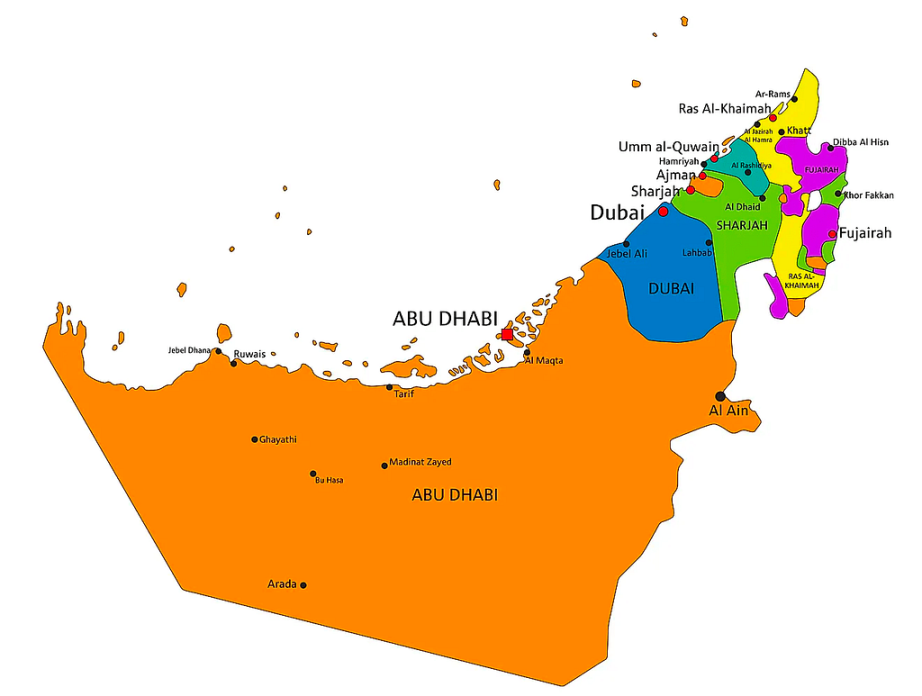
Situated on the southern coast of the Arabian Gulf in the United Arab Emirates, Dubai Emirate shares borders with Abu Dhabi to the south, Sharjah to the northeast, and the Sultanate of Oman to the southeast. Spanning approximately 4,114 square kilometers—about 5.8% of the UAE’s total area—it ranks second after Abu Dhabi. As of June 2020, Dubai had a population of 3,392,408, representing about 41.9% of the UAE's total population, making it the most populous city. The population increases annually by 177,020 people at a growth rate of 5.64%, with a population density of around 408.18 people per square kilometer—over eight times the national average.
1.2 Economy and Related Metrics
The UAE is the second-largest economy in the Gulf Cooperation Council (GCC), behind only Saudi Arabia, and one of the wealthiest nations globally, boasting among the highest GDP per capita (PPP) figures worldwide. While developing its petrochemical industry, the government prioritizes economic diversification, expanding trade, and increasing non-oil revenues’ share of GDP. In recent years, the UAE has aggressively promoted knowledge-based economies centered on information technology while emphasizing renewable energy research and development.
In 2022, the UAE recorded a GDP of $446.6 billion, growing at 8.9%, with a per capita GDP of $47,700—approximately 80% higher than the OECD average. Over the past six years, the UAE’s per capita GDP grew by 24.7%, with a year-on-year increase of 21.1% in 2022. Meanwhile, Dubai’s real GDP reached 111.3 billion dirhams (approximately $30.3 billion USD) in Q1 2023, rising 2.8% year-on-year—significantly outpacing the EU’s 1.1% and the US’s 1.8%. According to Kearney’s 2023 Global Cities Comprehensive Ranking, Dubai ranked 23rd globally and first in the MENA region.
Data released by the Dubai Statistics Center shows that the finance and insurance sector accounts for 15% of GDP, with the financial industry growing by 3.2% and contributing 12.7% to GDP. Central Bank of the UAE data indicates credit balances rose 3.5% and deposit balances increased 14.9% compared to the same period last year. The UAE Purchasing Managers’ Index (PMI) confirms the non-oil private sector has expanded for 28 consecutive months, with employment growth reaching its fastest pace since July 2016.
1.3 Regional Economic Development Outlook
Domestic institutions and multiple international organizations forecast that the UAE economy will return to steady growth in 2023, maintaining an optimistic outlook. Standard Chartered’s June report titled “The Future of Trade: New Opportunities in High-Growth Corridors” predicts exports will reach about 2 trillion dirhams by 2030, averaging an annual growth rate of 5.5%, with Dubai playing an extremely important role in future development and expansion.
Globally, amid the continuous rise of digital economies, Dubai urgently needs to identify its next growth engine. Web3 fields led by blockchain technology are not only closely aligned with its strengths in finance but also deeply integrated with the digital economy.
Despite objective challenges such as cultural differences, geopolitical constraints, and complex environments, Dubai (UAE) offers excellent conditions for trial and error and essential elements for cutting-edge technologies and financial innovation industries—including the crypto sector—thanks to its superior regulatory policies and business environment. In particular, Dubai’s crypto market has begun to take an early lead despite competition from emerging hubs like South Korea, Japan, and India. PwC estimates that by 2024, the blockchain market potential in the Middle East and North Africa centered on Dubai (UAE) will exceed $3.2 billion.
2. Industrial Structure and Geocultural Context
2.1 Composition of Industrial Structure
The UAE ranks fifth in oil reserves among Middle Eastern countries. While continuing to develop its petrochemical industry, the government prioritizes economic diversification, expanding trade, and increasing the share of non-oil income in GDP. Efforts include promoting industries such as cement, aluminum smelting, plastic products, building materials, apparel, and food processing, while placing emphasis on agriculture, animal husbandry, and fisheries. The UAE also leverages diverse funding sources to prioritize education and healthcare. In recent years, the country has heavily invested in IT-driven knowledge economies and renewable energy R&D—the capital Abu Dhabi became the headquarters of the International Renewable Energy Agency (IRENA) in June 2009.
Dubai holds only 5% of the UAE’s oil reserves, rendering its oil economy nearly unsustainable. Starting in 1979, Dubai launched massive infrastructure projects and implemented a diversified industrial policy, establishing port trade, tourism, and financial services as its core industries. Using Dubai as a base, it taps into a vast market encompassing nearly 4 billion people across the Middle East, Africa, South Asia, and Europe.
Dubai ranks 37th among the world’s top 50 financial centers and first in the Middle East. Amid the wave of digital economic transformation, the crypto industry has entered Dubai’s strategic vision, being positioned as a key component of future industrial structure. Strong policy support has accelerated the concentration of crypto enterprises, even mandating applications in certain areas—highlighting the power of strong governmental influence.
2.2 Cultural and Geopolitical Influences
The UAE operates under a system of state religion integration and is ethnically diverse. Emirati nationals constitute only about 15% of the population, with the rest made up of expatriates from the UK, India, Pakistan, Bangladesh, and the Philippines—over 100,000 of whom are British.
As one of the most renowned immigrant cities, Dubai features fragmented religious and linguistic landscapes and a complex social environment. Cultural fragmentation has become a bottleneck for internet-based development, requiring extreme caution regarding localization and cultural sensitivity when rolling out software applications at scale.
Located in the GMT+4 time zone, Dubai enjoys a geographically advantageous position with relatively friendly time differences to both Europe and Southeast Asia, making global business travel convenient. It serves as a commercial hub connecting markets in the Middle East, Asia, Europe, and Africa. However, geographically, Dubai faces year-round high temperatures, scarce rainfall, and harsh living conditions. Moreover, the UAE is not a neutral nation, and relations with neighboring Persian Gulf states are already intricate. Political dynamics between the Middle East and countries like the U.S. can directly impact the local economy.
3. History and Current State of the Crypto Market
3.1 Industry Layout and Development Timeline
Marwan Alzarouni, CEO of the UAE Blockchain Centre, stated in a media interview: "The UAE, especially Dubai, has always been forward-thinking and fast-moving in any future technology, and cryptocurrencies and blockchain are no exception." As a pillar economic center of the UAE, Dubai began planning around the crypto industry early on with strong government-led policy guidance. To date, Dubai has become an indispensable core player in the global crypto landscape:
-
2013: Launched the "Smart Dubai Initiative";
-
2016: Established the Global Blockchain Council;
-
2018: Announced goal to implement blockchain in 50% of government transactions by 2021;
-
2019: Released the "Dubai Blockchain Strategy 2020" to build Smart Dubai;
-
March 2022: Enacted Virtual Asset Law and established VARA (Virtual Assets Regulatory Authority);
-
August 2022: Announced Metaverse Strategy and launched a five-year metaverse plan;
-
August 2023: Announced DIFC would issue AI and Web3 licenses;
-
October 2023: Announced the first "Dubai AI & Web3 Festival" will be held September 11–12, 2024, at Madinat Jumeirah;
3.2 Ranked Top 2 Globally in Crypto Readiness Index
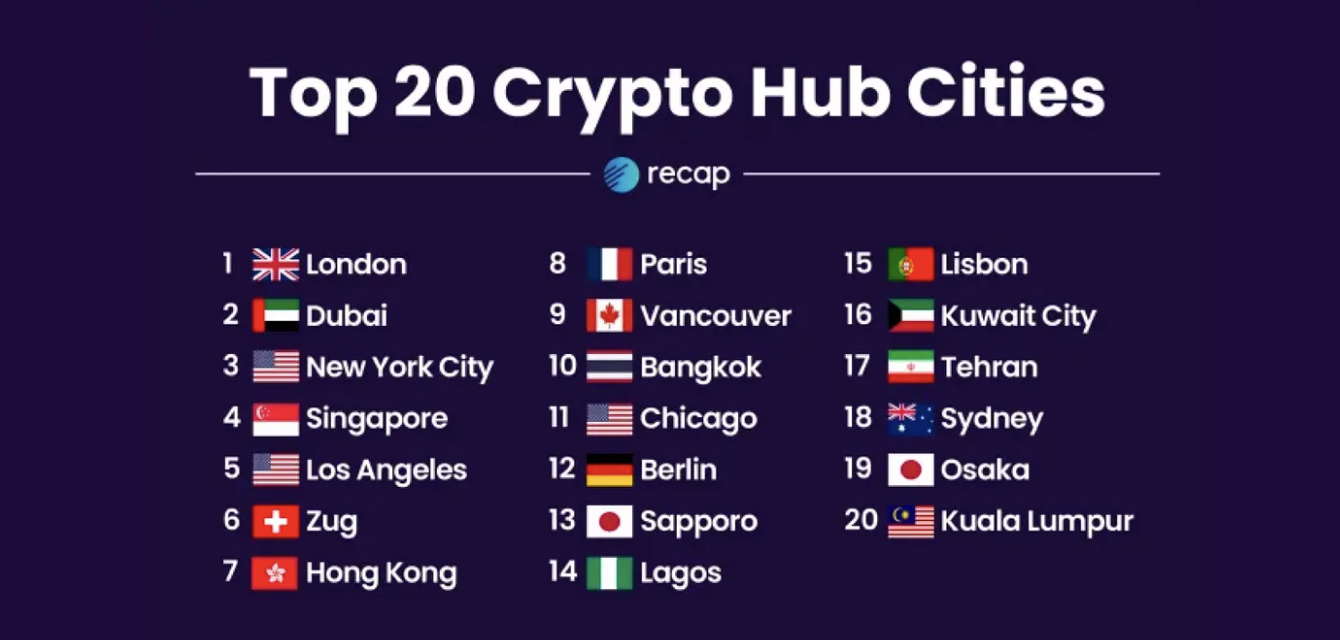
According to a report using the Crypto Readiness Index designed by crypto tax software company Recap, Dubai ranks second globally. The region’s zero-tax regime makes it an attractive residence for crypto investors. Additionally, according to Holborn Assets, there are 772 crypto companies in Dubai providing jobs for professionals, making it the top choice for most crypto practitioners.
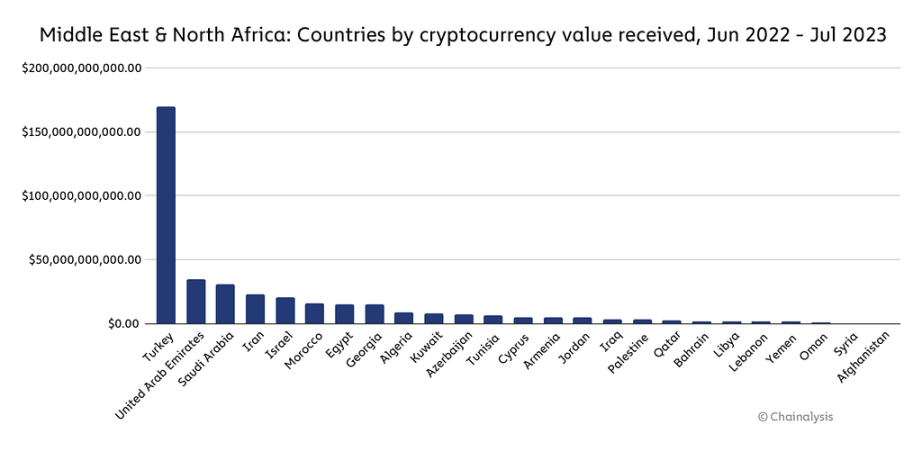
In Chainalysis’ Crypto Adoption Index, the UAE ranks second globally, just behind Turkey. Data shows the crypto industry contributes approximately 100 billion dirhams ($27.25 billion) to Dubai’s economy, accounting for 4.3% of the UAE’s GDP. To date, over 90 investment funds and 12 incubators—including Binance, ALPEX, Metahero, and Huobi—are concentrated in Dubai. Public disclosures indicate more than 1,400 blockchain or crypto startups with a combined valuation of 90 billion dirhams ($24.5 billion).
3.3 Globalization Increases Cryptocurrency Acceptance
Across the Middle East, people are highly optimistic and receptive toward cryptocurrencies. Industries ranging from hotels and restaurants to government agencies have begun accepting crypto payments. In Dubai (UAE), USDT is supported for shopping payments—for example, purchasing homes, vehicles, watches, etc.
-
LucidPay, a prominent UAE hotel group, uses a blockchain payment system and launched a stablecoin built on the Tezos blockchain network;
-
A black diamond was auctioned for $4.3 million paid in cryptocurrency to entrepreneur Richard Hert;
-
In 2014, a pizzeria in Business Bay, Dubai, started accepting Bitcoin payments;
-
Some hospitals and clinics accept Bitcoin for patient payments, and some even accept crypto donations;
-
Kiklabb, a UAE government-licensed organization, has begun accepting cryptocurrency payments;
-
The real estate sector encourages crypto use; developers in the UAE announced acceptance of Dogecoin as payment;
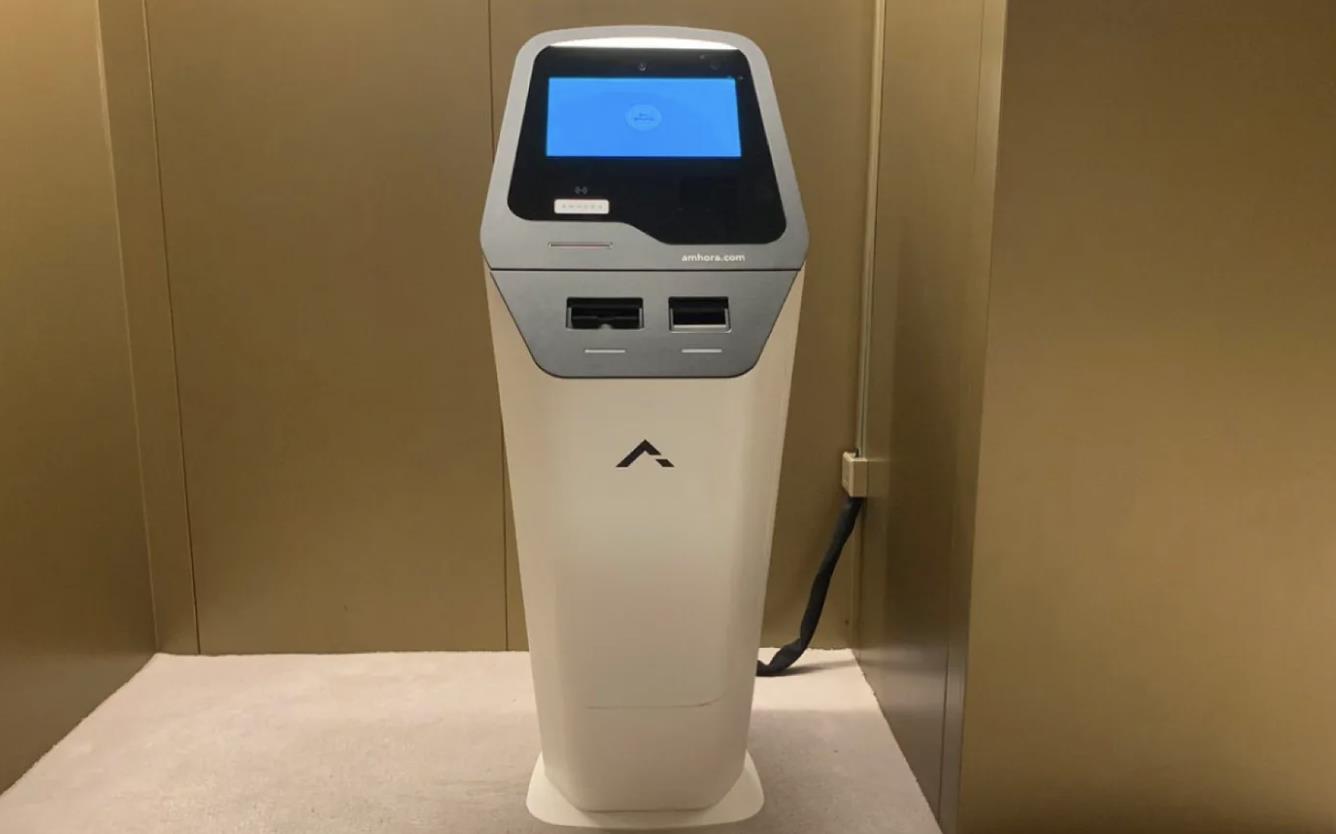
As one of the countries with Bitcoin ATMs, Dubai installed its first Bitcoin ATM in 2019 at the five-star Rixos Premium Dubai Hotel. At these self-service terminals, tourists can insert cash and instantly purchase Bitcoin.
Additionally, according to the latest research from HR platform Deel, Dubai employees lead the region in crypto withdrawals. Ethereum is the preferred cryptocurrency, with a withdrawal rate exceeding 51%, followed by USDC and Bitcoin. Tarek Salam, Head of Expansion at Deel, said: "Cryptocurrency adoption in Dubai is surging, and residents in other regions are also actively participating in the crypto ecosystem."
3.4 Preferences for CEXs and DEXs in the Region
Significant differences exist between countries. Referencing the heatmap below, which compares activity levels across some top crypto economies in the MENA region by platform type:
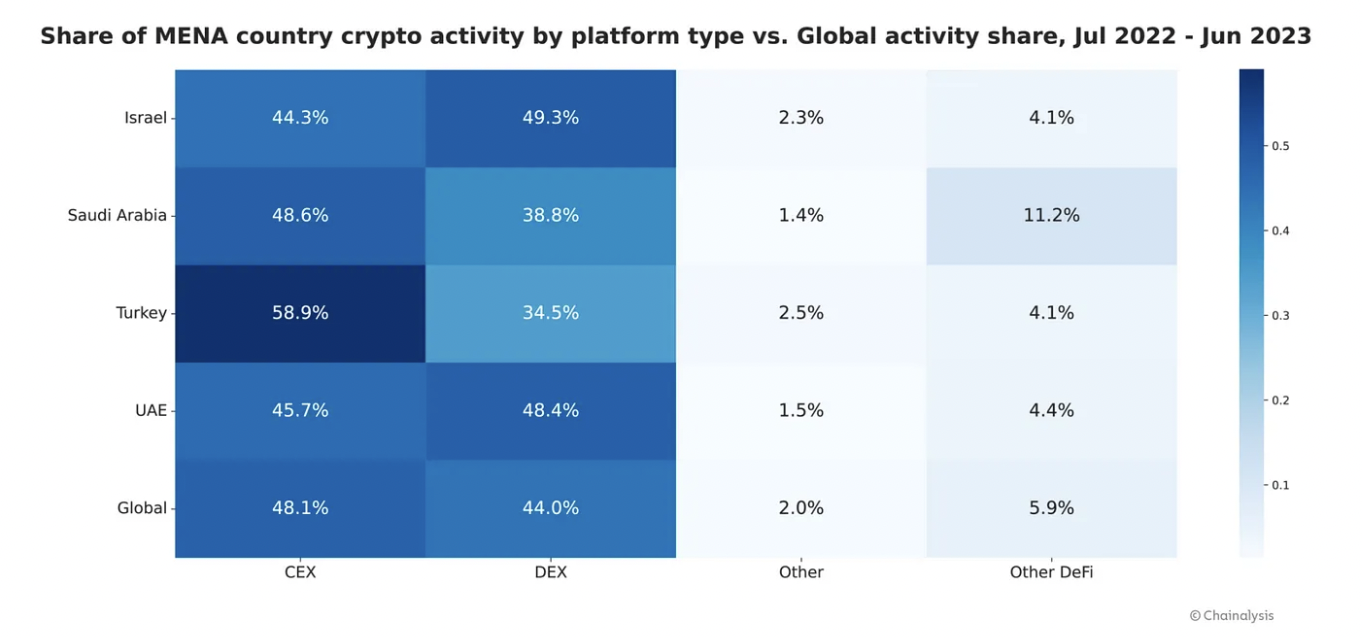
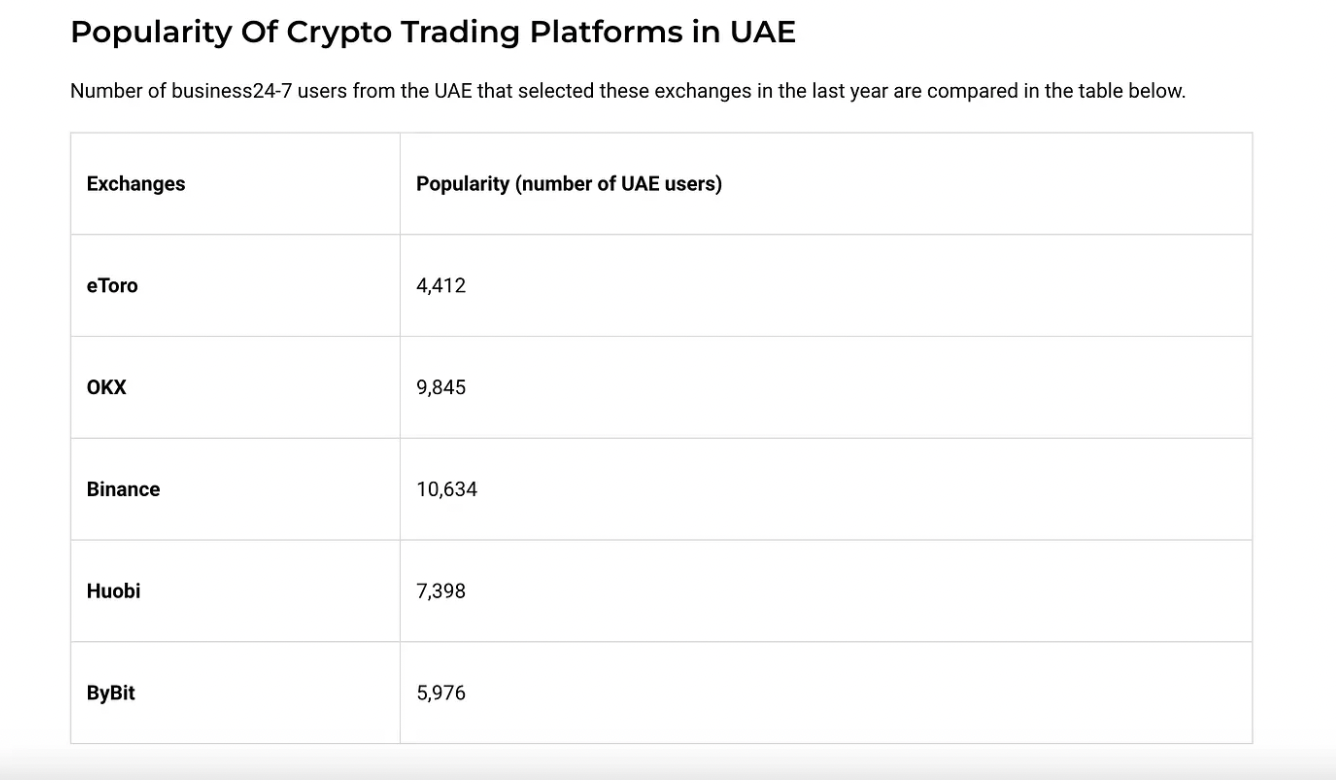
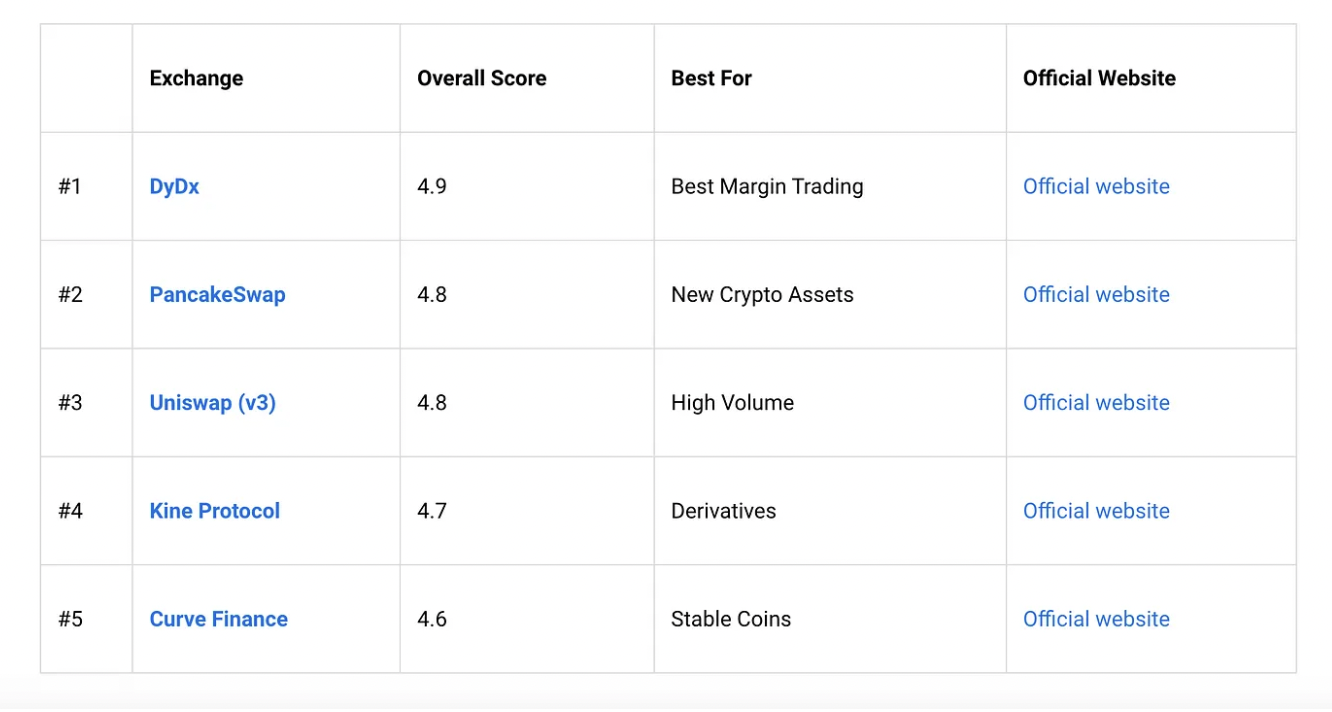
Heatmap distribution among Dubai (UAE) users shows 45.7% for CEXs and 48.4% for DEXs—nearly equal. Business24–7, a top broker review site in the UAE, evaluated and ranked the most popular CEXs and DEXs after screening 174 existing CEXs and 89 DEXs in the country:
-
eToro: Most popular among beginners;
-
OKX: High liquidity and extensive derivatives;
-
Binance: Largest globally, with the widest range of tokens;
-
HTX: Popular for high-yield savings;
-
ByBit: Best user experience;
-
DyDx: Leading decentralized exchange for margin trading;
-
PancakeSwap: Best DEX for new crypto assets;
-
Uniswap (v3): Highest trading volume;
-
Kine Protocol : Best derivatives DEX;
-
Curve Finance: Best stablecoin DEX;
3.5 Belief That Cryptocurrency Will Transform Finance and Gaming
In KuCoin’s survey of the UAE region, notably, 66% of respondents believe in the potential impact of the crypto industry on finance, and 53% think cryptocurrencies will play a crucial role in gaming. This highlights the transformative potential of crypto in reshaping traditional financial services and enhancing innovation and experience in gaming.
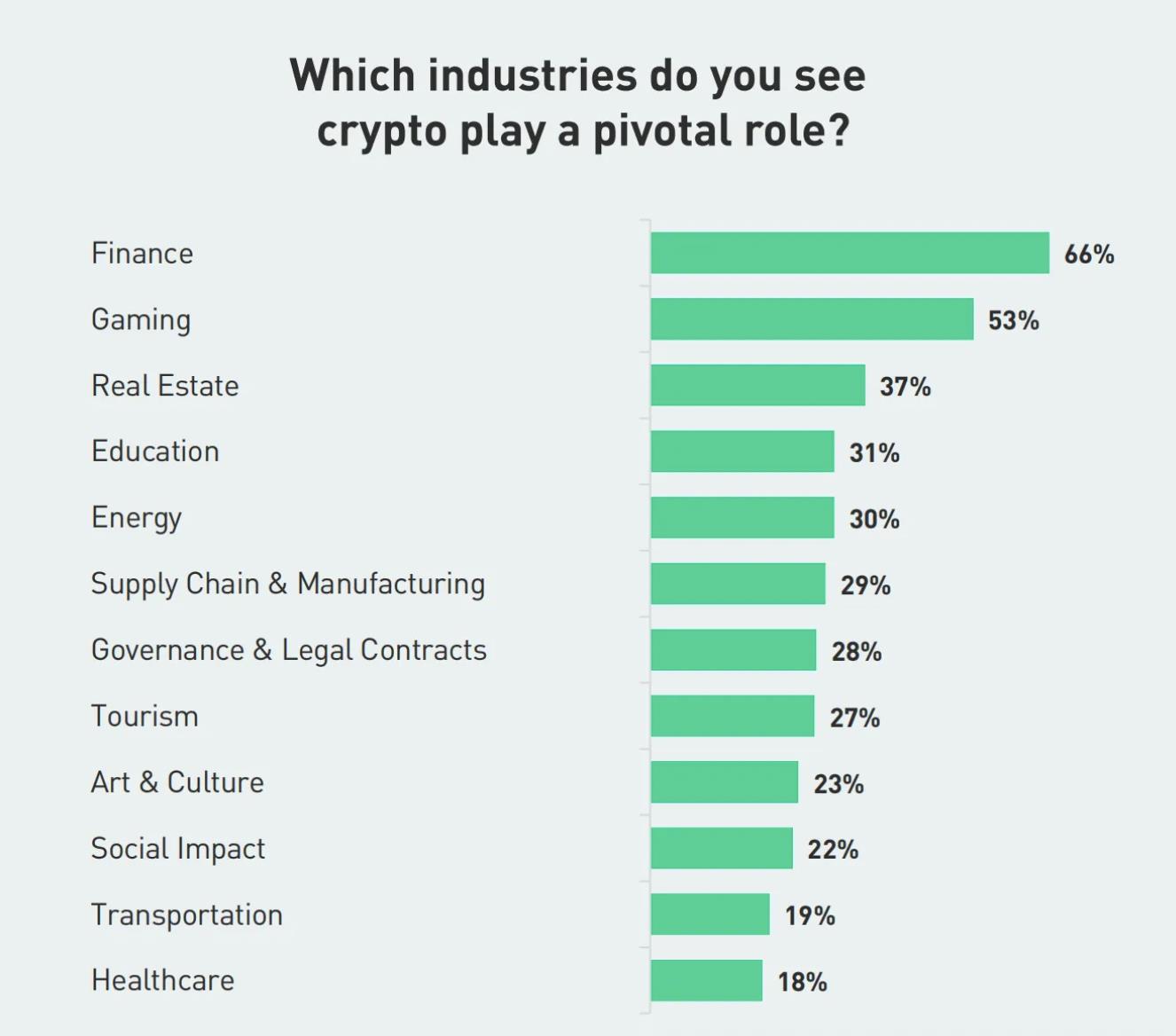
Additionally, 37% of respondents believe real estate is another industry poised for major change. Blockchain’s transparency in real estate transactions could effectively reduce friction during purchases, potentially revolutionizing the industry by making transactions more efficient and secure.
These findings indicate growing awareness of blockchain’s potential impact across various sectors and underscore the expanding influence of cryptocurrencies in today’s world. As industries embrace blockchain and crypto, we may witness transformations across all aspects of life—from how we conduct real estate transactions to how we experience entertainment and participate in governance.
3.6 Popular Crypto Sectors and Applications in Dubai (UAE)
Currently, Dubai’s Web3 ecosystem is highly diversified, spanning protocols, Web3 infrastructure, DeFi, crypto exchanges, NFT platforms, Metaverse, and Web3 gaming. A record number of top-tier crypto projects are relocating to Dubai.
Sheikh Hamdan, Crown Prince and Chairman of the Executive Council, announced the launch of the Metaverse Strategy and the establishment of the "Higher Committee for Future Technology and Digital Economy" to design policies, analyze trends, and oversee implementation of strategies related to the digital economy and future technologies, including Metaverse, artificial intelligence (AI), blockchain, and Web3—actively positioning Dubai as a Web3 capital.
Regional reports indicate that in the Dubai-centered Middle East, DEXs and related tokens have limited popularity due to incompatibility with local Islamic law, and related projects rarely establish operations in Dubai. However, the NFT sector is projected to grow at an annual rate of around 45.5%, with a compound annual growth rate (CAGR) of 32.1% expected from 2022 to 2028. Similarly, GameFi and SocialFi projects are highly popular among local users.
In payments, according to ResearchAndMarkets, the prepaid card and digital wallet market in the region grew at a CAGR of 9.2% from 2018 to 2022. From 2023 to 2027, the market is projected to grow at a CAGR of 12.3%, increasing from $5.66 billion in 2022 to $10.3 billion in 2027. Crypto platforms are forming partnerships with payment providers—a trend evident worldwide.
4. User Characteristics and Investment Preferences
Cryptocurrency adoption in Dubai (UAE) is extremely high. A recent YouGov survey found two-thirds of UAE adults are interested in crypto. Approximately 11.4% of residents own or have invested in cryptocurrencies; globally, the UAE now ranks among the top ten countries with the highest number of crypto-investing residents.
4.1 Younger Investors Are More Bullish on Crypto Assets
According to a study by financial services firm Holborn Assets, interest in crypto investing is growing in the UAE, with younger Emirati investors more bullish on crypto assets than their Western counterparts.
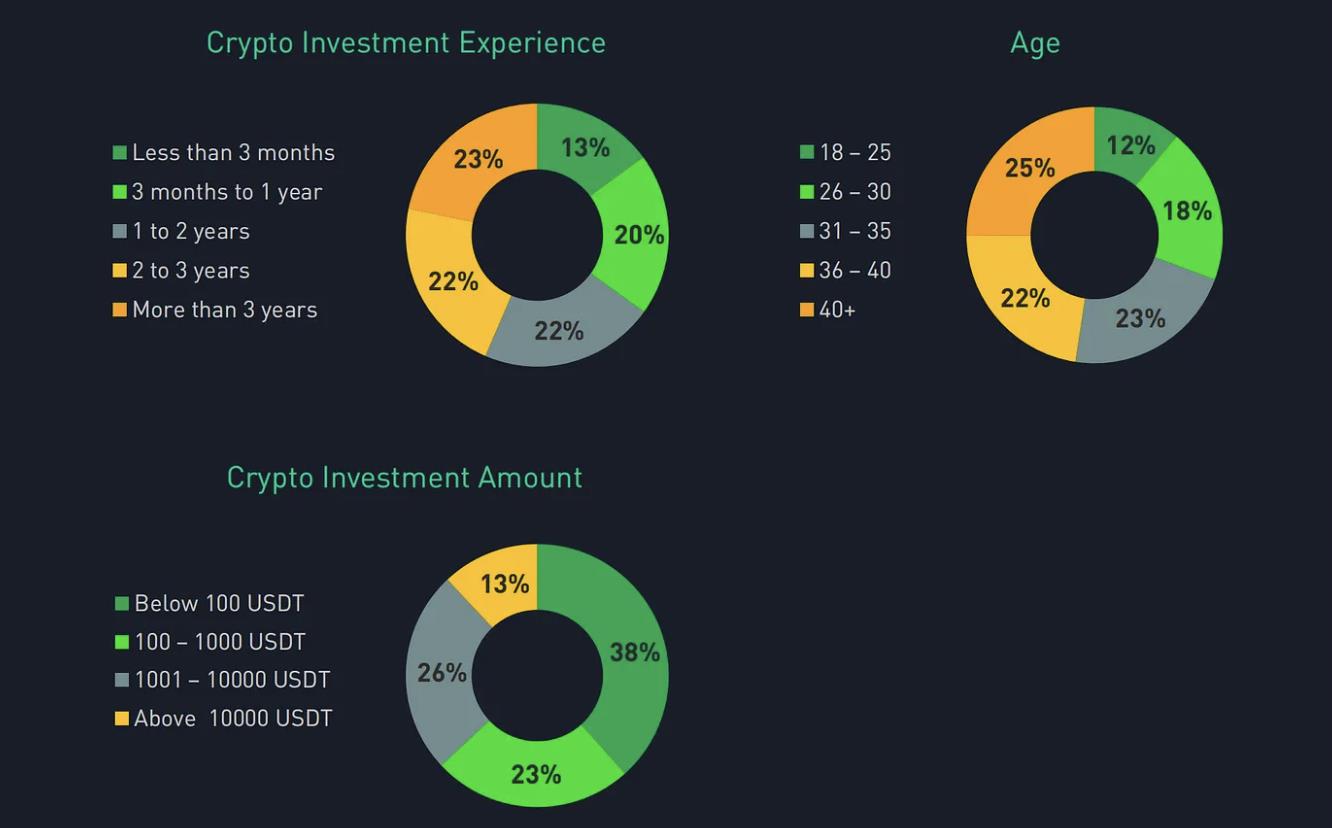
Among over 1,000 surveyed, 30% were aged 18–30, 45% were 30–40, and only 25% were over 40. Younger investors showed stronger optimism toward the crypto market, while older investors reported satisfaction with including crypto in their portfolios.
Also, among nationalities surveyed, Emiratis were the most enthusiastic crypto investors at 33%, followed by Arab expats (23%), Asian residents (24%), and Westerners (19%).
4.2 Preference for Long-Term Crypto Investment
The survey revealed multiple motivations for engaging with crypto: 59% of users participate for long-term investment, highlighting a growing willingness to treat crypto as a store of value, with investors increasingly viewing digital assets as reliable investment options. 35% of respondents were attracted by crypto’s ability to diversify portfolios, and 11% cited inflation hedging as their primary motivation.
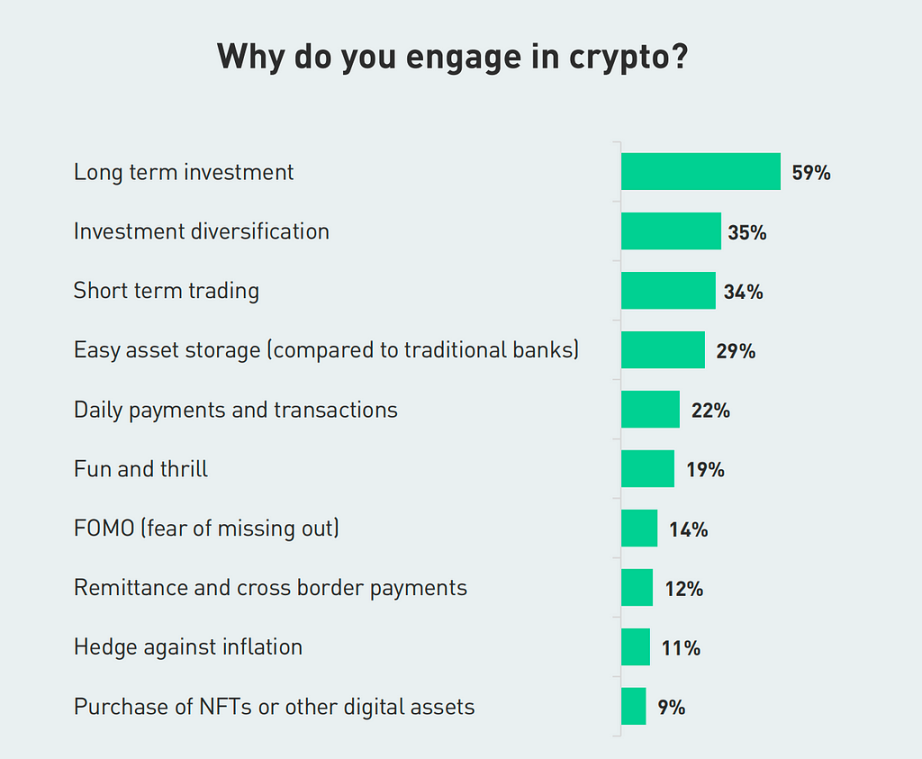
Compared to traditional finance, 29% of respondents see crypto as a more convenient way to hold assets, as it gains recognition beyond mere financial investment:
-
34% are enthusiastic about short-term trading;
-
22% use crypto for daily payments and transactions;
-
12% use it for cross-border remittances;
-
9% buy NFTs and other digital assets;
4.3 BTC and ETH Are Most Investors’ Top Choices
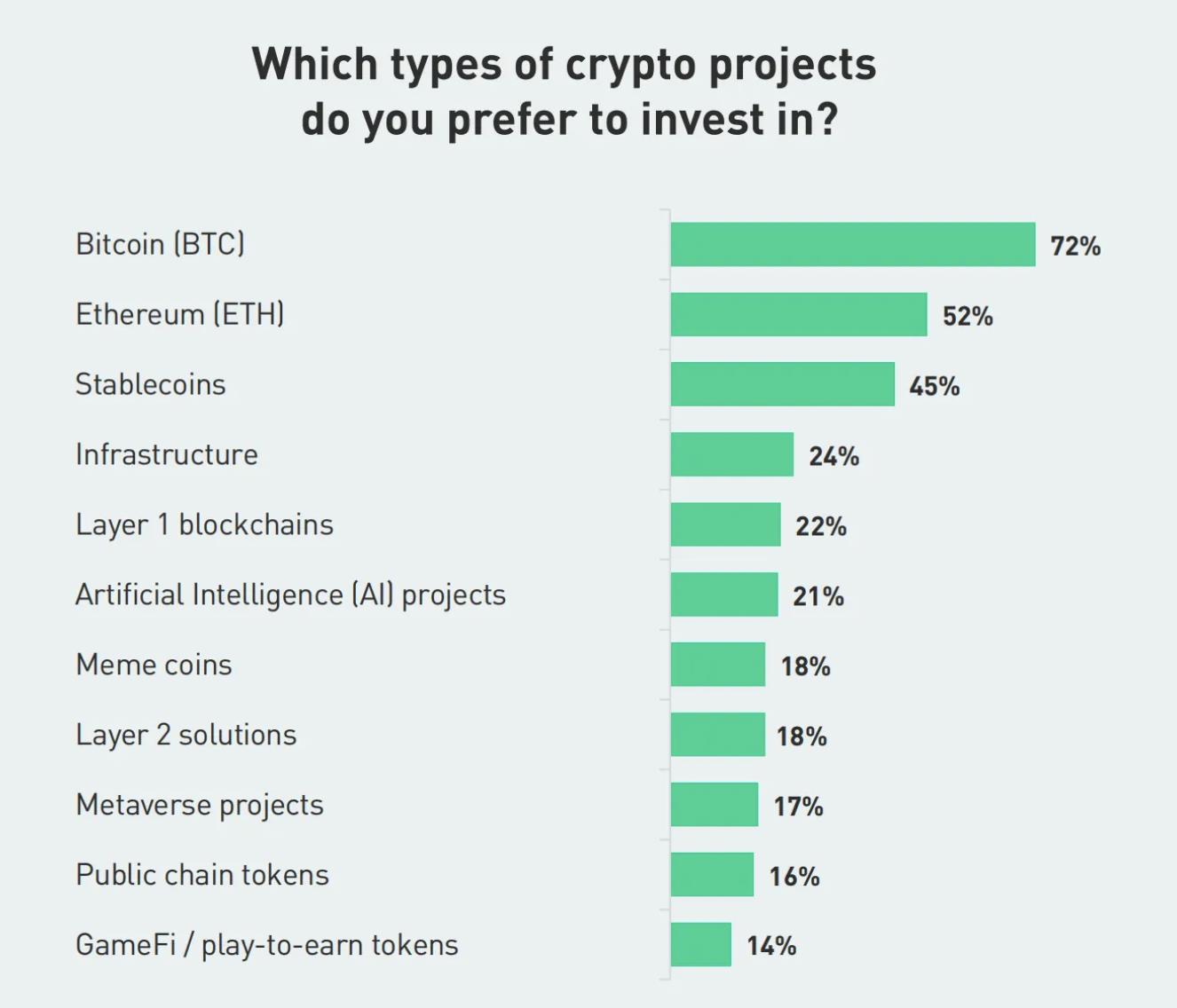
Bitcoin, often called "digital gold," is the most preferred crypto investment among UAE users, favored by 72% of respondents. This strong support reflects Bitcoin’s global reputation as a reliable store of value and underscores its enduring status as the premier digital asset.
Ethereum has become the second-most popular crypto investment, preferred by 52% of UAE users. Its versatility and utility, including smart contract functionality, resonate strongly with Emirati investors. In comparison, stablecoins lag slightly at 45%, suggesting UAE users may prioritize blockchain applications over pure stability.
Additionally, infrastructure projects and Layer 1 blockchains hold significant appeal in UAE investment preferences, with 24% and 21% of respondents expressing interest respectively. Another 22% showed interest in AI-related crypto projects, highlighting regional enthusiasm for integrating AI into blockchain to leverage its potential in advanced data analytics and automation.
4.4 Crypto Remittances and Transactions Are Entering Daily Life
Surveys show strong interest in remittances, daily transactions, and purchases beyond investment, indicating increasing integration of crypto into Dubai’s financial landscape. Ripple and FPC data also show that most payment companies believe global merchants will adopt more crypto payments in the short term. 64% of Middle Eastern payment company representatives believe over 50% of merchants will begin accepting crypto payments within the next three years.
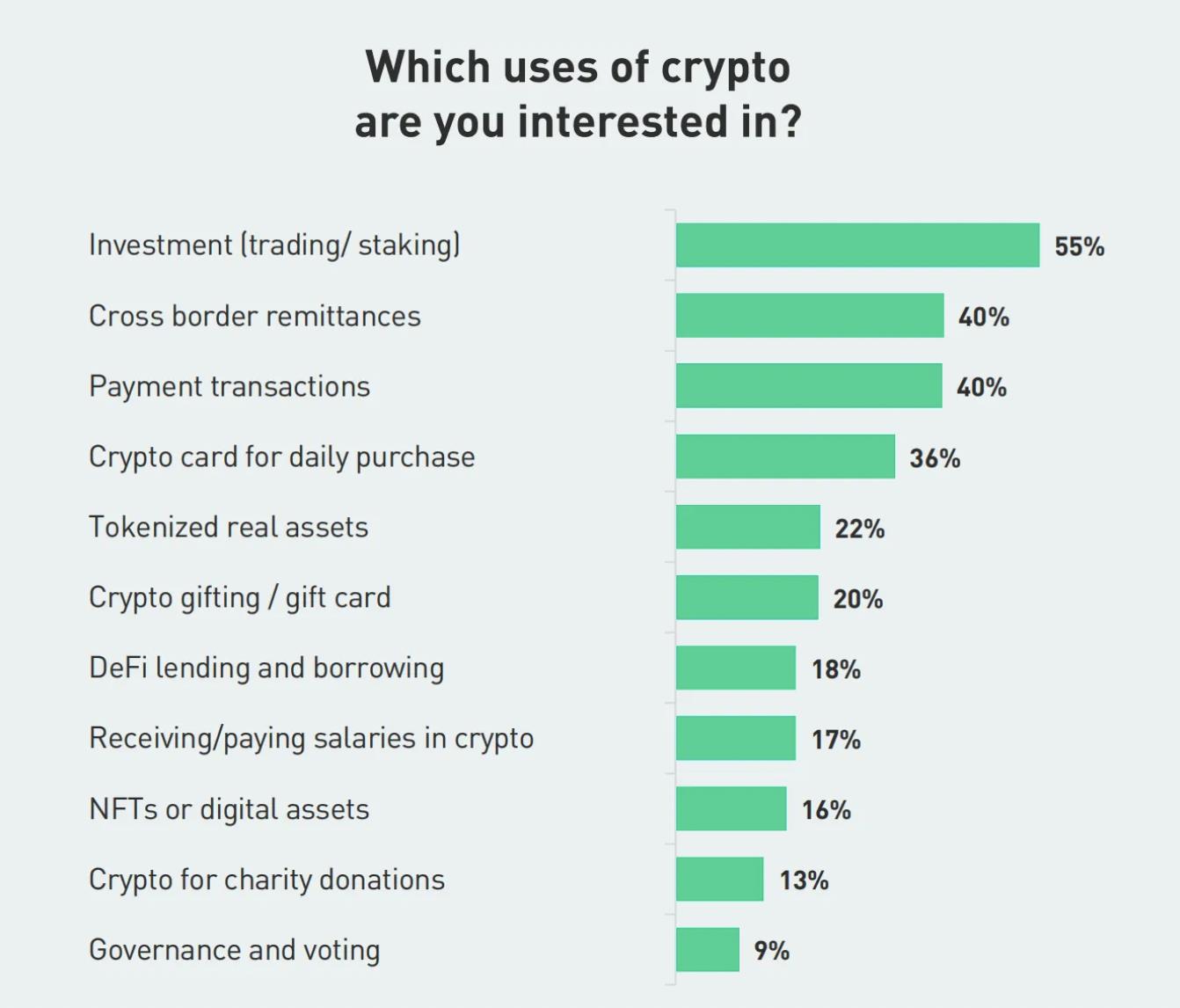
The survey reveals growing willingness among UAE users to adopt digital assets in personal life. For cross-border remittances, nearly 40% of participants view crypto as a more efficient and cost-effective method for international transfers; 40% find the practicality of crypto appealing for transactional payments; 36% are willing to use crypto cards for daily shopping—highlighting rising demand for crypto’s practical applications in everyday finance.
Moreover, 20% of users are interested in crypto gifts, and 17% are open to receiving or paying salaries in crypto. This expanding adoption signals a shift of crypto in the UAE from speculative assets to functional tools. These diverse interests not only reflect changing financial perspectives but also imply broader acceptance of blockchain’s role across various aspects of life in the UAE.
5. Innovation Trends and Market Advantages
5.1 Growing Expectations for AI and Identity Verification Integration in Crypto
The survey shows strong interest in various crypto innovations in the UAE. Integration of AI and crypto leads the list, with 62% of respondents expressing optimism. Additionally, 32% of participants are focused on safer, decentralized identity verification solutions based on crypto; 29% are particularly interested in blockchain-based supply chain tracking, reflecting a desire for greater transparency and traceability in supply chain management.

Decentralized Finance (DeFi) remains compelling, attracting interest from 26% of respondents. DeFi innovations offer opportunities for more inclusive and accessible financial services—from lending to liquidity mining.
Survey data shows growing interest in the crypto world and ecosystem, extending from gaming to social interactions, commerce, and education. Whether through AI-crypto convergence, blockchain-based identity security, or transparent supply chain tracking, these innovations are reshaping the crypto landscape and paving the way for more advanced and inclusive financial and digital experiences.
5.2 Strong Financial Infrastructure and Global Network Offer Clear Advantages
The UAE is making waves as an emerging hub for crypto industry development. 53% of respondents believe Dubai (UAE)'s most unique advantage lies in its ability to attract capital and funding, providing crypto startups and entrepreneurs with the resources needed for innovation and scaling, laying the foundation for success. Meanwhile, 46% emphasize Dubai (UAE)'s robust financial infrastructure, which creates an ideal innovative environment conducive to seamless transactions and trust-building.
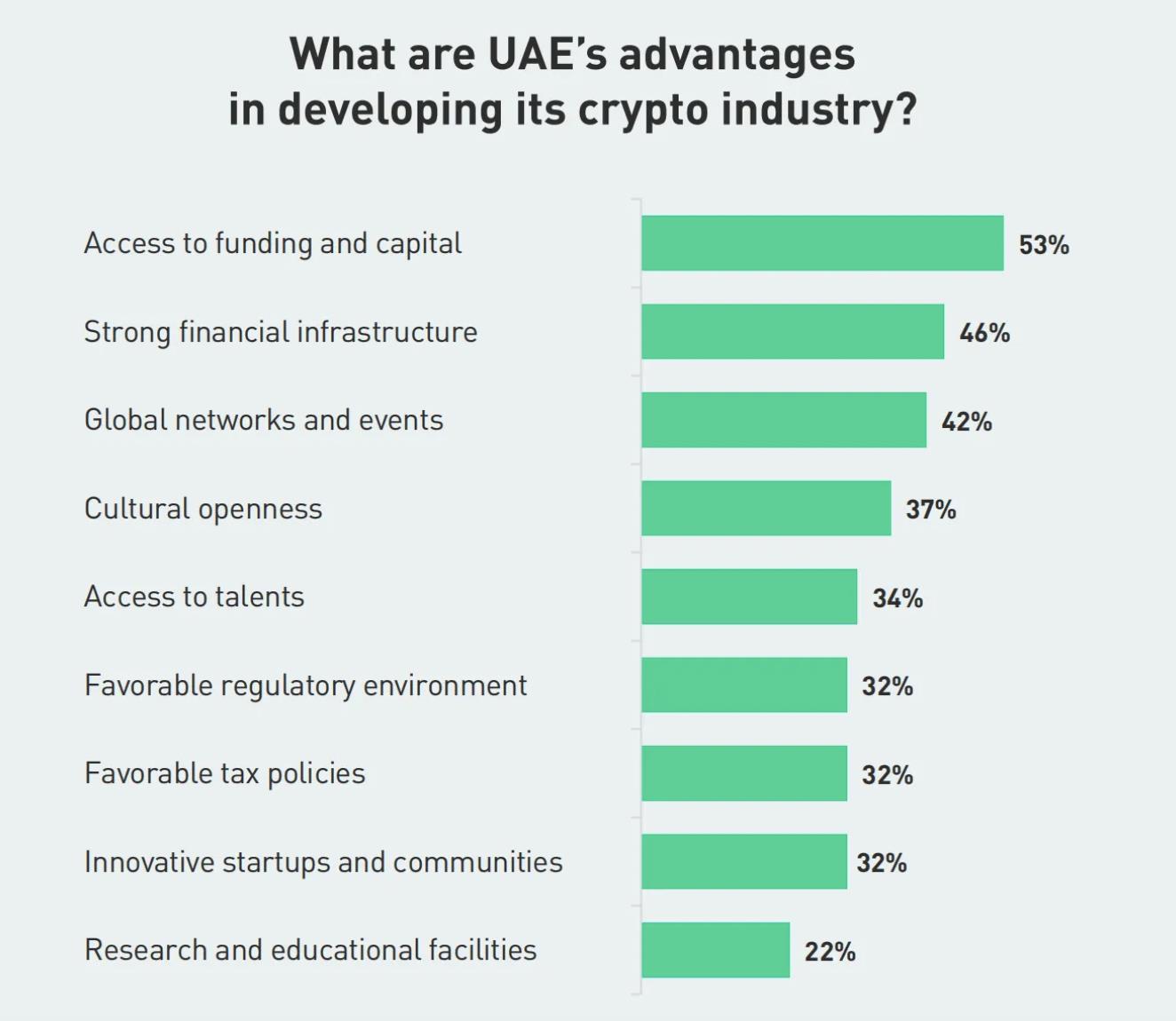
A talented workforce, favorable regulatory environment, and tax policies (recognized by 34% and 32% respectively) further enhance the UAE’s appeal as a crypto hotspot. Global networks and events (cited by 42%) further highlight the UAE’s attractiveness in the crypto space. These international connections and industry gatherings create valuable opportunities for knowledge exchange, collaboration, and global relationship-building.
Furthermore, the presence of innovative startups and communities fosters a dynamic crypto ecosystem that promotes collaboration, knowledge sharing, and rich insights, driving innovation and partnerships—bolstering the UAE’s position as a thriving crypto nation on the world stage. These advantages make the future of the UAE’s crypto industry look exceptionally vibrant.
6. Investment Environment and Institutions
Dubai (UAE)'s thriving startup scene has become a breeding ground for venture capitalists and investors seeking the next big thing—especially in frontier industries like crypto and AI. With its vibrant business community and investment-friendly environment, Dubai offers abundant opportunities for crypto entrepreneurs and investors alike.
6.1 Favorable Investment Climate Attracts More Resources
Reports show that in 2021, venture capital investments in the Middle East and North Africa (MENA) reached a record $2.3 billion, with Dubai taking the lead as the top VC destination. In 2022, traditional tech-era VC giants like Sequoia Capital, Tiger Global, and Bridgewater Associates began appearing frequently in crypto投融资 events, with fund sizes routinely exceeding hundreds of millions of dollars—further fueling Dubai’s investment momentum. Although crypto market热度 cooled somewhat in 2023, continued resource allocation from major players like Binance and Bybit has led to a continuous emergence of new investment firms in Dubai, attracting numerous crypto entrepreneurs.
6.2 Hot Sectors Gain Institutional Favor
In-depth research on investment institutions in Dubai (UAE) reveals that infrastructure, DeFi, GameFi, and payments are the sectors most likely to attract institutional attention and favor.
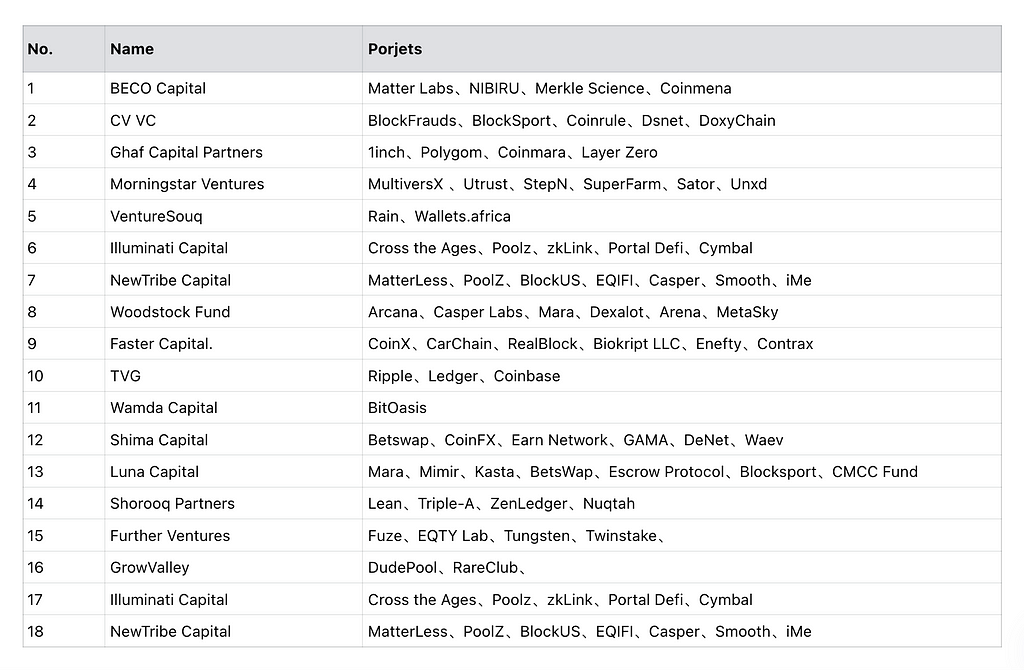
Due to policy incentives and government guidance, most local UAE investment institutions participate in crypto market investments or project incubation. Our survey of 18 Dubai (UAE)-based investment firms—including traditional capital, emerging crypto funds, local UAE VCs, and private investment arms of Dubai’s royal family—found that 68.2% prefer investing in infrastructure and blockchain application projects. Beyond that, DeFi and GameFi are top choices, with GameFi’s share gradually increasing since 2023.
7. Regional Crypto Regulatory Policies
On January 23, 2023, UAE Minister Thani bin Ahmed Al-Zeyoudi stated at the World Economic Forum in Davos, Switzerland, that crypto assets will play a significant role in the UAE’s global trade and will be incorporated into national trade policy in 2023. He emphasized: "As the UAE builds a regulatory framework for virtual assets, the focus will be on making Gulf countries friendly and safe for virtual assets."
7.1 Leading the Way in Global Regulatory Frameworks
Unlike many countries that either oppose or ignore cryptocurrencies, Dubai (UAE) has chosen to face them head-on:
-
2016: Dubai launched its first blockchain strategy;
-
2018: Abu Dhabi established the world’s first crypto regulatory framework;
-
2020: UAE Securities and Commodities Authority (SCA) issued the Crypto Assets Activities Regulation (CAAR);
-
2021: Federal level designated SCA as the domestic virtual asset regulator responsible for licensing and supervising virtual asset activities and investment services;
-
2022: Dubai established its own Virtual Assets Regulatory Authority (VARA);
In fact, India, the Philippines, and Pakistan all rank in the top ten of the UAE’s adoption index—positive signs for the UAE. These countries constitute a large portion of the UAE’s expatriate population, and the surge in crypto popularity in these nations may correlate with increased crypto adoption in the UAE.
7.2 Multiple Jurisdictions and Diverse Regulatory Frameworks
The UAE hosts multiple regulatory bodies overseeing crypto assets, each governing specific jurisdictions and business types. To determine the applicable regulatory framework, one must first understand the main jurisdictions in the UAE:
-
Mainland or Onshore Jurisdiction: Refers to any of the UAE’s seven emirates where companies can register through their economic departments, such as Dubai Department of Economic Development (DED) and Abu Dhabi Department of Economic Development (ADDED);
-
Economic Free Zones: Over 40 economic free zones exist (more than 30 in Dubai), with Dubai Multi Commodities Centre (DMCC) being the largest;
-
Financial Free Zones: Abu Dhabi Global Market (ADGM) and Dubai International Financial Centre (DIFC);
-
Onshore Offshore Jurisdictions: Jebel Ali Free Zone and RAK International Corporate Centre—these economic free zones offer offshore jurisdiction, suitable for legal structures like family trusts and foundations;
For mainland companies, regulation is handled by the Emirates Securities & Commodities Authority (SCA) and the UAE Central Bank. The two financial free zones have their own regulators: Dubai Financial Services Authority (DFSA) and Financial Services Regulatory Authority (FSRA). Additionally, the UAE’s 40+ economic free zones can issue licenses tailored to specific business activities, and each of the seven emirates can enact its own laws regulating virtual assets.
This diversified Web3 regulatory framework actively explores appropriate strategies to promote innovation while offering market participants multiple options to align with their specific virtual asset operations.
7.3 Overview of Key Regulatory Frameworks
VARA’s authority includes coordinating with federal-level SCA and UAE Central Bank regulations on crypto assets, overseeing all crypto asset service providers (including exchanges, venture funds, NFT platforms, etc.) throughout Dubai Emirate. Thus, all related activities—including but not limited to exchanges, brokers, custodians, and service providers—fall under its regulatory scope.
DFSA strictly limits acceptable crypto types—only Accepted Crypto Tokens are regulated. Other virtual assets such as utility tokens and NFTs are explicitly excluded from financial oversight. DIFC regulation suits: hedge funds investing in virtual assets, family offices, traditional financial firms (investment advisory, brokerage, trading, custody), and Bitcoin-related financial activities.
ADGM revised its Financial Services and Markets Regulations (FSMR) to include the "virtual asset sector," with additional rules covering Digital Assets, ICOs, Digital Securities (security tokens), and Market Rules. ADGM regulation suits: Web3 venture capital firms, virtual asset custodians, holding companies investing in Web3 project equity.
Economic free zones have signed MOUs with SCA, including Dubai Multi Commodities Centre (DMCC), Dubai World Trade Centre (DWTC), and International Free Zone Authority (IFZA). Economic free zone regulation suits: Web3, Metaverse, or NFT projects; personal
Join TechFlow official community to stay tuned
Telegram:https://t.me/TechFlowDaily
X (Twitter):https://x.com/TechFlowPost
X (Twitter) EN:https://x.com/BlockFlow_News
 @MIIXCapital_CN









