








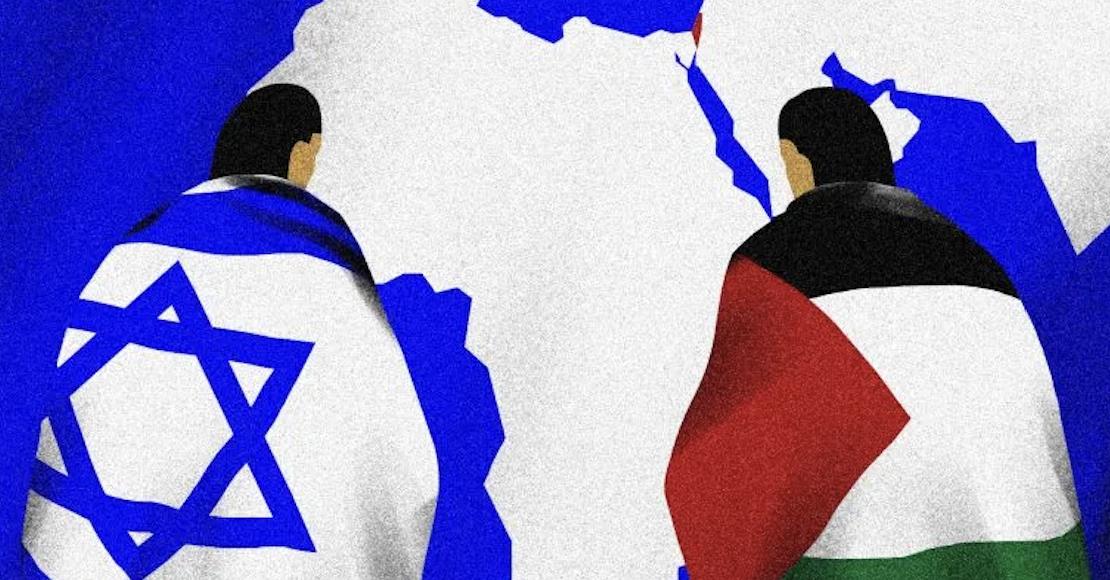
Logic of the Israel-Palestine Conflict and Its Current Impact on Global Financial Markets
TechFlow Selected TechFlow Selected
Logic of the Israel-Palestine Conflict and Its Current Impact on Global Financial Markets
This article will analyze the logic of the conflict and its impact on financial markets.
 Navigating Web3 tides with focused insights
Author: Alfred, LD Capital
On the morning of October 7, 2023, armed groups led by Hamas (the Islamic Resistance Movement) launched Operation "Al-Aqsa Flood," firing over 5,000 rockets into Israeli territory within a short time. Thousands of militants entered Israel from the Gaza Strip via combined arms operations and clashed with Israeli forces. On the same day, Israeli Prime Minister Netanyahu issued a public statement declaring that the country was at war and had begun retaliating. The conflict has lasted for a week and shows signs of escalation, resulting in more than 4,700 deaths. This crisis has refocused global political and economic attention on the Middle East. This article analyzes the logic behind the conflict and its impact on financial markets.
I. The Formation of a Century-Long Conflict Between Palestine and Israel
The history of Palestinians and Israelis in today’s Palestinian territories dates back two to three thousand years. However, the roots of their enduring conflict emerged after the 1917 Balfour Declaration and the United Nations' 1947 “Two-State Solution.” The conflict has now persisted for about a century, during which five Middle East wars and countless smaller clashes have occurred. The core causes stem from opposing claims over land ownership and the historical ambiguities left by British and American involvement in managing the region.
From the perspective of Israeli Jews, the current Palestinian territories are the "Promised Land" granted to them by God as described in their religious text, the Tanakh. Before 1600 BCE, the Israelites lived in Canaan (* present-day Palestine). A famine later drove them to Egypt, where they were enslaved. Around 1250 BCE, Moses led the Israelites back to Canaan to rebuild their homeland—an event known as the Exodus. Around 1000 BCE, the twelve tribes of Israel unified and established the Kingdom of Israel. The northern kingdom was later conquered by the Assyrians, while the southern Kingdom of Judah survived and became known as the Jewish people. Subsequently, the Jews were successively ruled by ancient Babylonians and Romans. Around 70 CE, following a failed war against Rome, the entire Jewish population was expelled, marking the beginning of a 2,000-year diaspora. While a small number remained near the Middle East, most migrated across Europe. Nevertheless, Jews have always regarded the Palestinian territories as their ancestral home and divinely promised land.
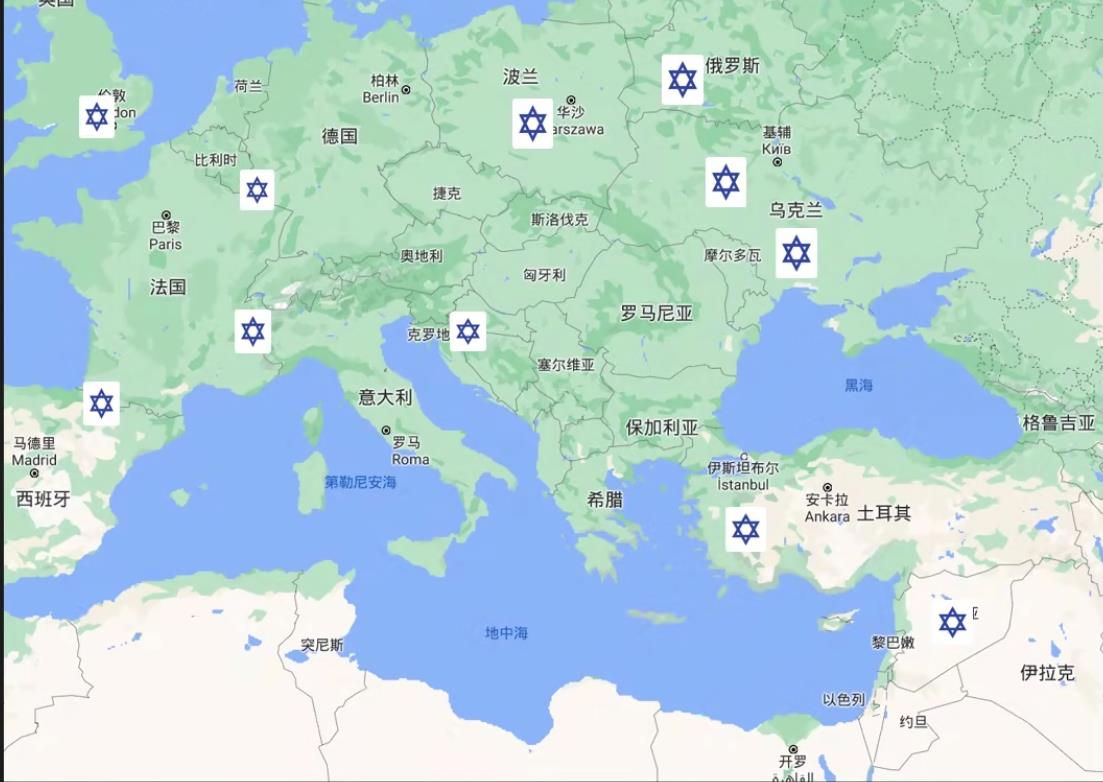
From the perspective of Palestinian Arabs, around 337 CE—while Palestine was still under Roman rule—some Arab populations began settling in the region. After 630 CE, Islam originated and produced its holy scripture, the Quran. Over the next century, Islam rapidly expanded. The Middle East, including Palestine, gradually became predominantly Arab in ethnicity and Muslim in religion. Palestine was subsequently ruled by Turks, Franks, Egyptian Mamluks, Mongols, and finally the Ottoman Empire. Most later rulers adopted Islam, preserving the region's identity as a predominantly Muslim area. Prior to 1882, Jews made up only 8% of Palestine’s population, constituting a minority group.
Around 1800, Zionism—also known as Jewish nationalism—emerged among Jewish communities, calling for Jews worldwide to return to Palestine and rebuild their homeland. Initially, the movement gained little traction due to dispersed Jewish populations and slow information dissemination. However, anti-Jewish pogroms in southern Russia in 1881 accelerated the spread of Zionism, triggering two waves of Jewish immigration. By 1914, Jews accounted for 13.6% of Palestine’s population. Tensions grew between newly arrived Jewish settlers and existing Arab residents. In 1915, Britain’s McMahon sought to overthrow Ottoman rule in the Middle East and reached a military cooperation agreement with Hussein, who desired an independent Arab state, promising support regarding Palestine’s status. However, Britain later made conflicting arrangements with France, planting seeds for future conflict. In 1917, motivated by lobbying efforts and strategic interests in the Middle East, the British government issued the Balfour Declaration, publicly supporting the establishment of a Jewish homeland in Palestine. By 1939, Jews comprised over 30% of the population. Following World War II and the Nazi genocide of Jews, large numbers of survivors migrated to the U.S. and Palestine, pushing for independence. In 1947, the United Nations proposed the “Two-State Solution,” dividing Palestine into two parts: one primarily for Jews (Israel), another primarily for Arabs (Palestine), with Jerusalem designated as an international zone under UN administration.
In 1948, Jews declared the establishment of the State of Israel. However, Arab nations argued that since the 7th century, Palestine had been an Arab-majority territory, and despite prior British promises, subsequent international agreements contradicted earlier assurances. They strongly opposed the creation of a Jewish state in an Arab-majority region. The day after Israel’s founding, neighboring Arab countries launched an attack, sparking the First Middle East War. Israel won, but localized warfare, frequent skirmishes, and disputes over territorial control have continued ever since.
II. Overview and Outlook of the Current Israel-Palestine Conflict
1. Underlying Logic of the Israel-Palestine Conflict
After the Fifth Middle East War, the first peace agreement—the Oslo Accords—was signed between Palestine and Israel in 1993. It allowed for the formation of a temporary Palestinian Authority to negotiate future transfers of administrative control. In 1995, PLO leader Yasser Arafat and Israeli Prime Minister Yitzhak Rabin signed the Oslo II Accord, earning both men the Nobel Peace Prize. However, implementation stalled due to opposition from hardliners on both sides. After the signing of Oslo II, Rabin was assassinated by an Israeli right-wing extremist, and the PLO split into two main factions: Fatah, advocating peaceful negotiation, and Hamas, pursuing further rights through struggle. The Oslo peace process ultimately failed to gain momentum. After 2000, widespread violence erupted again in Palestine, leading to deteriorating relations. Eventually, Hamas took control of the Gaza Strip, while Fatah maintained authority in the West Bank.
Israel’s current Prime Minister is Benjamin Netanyahu of the right-wing Likud Party. He has served three non-consecutive terms as Prime Minister: from 1996 to 1999, 2009 to 2021, and again since 2022—accumulating over 15 years in office, making him the longest-serving Prime Minister since Israel’s founding in 1948. On December 29, 2022, Netanyahu returned for his third term and formed what is considered Israel’s most right-wing cabinet in history. His right-wing policies manifest both externally and internally. Externally, he continuously implements measures that shrink Palestinian living space, intensifying hostility from Palestinians and other Arab nations. Internally, amid rising tensions between secular Israelis and ultra-Orthodox groups, Netanyahu’s government pushed forward judicial reforms in early 2023 aimed at weakening the Supreme Court—Israel’s only institution capable of checking executive power. This sparked fear among leftists and secular citizens and drew criticism from the United States, which had recently shifted its strategic focus away from the Middle East. The reforms triggered 29 consecutive weeks of strikes and protests, leaving Netanyahu under mounting domestic and international pressure throughout the year.
As for Hamas in Palestine, there may be two primary reasons behind initiating this latest round of conflict. First, long-standing grievances rooted in shrinking living space and resource deprivation. Today, the Gaza Strip is often called “the world’s largest open-air prison”—home to 3 million people on just 365 square kilometers. Surrounded by border walls and receiving limited access to electricity and water, Gaza can barely sustain basic life, let alone develop economically. Meanwhile, the West Bank continues to lose land to Israeli settlements and suffers under restrictive policies that hinder normal economic and industrial development. Effectively, Palestine is experiencing a slow death, with Gaza being especially volatile—a powder keg ready to ignite. Second, Hamas’s ability to sustain resistance in such a small territory relies heavily on support from certain Arab interest groups. Thus, decisions to launch attacks likely consider directives and tangible backing from these external patrons. Since September, reports indicate that the U.S. and Saudi Arabia have been advancing a joint defense mechanism. Under this potential deal, Saudi Arabia would recognize Israel and normalize relations, agreeing to increase oil production in 2024 per U.S. demands, in exchange for American military protection. Disrupting this agreement could be a hidden motive behind the recent outbreak of hostilities.
2. Current Development of the Conflict
Hamas has demonstrated unprecedented levels of preparation and organizational capability in this conflict, suggesting thorough planning for escalation and prolonged fighting. Recently, it has also received growing support from various Arab countries and organizations. Beyond Iran, Lebanon, Syria, Iraq, and Egypt, even Saudi Crown Prince Mohammed bin Salman expressed continued Saudi support for Palestine to Palestinian President Mahmoud Abbas. Some nations have already begun delivering supplies to Gaza. Regional resistance groups have taken even more direct and radical stances: Muhammad Qasim, second-in-command of Hezbollah in Lebanon, stated the group is closely monitoring developments and stands ready to act when the time comes—even if others urge restraint, such appeals will have no effect. Iraqi groups such as the Badr Organization, Fatah Alliance, and Hezbollah Brigades, along with Yemen’s Houthi rebels, have warned that U.S. intervention in the Israel-Palestine conflict would escalate it into a regional war.
Israel’s ruling party has adopted an extremely hardline stance, determined to eliminate Hamas entirely. The Israeli parliament has approved Netanyahu’s proposal to form an emergency interim government and activated clauses in the Basic Law concerning “declaring war or launching major military operations,” transferring full authority to a small emergency cabinet consisting of Netanyahu, Defense Minister Yoav Gallant, and Benny Gantz. Netanyahu recently declared that Israel would crush and destroy Hamas, stating every Hamas member would become a “dead man.” Israel has also received broad support from Western governments and major media outlets. The U.S. National Security Council affirmed that Washington can simultaneously support both Ukraine and Israel and has begun sending military aid. The USS Ford aircraft carrier has arrived in the eastern Mediterranean, and a second carrier is en route to provide deterrence. The U.S. Secretary of State and Defense Secretary have both visited Israel to meet with Netanyahu. The UK announced plans to deploy reconnaissance aircraft and two Royal Navy vessels near Israel in the eastern Mediterranean to support Israel.
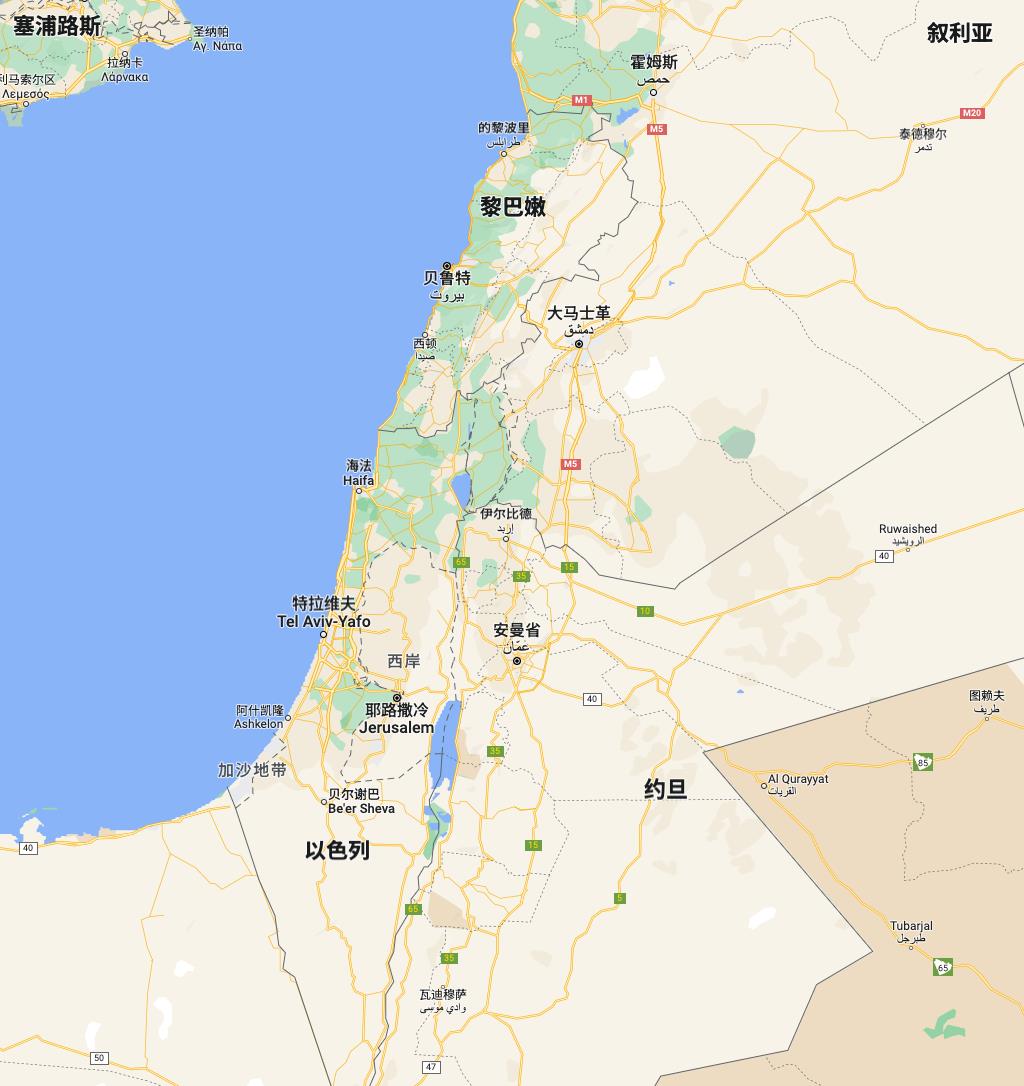
The current scale of the conflict is substantial, with increasing risks of spillover. Casualty figures represent the highest in years. Israel has engaged in actual combat with Hezbollah in the north and Syria in the northeast, conducting airstrikes on Aleppo and Damascus International Airport. Israel recently cut off water and electricity to Gaza, imposing a total blockade, and has mobilized over 400,000 reservists. Armored vehicles and ground troops have massed at the Gaza border, preparing for a ground invasion. In a phone call with Putin, Netanyahu stated Israel would not cease operations in Gaza until Hamas was destroyed. Since the bombing of a hospital in Gaza on October 17, the conflict has intensified further.
3. Future Scenarios of the Conflict
There are three possible trajectories for how the conflict might evolve:
First scenario: After several weeks of intense fighting, both sides agree to negotiations, or Hamas is quickly defeated. In this case, major powers may then advocate for a new peace framework. On October 10, senior Hamas official Musa Abu Marzouk told Al Jazeera in a phone interview that Hamas remains open to ceasefire discussions and all forms of political dialogue. If Hamas’s goal was merely to derail the recent U.S.-Saudi agreements, it may have incentives to enter talks. Israel might accept negotiations once it achieves significant battlefield advantages and receives international mediation, potentially paving the way for a viable peace plan. Alternatively, if Hamas suffers a swift defeat, Palestinians may face an Israeli-imposed ceasefire arrangement.
Second scenario: The conflict evolves into a protracted proxy war lasting months. As hostilities escalate and various regional armed groups intervene to support Hamas—balancing what appears to be overwhelming Israeli dominance—major powers may restrain themselves from direct involvement while continuing to supply resources to their respective proxies. The situation could dynamically shift toward either negotiated settlement or further escalation.
Third scenario: The conflict escalates to extremes, evolving into a full-scale regional war. Should the second scenario unfold, the risk of further escalation increases significantly. With more actors and resources involved, misjudgments become more likely, potentially prompting radical decisions by any side. If any major power directly enters the war, the conflict would dramatically escalate into a regional conflagration.
Given the vast asymmetry in military strength and negotiation leverage between Hamas and Israel, whether the conflict escalates now hinges largely on Israel. If, after gaining an advantage, Israel eases restrictions on Palestinian living conditions and becomes willing to accept the 1947 Two-State Solution advocated by the UN and mainstream nations, the Israel-Palestine issue could find a favorable resolution. Implementing the Two-State Solution would greatly improve the Palestinian situation, while Israel could resolve regional instability through compromise. However, Israel is currently governed by an extreme right-wing party. Netanyahu needs to maintain a common external enemy to buy time for resolving internal issues. Given his government’s current rhetoric and actions—which are highly aggressive—if Israel launches a devastating attack on Hamas and the Gaza Strip, the conflict will likely escalate toward catastrophe. At present, the second scenario appears most probable.
III. Historical Review of Wars’ Impact on Financial Markets
(1) Russia-Ukraine Conflict
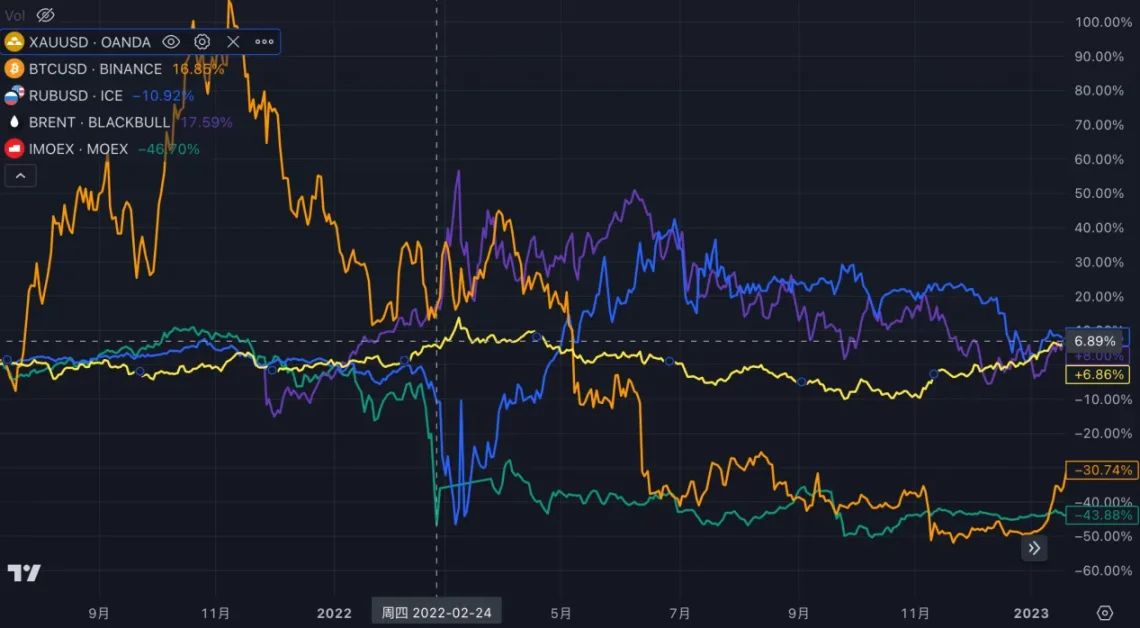
During the first month of the Russia-Ukraine conflict in February 2022, gold, crude oil, and Bitcoin prices rose to varying degrees. Brent crude peaked at $137 per barrel, gold reached $2,068, and Bitcoin climbed to $47,888. Russian stock indices fell sharply. The ruble depreciated significantly due to sanctions including expulsion from SWIFT and freezing of foreign reserves by Western nations. On March 15, the Federal Reserve began raising interest rates, after which Bitcoin prices started a sustained decline, revealing high sensitivity to interest rates and liquidity. Crude oil and gold prices remained elevated for several months. The ruble staged a V-shaped recovery after Russia introduced a ruble settlement decree requiring “unfriendly” countries trading gas with Russia to open ruble accounts and conduct transactions in rubles—or face contract default—leading to a sharp rebound in the currency’s value after initial collapse.
(2) Iraq War
In October 2002, the U.S. Congress authorized President George W. Bush to launch any military action against Iraq. When Bush issued an ultimatum to Iraqi President Saddam Hussein, financial markets sensed brewing conflict—crude oil and gold initially rose before falling. On March 20, 2003, the U.S., UK, Australia, and Poland launched bombing campaigns against Iraq, officially starting the Iraq War. This nearly decade-long war fueled ongoing conflicts across the Middle East, driving continuous increases in oil prices until the 2008 financial crisis.
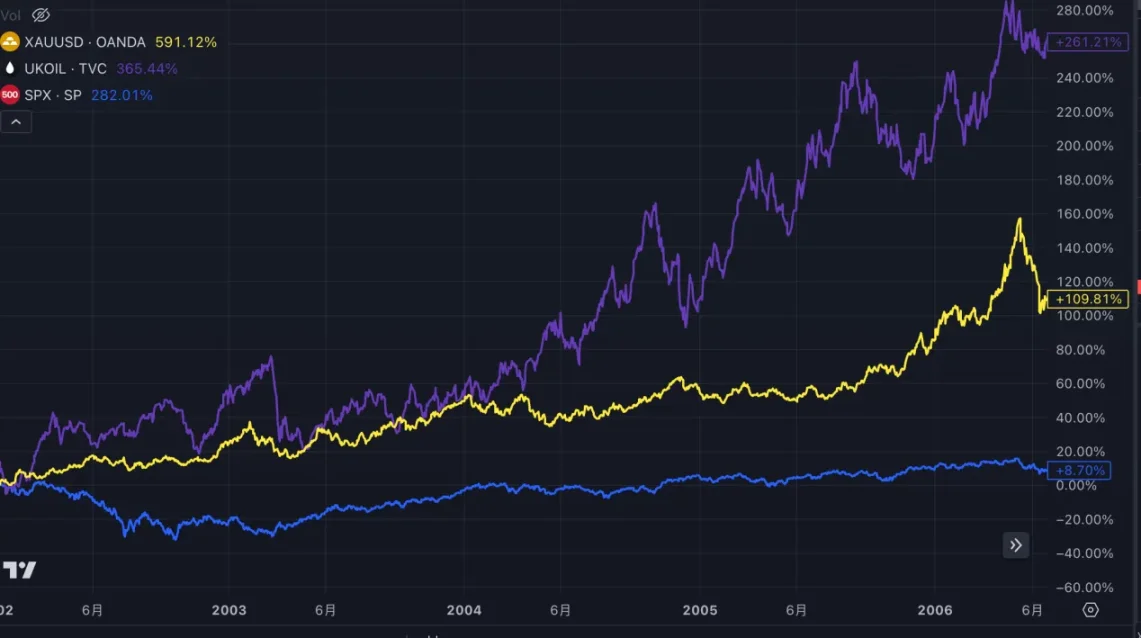
(3) Fourth Middle East War
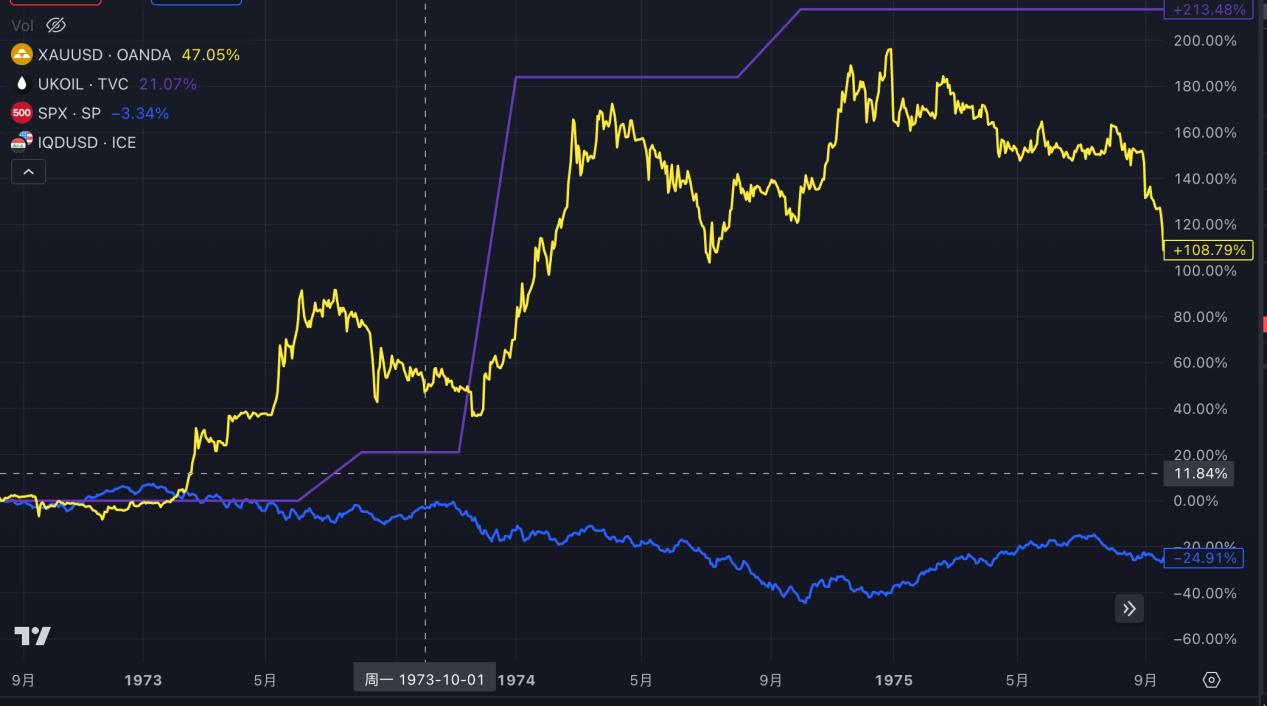
In the six months following the 1973 Fourth Middle East War, crude oil and gold prices surged significantly. The war prompted oil-producing Middle Eastern nations led by Saudi Arabia to impose an oil embargo protesting U.S. support for Israel. Over the next three months, oil prices nearly quadrupled and remained high even after the conflict ended. The U.S. stock market, far from the battlefield, experienced mild declines, but overall negative impacts were limited.
IV. Fluctuations in the International Crude Oil Market Due to This Conflict
As the Middle East accounts for over one-fifth of global oil supply, geopolitical risks stemming from the Israel-Palestine conflict are of particular concern. Since Palestine itself is not a traditional oil-producing region, the impact on oil prices would be limited unless the conflict expands to involve OPEC member states, which could drive prices sharply higher.
1. Crude Oil Market Conditions Before the Conflict
On September 5, 2023, Saudi Arabia and Russia extended their previous oil production cut agreement. Saudi Arabia unilaterally prolonged its voluntary reduction of 1 million barrels per day for an additional three months into Q4 2023. Russia also decided to extend its September export reduction of 300,000 barrels per day through year-end.
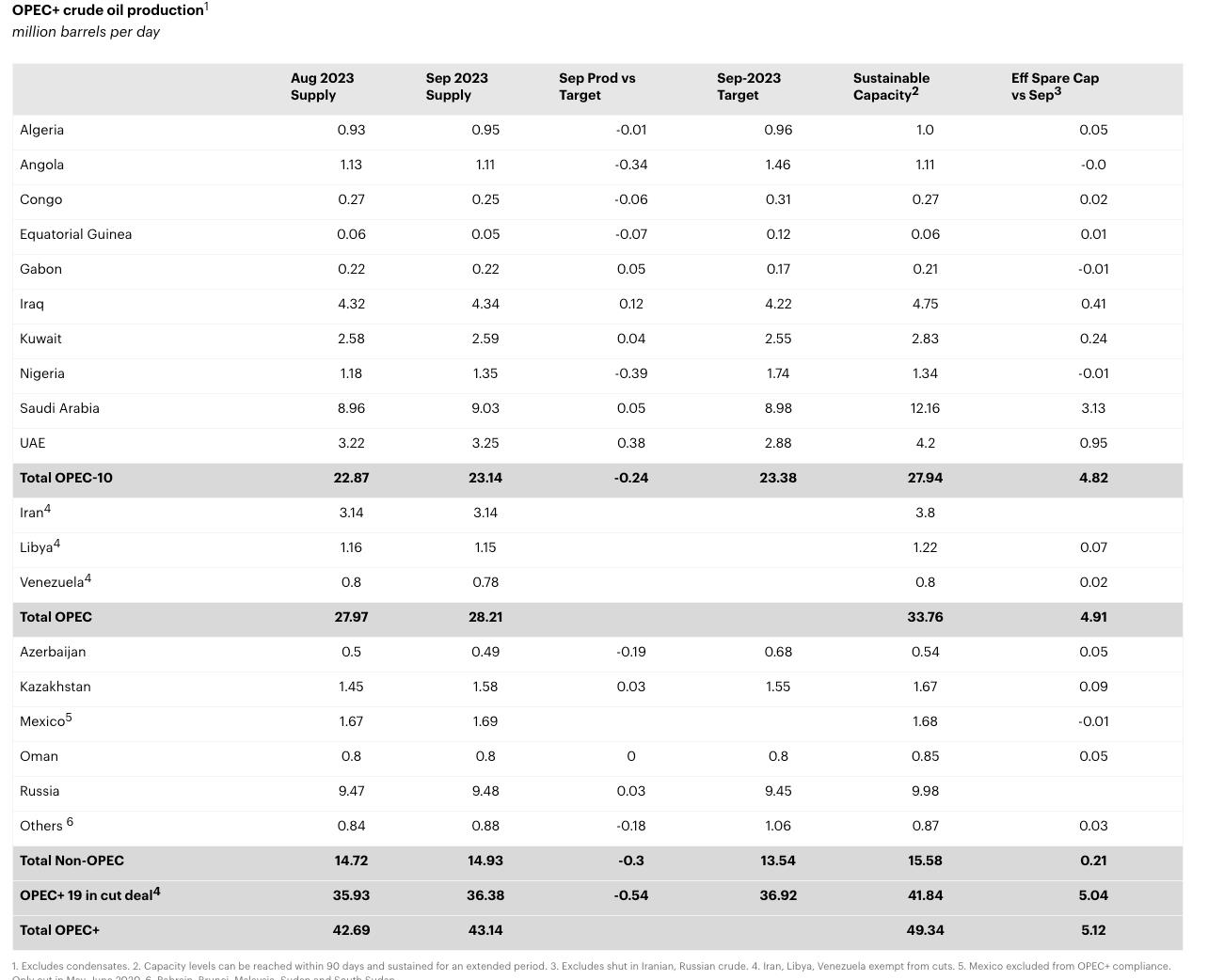
According to IEA data, OPEC+ production cuts continued to take effect. In September 2023, total crude output from OPEC+ compliance countries stood at 36.38 million barrels per day, below the target of 36.92 million. Non-OPEC countries produced 14.94 million barrels per day, lower than the 15.34 million target. Global oil demand growth forecasts were raised from 2.2 million to 2.3 million barrels per day for 2023.
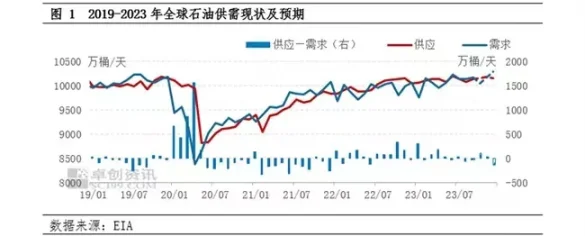
Overall, global crude supply in September 2023 was 101.34 million barrels per day, while demand reached 101.63 million barrels per day—indicating a supply deficit. Looking ahead to Q4 2023, projected supply is 101.56 million bpd versus expected demand of 101.62 million bpd, suggesting continued tightness. This supply shortfall could worsen if the Israel-Palestine conflict expands, pushing oil prices higher.
2. Key Variables Influencing Current Oil Prices
Suspension of the U.S.-Saudi Joint Defense Agreement. Previously, Saudi Arabia signaled willingness to boost oil output to facilitate a U.S.-Saudi defense pact. Riyadh stated that production decisions depend on market conditions, expressing readiness to act in early 2024 if prices remain high. U.S. and Saudi officials said the move aims to promote normalization between Saudi Arabia and Israel. Under the proposed deal, Saudi Arabia would recognize Israel in exchange for a U.S. security guarantee. For the U.S., this would help reduce inflation via lower oil prices and benefit Biden’s re-election campaign. However, the Israel-Palestine conflict makes Israeli-Saudi normalization impossible for now, temporarily shelving the agreement.
Uncertainty surrounding Iranian oil output. Unlike Saudi Arabia and Russia, Iran has steadily increased oil production since late 2022. Earlier projections suggested Iran could become the world’s second-largest oil supplier after the U.S. in 2023. But with Iran firmly supporting Palestine in this conflict, it may face renewed U.S. sanctions on oil exports.
Potential oil production cuts by Gulf states if the conflict escalates. Gulf oil producers are predominantly Arab nations sympathetic to Palestine. If the conflict reaches the third stage and Gulf states are drawn into war, global oil prices would almost certainly exceed $100 per barrel. Currently, this scenario remains unlikely.
3. Current Oil Price Situation
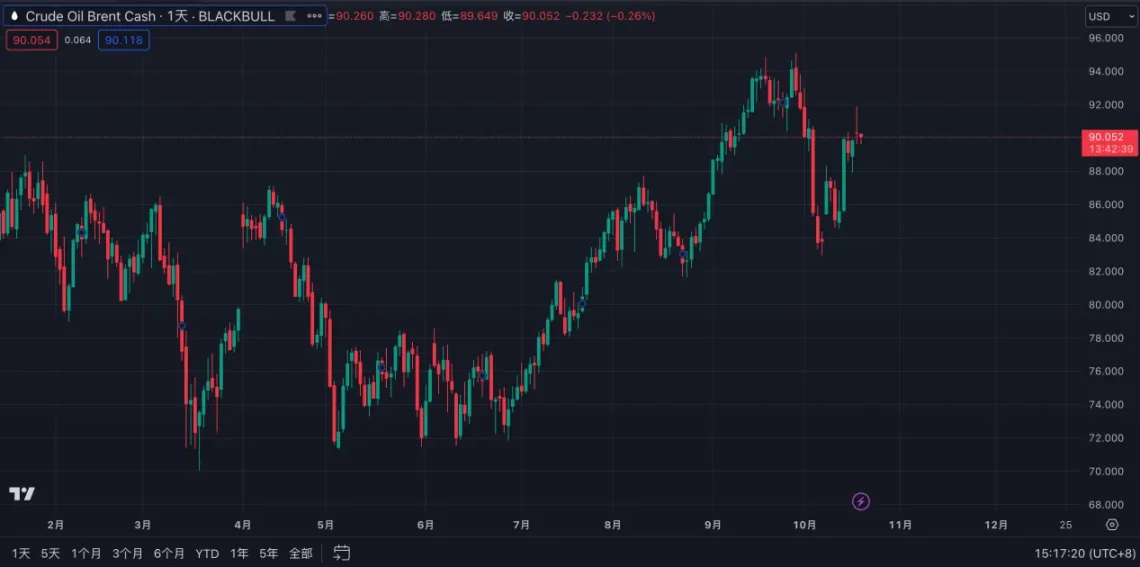
On October 7, the day the conflict erupted, both Brent and WTI crude opened sharply higher. Over the next two days, markets grew optimistic, believing the conflict would not significantly affect other oil producers, causing prices to retreat. However, on October 13, as signs of intensification emerged, markets repriced expectations, sending oil prices significantly upward and recovering losses from early October. Currently, Brent trades around $90 and WTI near $86 per barrel.
V. Impact on Israel and International Financial Markets
Recent Israel-Palestine hostilities have negatively affected stock markets in Israel and parts of the Middle East to varying degrees. The Israeli currency has suffered significant depreciation. European and U.S. markets have so far remained largely unaffected unless the conflict escalates further.
1. Stock Markets
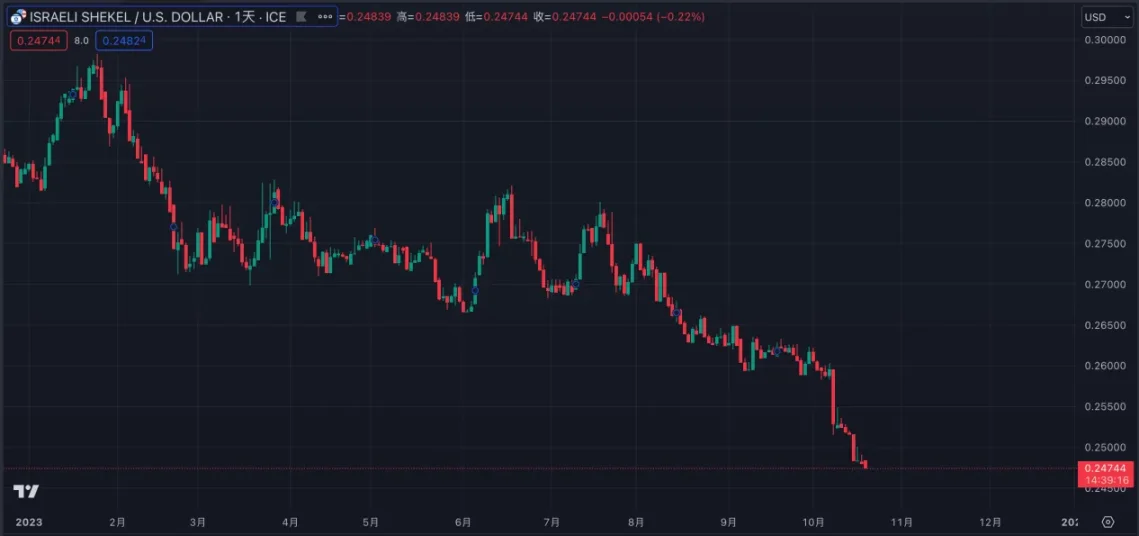
Since the outbreak of conflict on October 7, Israel’s TA35 Index has seen the largest drop, declining approximately 8%. Egypt’s EGX30 Index initially fell but later rebounded above pre-conflict levels. Major stock indices in neighboring countries such as Saudi Arabia, UAE, and Lebanon have declined to varying degrees. U.S. and EU major indices have not yet shown significant effects. So far, negative impacts on equities are concentrated mainly in Israel and select Middle Eastern nations.
2. Currency Markets
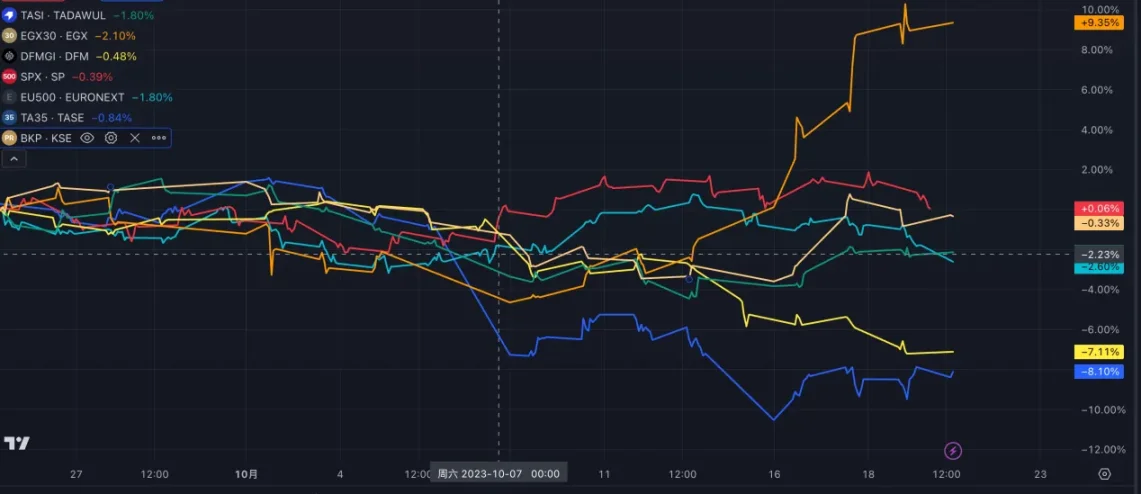
Israel’s primary currency is the New Shekel. Palestine does not have an independent currency and uses the Israeli New Shekel and Jordanian Dinar in daily transactions. Since the conflict began, the Israeli shekel has depreciated significantly—by about 4%. Recently, the Bank of Israel stated it would not defend any specific exchange rate level for the New Shekel.
3. Others
Tel Aviv, Israel, renowned for its concentration of scientific talent and tech companies, is often dubbed the “Silicon Valley of the Middle East” and the “City of Innovation.” However, following the outbreak of the Israel-Palestine conflict, many skilled professionals were drafted into military service, negatively impacting numerous tech company operations. Recently, NVIDIA canceled the in-person edition of its annual AI Summit originally scheduled for October 15–16 in Tel Aviv. Originally, NVIDIA planned to unveil its latest advancements in artificial intelligence at the summit, with CEO Jensen Huang set to deliver a keynote speech.
Additionally, on October 12, S&P Global Market Intelligence reported that Israel’s 5-year credit default swap (CDS) widened to 103 basis points—the highest level in nearly a decade.
VI. Changes in Gold, Bitcoin, and the Crypto Market
1. Gold
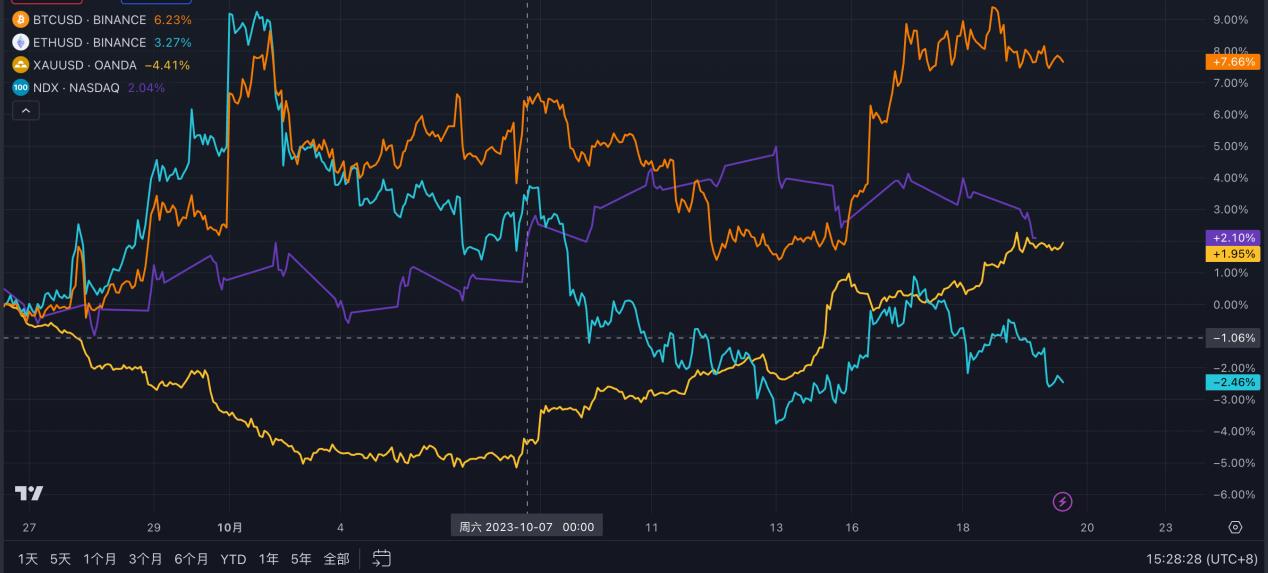
As a traditional safe-haven asset, gold tends to rise during major wars and conflicts. Since the outbreak of the Israel-Palestine conflict, gold prices have steadily climbed, recording their largest single-day gain of 3.4% on October 13. Although prices pulled back slightly at the start of the week, they have risen cumulatively by 5.5%, making gold the most significantly outperforming asset amid this crisis.
2. Overall Cryptocurrency Market
Bitcoin was previously considered “digital gold” and believed to possess strong safe-haven characteristics. However, during this Israel-Palestine conflict, BTC has not exhibited significant price gains like gold. Instead, it has followed an independent downward trend, briefly surging and then falling again due to fake news about approval of a spot Bitcoin ETF. This reflects BTC’s tendency to behave more like a risk asset during interest rate hike cycles.
3. Israeli and Islamic Crypto Projects
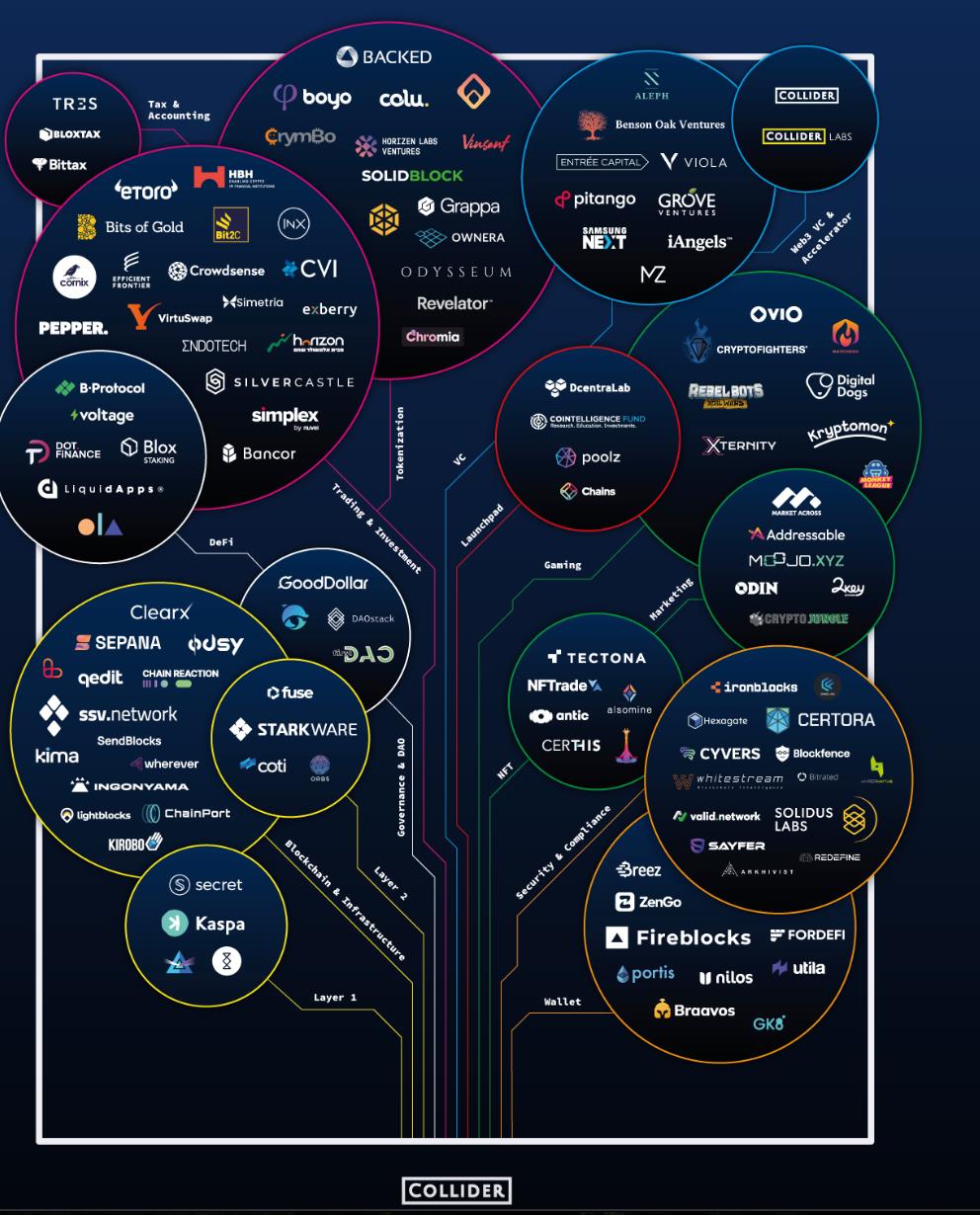
Israel boasts exceptionally high concentrations of high-tech talent and firms—representing just 0.1% of the global population but producing some of the world’s most successful startups, ranking seventh globally in unicorn count. This strength extends beyond advanced manufacturing and internet sectors into Web3. Israel is home to leading academics such as Eli Ben Sasson, Shafi Goldwasser, Yehuda Lindell, Aviv Zohar, and Eran Tromer, and hosts pioneering technologies like MPC and ZKP. Notable crypto projects include Starkware, Fireblocks, Kaspa, Secret Network, Bancor, and SSV Network.
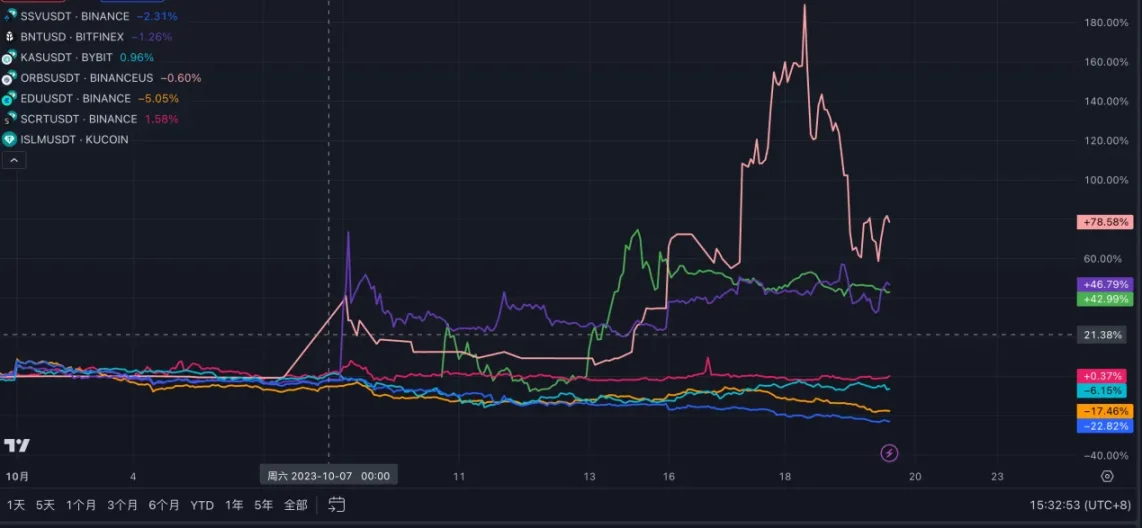
Since the conflict began, some Israeli crypto projects have suffered negative impacts and price declines. For example, on October 11, Alon Muroch, Israeli-born founder of Ethereum staking infrastructure project SSV Network, announced on X that he had been called to active duty. While the team says operations continue normally, the SSV token has dropped significantly—down about 15% since the conflict began. BNT and ORBS have experienced sharp volatility recently due to pronounced market maker and whale activity. Most other Israeli-linked tokens have declined to varying degrees. Due to Israel’s unique conscription system, members of many tech firms and crypto projects may be called up as reservists and directly or indirectly participate in military operations during escalations. Crypto projects headquartered or primarily staffed in Israel may face further downside risks.
Notably, on October 10, the Islamic crypto project Islamic Coin launched its ISLM token and distributed community airdrops. The project claims to operate a Sharia-compliant ecosystem on the Haqq Network blockchain, aiming to enable over 1.8 billion Muslims to access digital finance without compromising values or beliefs. The token spiked upon launch before correcting, and has recently held at elevated levels. If the conflict widens and broader participation from the Islamic world follows, it could positively influence the token’s price.
4. Hamas and Crypto Financing
Recent reports from TRM Labs indicate that Hamas is the first Middle Eastern armed group to adopt cryptocurrency for fundraising. Elliptic, a blockchain research firm, analyzed that digital wallets linked to the Palestinian Islamic Jihad received $93 million in cryptocurrency between August 2021 and June of last year. BitOK research also found approximately $41 million flowed into wallets associated with Hamas during the same period, though it remains unclear whether these funds financed the recent attacks on Israel. However, Ari Redbord, head of legal and government affairs at blockchain intelligence firm TRM Labs, noted that cryptocurrencies constitute only a small portion of Hamas’s fundraising strategy, which is primarily state-funded. Previously, Israel stated its domestic law enforcement agencies had collaborated with Binance to identify and seize funds from related accounts, with confiscated assets directed to the Israeli treasury.
VII. Conclusion
1. Three Possible Trajectories for the Israel-Palestine Conflict: First, after several weeks of fighting, both sides agree to negotiate or Hamas is swiftly defeated, opening space for major powers to promote a new peace framework. Second, the conflict evolves into a broader proxy war lasting months, with regional armed groups intervening to counterbalance Israel’s dominance, while major powers refrain from direct involvement to protect their own interests. Third, the conflict escalates to extremes, becoming a full-scale regional war. The second scenario increases the likelihood of further escalation—more participants and resources raise the risk of miscalculation, potentially triggering radical moves. If any major power joins the war, it would escalate catastrophically.
2. Whether the conflict escalates depends critically on Israeli Prime Minister Netanyahu’s stance toward Hamas. Although the current conflict remains confined to Palestinian territories, Israel has displayed extreme right-wing attitudes and actions. The U.S., Iran, and other powers have begun preparing necessary support for Israel’s offensive into Gaza—the U.S. has deployed an aircraft carrier and 2,000 troops to the eastern Mediterranean. Direct border clashes have already occurred between Israel and Lebanon and Syria. The probability of escalation is growing, making the second or even third scenario increasingly plausible.
3. Financial Market Impacts Under Each Scenario: In the first scenario, oil, gold, and stock prices affected by the conflict would quickly revert to pre-crisis levels. If a stable ceasefire is achieved, regional equity assets could see further upside. In the second scenario, oil may trade between $85–$100 per barrel and gold between $1,900–$2,000, creating short-term trading opportunities tied to conflict headlines. Middle Eastern stock markets and the Israeli shekel would remain depressed. The broader crypto market might see limited impact, though BTC currently offers the highest risk-reward ratio among global assets. In the third scenario, oil prices would surge past $100—and possibly reach $150—gold could break $2,000, Middle Eastern equities and currencies of involved nations would plummet, the broader crypto market might rise due to capital flight from the region, while crypto tokens linked to Israeli-based teams would likely fall sharply.
Join TechFlow official community to stay tuned
Telegram:https://t.me/TechFlowDaily
X (Twitter):https://x.com/TechFlowPost
X (Twitter) EN:https://x.com/BlockFlow_News
 Cycle Capital Research









