How Stablecoins Accelerate Dollarization in the Global South?
TechFlow Selected TechFlow Selected
How Stablecoins Accelerate Dollarization in the Global South?
This shift toward dollarization, where locals prefer assets like USDC over fiat currency, has implications far beyond financial convenience.
 Navigating Web3 tides with focused insights
Author: ALEX TAPSCOTT
Compiled by: TechFlow
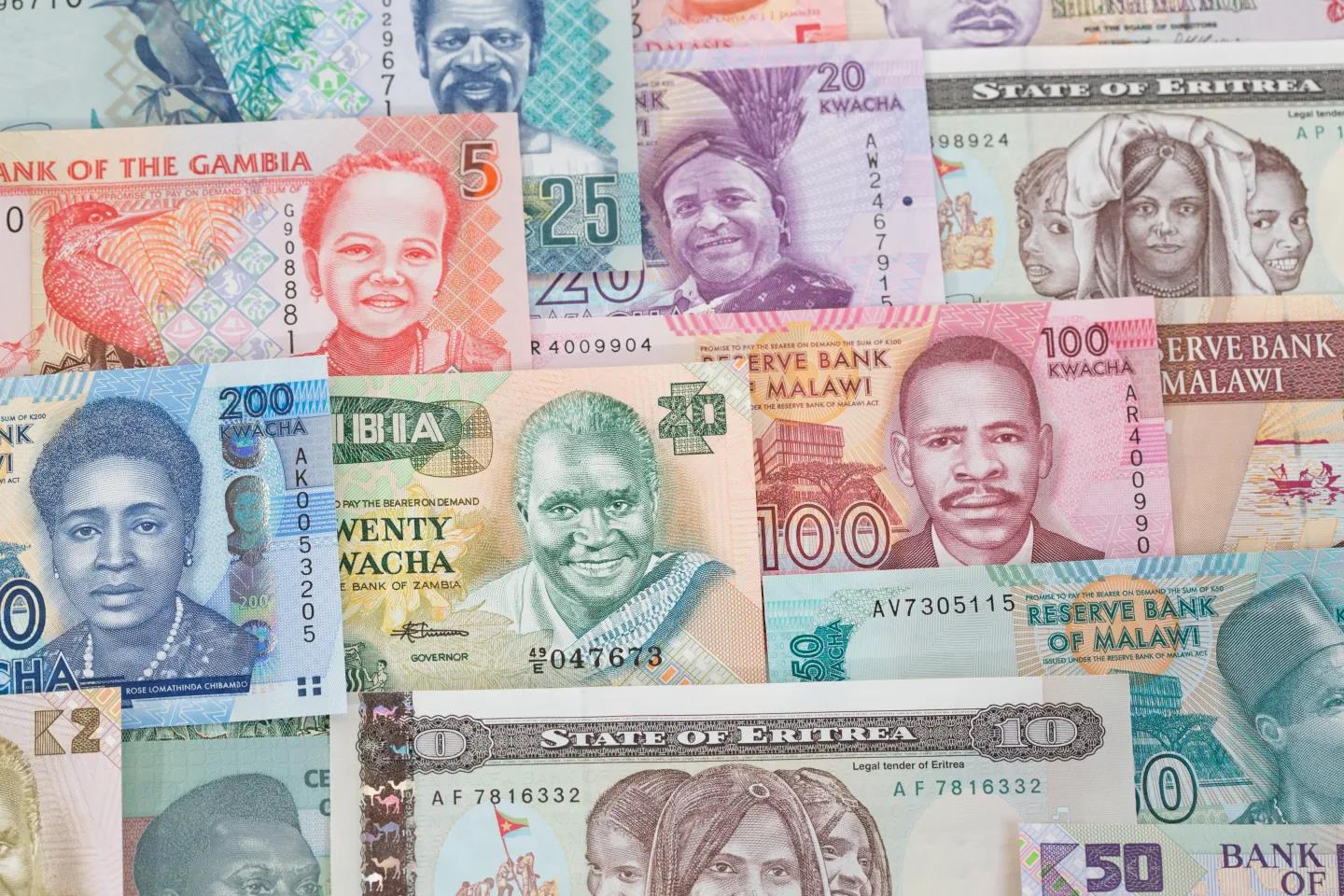
In today's highly interconnected world, cross-border capital flows can either serve as a lifeline or a bottleneck for entire nations. For decades, the global financial system has favored privileged elites, leaving many countries in the Global South trapped in cycles of economic inequality and resulting political instability. However, Web3 technologies are now bypassing legacy systems with new tools for financial inclusion and economic empowerment. Digital currencies like Bitcoin and USDC are building bridges—and quietly transforming lives.
Consider this: sending money from Nigeria to Ghana via traditional remittance channels often takes longer and costs more than physically driving cash across the border. Why? Because conventional wire transfers route through New York and London before returning to Africa.
Innovators like Dickson Nsofor of Nigeria have recognized the need for a better way. Four years ago, Nsofor founded Korapay, a pan-African payments infrastructure company. He views blockchain and cryptocurrency not as speculative assets, but as mediums for transactions. This insight led him to build a platform that leverages these Web3 innovations for cross-border payments.
Today, Korapay is Nigeria’s largest business-to-business cross-border payment provider. It processes billions of dollars in payments using Bitcoin, USDC, and other crypto assets, while settling transactions in traditional fiat currencies. Most remarkably, many multinational corporations use Korapay’s services to convert Nigerian Naira into U.S. dollars—without even realizing that cryptocurrencies and stablecoins are being used behind the scenes. This demonstrates how innovators like Nsofor are rebuilding the engine of traditional finance from the ground up.
Why are stablecoins like USDC gaining such popularity in Africa? The answer lies in broader contexts of economic disparity, currency instability, and a deep desire for financial independence.
Take Nigeria, where over 40% of the population is under the age of 15. Young people see cryptocurrency as a way to transcend the limitations of local currencies. As mobile internet penetration grows, freelancers and gig workers increasingly choose to be paid in digital assets—whose value holds up better than local fiat currencies vulnerable to inflation and market depreciation. In interviews, Nsofor told me that all his young Nigerian employees prefer to receive salaries in USDC, USDT, or even Bitcoin rather than Nigerian Naira, because these assets serve as better stores of value and, in the case of stablecoins, offer greater practicality.
This shift toward dollarization—where locals favor assets like USDC over fiat—is about far more than financial convenience. It represents a profound transformation in economic opportunity: individuals can now work for internet-native organizations anywhere in the world and accumulate wealth in stable digital assets.
Whether this kind of dollarization is a net positive for the world remains unclear. The collapse of local currencies under dollarization could further destabilize fragile governments in volatile regions. For example, Nigeria’s Central Bank initially took a hostile stance toward cryptocurrencies, even proposing an outright ban. Although its leadership has recently signaled intentions to develop a regulatory framework for stablecoins and tokens, the consequences remain uncertain. Last year, Reza Baqir, then governor of Pakistan’s central bank, said at a gathering of business and government leaders in Saudi Arabia that his institution was considering a total ban on all digital assets, fearing dollarization would undermine his bank’s control over monetary policy and interest rates—and that he was willing to take radical measures. Yet the ban never materialized, and Baqir no longer holds that position.
Despite these challenges, adoption of digital assets continues to grow. Even the United Nations High Commissioner for Refugees has adopted blockchain technology to distribute digital cash in war-affected regions like Ukraine. This not only protects funds but also highlights the broader appeal of digital assets.
The adoption of cryptocurrency and blockchain technology in Africa and beyond is not merely a financial trend: it began as a survival strategy, and has evolved into a platform for economic flourishing. Above all, it stands as a testament to human resilience and innovative spirit in the Global South. Let us recognize that Web3 holds the potential to create a more inclusive and equitable financial future for all.
Join TechFlow official community to stay tuned
Telegram:https://t.me/TechFlowDaily
X (Twitter):https://x.com/TechFlowPost
X (Twitter) EN:https://x.com/BlockFlow_News
 @FortuneMagazine