









Chainalysis Report: Cryptocurrency Adoption in Sub-Saharan Africa
TechFlow Selected TechFlow Selected
Chainalysis Report: Cryptocurrency Adoption in Sub-Saharan Africa
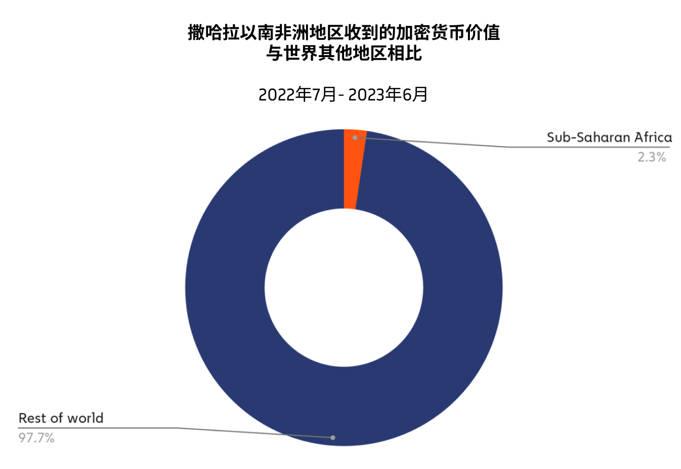
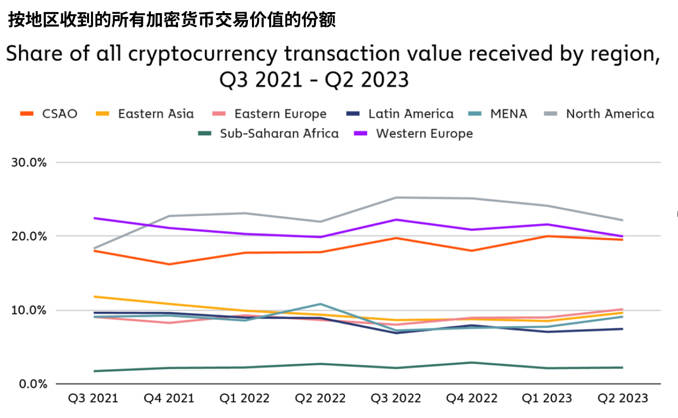
Sub-Saharan Africa is the smallest crypto economy, accounting for 2.3% of global transaction volume from July 2022 to June 2023.
 Navigating Web3 tides with focused insights
Author: Chainalysis
Translation: vand, Web3 Institute for Asia, Africa and Latin America
Similar to previous years, Sub-Saharan Africa remains the smallest cryptocurrency economy, accounting for 2.3% of global transaction volume between July 2022 and June 2023. During this period, the region is estimated to have received $117.1 billion in on-chain value.
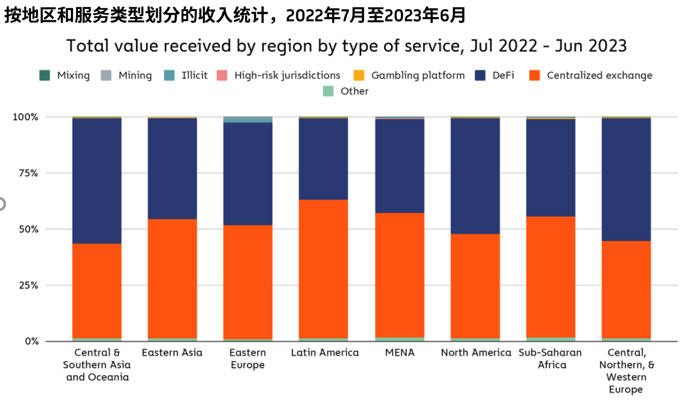
When examining cumulative transaction value, centralized exchanges are the most commonly used platform type, contributing over half of all transaction volume. The cryptocurrency market in Sub-Saharan Africa also features more small-value transactions than most other regions. Exchanges with transaction values under $1 million account for a larger share compared to other regions.
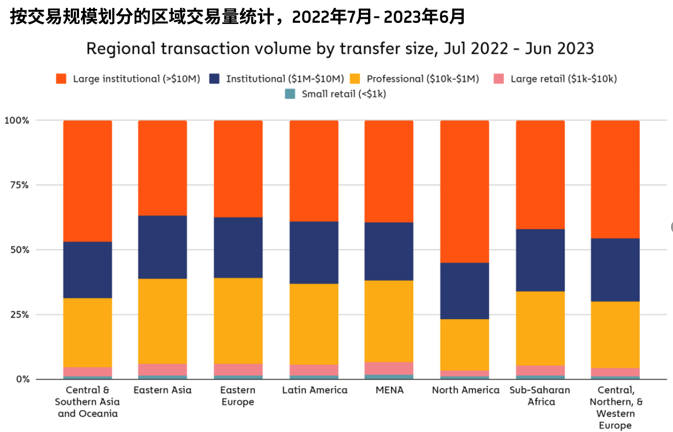
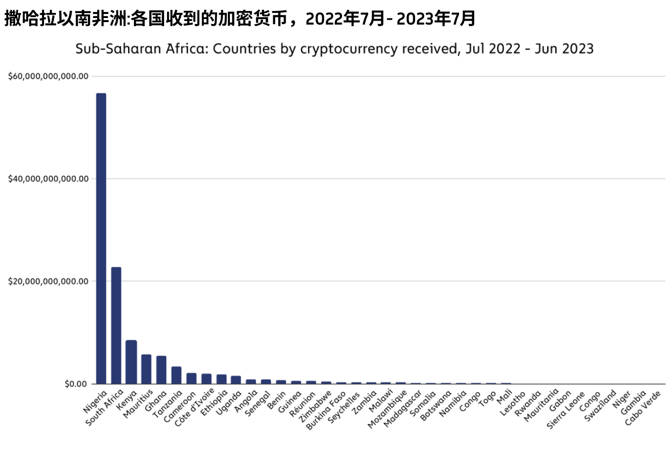
Although Sub-Saharan Africa's cryptocurrency transaction volume is relatively low, careful analysis reveals that cryptocurrency penetration is quite high, becoming an important part of daily life for many residents. No country exemplifies this better than Nigeria, which ranks second globally in the Global Crypto Adoption Index.
Citizens Turn to Bitcoin and Dollar-Pegged Stablecoins to Hedge Against Inflation and Debt Crises
Nowhere is BTC more dominant than in Sub-Saharan Africa, where it accounts for a higher share of transaction volume than in any other region.
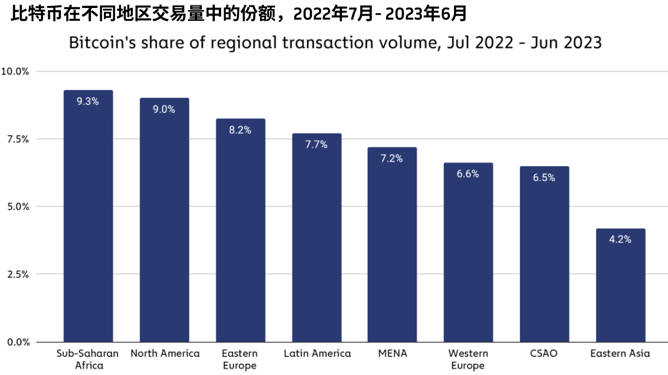
Residents in Sub-Saharan Africa may be turning to so-called "digital gold" (BTC) as an alternative means of storing monetary value.
Many countries in the region face rising inflation and debt crises, making cryptocurrencies an attractive store of value—for preserving savings and achieving greater financial freedom.
For example, in Ghana, inflation rose for 13 consecutive months, reaching a 20-year high of 29.8% in June 2022. With relatively limited financial opportunities, many Ghanaians have adopted Bitcoin. Nigeria, Kenya, and South Africa have faced similar challenges in recent years, and widespread adoption of cryptocurrency among their populations is no coincidence of market trends.
Local experts tell us that some market participants have shifted from Bitcoin to stablecoins, which are far less volatile than BTC, especially while Bitcoin prices remain well below historical highs.
Moyo Sodipo, co-founder and CPO of Nigeria-based crypto exchange Busha, said: "When Busha was rapidly growing in 2019, Bitcoin was very popular. Many people initially didn’t accept stablecoins. But now in a bear market, people want more options between Bitcoin and stablecoins. However, market changes haven't suppressed economic activity. People continue seeking ways to hedge against naira depreciation and the ongoing recession since COVID."
Spotlight: Nigeria Is Africa’s Largest Cryptocurrency Economy
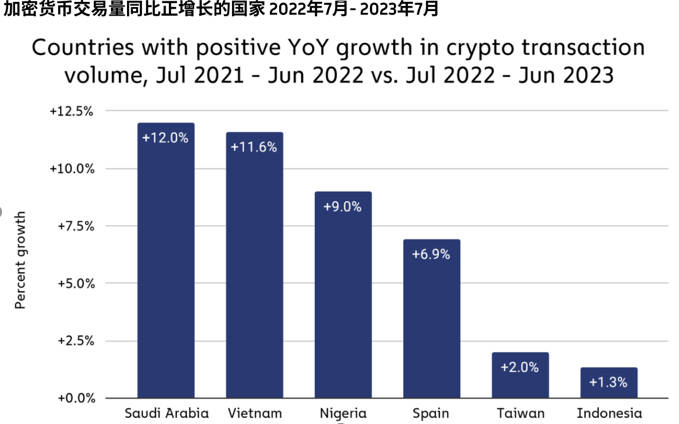
Nigeria, with the largest population and economy in Sub-Saharan Africa, is also the region’s largest cryptocurrency economy. Despite entering a bear market, Nigeria’s crypto economy continues to grow, maintaining positive year-on-year growth in transaction volume. Its 9.0% growth rate ranks third among these six countries.
Cryptocurrency has become one solution to Nigeria’s economic problems. Since 2016, Nigeria has experienced two major recessions, political instability, the impact of COVID-19, and oil price crashes. As a result, Nigerians of all ages face high unemployment—over 20 million were job-seeking in 2021—with many migrating abroad.
The recent naira crisis has intensified these issues. In 2022, the Central Bank of Nigeria announced plans to redesign the naira and issue new banknotes to combat inflation and counterfeiting, and to control the amount of currency in circulation.
The resulting cash shortage caused difficulties for the unbanked and created uncertainty about the value of old notes. This unstable economic environment encouraged many citizens to seek financial alternatives, creating opportunities for cryptocurrency to expand its market presence.
These shifts are reflected in data: as the naira’s value declined, public interest in crypto generally increased. Peaks around May and November 2022 may reflect users taking advantage of volatility triggered by the TerraLuna and FTX collapses, rather than local economic conditions.
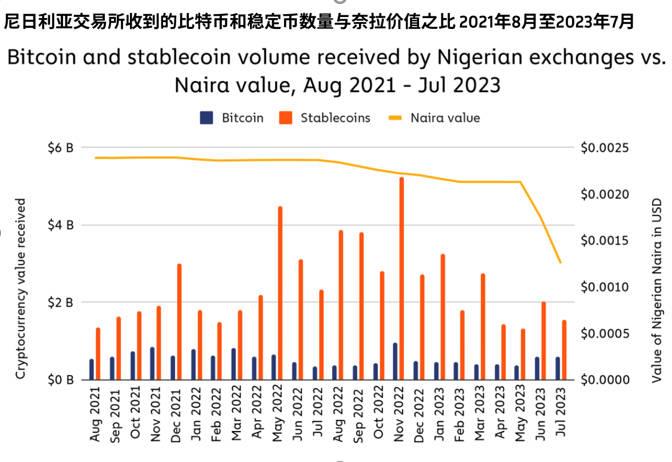
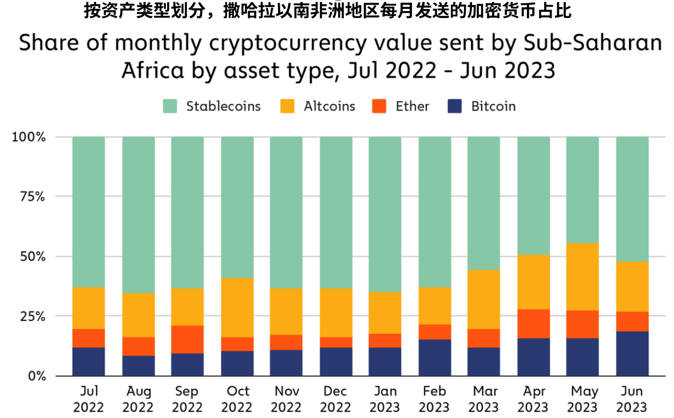
Meanwhile, interest in altcoins in the region has been increasing.
Moyo Sodipo explained: "During market black swan events, we see buying frenzies. When a new memecoin like Dogecoin or Shiba appears, it triggers waves of purchases. There will always be people interested in a token that seems capable of earning them thousands of dollars." The chart below shows rising altcoin activity alongside the monthly proportion of stablecoin value.
Improved Regulatory Frameworks Pave the Way for Mass Adoption
Regulatory improvements are bringing new developments to exchanges in Sub-Saharan Africa. At the end of 2022, the Financial Sector Conduct Authority (FSCA) announced a licensing regime for crypto businesses and declared crypto assets as financial products, providing stronger legal backing and enabling financial investigators to better combat illegal activities in the sector.
This proactive stance has reduced regulatory uncertainty and encouraged digital token trading. Indeed, citizens in the country have traded billions of dollars worth of digital currencies in recent years.
According to Marius, Luno’s regional manager for Africa, “Currently, the primary use case for cryptocurrency in South Africa revolves around investment. Over the past three years, the number of customers holding crypto on Luno has increased by nearly 50%.” He added: “In well-regulated markets, we tend to see responsible industry development because everything operates in the open. Interactions between regulators and exchanges become more transparent. But regardless of regulation, the crypto industry will continue to grow. Establishing rules to protect consumers and create a safer operating environment benefits everyone.”
The Central Bank of Kenya (CBK) has also been exploring cryptocurrencies, issuing statements on potential volatility risks as leaders consider launching a CBDC. In early 2023, the government proposed a bill advocating consistent securities definitions for digital assets and record-keeping by licensed crypto traders. Around the same time, the Nigerian government approved a national blockchain policy to integrate blockchain into the legal framework, emphasizing that blockchain adoption could benefit the nation.
In Mauritius, where crypto transaction volumes lag behind Kenya, the 2021 Virtual Asset and Initial Token Offering Services Act provided comprehensive legislative support for token issuance. The country is committed to consumer protection, promoting crypto adoption, and attracting traders, while other countries in the region have issued explicit bans on certain crypto-related activities.
A series of recent policy announcements have helped foster the development of the local cryptocurrency industry in Africa. As noted above, many of the continent’s most significant crypto regulations were introduced in early 2023 by its largest countries. The chart below compares the usage of local, homegrown cryptocurrency exchanges across Sub-Saharan Africa.
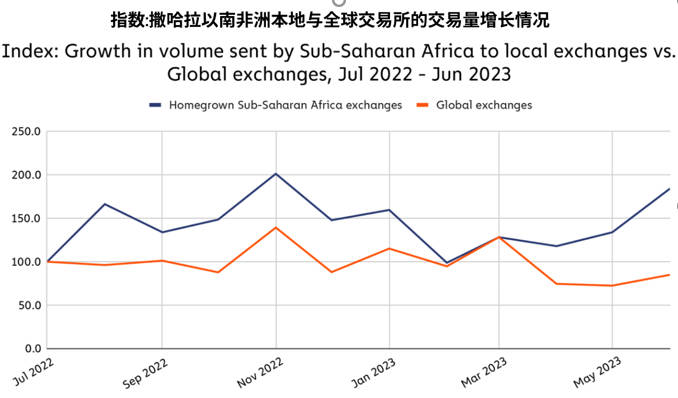
Supportive policy stances, consumer confidence, and a secure environment created by compliant local crypto enterprises partially explain why African-based exchanges have grown faster in the region than international competitors since early 2023.
What’s Next for Sub-Saharan Africa’s Cryptocurrency Economy?
The future of cryptocurrency looks bright. Major countries like Nigeria have already become global leaders in crypto adoption, and rising transparency at the local level is driving growth. Crypto operators will leverage this momentum to enter the market. Years of studying emerging markets have taught us: while residents in wealthier nations may trade more cryptocurrency in volume than those in emerging markets, the latter demonstrate greater everyday demand for crypto—a reality closely aligned with Bitcoin’s original vision and that of the entire industry.
Join TechFlow official community to stay tuned
Telegram:https://t.me/TechFlowDaily
X (Twitter):https://x.com/TechFlowPost
X (Twitter) EN:https://x.com/BlockFlow_News
 Chainalysis









