Central African Republic's Web3 Gold Rush: Bitcoin, Blockchain, and Tokenization of Natural Resources
TechFlow Selected TechFlow Selected
Central African Republic's Web3 Gold Rush: Bitcoin, Blockchain, and Tokenization of Natural Resources
Why would an underdeveloped African country have such strong faith and conviction in Bitcoin and blockchain technology?
 Navigating Web3 tides with focused insights
Author: Will Awang
In August 2023, the Sango team of the Central African Republic (CAR), a national digital currency project, announced that the country's legislative body had passed the Tokenization Law, removing legal barriers for future tokenization of land and natural resources.
The Central African Republic became the second country in the world to adopt Bitcoin as legal tender in April 2022, following El Salvador. Last July, it officially launched the Sango project to support the "crypto initiative" initiated by its parliament. The country has since become one of the most crypto-friendly nations in the underdeveloped regions of the world.
This article will examine what exactly the sovereign nation’s digital currency project Sango is doing, based on its whitepaper. Beyond the project itself, we’ll also explore from a national perspective why an underdeveloped African country holds such strong faith and conviction in Bitcoin and blockchain technology.
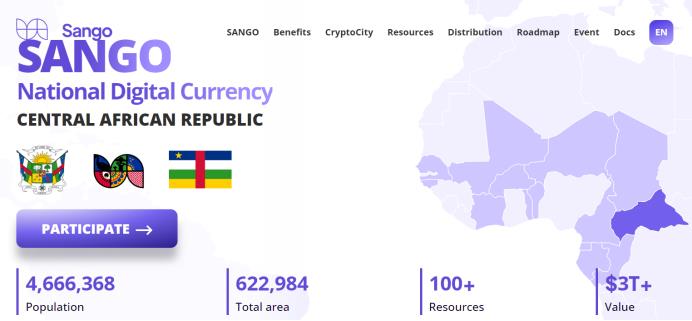
National Digital Currency Project — Sango
The Sango project is a key component of the "crypto initiative" launched by the Parliament of the Central African Republic and enjoys the support of the President of the Republic. The Sango project represents CAR’s determination to build a blockchain-based digital economy. According to the Sango roadmap, major future milestones include:
(1) Tokenizing land and natural resources to provide investors with democratic and decentralized investment opportunities;
(2) Building crypto cities and crypto islands;
(3) Becoming Africa’s crypto hub;
(4) Developing the Sango App as a bridge between residents and the city;
(5) Supporting Bitcoin mining projects through sustainable energy sources.
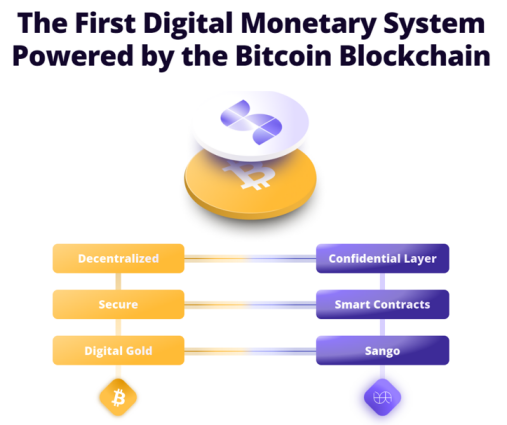
The Sango project issues its native token, SANGO, with a total supply of 21 billion tokens. Launched in July 2022, SANGO is a “national digital currency” of the Central African Republic. Reportedly, SANGO is deployed on a Bitcoin sidechain, which offers the advantage of accessing Bitcoin’s full liquidity.
As part of the SANGO ecosystem, holders can obtain corresponding rights by investing different amounts and locking up their tokens, including citizenship by investing $60,000 worth of SANGO tokens (locked for five years), residency rights by investing $6,000 worth of SANGO tokens (locked for three years), and land property rights by investing $10,000 worth of SANGO tokens (locked for ten years).
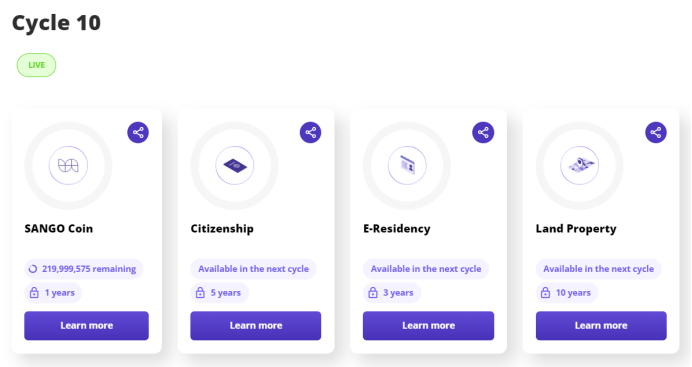
The first two rights are straightforward. However, the third right—land property—is not yet fully unlocked and lacks clear legal clarification. Currently, only the following information is available from the official website:
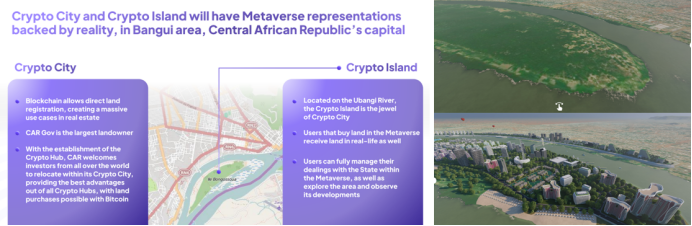
The government of the Central African Republic is the largest landowner in the country and intends to sell partial ownership of land through tokenization. Investors can acquire land property rights by investing $10,000 worth of SANGO tokens (refundable after a 10-year lock-up period). Each plot measures 250 square meters and is located in the Crypto City residential district along the Ubangi River, extending from the capital Bangui.
Meanwhile, the Sango team plans to develop a 1:1 synchronized metaverse project for Crypto City, allowing investors to manage virtual properties. According to the Sango website, properties purchased in the metaverse can also be obtained in the real world, creating an experience akin to an online metaverse real estate sales office.
Natural Resource Tokenization Law
On August 22, 2023, the Sango project team announced that the country’s legislature had passed the Tokenization Law. The law removes obstacles for future tokenization of real-world assets such as land, agriculture, and natural resources. Other provisions include enabling online acquisition of business visas and allowing citizens and foreigners to “easily” establish businesses and obtain permits for real estate, agriculture, natural resource extraction, and forestry.
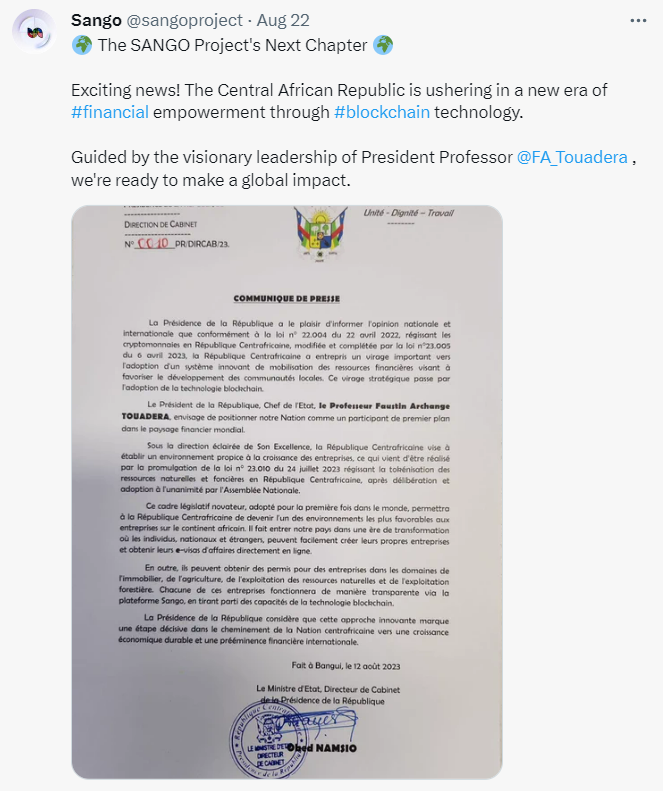
Although currently the Sango website only showcases the Central African Republic’s national-level efforts to attract crypto investments—and clearly states that SANGO tokens can offer state-backed utilities—the specific pathways for tokenizing real-world assets like land, agriculture, and natural resources remain unclear and require further legal clarification.
Nevertheless, launching natural resource tokenization indeed brings numerous benefits to both issuers and investors. This means global investors can conveniently use the Sango application and SANGO tokens to invest in these scarce natural resource assets. It enables CAR’s assets to rapidly access tokenized capital, transparently and democratically represented on the blockchain, while broadening investor participation through permissionless, fractional ownership.
This is a long-term goal of the Sango project, as it will make investing in the Central African Republic easier, enabling development in regions rich in natural resources while bypassing complex cross-border investment procedures such as foreign investment approvals, capital inflow/outflow restrictions, market entry thresholds, bilateral tax treaties, antitrust reviews, joint venture governance, and operations.
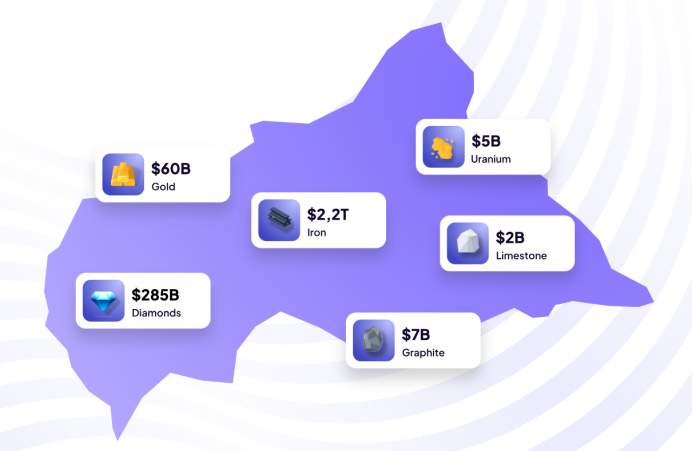
According to the Sango website, the Central African Republic is estimated to possess iron ore valued at $2.2 trillion, diamond reserves worth $258 billion, gold deposits valued at $60 billion, graphite reserves worth $7 billion, uranium worth $5 billion, and limestone valued at $2 billion.
Faith and Conviction in Bitcoin and Blockchain
By reading the Sango project whitepaper, one can see the strong desire among underdeveloped regions—often overlooked by the rest of the world—to actively engage with the global community. Rather than struggling within outdated systems and hierarchies, why not fully embrace Bitcoin and blockchain technology and move toward a brighter future?
The Sango whitepaper states: "Blockchain is considered one of the pillars of the Fourth Industrial Revolution. For developing nations like the Central African Republic, blockchain technology presents a valuable opportunity to achieve development on par with advanced economies while establishing an effective national digital currency system. For a country where most of the population lacks bank accounts, restructuring the entire economic framework via blockchain represents a leapfrog opportunity into the Web3 revolution."
Therefore, the Central African Republic will establish a comprehensive legal framework across all levels to support cryptocurrencies and crypto-related activities, including:
(1) Adopting Bitcoin as legal tender (or at least as an anchor currency);
(2) Exempting all cryptocurrency-related activities from taxation;
(3) Enacting other relevant applicable laws.
Following the passage of the Tokenization Law, the President of the Central African Republic stated in a press release: "The Central African Republic has made a significant strategic shift toward blockchain, using innovative institutions to mobilize financial and fiscal resources to promote local community development. This pioneering tokenization legislative framework, the first of its kind globally, will position CAR as one of the most favorable environments for crypto business on the African continent."
Historical Shackles
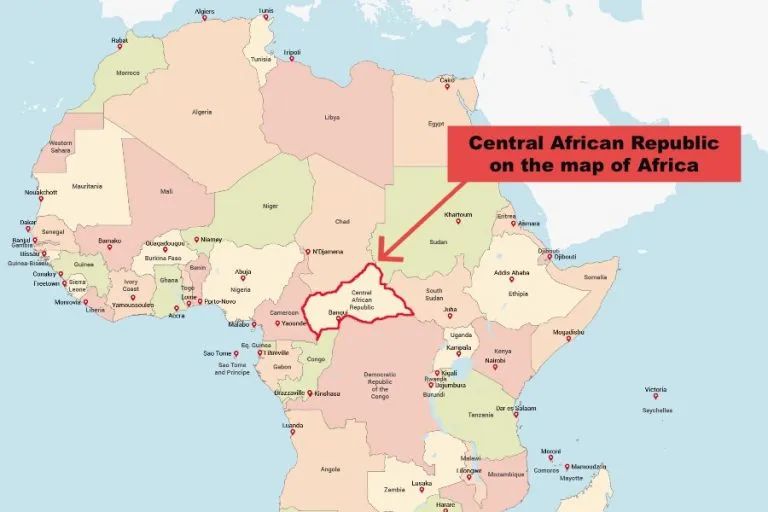
The Central African Republic is one of the world’s least developed countries, with an economy primarily based on agriculture and weak industrial foundations, importing over 80% of its industrial goods. Located in a remote region south of the Sahara and affected by historical factors such as French colonialism, armed coups, and governance chaos, CAR missed out on previous industrial revolutions, causing the world to overlook its untapped potential—a situation shared by much of Africa.
The future of the Central African Republic lies with its youth. Only by freeing young people from historical shackles can national transformation occur. Thus, CAR’s vision is to reform its entire economic system to accommodate youth and new technologies, aiming to establish a Bitcoin-based digital currency system leveraging blockchain technology and Bitcoin’s concept as “digital gold.”
The Sango team expects that by 2030, Sub-Saharan Africa—or the continent as a whole—has the potential for leapfrog development. Two key drivers are the region’s large youthful population and vast untapped natural resources. Of course, adopting appropriate technologies will be critical to achieving this goal.
Bitcoin and blockchain technology have seen significant growth in Africa in recent years. Due to the lack of mature banking and financial systems, Bitcoin’s peer-to-peer electronic cash system has been efficiently used for cross-border payments. Additionally, high inflation, limited use cases, and foreign exchange controls plague many African fiat currencies—examples of outdated systems that remain unresolved. Digital currencies may represent a ready-made solution for a better future.
Reconnecting with the World
We observe that underdeveloped nations like the Central African Republic are unwilling to compromise with old systems, either in building monetary frameworks or constructing digital economies. Rather than struggle and be dominated within outdated structures, they choose to fully embrace Bitcoin and blockchain technology and sprint toward a brighter future.
Clearly, they do not intend to waste precious capital on early-stage traditional financial infrastructure, nor repeat the paths taken by the U.S. and China. Instead, they aim to leap directly into the Web3 era, seizing the opportunity to reconnect and develop in sync with the rest of the world.
Thus, their strong faith and conviction in Bitcoin and blockchain technology follow a coherent logic—even though the path ahead remains thorny.
Join TechFlow official community to stay tuned
Telegram:https://t.me/TechFlowDaily
X (Twitter):https://x.com/TechFlowPost
X (Twitter) EN:https://x.com/BlockFlow_News
 0xWillmfer