








When friend.tech gets options contracts: speculation on top of speculation—worth participating in?
TechFlow Selected TechFlow Selected
When friend.tech gets options contracts: speculation on top of speculation—worth participating in?
Speculation will always be a feast, with endless ways to participate, but no guaranteed way to consistently profit.
 Navigating Web3 tides with focused insights
For the past week, the cryptocurrency market has been dominated by friend.tech.
Media outlets are analyzing and interpreting it, KOLs are sharing invitation codes, scientists are monitoring for new big-name accounts to join so they can quickly buy shares... while latecomers are pondering whether they should jump in.
But don't forget, there's more than one way to participate in friend.tech beyond buying and selling shares.
The crypto market is inherently characterized by high volatility. Around speculation itself, wherever there's a hotspot, products emerge to provide services leveraging that volatility.
Now, you can even go long or short on friend.tech directly on-chain—without needing to download or use the product itself.
Two days ago, the on-chain options DEX Aevo announced the addition of the FRIEND-USD trading pair on its platform.
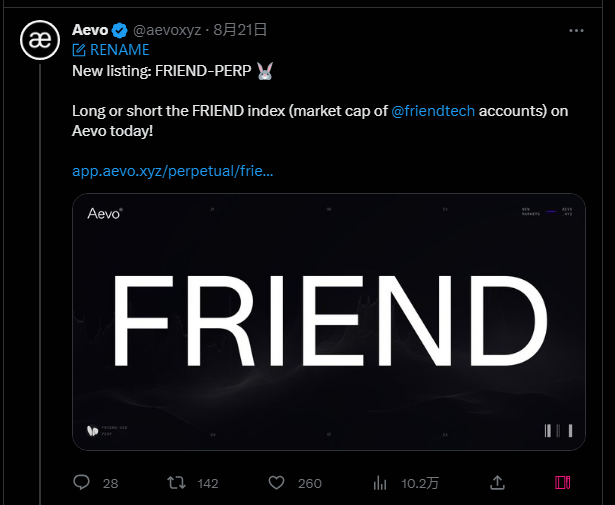
Most traders may be more familiar with futures contracts, but less so with options. In fact, options are simpler in concept: holding an option grants a right—the buyer of an option has the right, but not the obligation, to buy or sell a specified amount of an underlying asset at a predetermined price on or before a certain date.
This means you could buy a call option on friend.tech today, and if the value rises tomorrow, you’d receive a payout based on factors like leverage, price movement, and fees at the time of settlement.
friend.tech itself already carries a speculative nature, and options on friend.tech add another layer—a kind of "speculation atop speculation."
But market data doesn’t lie. According to DefiLlama, after launching this options pair, Aevo saw a noticeable uptick in both TVL and capital inflows. Where there’s speculation, there’s heat.
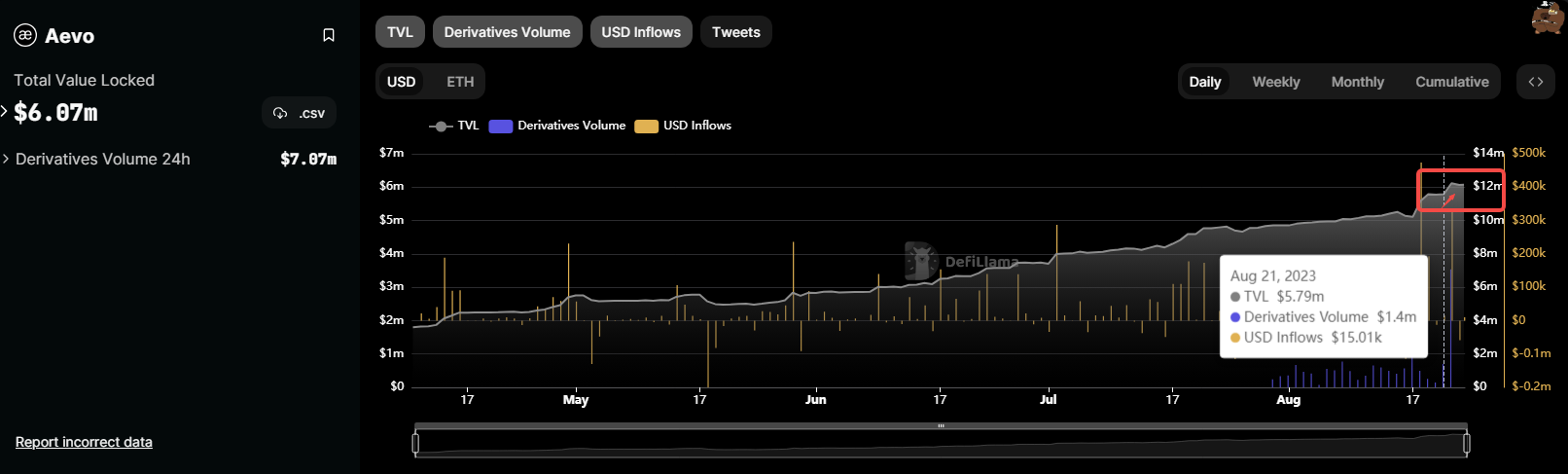
If someone is bearish on friend.tech, they can purchase a put option to seek gains through leverage. But before doing so, it’s essential to understand how Aevo’s friend option product works and what the user experience is like.
The FRIEND Index and User Experience
First, visit https://app.aevo.xyz/perpetual/friend to find the FRIEND-USD trading pair directly.

On the left side of the interface, you'll see trading options: Buy and Sell. The former represents call options (bullish), the latter put options (bearish).
You can choose to trade at market price or place a limit order at your desired price. For example, with a limit order as shown below, set the price, number of contracts, and adjust leverage—the system will automatically calculate fees. Click confirm to complete the trade.
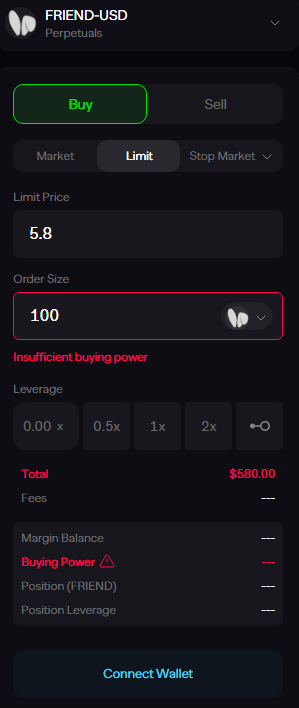
Note that everything executes on-chain, so you’ll need to connect a wallet to perform actual transactions. Also, leverage is capped at a maximum of 2x.
You might wonder: friend.tech allows bidding on different users’ shares at varying prices—so where does the unified price for the FRIEND-USD trading pair come from?
In reality, the price fluctuation of this option has no direct relation to share trading within friend.tech. The only relevant metric is friend.tech’s current total TVL.
Based on changes in total TVL, the contract defines a “FRIEND Index.”
The specific calculation divides friend.tech’s current TVL value by one million. For instance, if the current TVL is $5.7M, the FRIEND Index is $5.7, which then moves in sync with TVL increases or decreases.
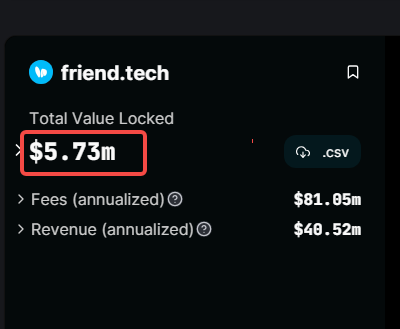
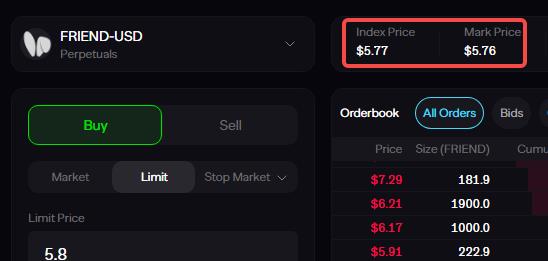
Essentially, this is leveraged speculation on the rise or fall of friend.tech.
If it becomes more popular, TVL will naturally increase, pushing up the FRIEND Index price—and vice versa.
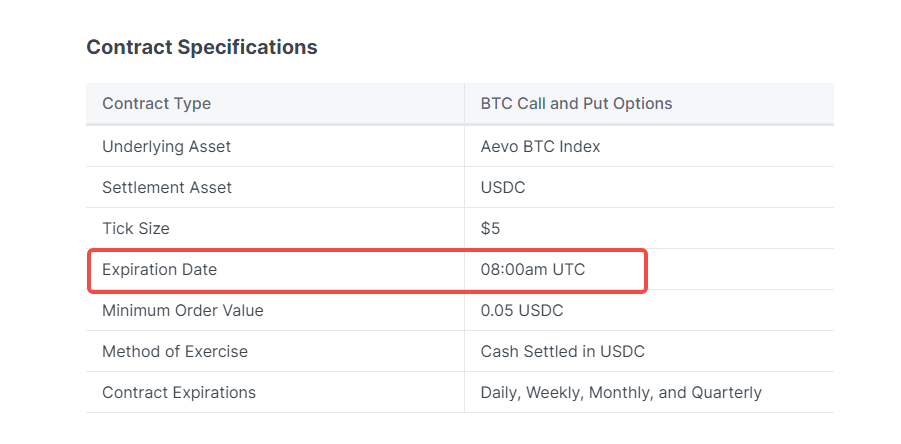
After placing an order, when does it settle and profits/losses get calculated?
According to Aevo’s design documentation, all options settle daily at 8:00 AM UTC. So if you buy a call option today, you’ll realize gains tomorrow morning if the TVL has increased by then—or incur losses if it hasn’t.
Options Data Analysis
From current data on friend.tech options on Aevo, we can also infer some market sentiment.
First, the 1-hour funding rate shows negative premium, meaning shorts pay fees to longs—indicating that, at the time of writing, more participants are bearish on friend.tech.

However, open interest is nearly $50,000, suggesting that the capital involved in friend options is relatively small. Thus, this bearish sentiment reflects only a narrow segment of traders opting into these options—not necessarily the broader market view.
Additionally, current stats show around $80,000 in 24-hour options trading volume. Yesterday, this figure reached $540,000—surpassing even Ethereum options trading volume on Aevo.
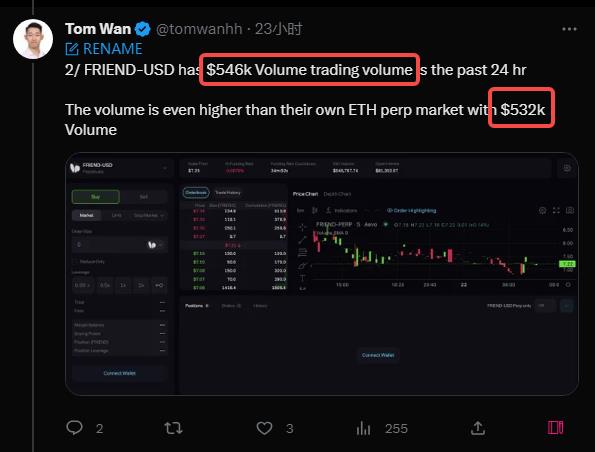
This also suggests that enthusiasm for friend.tech options may not last. Launching related options during a hype cycle can certainly attract traffic, but retaining users for ongoing options trading remains a much harder challenge.
Moreover, looking at price trends, the FRIEND Index shows scattered discontinuities—meaning that over certain intervals, friend.tech’s TVL barely changed. You may not be able to precisely predict when TVL will spike, increasing the difficulty of deciding whether to go long or short. Hence, the decline in trading volume is understandable.
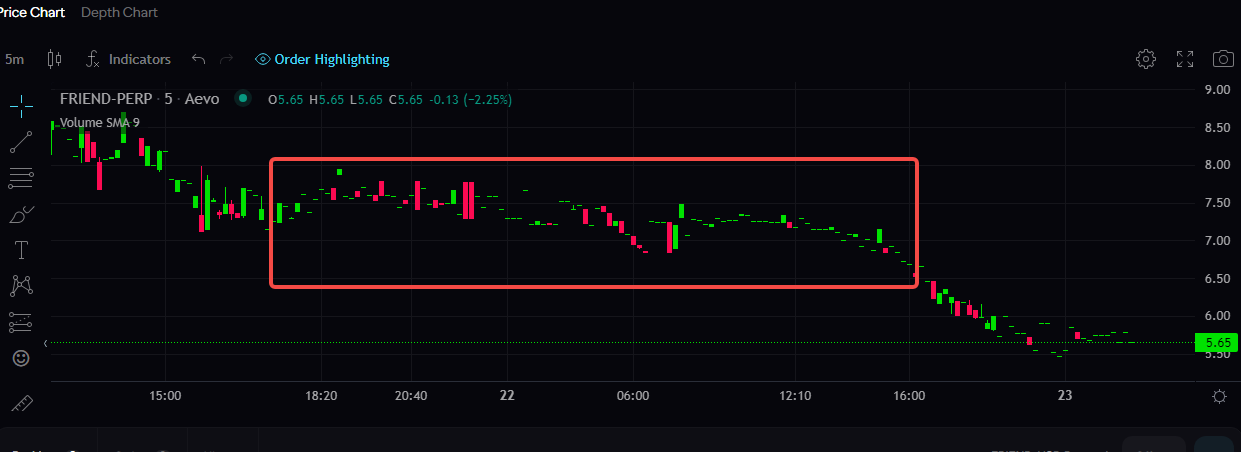
Overall, profiting from friend.tech options isn’t easy. It’s unwise to assume that because it feels like a short-term bubble, continuously going short will guarantee profit—such a "set-and-forget" approach doesn’t work well with this current product.
Still, the emergence of such options highlights the essence of crypto markets—speculation is always a feast. There’s always a way to participate, but never a guaranteed way to win.
Join TechFlow official community to stay tuned
Telegram:https://t.me/TechFlowDaily
X (Twitter):https://x.com/TechFlowPost
X (Twitter) EN:https://x.com/BlockFlow_News
 深潮TechFlow






