How to effectively participate in DAI stablecoin with an 8% annualized interest rate?
TechFlow Selected TechFlow Selected
How to effectively participate in DAI stablecoin with an 8% annualized interest rate?
Simply put, the 8% might only have this one chance.
 Navigating Web3 tides with focused insights
This article will detail the source of the 8% annualized yield, as well as explain what DSR and EDSR are. Since MakerDAO does not have an official deposit page, we’ll also introduce four platforms where you can deposit $DAI, along with step-by-step instructions.
First, a quick concept overview: MakerDAO's DSR, or Dai Savings Rate, can be simply understood as the deposit interest rate for the stablecoin $DAI. By depositing $DAI into the DSR contract, users automatically earn interest—similar to a demand deposit in the traditional financial world.
The proposed 8% interest rate is technically part of a new mechanism called EDSR—Enhanced Dai Savings Rate—which is an upgraded version of the current interest rate model.
Now, let’s discuss the source of this return. We all know that an 8% yield exceeds returns from U.S. Treasury bonds and many other high-quality investment assets. So, is this yield genuine?
Firstly, it is a temporary rate using a tiered calculation model. The Enhanced Dai Savings Rate (EDSR) is a short-term measure designed to boost user deposits when DSR utilization is low. The EDSR is determined based on DSR utilization and gradually decreases as utilization increases.
What is DSR utilization?
Simply put, it refers to the ratio of $DAI deposited into the DSR relative to the total supply. As more $DAI is deposited into the DSR, the interest rate will gradually decline.
As shown in the image below, when utilization is <20%, the rate is 8%. Once utilization exceeds 50%, the rate drops to 4.16%.
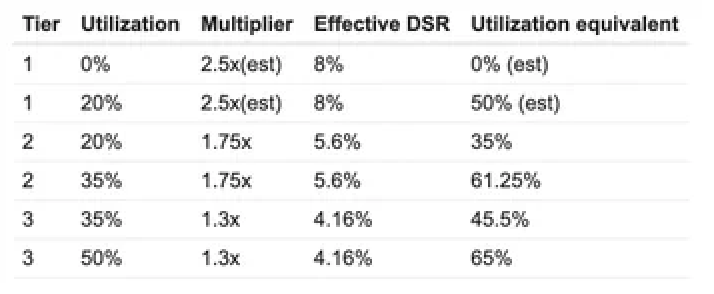
It’s important to note that EDSR is a one-time, unidirectional, temporary mechanism—meaning that once the rate starts decreasing over time, it cannot increase again even if DSR utilization drops later.
In short, this 8% opportunity may only come once.
From the analysis above, we now understand the source of the 8% yield. In principle, if MakerDAO allocates 100% of its stablecoin assets into real-world assets (RWA), and less than 20% of $DAI is drawing yield, the excess return becomes available—this surplus is what enables the “8% > Treasury yield” scenario. (Exact figures require precise calculations.) Essentially, this means the DAO reduces its own revenue share and distributes it to $DAI depositors.
How to Deposit? – DeFiSaver (Smart Saving)
https://app.defisaver.com/smart-savings
- Under [Smart Saving], select Maker DSR;
- Enter the deposit amount in the Supply field;
- The right side displays estimated weekly/monthly/yearly earnings.
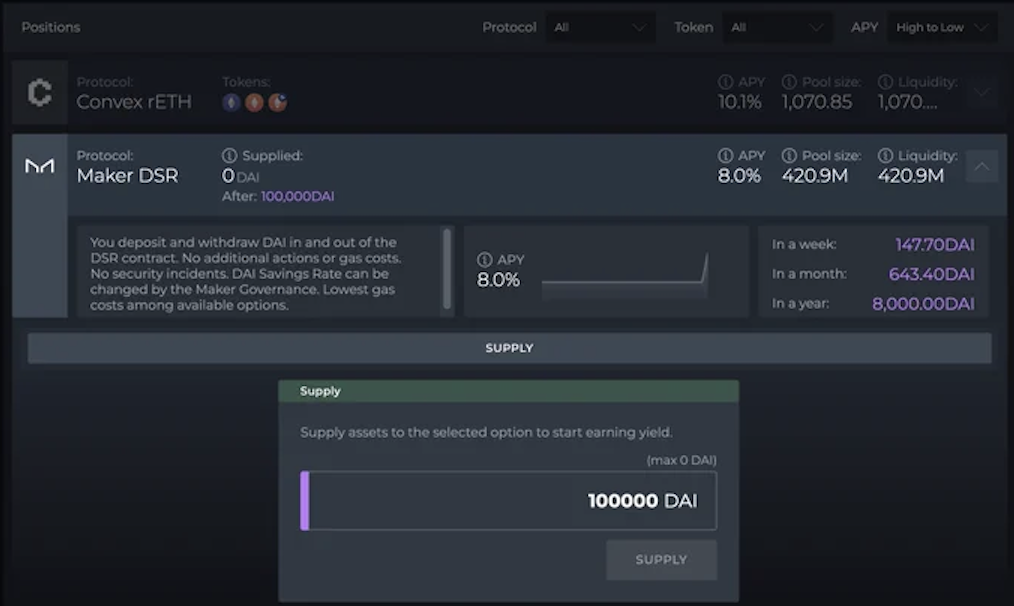
How to Deposit? – DeFiSaver (Spark)
https://app.defisaver.com/spark
- On Spark’s Supply panel, switch the token to $DAI;
- After supplying DAI, it converts into sDAI, which can be used as collateral for borrowing;
- Spark is MakerDAO’s lending protocol. sDAI functions similarly to aDAI on Aave—allowing users to earn DSR yields while simultaneously using their holdings as collateral for loans.
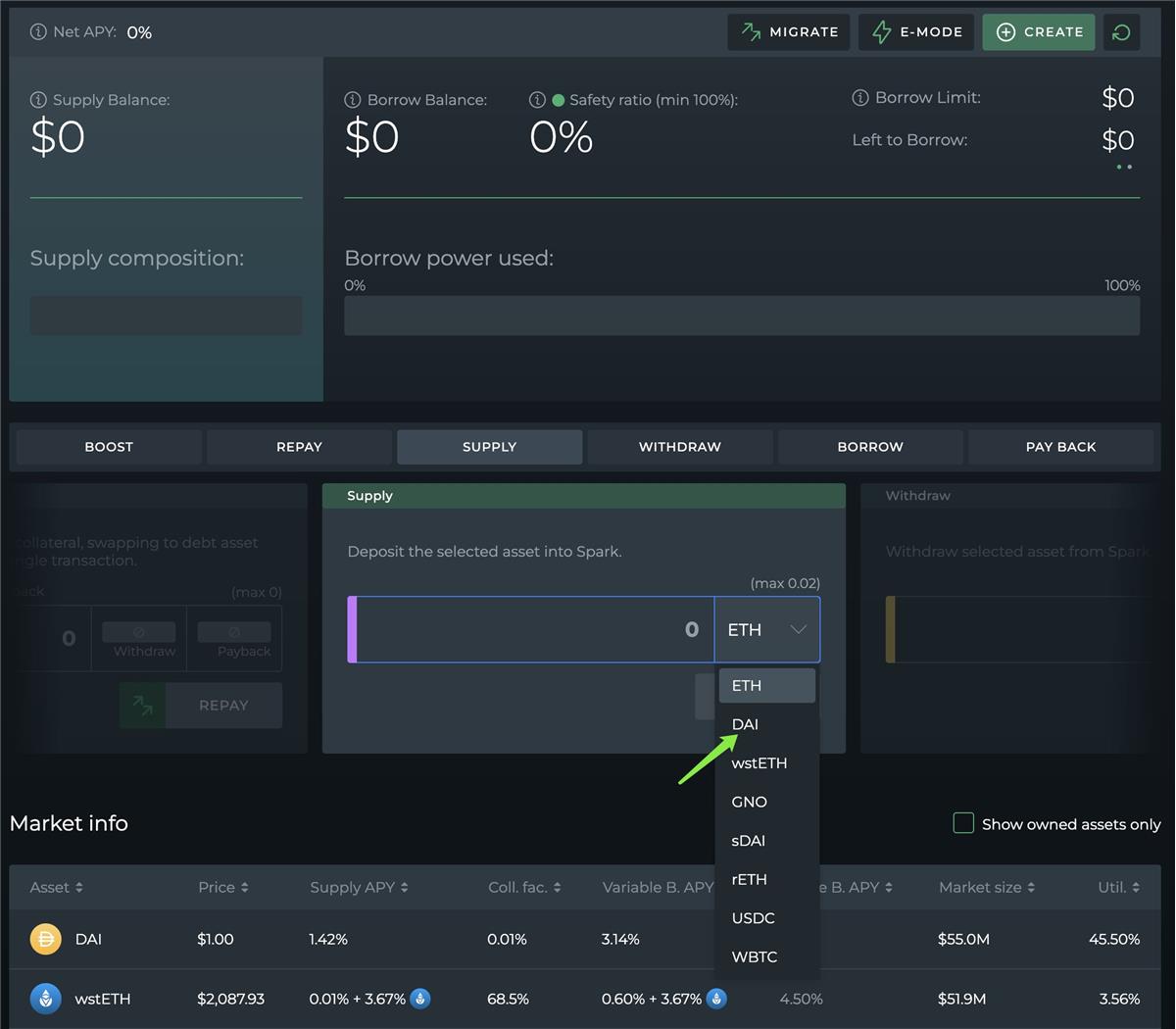

How to Deposit? – SummerFi
- On the Earn page, select Maker; subsequent steps are similar to those on DeFiSaver.
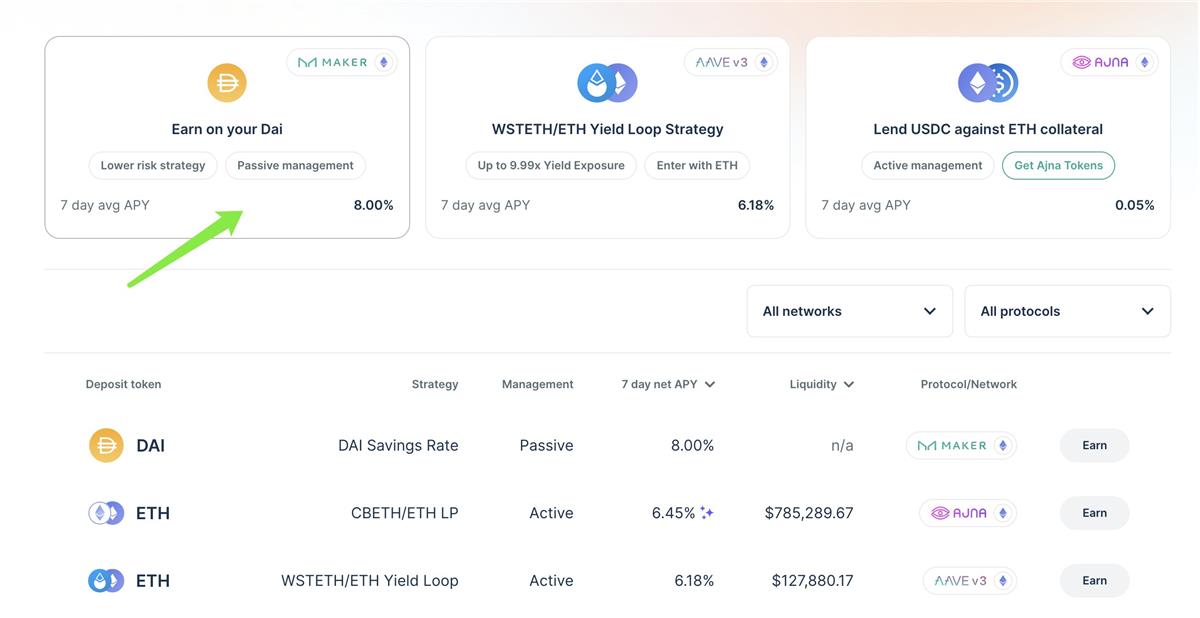
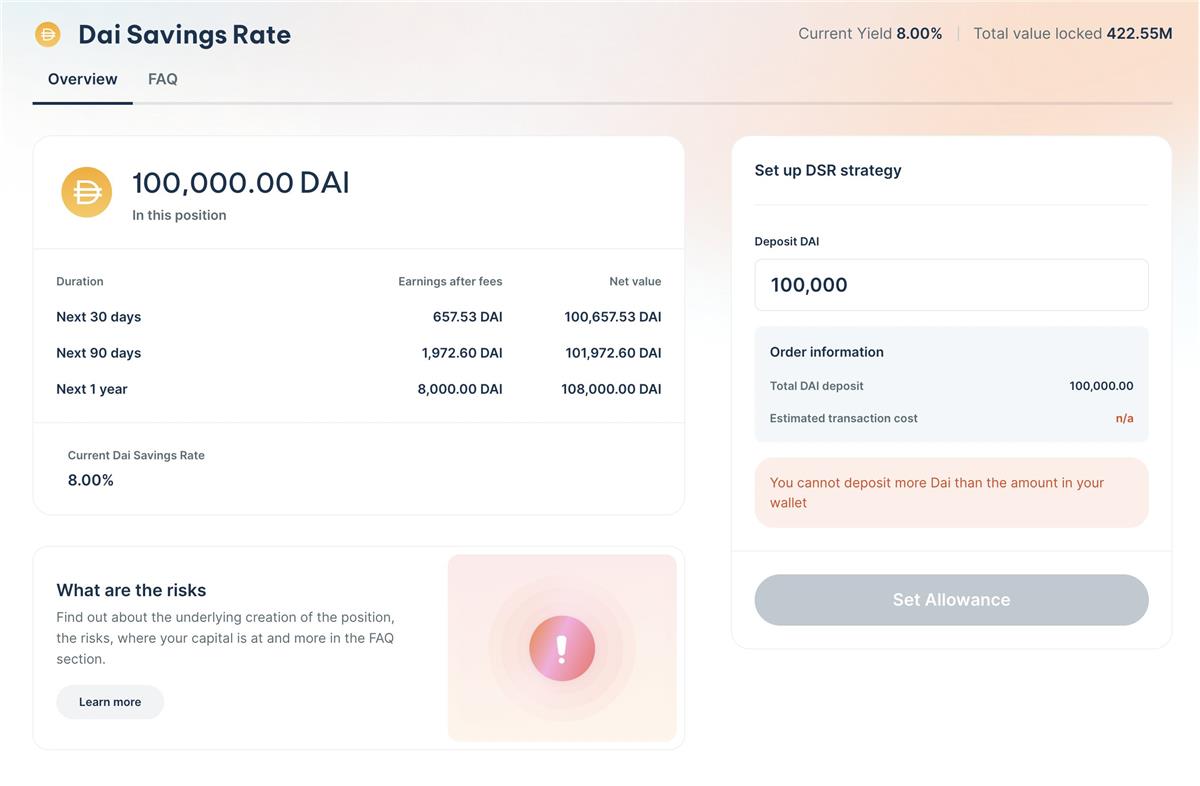
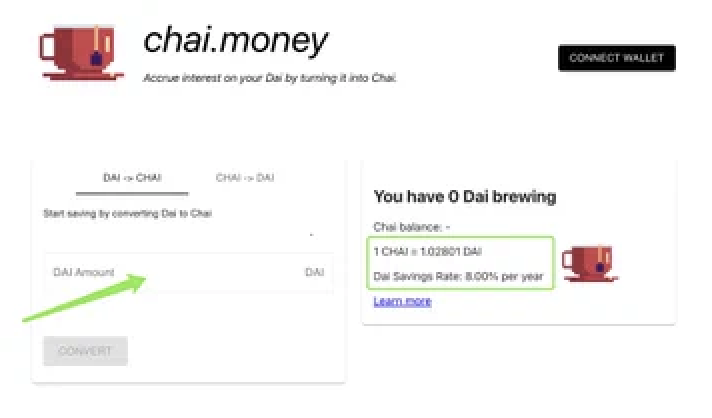
How to Deposit? – chai.money
$CHAI can be understood as a wrapped token that automatically accumulates both principal and interest earned from $DAI deposited in the DSR.
Join TechFlow official community to stay tuned
Telegram:https://t.me/TechFlowDaily
X (Twitter):https://x.com/TechFlowPost
X (Twitter) EN:https://x.com/BlockFlow_News
 @Cook0x