









NFT Trading Bot Loses 800 ETH to Prank, Is Web3 Transparency a Double-Edged Sword?
TechFlow Selected TechFlow Selected
NFT Trading Bot Loses 800 ETH to Prank, Is Web3 Transparency a Double-Edged Sword?
Declare to the world or quietly accumulate wealth?
 Navigating Web3 tides with focused insights
Written by: 0xTransparency, TechFlow
As the weekend approached, the otherwise quiet NFT market witnessed a thrilling game of predator and prey.
Hanwe (@HanweChang), an influential NFT figure on Twitter, discovered that a bot on Blur was mimicking his bidding strategy. He decided to turn the tables, playing a prank on the bot—and publicly announced a profit of 800 ETH (approximately $1.46 million).

How did he do it?
Regular users of Blur will know that the platform supports trait bidding—allowing users to place bids on specific traits within an NFT collection, such as Azuki characters wearing glasses or having white backgrounds.
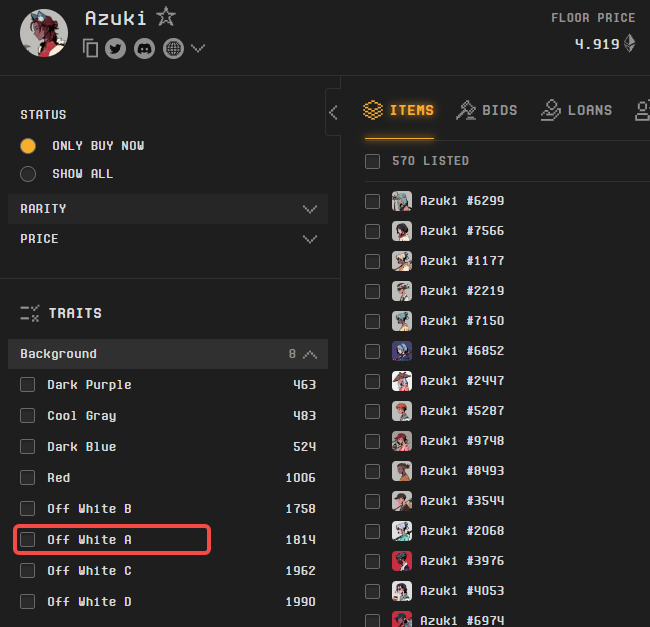
Another well-known Chinese-speaking influencer, 0xSun (@0xSunNFT), analyzed how Hanwe outsmarted the bot:

Realizing that the bot automatically copied his bidding behavior, Hanwe first quietly acquired multiple Azukis (possibly using another account). Then he began his act: he placed bids of 50 ETH on several Azukis from this batch with the "Off White A" background trait.
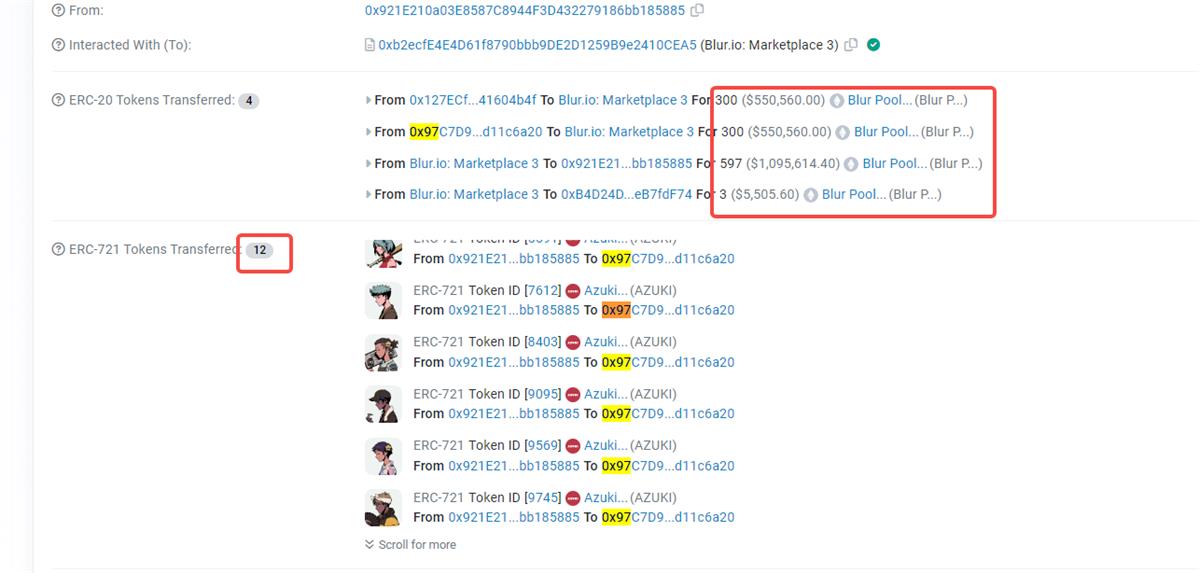
The bot, true to form, automatically mirrored Hanwe’s bid at 50 ETH. Hanwe then immediately accepted the bot's offer, selling those Azukis at the inflated price of 50 ETH each. Meanwhile, he canceled his own original bait bids.
In short: he set a high price for his own assets, lured the bot into matching it, then offloaded his inventory at a premium before pulling back his bait.
Bots don’t cry. But the blockchain record coldly documents all 12 transactions, each sale priced impressively in USD. The owner behind wallet address 0x97 was undoubtedly rekt, left frustrated and helpless.
Please Return the Money You “Stole”?
800 ETH is no small sum.
Just as Hanwe proudly showcased his bait-and-switch maneuver on Twitter, the entity behind address 0x97 fired back.
A user named elizab.eth commented under Hanwe’s post:
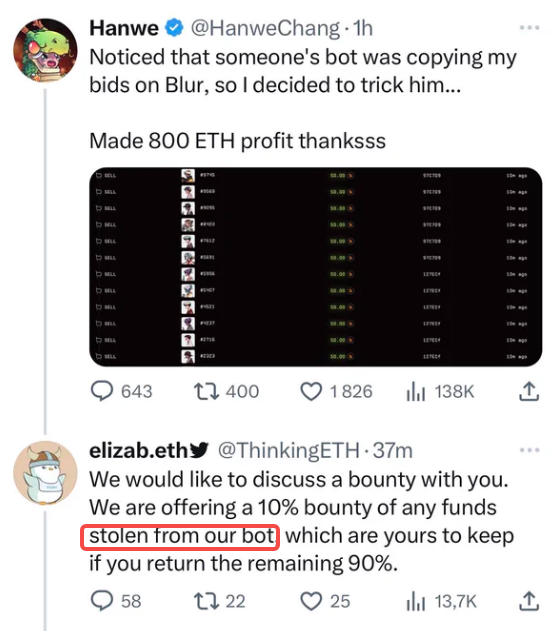
“We’d like to talk about the bounty. If you return 90% of the money you stole from our bot, you can keep 10% as a reward.”
Note the use of the word “stolen.”
A bot copies someone’s trading strategy, suffers losses when tricked—does that count as theft? In the real world, such a significant financial loss might spark legal disputes and prolonged litigation.
Hanwe’s tactic wasn’t particularly complex—he simply exploited the bot’s mindless copying behavior and taught it a lesson. Morally, it may seem somewhat sneaky. But in the crypto world, there are no clear rules governing participants’ actions.
If this counts as theft, then what about massive futures price manipulations, historical instances of cutting network cables, or project teams saying “sorry, we failed”? Could these also broadly be labeled as stealing—taking chips from retail hands?
Conversely, when bots successfully follow others’ strategies and profit, have they ever shown goodwill—sent red packets or shared profits?
In this dark forest of Web3, perhaps you can't enjoy feasting as a hunter while crying foul when you become the hunted.
What goes around comes around. There are times when you outplay others, and times when you get outplayed. Especially without strict regulations or institutional constraints, every boom and bust becomes part of a raw, chaotic, winner-takes-all market dynamic.
In a more recent tweet, elizab seems to express a sense of enlightenment and acceptance:

It’s just ironic—lessons you paid for from others, someone else must now pay for again from an even smarter player.
In our Web3 world, there are many lessons—but few teachers.
Go Public or Stay Quiet?
In Hanwe’s comment section, some questioned why he would openly admit to tricking a bot—after all, it looks somewhat malicious, and 800 ETH is certainly a number that invites envy.
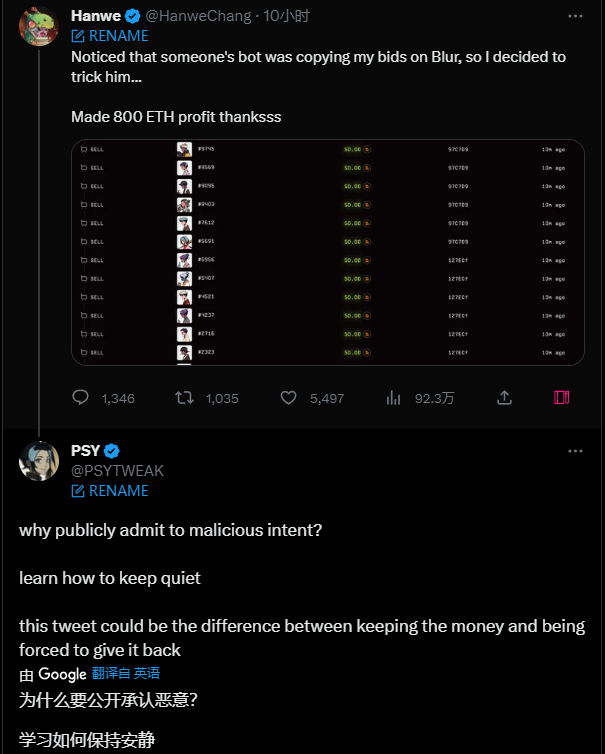
Whether it was bragging or venting, the personal motives of big players aren’t our main focus here. This incident raises another question: in Web3, all on-chain transactions and decisions appear transparent. Any action, if dug up and publicized, can become common knowledge.
Yet old wisdom says: stay low and get rich quietly.
To go public or stay silent? Ironically, staying quiet may attract chain sleuths, copy-trading bots, sandwich attackers, and other hidden adversaries who study, mimic, and exploit your moves.
And if a once-lucrative private trading strategy gets widely copied, does it remain profitable?
On-chain activity is full of博弈 (strategic games). You stay quiet and make money; I replicate your strategy—but maybe you’re deliberately showing it to me…
Layer upon layer of deception, multiple levels of reversal. Often, we cannot fully discern someone’s true intentions through transparent, public on-chain data alone.
This transparency is precisely the arbitrage space Web3 offers to participants at different levels:
Third-tier lambs believe in transparency;
Second-tier bots dive deep into transparency;
Top-tier whales exploit transparency.
May every little anonymous soul in Web3 walk their path safely.
Join TechFlow official community to stay tuned
Telegram:https://t.me/TechFlowDaily
X (Twitter):https://x.com/TechFlowPost
X (Twitter) EN:https://x.com/BlockFlow_News
 深潮TechFlow









