








Why do Musk and Altman both want to revive cryptocurrency?
TechFlow Selected TechFlow Selected
Why do Musk and Altman both want to revive cryptocurrency?
As technological evolution drives us through these uncharted waters, unprecedented new possibilities will emerge.
 Navigating Web3 tides with focused insights
Author | Pritam Bordoloi
Compiled by | Xu Jiecheng,51CTO Technology Stack
Is cryptocurrency dead? The answer to this question depends on who you ask. A crypto enthusiast would give you a hundred different reasons why cryptocurrency is far from dead. Tesla CEO Elon Musk and OpenAI CEO Sam Altman both have strong interests in cryptocurrency and its potential role in shaping the future world.
For a long time, Musk has been a supporter of cryptocurrency; Sam Altman's cryptocurrency project, Worldcoin, recently announced its official launch. Interestingly, both Musk and Altman are devoted believers in artificial intelligence, and today these two tech leaders are actively involved in revitalizing cryptocurrency while simultaneously driving their companies’ heavy investments into AI.

01 Attracted by the Future
As some of the most visionary entrepreneurs in the world, Musk and Altman are drawn to cryptocurrency through visions of the future and innovation. Cryptocurrency represents an evolving digital landscape that could play a crucial role in shaping the future of the digital economy.
Altman’s idea behind Worldcoin appears rooted in a dystopian concept. In the future, a biometric device will scan users’ irises to verify a unique digital identity, determining whether a user is human or artificial intelligence. According to Altman himself, the Worldcoin concept applies to a very distant future.
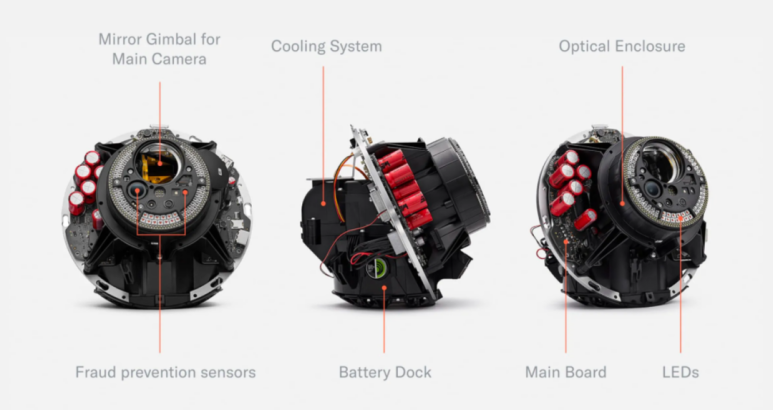
Worldcoin will operate based on a global human iris-biometric identity database, using Worldcoin tokens for interactions linked to every individual’s financial transaction data worldwide, managed by a centralized nonprofit organization capable of enforcing strict oversight policies and collecting sensitive data.
Altman also acknowledges that many uncertainties remain around Worldcoin, but he believes once people understand the feasibility of the technology and the importance of cryptocurrency in the global economy, they will be more open to Worldcoin. Despite unresolved ethical and privacy concerns surrounding cryptocurrency, many people are now pushing forward aggressively to address these issues.
02 Preparing for the Post-AGI Era
On the other hand, the premise of Worldcoin is compelling. Altman says Worldcoin has a simple goal—to build a global financial and identity network based on proof-of-personhood in the age of artificial intelligence. Worldcoin founders including Alex Blania and Max Novendstern believe that achieving Artificial General Intelligence (AGI)—where AI surpasses human intelligence—will trigger a surge in productivity and massive wealth creation.
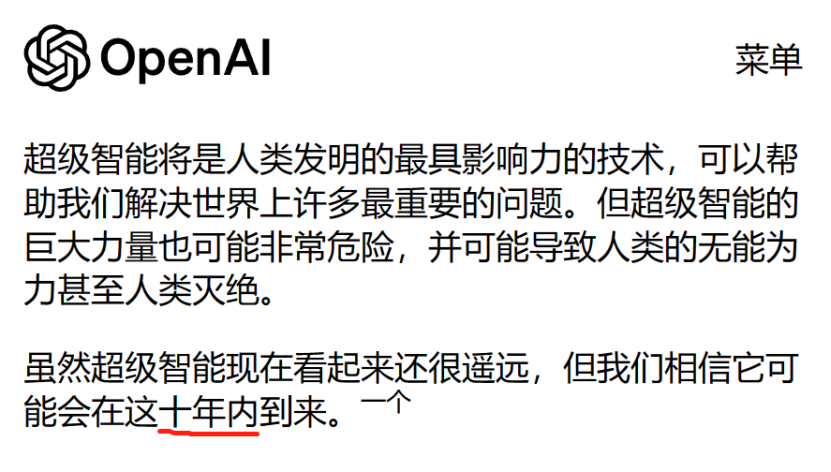
Now here’s what makes Worldcoin particularly interesting: its creators believe the wealth generated by AI should be distributed equally among all global citizens in the form of cryptocurrency (universal basic income), and currently the most viable channel for this is Worldcoin. Importantly, both Musk and Altman predict AGI will arrive around 2030.
However, not everyone agrees with this vision. Akshay Bajaj, co-founder of DeFiVerse, believes Worldcoin currently seems somewhat overhyped. “I think Worldcoin will have to prove itself as more than just a fancy idea. Handling so much data globally will be a huge challenge. Governments across multiple jurisdictions will certainly raise objections. And right now, the primary function of cryptocurrency is still speculation.”
To date, Worldcoin has raised approximately $250 million in funding, supported by several venture capital firms and well-known investors. Nevertheless, beyond overcoming uncertainty, the startup must also overcome numerous regulatory hurdles. Moreover, no one can yet definitively say whether the current financial system will truly be disrupted in the post-AGI era.
03 A More Realistic Approach
In contrast, Musk’s approach to cryptocurrency appears more pragmatic compared to Altman’s. “In the coming months, we’ll enhance X (Twitter) with full communication capabilities and the ability to manage the entire financial world,” he said.
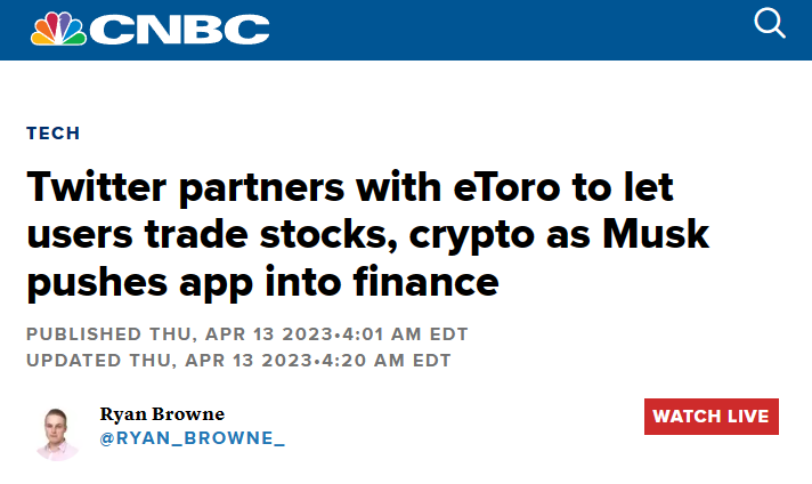
Even when Musk first took over Twitter, there were speculations that he would introduce cryptocurrency to the platform. This soon proved true—according to reports from April 2023, as part of a collaboration with investment social platform eToro, Twitter would allow users to trade stocks and cryptocurrencies directly on the platform.
Musk envisions transforming Twitter into an AI-driven, all-encompassing global platform. He stated that the plan would begin with fiat currency support and potentially integrate cryptocurrency at a later stage. This clearly indicates that Musk’s vision for a future driven by artificial intelligence includes potential use cases for cryptocurrency.
In fact, Musk previously noted that the current banking system is neither “real-time” nor efficient, making it incompatible with today’s digitally connected world. Musk identified cryptocurrency as the solution to this problem. Therefore, it’s likely that this philosophy will soon be implemented on Twitter.
“Elon Musk’s crypto policy has always been very positive. I hope he’ll also speak about Ethereum or Bitcoin,” said Bajaj. Previously, Musk stated his space company SpaceX would accept Dogecoin as payment—a cryptocurrency he has supported for quite some time. Meanwhile, Tesla purchased $1.5 billion worth of Bitcoin and announced the automaker would accept cryptocurrency payments.
04 Other Tech Leaders
Due to the influence of Musk and Altman, many cryptocurrency supporters firmly believe they will become the “saviors” of cryptocurrency. But in fact, many other tech leaders like them are also actively supporting the “revival movement” of cryptocurrency. For example, Jack Dorsey, Twitter’s founder, is now deeply involved in his own cryptocurrency projects. Earlier this year, Dorsey revealed that his company Block (formerly Square) is developing Bitkey—a hardware product for the crypto space that allows users to securely transfer and manage their Bitcoin in a user-friendly way.
However, unlike Altman, Dorsey is a staunch believer in decentralization. After leaving Twitter, he even created Bluesky, a new generation decentralized Web3 social platform. As such, he appears uninterested in Altman’s ideas regarding the Worldcoin project.

Interestingly, Worldcoin isn’t the first platform advocating the concept of universal basic income. Yoni Assia, founder of eToro, said he feels honored that Worldcoin’s approach mirrors his own GoodDollar—a universal basic income platform. Like Dorsey, Musk supports decentralized approaches and has previously called Bluesky an interesting idea.
In summary, while the metaverse concept has gradually faded from public attention, the waters of cryptocurrency are rippling again, stirred by numerous tech leaders. Whether you believe it or not, as technological evolution drives us through these uncharted waters, unprecedented new possibilities will emerge.
Join TechFlow official community to stay tuned
Telegram:https://t.me/TechFlowDaily
X (Twitter):https://x.com/TechFlowPost
X (Twitter) EN:https://x.com/BlockFlow_News
 @Analyticsindiam









