
The first ChinaJoy Web3 Conference successfully concluded, exploring a new era of the digital economy
TechFlow Selected TechFlow Selected
The first ChinaJoy Web3 Conference successfully concluded, exploring a new era of the digital economy
This conference focuses on exploring the future development trends of Web3 technology and the digital economy, revealing the most cutting-edge technological advancements and industry insights.
 Navigating Web3 tides with focused insights
Author: ChinaJoy
On July 29, the inaugural "ChinaJoy Web3 Conference," co-hosted by Hanwei Xinheng, Xinhuo Technology, and D11Labs, under the guidance of the China Audio-video and Digital Publishing Association, successfully concluded at the Kerry Hotel Pudong in Shanghai.

Themed "Creating a New Era of Digital Economy," this conference focused on exploring the future development trends of Web3 technology and the digital economy, revealing the most cutting-edge technological advancements and industry insights. Additionally, the event emphasized how frontier Web3 technologies can promote the growth of the digital economy, deeply connecting ecosystem resources both within and beyond the Web3 community, accelerating industrial ecosystem implementation, and helping Shanghai build international influence in emerging digital economic fields such as Web3.
Featured speakers included renowned economist Zhu Jiaming, Han Zhihai—Director, Vice President of Shunwang Technology and Chairman of Hanwei Xinheng, James Ho—Fund Manager at Animoca Ventures, Kong Jianping—Founder of Nano Labs and Director of Hong Kong Cyberport, Garrison Yang—Vice President of Growth and Strategy at Ava Labs, Yu Jianning—Founder and Dean of Uweb, and Zhao Binghao—Dean of the FinTech Rule of Law Research Institute at China University of Political Science and Law. The conference was hosted by Nina Xiao’er, community ambassador for iPollo.
Han Zhihai, Vice President of Shunwang Technology and Chairman of Shanghai Hanwei Xinheng Exhibition Co., Ltd., delivered the opening remarks on behalf of the organizing committee.
Han stated that with the rising popularity of concepts and industries such as the metaverse, digital art, and blockchain, increasing numbers of scholars and industry leaders are turning their attention to Web3.0 innovative technologies, gradually transitioning Web3.0 from concept into reality. ChinaJoy has always served as an open platform for discussing major technological transformations and frontier trends in the digital entertainment industry. As a globally renowned gaming exhibition based in Shanghai, ChinaJoy will continue to follow policy directions, align with industrial and technological trends, and promote technological innovation. He expressed hope that the successful hosting of this Web3 conference would inject new momentum into Shanghai’s development in the digital new economy, attracting top-tier Web3 talent, technology, capital, and enterprises to the city, thereby fostering the healthy and prosperous growth of the local digital entertainment sector.
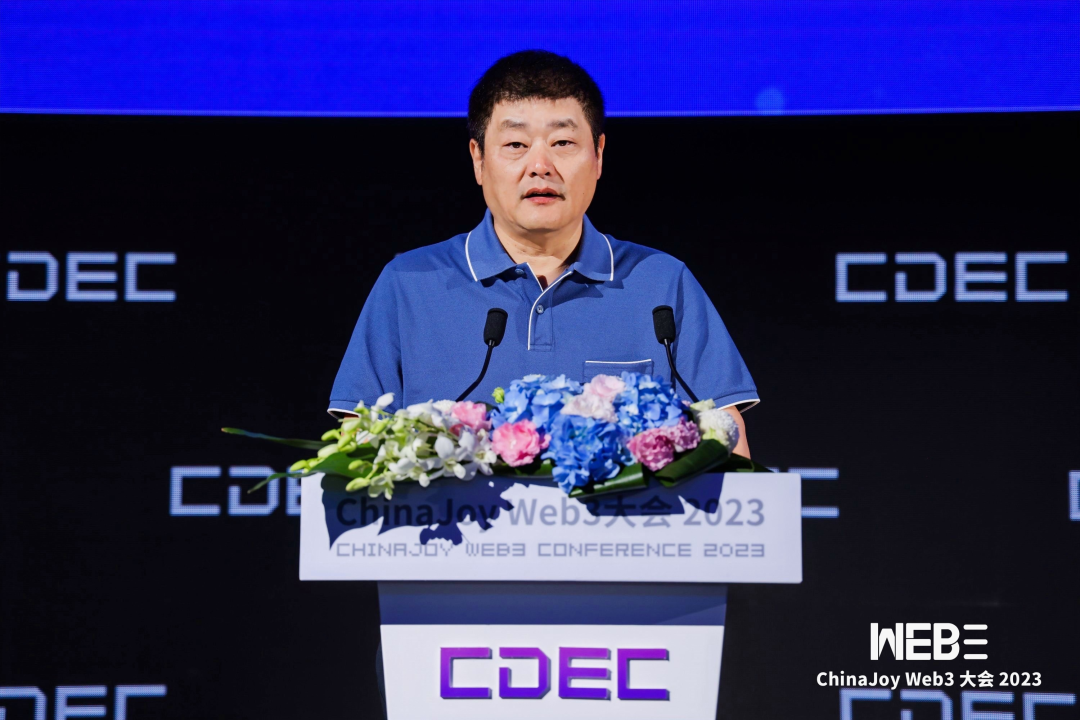
Han Zhihai, Vice President of Shunwang Technology, Chairman of Hanwei Xinheng
Professor Zhu Jiaming, renowned economist and Chair of the Academic and Technical Committee at Hengqin Digital Finance Research Institute, delivered a remote video keynote. In his address, Professor Zhu noted that when ChinaJoy was first established 20 years ago, it was the golden age of the internet—but terms like blockchain, NFTs, the metaverse, and especially Web3.0 had yet to emerge, while artificial intelligence was still awaiting breakthroughs. At that time, people's understanding of the digital entertainment industry, its technologies, and culture was still in a very early stage. Now, two decades later, the technological foundation, content, potential, and prospects of the entertainment industry have undergone fundamental changes.
Today, big data, AIGC, virtual reality technologies—including the metaverse and Web3—are providing critical technical foundations and support for the entertainment industry and its related sectors. In particular, the convergence of Web3.0 and AI is enabling the creation of a value-based internet and intelligent internet, which together will foster an entirely new ecosystem for the entertainment industry.

Renowned Economist Zhu Jiaming
Following this, the main conference program officially began, structured around four key topics: "Building Web3 Infrastructure," "How Web3 Technology Empowers the Digital Economy," "Web3 Leading a New Paradigm in Game Industry Transformation," and "The Current State and Future Trends of the Metaverse."
During the first session, "Building Web3 Infrastructure," Kong Jianping, Founder of Nano Labs and Director of Hong Kong Cyberport, delivered a speech titled "Opportunities for the Metaverse in the Web3 Era," introducing three fundamental laws of Web3. If the industrial era represents two-dimensional space and the internet era three-dimensional space, then the Web3 era represents four or even higher dimensions. Based on this framework, he proposed three laws of Web3: 1) The network value of Web3 is at least proportional to the cube of the number of users; 2) The total network value of Web3 equals the sum of values across all network layers; 3) Every marginal user in Web3 receives corresponding network value.
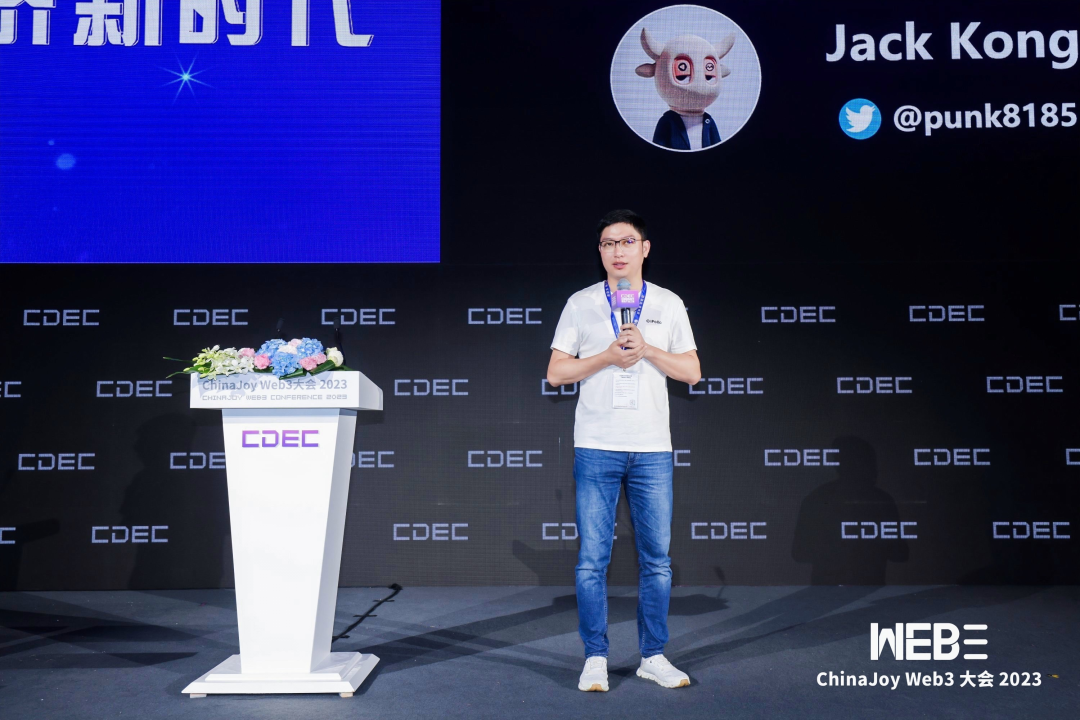
Kong Jianping, Founder of Nano Labs, Director of Hong Kong Cyberport
Garrison Yang, Vice President of Growth and Strategy at AvaLabs, offered an in-depth discussion on Web3 infrastructure from a gaming perspective. In his keynote titled "Web2.01: The Next Step in Gaming Innovation," he shared that user growth in Web3 gaming has not been as rapid as expected, facing significant acquisition barriers such as high entry thresholds for decentralized tools, costly operations, and poor gameplay, all of which deter many Web2 gamers.
Based on these observations, Garrison introduced the concept of "Web2.01": developers should maximize the use of Web3 and blockchain technologies while minimizing impact on user experience—achieving Web2-level gameplay through Web3 technology. "Right now, we should focus more on enhancing the Web2 experience and avoid doing things players aren’t ready for," said Garrison. "The market has shown us that Web2 gaming experience is far ahead. Web3 technology should aim to enhance these positive experiences rather than replace them."

Garrison Yang, Vice President of Growth and Strategy at AvaLabs
In June this year, AvaLabs launched the Avalanche Arcad3 initiative, aimed at helping Web2 game companies explore Web3. Arcad3 provides Web2 game developers with support in blockchain technology, marketing, and business models.
During the session "How Web3 Technology Empowers the Digital Economy," Yuan Yuming, CEO of Huolian Technology, spoke during the roundtable discussion "Opportunities and Challenges: The Prospects of Web3 in Empowering the Digital Economy." He noted that the recent boom in AIGC and AI has created new opportunities for blockchain and Web3. Data required by AIGC and virtual AI models can be managed via blockchain and Web3 platforms, enabling traceability, ownership verification, and full lifecycle tracking. This ensures rights are recognized throughout the process, stimulating participation, while also preventing violations—highlighting blockchain’s foundational role in supporting the AI and broader digital economy industries.
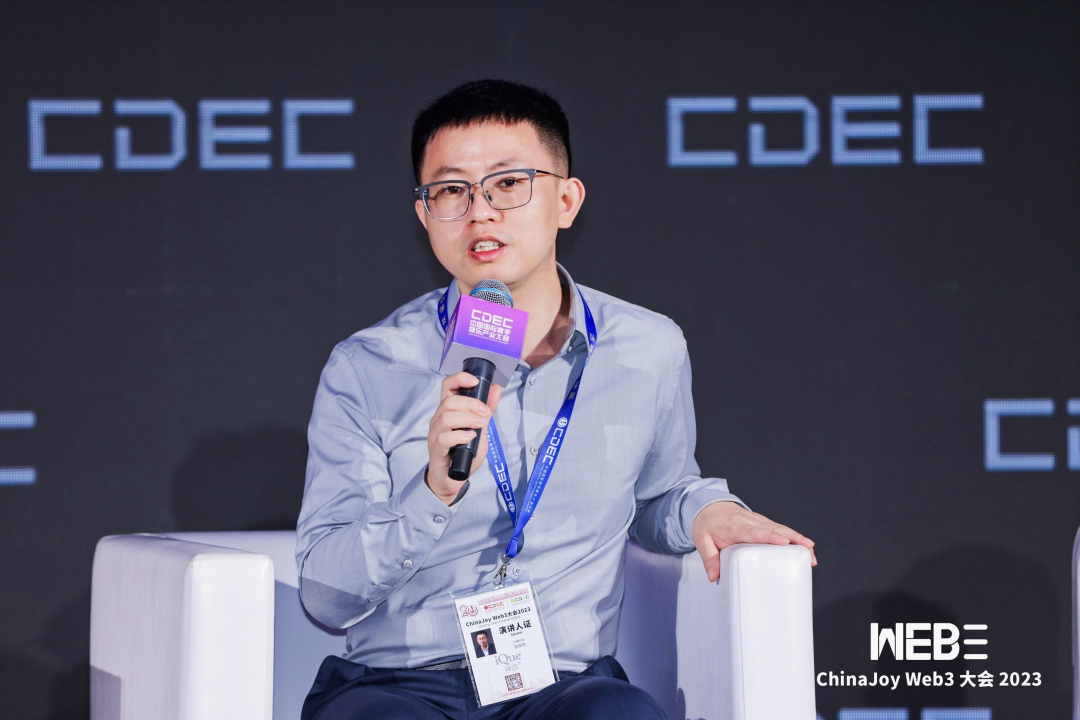
Yuan Yuming, CEO of Huolian Technology
Guo Junxiu, Founder and CEO of Elven, added during the discussion that blockchain can elevate financial digitization to a new level—enabling fully real-time integration between business and finance. Since all data resides on-chain, every business contract simultaneously serves as a financial fulfillment record. This creates a strong foundation for data governance, integrating contract signing and execution from day one, laying a solid groundwork for true business-finance integration.

Guo Junxiu, Founder and CEO of Elven
During the third session, "Web3 Leading a New Paradigm in Game Industry Transformation," James Ho, Fund Manager at Animoca Ventures, delivered a keynote titled "The Past and Future of Web3 Gaming." James outlined Animoca Ventures' current investment strategy: to accelerate mass adoption of Web3, they now prioritize investing in innovative open infrastructure projects and content applications, shifting focus from marketplaces to content creation. "True digital ownership means creating a more equal and open internet, bringing in more creators and unlocking greater economic opportunities," said James Ho. "When we reach a billion Web3 gamers, we want to remain at the forefront."

James Ho, Fund Manager at Animoca Ventures
Chen Haiteng, Chief Strategic Officer for Asia at Doublejump.tokyo, presented on "Business Opportunities and Challenges in Japan’s Web3 Gaming Industry." He shared that Japan’s Web3 gaming market is currently seeing major game companies and IP holders actively entering or announcing plans to enter. The market’s热度 and sustainable momentum are growing. Both Japanese corporations and the government are focusing on building a healthy Web3 ecosystem, making now the ideal time to enter.
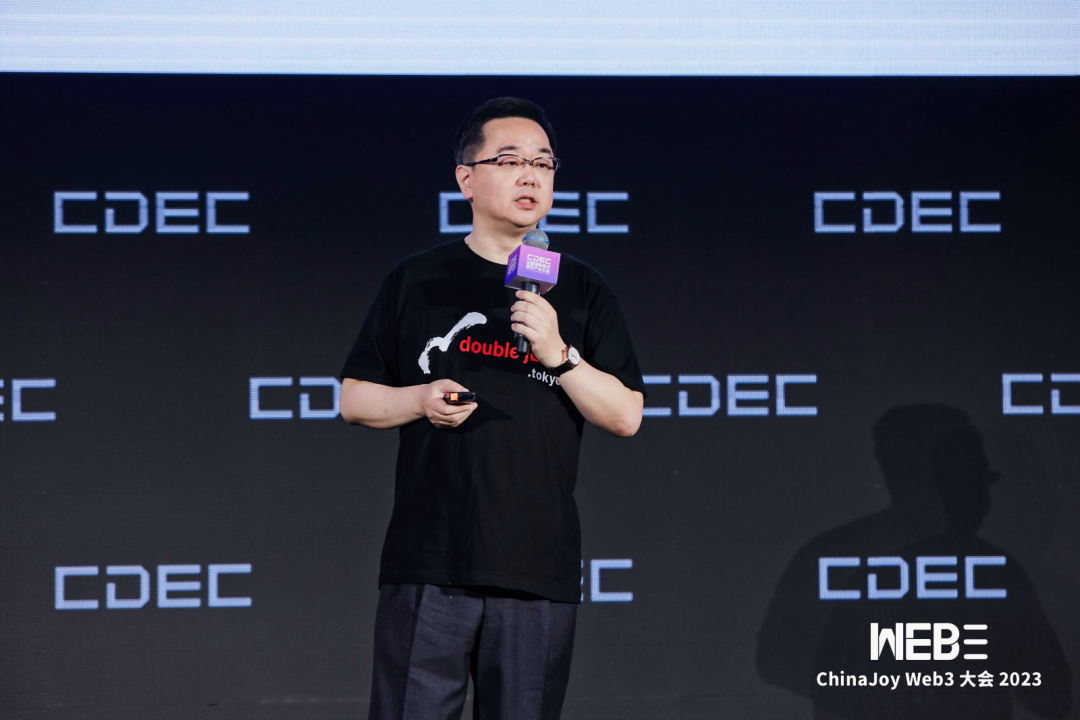
Chen Haiteng, Chief Strategic Officer for Asia at Doublejump.tokyo
Doublejump.tokyo is a company dedicated to NFT and blockchain game development, often referred to as the "Nintendo of Japan’s Web3 industry." Bandai Namco and Sega are strategic investors and partners. The company developed Japan’s first blockchain game. In June, Doublejump.tokyo launched a teaser site for *Three Kingdoms Battle – Sangokushi Taisen*, a groundbreaking Web3 game licensed by Sega, set to launch in 2023. Doublejump.tokyo is also involved in developing Oasys, a Japanese public blockchain designed specifically for game developers.
The final session, "The Current State and Future Trends of the Metaverse," featured Yu Jianning, Founder and Dean of Uweb, speaking on "The True Era of the Metaverse: Web3.0 and AIGC Empowering Game Industry Transformation." Yu believes that Web3.0 not only builds a human-scale financial internet but also a human-scale value internet—one of the key pillars of the future metaverse. Looking at the evolution of the internet, content and modes of creation have been crucial drivers. Web1 focused on marginal content, Web2 on UGC and short videos, while Web3-era content is increasingly driven by AI. This shift in production methods transforms content ecosystems, alters the relationship between content and users, redefines value logic, and ultimately reshapes the entire internet.
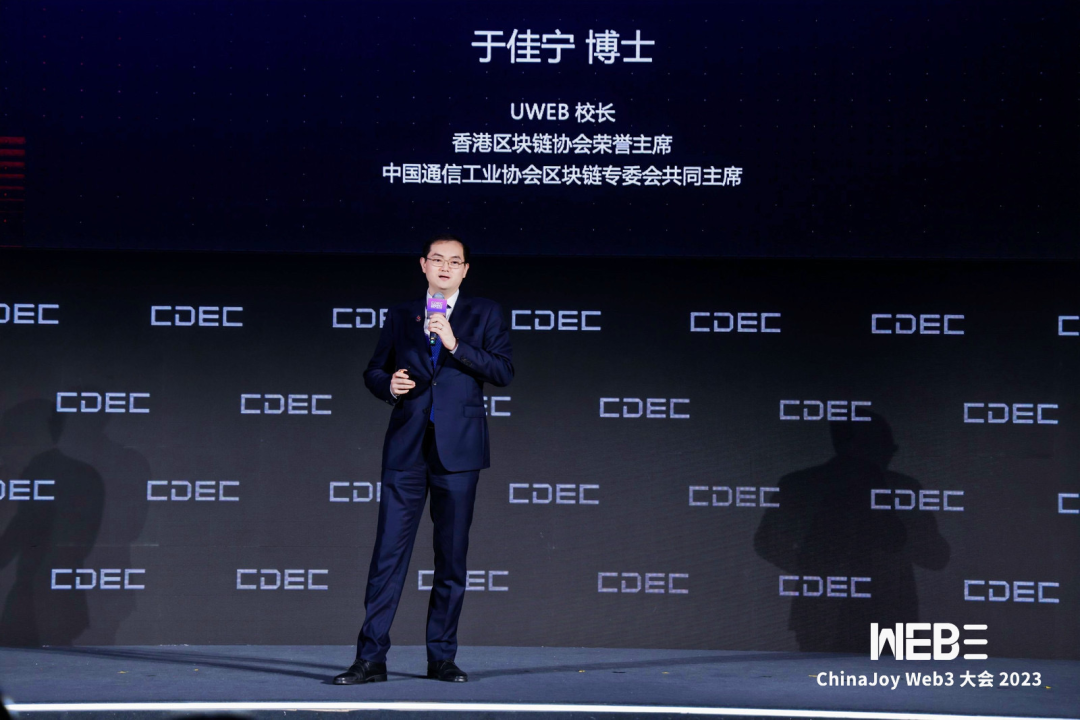
Yu Jianning, Founder and Dean of Uweb
Mo Ziyuan, Solutions Architect at Amazon Web Services (AWS), delivered a keynote titled "Building Immersive Metaverses on Web3." Mo explained that the emergence of the metaverse offers startups an opportunity to break the monopoly of gaming giants, though they still face major challenges—particularly the lack of comprehensive development toolchains available to large corporations. For example, how does one build a complete data analytics system? AWS has designed a full suite of game development tools for indie developers, including GameLift, a fully managed backend service for game servers, and Open 3D Engine (O3DE)—an open-source, modular, cross-platform 3D engine capable of producing AAA-quality games and used in 3D film production.
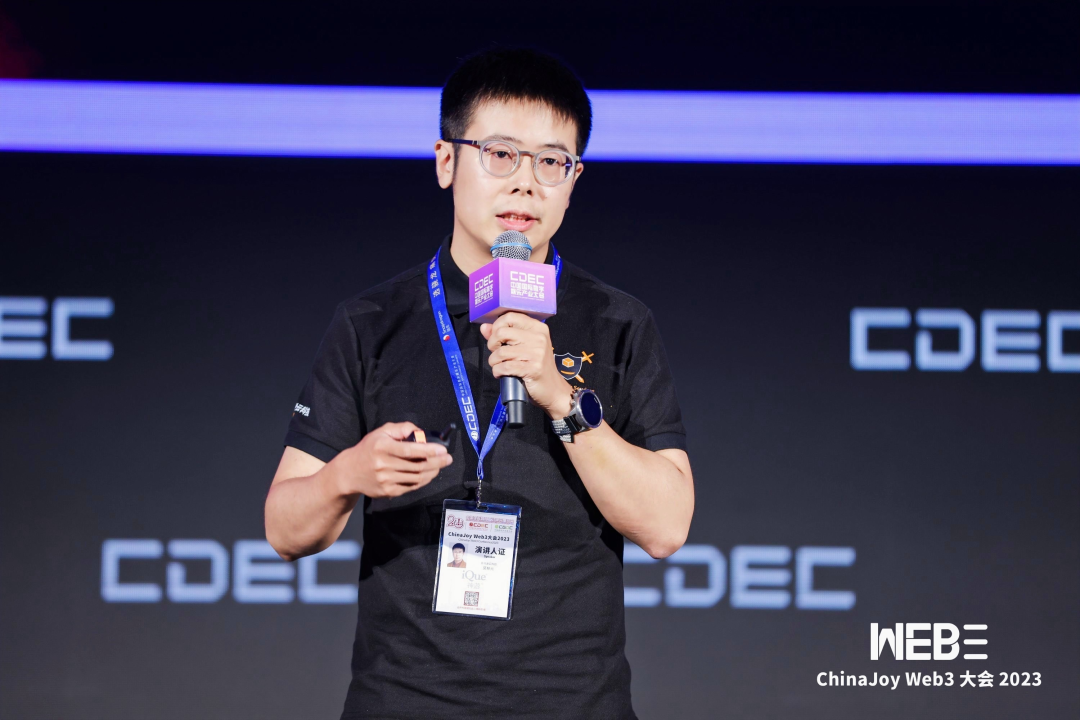
Mo Ziyuan, Solutions Architect at Amazon Web Services
Additionally, internationally recognized expert in commercial law, fintech, and digital law, Zhao Binghao, delivered a keynote titled "Compliance Guide for Cross-border Web3 Projects." His talk covered "Compliance Frameworks for Web3 Projects" and "Legal Risks and Compliance Strategies for GameFi Projects." Zhao emphasized that legal structuring for Web3 projects hinges on three factors: 1) Funding structure—most Web3 projects require investment, necessitating legal considerations; 2) Governance structure—many Web3 projects evolve into DAOs, raising legal compliance questions for founders; 3) Liability structure—closely tied to governance.
Regarding "Legal Risks and Compliance for GameFi Projects," Zhao discussed the current regulatory landscape in East Asian countries, noting that China, Japan, and South Korea have particularly detailed and stringent oversight of GameFi. For global compliance and long-term success, projects must respect local regulations and implement targeted compliance measures.
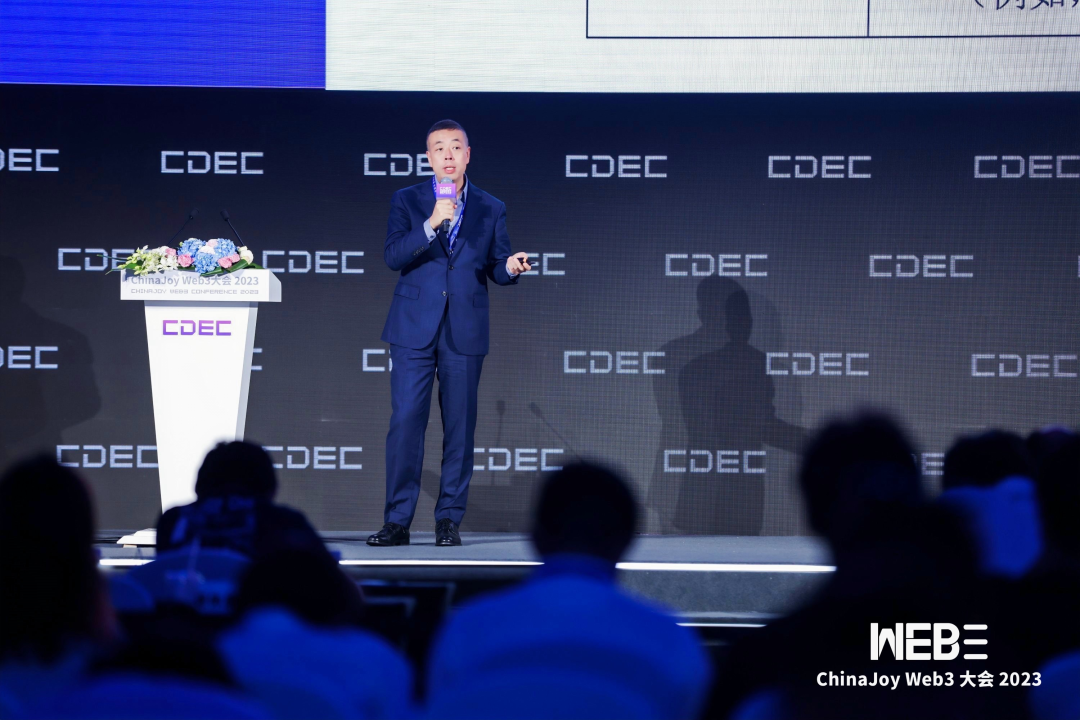
Zhao Binghao, Internationally Renowned Expert in Commercial Law, Fintech, and Digital Law
Salar Shahna, Chairman of the WorldXR Forum and Business Director at Sensoryx, spoke on "Connecting the Real World to Empower the Metaverse." Salar remarked, "Many think VR is dead, but the rise of blockchain, the metaverse, and Web3 has actually prolonged its life. Virtual assets and blockchain technology can integrate with VR, being used—and even consumed—within virtual worlds. Blockchain better connects the real and virtual worlds."
Finally, Salar highlighted that digital identity acts as a passport in the metaverse, giving users a sense of identity and belonging in virtual environments, significantly enhancing user experience.
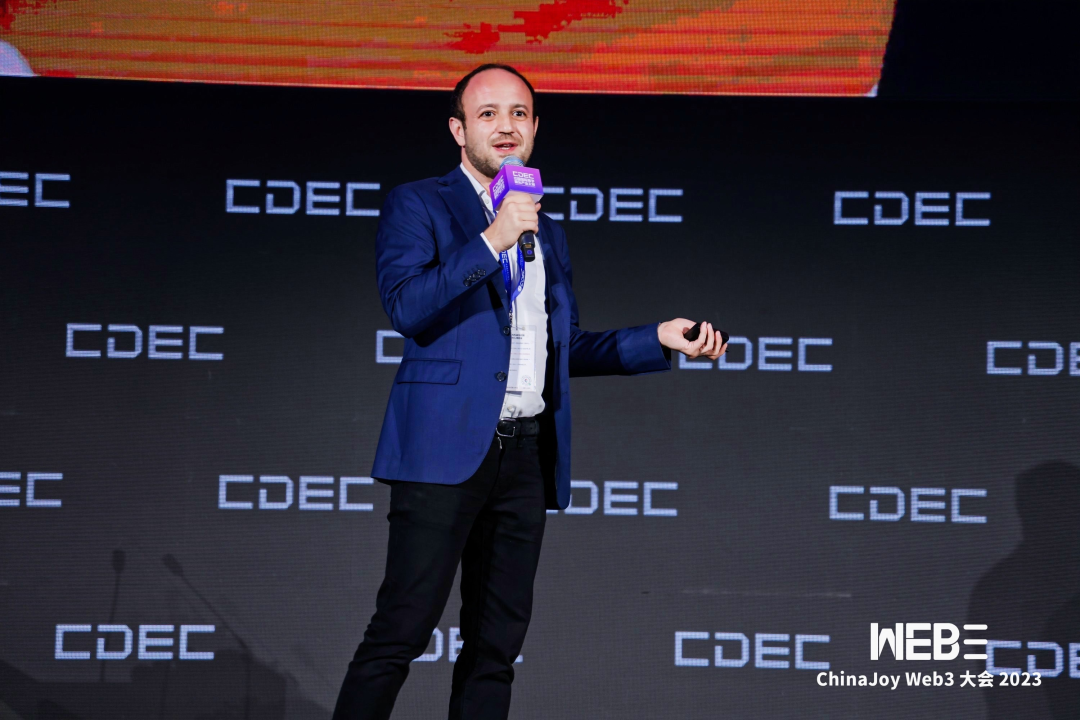
Salar Shahna, Chairman of WorldXR Forum, Business Director at Sensoryx
The conference received strong support from strategic partners including Ava Labs, Amazon Web Services, Animoca Ventures, double jump.tokyo, and Oasys. With the collective efforts of Web3 entrepreneurs and experts across various fields, the event concluded successfully.
This inaugural ChinaJoy Web3 2023 marks the first collaboration between ChinaJoy and the Web3 industry. The success of the conference reflects the accelerating synergy between cutting-edge technologies and the digital entertainment sector, signaling that Web3-powered digital economies are rapidly advancing—a better era for the digital economy is arriving.
Join TechFlow official community to stay tuned
Telegram:https://t.me/TechFlowDaily
X (Twitter):https://x.com/TechFlowPost
X (Twitter) EN:https://x.com/BlockFlow_News
 @ChinaJoy10