NFT's Darkest Hour: New Meme Coin $NOVA Distributes Relief Funds to Blue-Chip Whales
TechFlow Selected TechFlow Selected
NFT's Darkest Hour: New Meme Coin $NOVA Distributes Relief Funds to Blue-Chip Whales
Let those who originally don't need "relief" become "recipients" as well, making $NOVA an economic safety net for anyone.
 Navigating Web3 tides with focused insights
Pop culture/memes are one of the most important components in Web2. The cryptographic technology brought by blockchain has made the monetization of pop culture/memes possible.
Dogecoin originated from a Shiba Inu named Kabosu. $Pepe comes from a common meme we see every day—the Sad Frog.

More interestingly, some memecoins have built native Web3 memes based on Web2 pop culture. $AIDOGE is a representative example.
The $AIDOGE model involves airdropping tokens to all addresses eligible for $ARB airdrops and adding a transaction tax. A portion of the tax revenue is used to purchase $ARB, which will then be distributed as rewards to LPs and token buyers. $AIDOGE leverages DeFi to create a native Web3 meme.
Just as $AIDOGE emerged from AI and memes, Nova—deployed on Ethereum—is similarly derived from AI and PePe. PePe surged 375,000x within just 21 days. Nova’s narrative and imagery are even more exaggerated. Can it recreate this wealth-generation myth? Below, we’ll dive into the $NOVA gameplay.
$NOVA Gameplay: UBI and an Extremely "Ironic" Economic Safety Net
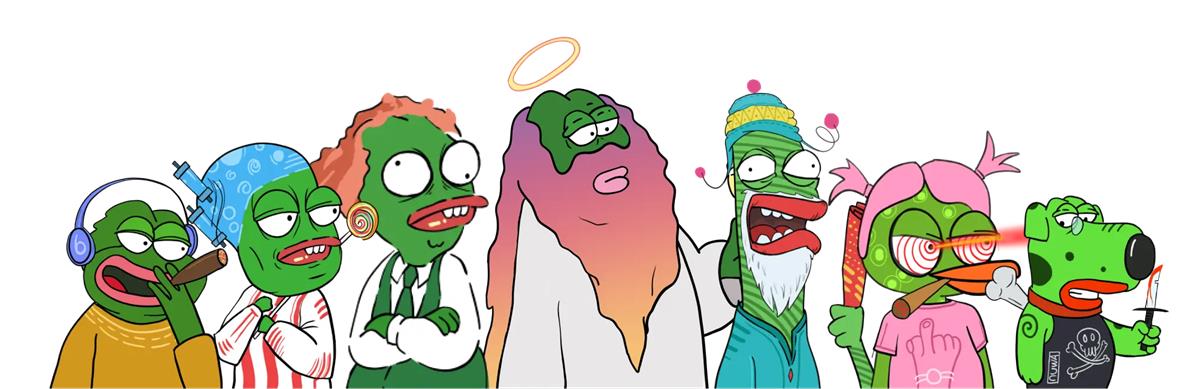
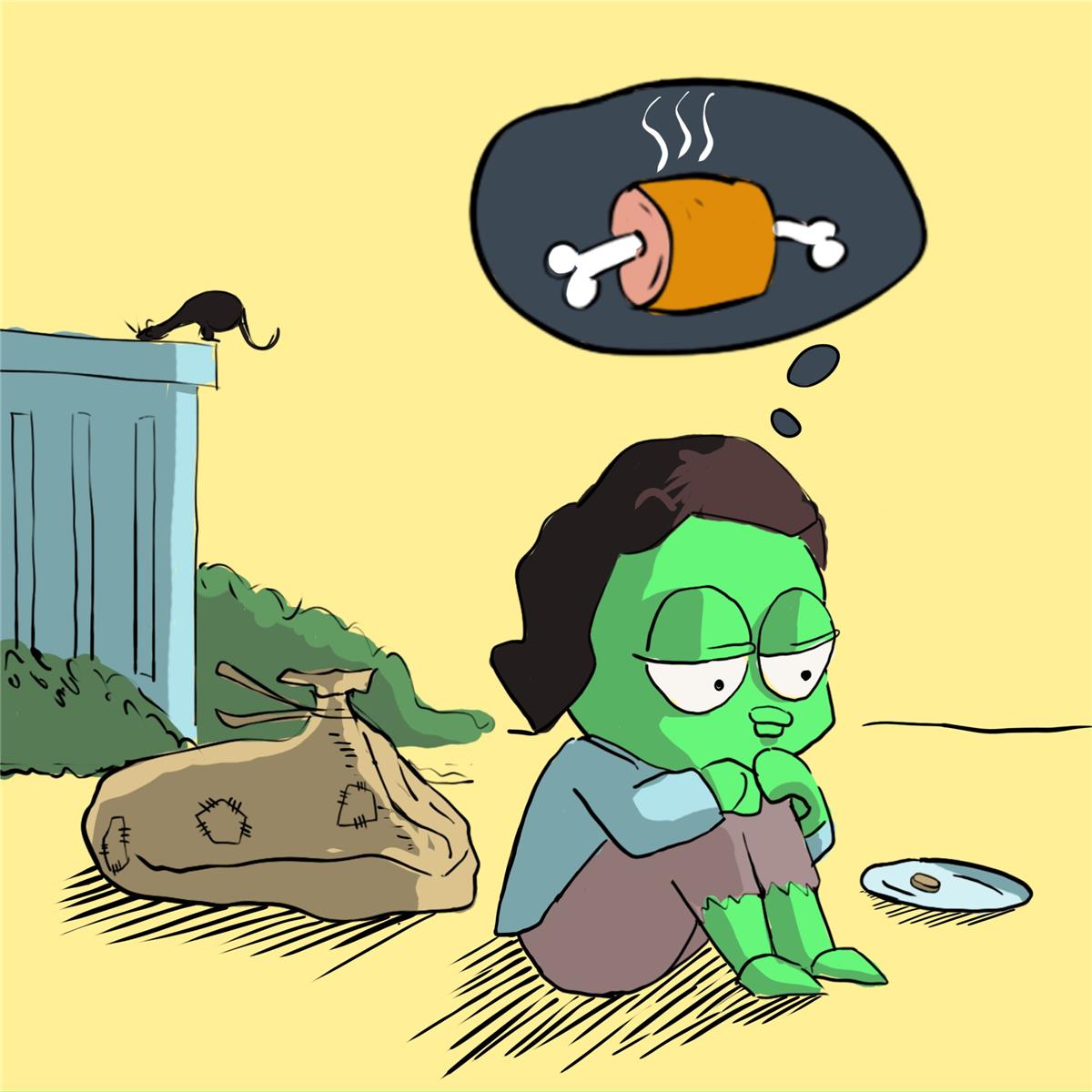
According to its official website, Nova’s smart contract code was written by ChatGPT and officially launched on July 10. The character design on its website resembles those seen in American animated shows, but with exaggerated features—green-toned and wide-eyed, much like users desperately waiting through a bear market.
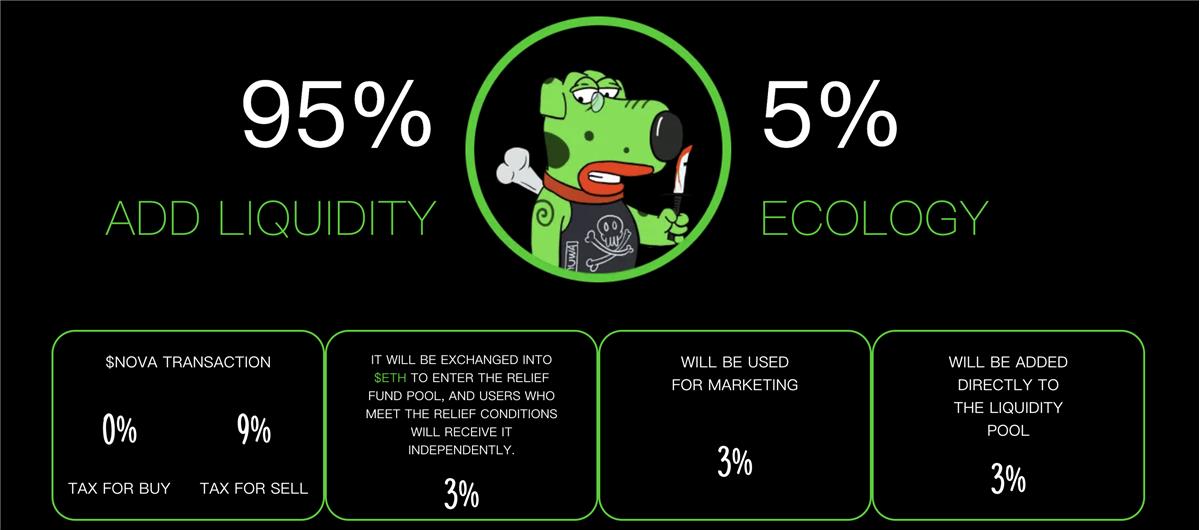
After launch, 95% of $NOVA will be allocated to liquidity provision, while the remaining 5% will support future ecosystem development. The total supply of $NOVA is 1 quadrillion.
Unlike most purely sentiment-driven memecoins, Nova is more like a social experiment—it introduces the concept of UBI into its tokenomics.
UBI stands for Unconditional Basic Income, which Wikipedia defines as "an unconditional, regular cash payment given to every individual or member of a society without means testing or work requirements, issued by a government or organization to ensure basic living conditions—including food, housing, education, healthcare, and utilities—thus guaranteeing fundamental human rights through economic security."
Since the pandemic began in 2020, Elon Musk and Bill Gates have been advocating that governments implement UBI. Recently, OpenAI founder Sam Altman proposed UBI as a solution to the growing problem of human unemployment caused by AI. WorldCoin is a direct manifestation of this idea. He believes that when AI replaces more jobs, lack of employment and income should not threaten survival. Thus, his vision is to provide everyone with financial support to secure their basic livelihood—a theory grounded in economics that could free up time for life and creativity.
However, where will the money come from?
Altman predicts that over the next decade, AI companies will earn so much profit that they can afford to redistribute part of it to everyone. He conservatively estimates that 250 million people could receive $13,500 annually at no cost.
To enable equal access to these funds globally, Altman chooses blockchain technology and issues a cryptocurrency called “Worldcoin.” He envisions individuals joining the Worldcoin system so that universal basic income can be directly distributed through it.
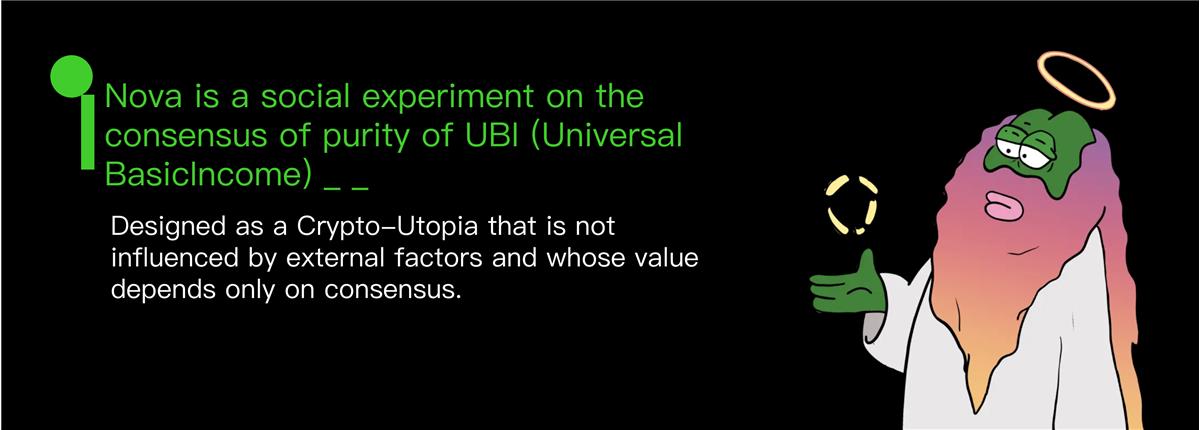
In Web3 terms, this translates to equally distributing protocol treasury funds among all token holders.
So how does Nova do it?
The $NOVA contract includes a 9% sell tax (0% buy tax). Of this, 3% automatically purchases ETH and distributes it to holders of the top 30 blue-chip NFTs. In the traditional world, welfare is intended for those in need. By allocating one-third of the sell tax to these elite NFT holders, $NOVA expresses compassion toward the collapsing NFT market.
In phase one, according to the official site, $NOVA will distribute 10,000 ETH in relief to major blue-chip holders.
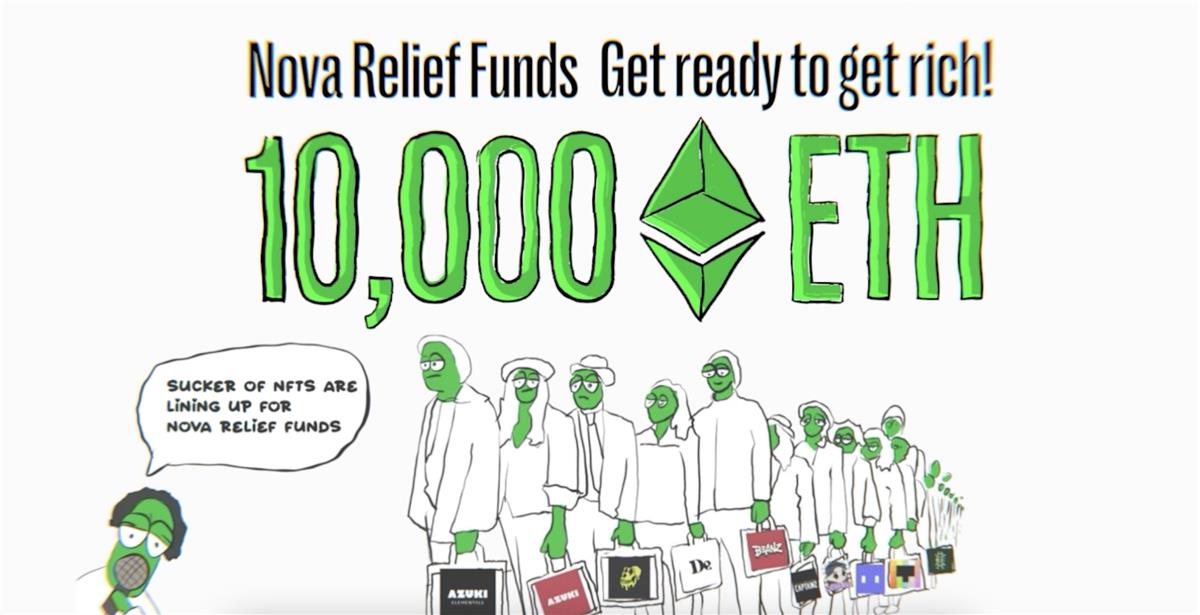
To “help” those who suffered heavy losses in recent NFT events involving Azuki, BAYC, etc., $NOVA ultimately decided to allocate tax proceeds to them. At the same time, this also appears as a form of reverse irony—providing “relief” to those who seemingly don’t need it, turning $NOVA into an economic safety net for anyone.
It must be said that during nearly two years of bear market in the NFT space, these once-celebrated crypto elites and whales indeed suffered the heaviest losses. Eligible holders can regularly claim relief funds on the $NOVA website.
Of the remaining 6%, 3% will fund team marketing expenses, and another 3% will be added to the liquidity pool to achieve self-sustaining liquidity growth.
Additionally, $NOVA incorporates a token burn mechanism to achieve deflation—$NOVA’s initial price is $0.000000001. Every time the price increases tenfold, the system automatically burns 1% of the circulating supply. The current price is $0.000000011.
Simply put, Nova is conducting a social experiment using cryptocurrency technology.
Humanitarian Consensus Amid NFT Collapse
Beyond innovative mechanics, a strong narrative and timely context are equally crucial for any successful memecoin.
The NFT market has been on a downward trend throughout this year. The root cause lies in tightening monetary policy in the U.S., leading to dwindling liquidity and increasingly PVP (player versus player) dynamics. As the weakest link in the asset chain, NFT liquidity has gradually evaporated after a prolonged rate-hiking cycle, accelerated further by the emergence of Blur. As the tide recedes, only Azuki’s collection has maintained resilience, even rising against the trend.
Another key factor supporting Azuki community confidence was the offline party scheduled for June 23 in Las Vegas. Before the event, rumors circulated about potential major announcements. However, after the release of Azuki Elementals failed to meet expectations, many OG Azuki members left. Consequently, Azuki’s floor price dropped from 16–17 ETH before the party to the current 5–6 ETH.
Azuki’s collapse feels like the final veil being lifted from the NFT market. After Azuki’s downfall, blue-chip NFTs broadly declined. This is arguably the darkest hour for the NFT market. Yet, we firmly believe that NFT technology itself will gain broader adoption in the future.
Unlike other memecoins focused on NFT维权 (rights protection), $NOVA extends maximum humanitarian care through its UBI mechanism to those harmed by falling blue-chip NFT prices. This narrative is enduring: during downturns, Nova can subsidize holders who continue holding blue-chip NFTs; when the market recovers, Nova may accompany them back to new highs.
To ensure fair and transparent distribution of incentives, Nova will conduct list verification, ensuring that every recipient of “relief” is a genuine blue-chip NFT holder, so fees generated by $NOVA traders reach those truly in need. Moreover, this is just the beginning. Nova’s vision includes encouraging all ecosystem participants to equally engage in community governance, fostering collective growth and progress.
It is foreseeable that sustainable meme narratives, the UBI mechanism, and a fair, transparent community environment will provide solid momentum for $NOVA’s growth.
Final Thoughts
$NOVA does not limit itself to being just another Ethereum-based memecoin—it aims to stand firmly beside everyone in need through an innovative social experiment, accompanying them through valleys and toward peaks.
More importantly, Nova seeks to build a robust community within the crypto utopia through this experiment. The value of $NOVA is entirely determined by this community—its consensus is $NOVA’s value.
Whether $NOVA can become the new king of memes and a true economic safety net for all remains to be seen.
Join TechFlow official community to stay tuned
Telegram:https://t.me/TechFlowDaily
X (Twitter):https://x.com/TechFlowPost
X (Twitter) EN:https://x.com/BlockFlow_News