In-depth Exploration of the Three Major Challenges Facing Ethereum
TechFlow Selected TechFlow Selected
In-depth Exploration of the Three Major Challenges Facing Ethereum
Can Ethereum withstand the pressure?
 Navigating Web3 tides with focused insights
Compiled by: DoraFactory
This article will delve into the three main reasons highlighted by Buterin that could lead to Ethereum's failure.
As we navigate the transformative maze of blockchain technology, examining Ethereum's developmental trajectory is crucial. According to co-founder Vitalik Buterin, Ethereum faces several significant challenges that, if not properly addressed, could lead to its downfall.
First obstacle: The shift toward Layer 2 scaling. As blockchain capabilities expand and demand grows, Ethereum needs to provide a scalable solution while preserving its decentralized ethos. This is a balancing act—if unresolved, users may become frustrated by high transaction costs and turn to centralized alternatives, undermining Ethereum’s core value proposition.
Second, wallet security on Ethereum. Like seasoned fortress guards, Ethereum must ensure the safety of user assets. If users cannot trust Ethereum to protect their funds, they may flock to centralized exchanges, posing another potential threat to Ethereum.
Finally, privacy is critical in today’s digital world. If Ethereum fails to offer robust privacy protection mechanisms, it risks losing users who may instead migrate to centralized solutions capable of providing at least some degree of data protection.
1. What Is Ethereum?
Ethereum, created by Vitalik Buterin, is the second-largest cryptocurrency by market capitalization. It rose to prominence in the industry through the introduction of smart contracts and is considered more significant than Bitcoin. Ethereum has built an entire ecosystem for decentralized applications (DApps) and serves as the foundation for many other cryptocurrencies.
Ethereum represents an interconnected ecosystem of diverse communities and toolsets, empowering individuals to transact and communicate without centralized control.
Launched in 2015, Ethereum expanded upon the groundbreaking concepts introduced by Bitcoin and possesses several unique features. Both platforms enable the use of digital currencies without reliance on banks or payment service providers. However, Ethereum introduced programmability, allowing the creation and deployment of decentralized applications on its platform.
While Bitcoin only allows simple value-transfer messages, Ethereum elevates this concept further—it enables not just message exchange but also the creation of any general-purpose program or contract. This unlimited potential for contract creation has sparked massive innovation within the Ethereum network.
Unlike Bitcoin, which primarily functions as a payment network, Ethereum operates as a diversified marketplace hosting various services such as financial platforms, games, and social networks. These applications respect user privacy and resist censorship, solidifying Ethereum’s unique position in the digital world.
Ethereum relies on three fundamental elements to thrive: Layer 2 (L2) scaling, wallet security, and privacy. These three components are intrinsically interlinked, each playing a vital role in Ethereum’s functionality. Failure in any one area risks destabilizing the entire system. Do not confuse this with the blockchain trilemma, which refers to the idea that no blockchain can simultaneously optimize decentralization, security, and scalability.
2. Ethereum’s Three Key Elements
L2 Scaling
Crucial for Ethereum to handle increasing usage. Imagine a busy bar where a single bartender struggles to serve a growing crowd. In this analogy, L2 scaling is like hiring additional bartenders—it enables Ethereum to process transactions faster and avoid high per-transaction costs. Without efficient L2 scaling, Ethereum’s transaction fees could reach $3.75 (or even $82.48 during bull markets), pushing users toward centralized alternatives.
Wallet Security
Wallet security is akin to our trust in the stability of a stool. Users must feel confident storing funds and assets within the system. Without strong wallet security, users may shift to centralized exchanges.
Privacy
The public visibility of all transactions sacrifices privacy for many users, who may then turn to centralized solutions offering at least some level of data concealment. Without robust privacy protections, Ethereum risks losing a large portion of its user base.
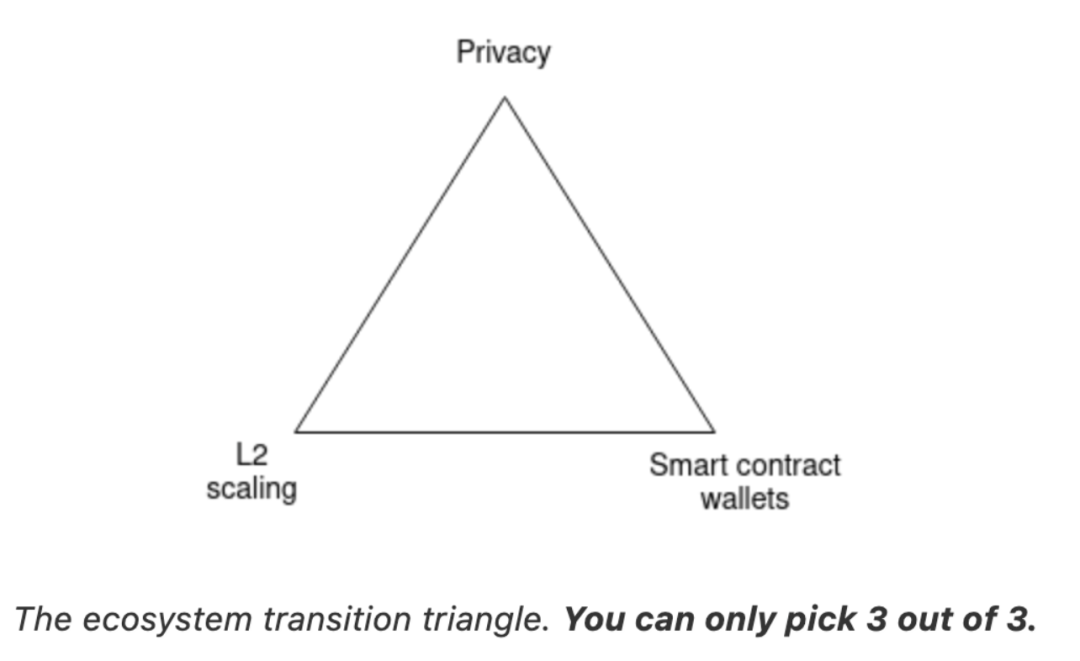
3. L2 Scaling
L2 scaling involves moving most of the computational load from the main Ethereum chain (Layer 1) to “sidechains” or Layer 2 networks. These sidechains can process transactions faster and at lower cost—like additional highways alleviating traffic congestion.
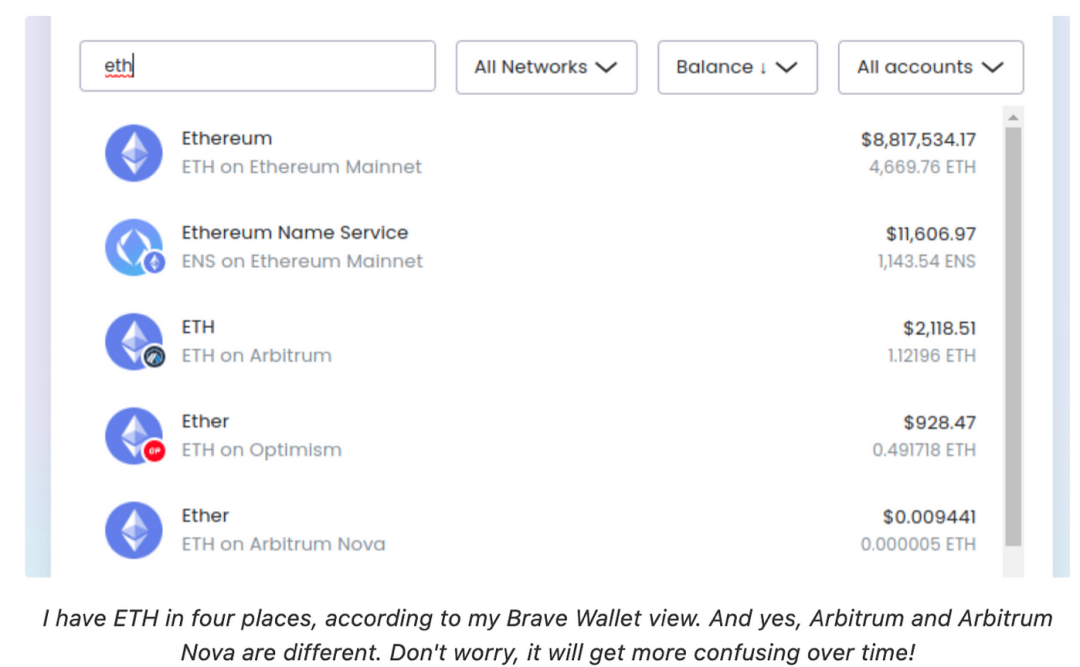
However, this transition is not without challenges. It requires users to adapt to a new framework—existing across multiple L2s rather than relying on a single address. This shift resembles holding multiple bank accounts at different institutions, each serving distinct purposes, instead of depending on one unified account.
There is already evidence of this trend—for example, Optimism being used in ExampleDAO, zkSync implemented in stablecoin systems, and Kakarot applied in other use cases. In each case, users must create accounts on their respective L2s. The transition to L2 scaling is both challenging and essential. For Ethereum to continue advancing toward its goal of becoming a global, open, and permissionless platform, overcoming this barrier is imperative.
4. Wallet Security
The second critical point in the Ethereum ecosystem is wallet security. Wallet security is a vital feature in the cryptocurrency space, acting as the first line of defense against unauthorized access and potential theft of digital assets. Since digital wallets are key components of Ethereum’s overall operation, any security flaws or vulnerabilities could result in severe losses and erode trust in the platform.
A key challenge facing Ethereum is the potential risk to wallet security. Essentially, if Ethereum cannot provide users with strong and reliable wallet security, there is a high likelihood that users will move their funds to centralized exchanges. Centralized exchanges can offer advanced security measures such as two-factor authentication, cold storage, and insurance against potential theft, making them a more attractive option for storing digital assets.
There have been several past incidents showing that Ethereum’s wallet security has been compromised, negatively impacting the ecosystem. For instance, in 2017, Parity, an Ethereum-based company, suffered a major security breach when attackers exploited a vulnerability in their multi-signature wallets, resulting in over $30 million worth of Ether being lost. This incident not only caused significant financial loss but also shook confidence in Ethereum’s wallet security.
These events underscore the importance of developing advanced digital wallet security features within the Ethereum ecosystem. Without proper wallet security, Ethereum risks losing users and their trust in the platform’s ability to safeguard digital assets. Therefore, for Ethereum to succeed and maintain its standing in the cryptocurrency space, enhancing wallet security and ensuring secure storage of digital assets must be prioritized. This is an issue requiring the highest priority on Ethereum’s development roadmap.
5. Privacy
Privacy bears the significant responsibility of protecting transaction confidentiality within the Ethereum network. However, as we continuously progress through the digital maze, we must confront the reality that privacy in Ethereum’s operations is not as secure or reliable as we might hope.
The nature of blockchain is that of a public ledger, recording every transaction and interaction between users. On Ethereum, every transaction and Proof-of-Attendance Protocol (POAP) can be viewed by anyone. In principle, this provides transparency—an important factor in building trust in any transaction. Yet, it also poses significant challenges to individual and transactional privacy. The public nature of these transactions reveals substantial information about participants and their activities, opening doors to potential misuse.
Insufficient or failed privacy measures would have far-reaching consequences for the entire Ethereum ecosystem.
Ethereum’s history is not devoid of incidents where privacy breaches led to serious outcomes. Notably, in 2016, the Decentralized Autonomous Organization (DAO) was hacked, resulting in the theft of 60 million Ether. In another case, a privacy vulnerability in 2020 triggered an “accidental hard fork” on Ethereum—a flaw that split Ethereum into two separate blockchains.
In summary, Ethereum’s success and its ambition to become a mature technological stack heavily depend on how it navigates the delicate balance between transparency and privacy. Failing to resolve this critical issue would shake Ethereum’s foundational structure and hinder its evolution into a global, open, and permissionless experience.
6. Transitional Solutions to Address These Challenges
Adapting to these major transitions will inevitably reshape the familiar relationship between Ethereum users and addresses, potentially creating a more complex landscape. Take the transition to L2 scaling as an example. In this new paradigm, users will no longer be confined to a single address. Instead, they will hold multiple accounts spread across various L2 solutions, each with its own unique address. This change goes beyond surface-level—it introduces new complexities and potential confusion for users accustomed to managing just one address.
Yet, these challenges are not limited to the user perspective. The transitions also demand significant adjustments from developers. As Buterin points out, the existing mental model of “one user ≈ one address” is gradually fading, replaced by the need to coordinate interactions across different addresses, L2s, and applications. This shift requires a deep and fundamental rethinking of how we interact with Ethereum—an undertaking that may initially seem daunting. The difficulty lies in coordinating these efforts across the entire ecosystem to ensure a smooth transition.
For instance, a simple payment now requires more than just a 20-byte address. It also necessitates the recipient specifying their L2 solution along with their address, while the sender’s wallet automatically routes the funds via a bridging system to the designated L2. This is just one example among many changes required within the Ethereum ecosystem.
7. Looking Ahead
Can Ethereum Withstand the Pressure?
Despite facing these significant challenges, Ethereum is not standing still. To tackle scalability issues, developers are turning to rollups (Layer 2 solutions), which aim to process transactions off-chain and then bundle and post them onto the main Ethereum chain. This increases throughput and reduces costs while maintaining the security guarantees of the main chain.
Regarding wallet security, efforts are underway to transition users to smart contract wallets. These wallets offer more secure storage solutions by leveraging the inherent security mechanisms of Ethereum itself.
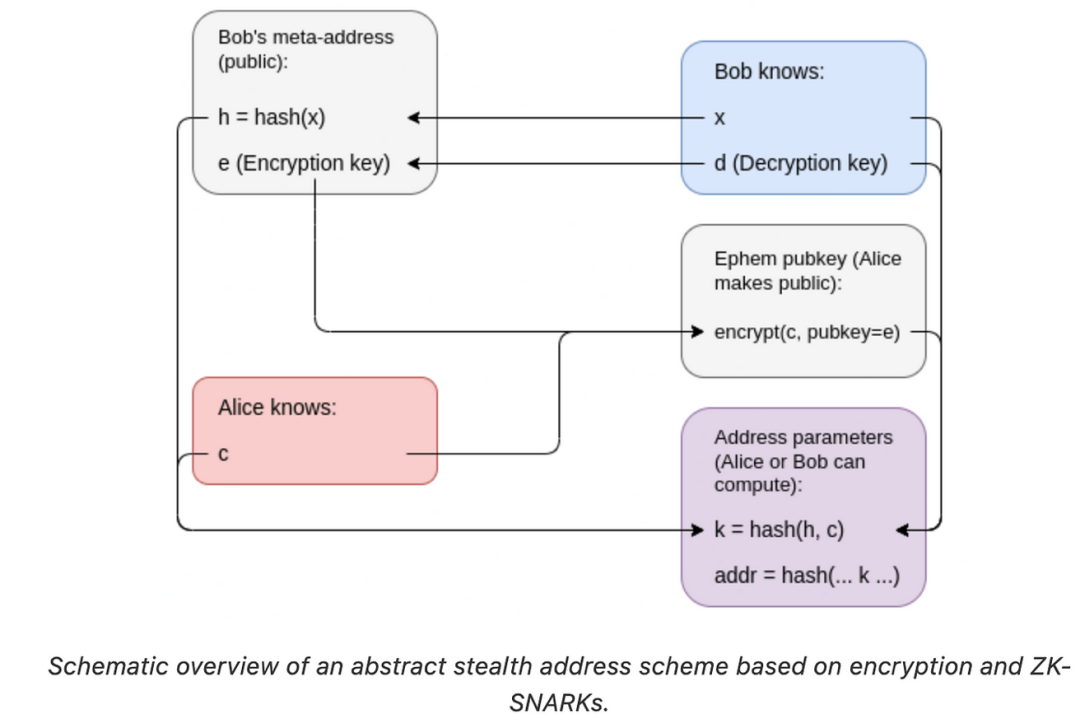
Privacy concerns are being addressed through various innovative technologies, such as zero-knowledge proofs, which allow users to prove ownership without revealing any sensitive information.
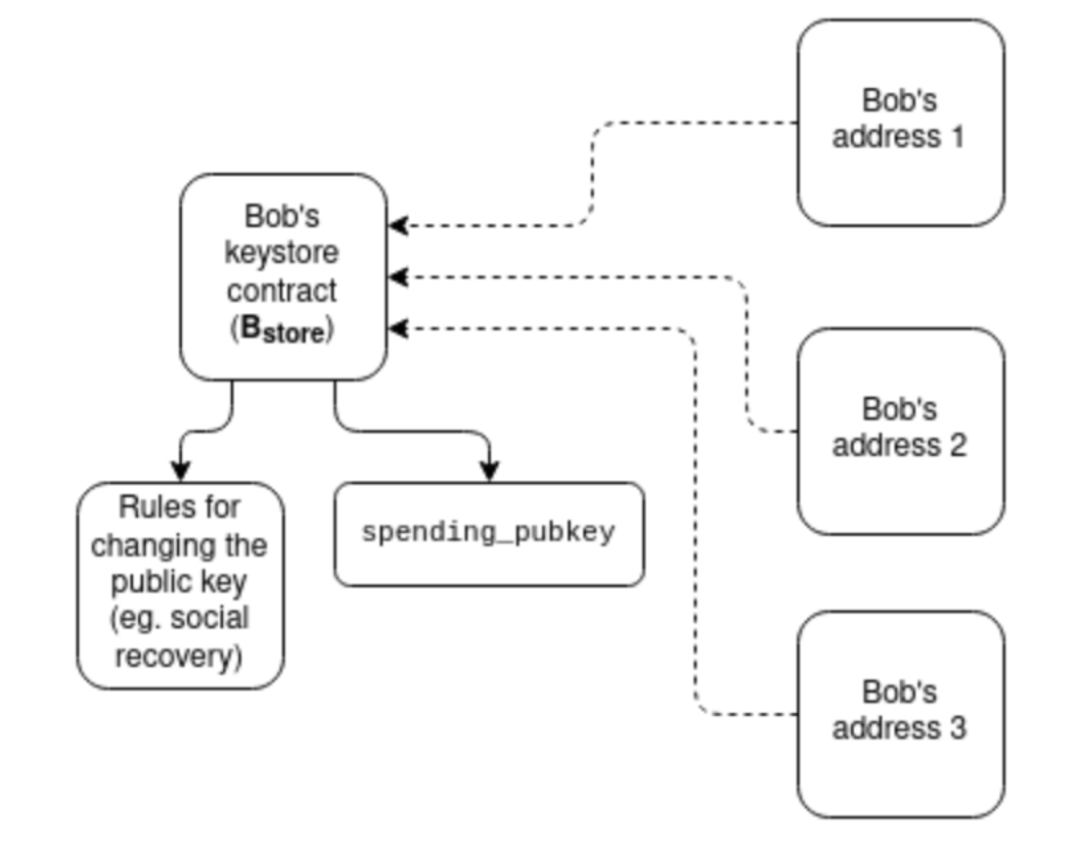
For these challenges, Vitalik’s proposed solution is based on an architecture that separates validation logic from asset holding. Through keystore contracts, validation logic can be placed in one location corresponding to different addresses across L2s, significantly reducing the complexity of managing multiple addresses and associated security risks.
Join TechFlow official community to stay tuned
Telegram:https://t.me/TechFlowDaily
X (Twitter):https://x.com/TechFlowPost
X (Twitter) EN:https://x.com/BlockFlow_News
 @master_ventures