Everyone asks Vitalik: BCH culture has made progress, MPC wallets have fundamental flaws, longest hike was 113 kilometers
TechFlow Selected TechFlow Selected
Everyone asks Vitalik: BCH culture has made progress, MPC wallets have fundamental flaws, longest hike was 113 kilometers
Previously, Vitalik publicly stated that BCH was largely a failure; now he says that BCH has made cultural progress.
 Navigating Web3 tides with focused insights
Compilation: TechFlow

On June 28, Ethereum founder Vitalik hosted a public AMA on Twitter, answering various questions from the community—ranging from industry topics to personal life—offering many insightful, thought-provoking perspectives and even some personal anecdotes.
For example, Vitalik stated that MPC-based EOA wallets have fundamental flaws, asserting that smart contract wallets are the only viable choice—a view that sparked pushback from professionals working in the MPC wallet space.
In response to a question from Bankless co-founder David, Vitalik expressed dissatisfaction with those who see tokenization as the primary breakthrough and innovation in cryptocurrency. While acknowledging that tokenization has enabled new economic models and democratized access to financial tools, he believes this narrow focus undermines the broader potential of the technology.
Previously, Vitalik had publicly stated that BCH was largely a failure; now, he acknowledges cultural progress within the BCH community.
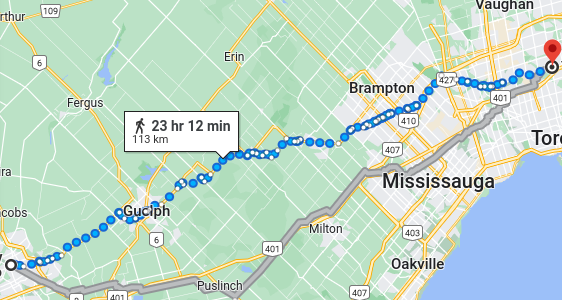
Finally, Vitalik revealed an impressive personal record: his longest hike covered 113 kilometers over 23 hours—an astonishing feat.
Below is a curated selection of the Q&A session by TechFlow:
Soul Wallet: If you could go back in time, would you have included account abstraction in Ethereum?
Vitalik:
Yes, absolutely. I think if I were designing a system from scratch, I would build something like ERC-4337 into the design from the start. Here’s a simple version:
-
Each user account has a "validator" that can only read storage and transactions.
-
Transactions first call the validator for verification; if validation passes, the transaction specifies the code to be executed by the account.
-
Nonces are still managed by Ethereum.
The main thing missing here is aggregation, which becomes important (e.g., proof aggregation). For this, it's hard to choose between two options:
(i) An ERC-4337-style general-purpose aggregation system.
(ii) A more opinionated system where what gets aggregated are "claims," with a basic claim being a static call to the current Ethereum state, and then claims are aggregated via ZK-EVM proofs.
Looking ahead, (ii) seems more correct.
By the way, I’d also try to explore whether there are any useful ways to make privacy more native. Probably not anything exactly like Zcash, but perhaps tools that make privacy easier—maybe good recursive snarking is exactly what we need.
Eva Beylin: Which countries do you think are most likely to become the most crypto-friendly and serve as long-term livable crypto hubs?
Vitalik: Generally more optimistic about smaller countries than large ones.
Owocki.Ξth: What excites you in the field of regenerative/public goods funding?
Vitalik: Better tracking of the provenance of funds, so we can identify and reward the entire tree of processes that led to certain selected outcomes. I’m starting to see work in this area, and it would be great to see more.
JAKE: What surprised you most about Zuzalu compared to your expectations?
Vitalik: I think Zuzalu was a successful experiment—many core assumptions were validated:
1. It’s entirely feasible to organize such an event.
2. People are willing to stay.
3. Ideas successfully cross-pollinate.
4. ZK technology integration succeeded.
5. Support for healthy culture succeeded.
I think the biggest unresolved issue is how to balance quality and inclusivity at scale. Currently, people I’ve spoken to (and myself) seem to lean toward multi-layered “community networks”—what this means in practice depends on the details...
Evan Van Ness: Are you concerned that Ethereum culture might be heading down a path too similar to Bitcoin culture, where the loudest voices are non-technical?
Vitalik: Not sure if being non-technical itself is the problem—it’s more like the dark trinity of (i) non-technical, (ii) overconfident, and (iii) adversarial. Of these, I’d say the latter two matter more. But definitely worth watching!
Longzhu: How do you envision the scale and complexity of a human city on Mars? If by 2050 there are 1 million settlers on Mars, a ticket costs only $50,000, and Ethereum TPS reaches 60 million, would you permanently move to Mars?
Vitalik: Depends on quality of life! (And the jurisdiction Mars cities end up having, and culture...)
Pourteaux: Do you think it’s worthwhile to foster kinship between Ethereum and Bitcoin holders? If so, how can we achieve this?
Vitalik: I’d say one important area for potential coordination is jointly supporting non-blockchain freedom + privacy tools more aggressively: end-to-end messaging (without phone numbers), internet anonymity, end-to-end collaboration tools, secure operating systems (Graphene, Qubes), open hardware, open VR...
DavidHoffman: What aspect of the crypto world do you dislike the most—what drains your energy or mental resources the most?
Vitalik: As always, people thinking the main innovation in crypto is tokenization.
Secondarily:
1. Massive capital misallocation (TechFlow note: appears to refer to capital going to projects he considers junk).
2. People who easily violate principles (cough cough, fake libertarians...).
3. On the other side, completely unrealistic purist beliefs (“A 12-word seed phrase is good enough for anyone!”).
4. Unnecessary conflict.
Yuga: What are your thoughts on the pros and cons of MPC (EOA)-based wallets versus smart contract wallets?
Vitalik: MPC-based EOA wallets have fundamental flaws because they cannot revoke keys (re-sharing doesn’t count—the old holder can still recover the key). Smart contract wallets are the only viable option.
Note: Shortly after, Bitizen, an MPC wallet founder, responded in writing, stating that Vitalik is an exceptional genius programmer, but possibly a poor product manager.
Article:
https://www.techflowpost.com/article/detail_12323.html
QMA564: What applications do you use most frequently?
Vitalik: Browser, chat apps, Duolingo, Pleco (Chinese learning app), Eth wallet.
Yama: Will you continue donating to Ukraine?
Vitalik: Yes, I’ve donated in several places this year. (Note: later clarified that he directly donated ETH and other cryptocurrencies.)
Andrey: In order of likelihood, what are the top 5–10 risks you believe humanity could face next century that might lead to catastrophic outcomes?
Vitalik:
1. AI 2. Deliberately engineered super-pandemics Nuclear war trending toward sub-existential doom, and unbreakable AI-enhanced totalitarianism are also concerning.
The Bitcoin Cash Podcast: What do you think of BCH today? I believe your last public comment was that it failed due to internal rebellions. Does the stability over the past 2.5 years and the current unity of the community make you reconsider this view?
Vitalik: Visible cultural progress! Wishing you all the best.
Alex: What do you consider the most promising recent research directions in p2p networks related to Ethereum that new researchers or research engineers should spend time on?
Vitalik: Just making the existing Ethereum p2p layer more robust (against deliberate censorship, firewalls, etc.). Not glamorous, but very important.
Cxqmaggie: What’s the longest distance you’ve ever walked?
Vitalik:
NIMI VISHI: This is a question about Zuzalu—what was the biggest outcome? Where would you improve next time? When is the next one?
Vitalik:
Around ten or more ideas. But I hope to see deeper adoption and coordination around free/open/decentralized/privacy-friendly technologies beyond zupass and zupoll.
Secondly, using ETH payments on L2s, ditching Telegram, and switching to @ethstatus or @skiffprivacy or other alternatives.
Join TechFlow official community to stay tuned
Telegram:https://t.me/TechFlowDaily
X (Twitter):https://x.com/TechFlowPost
X (Twitter) EN:https://x.com/BlockFlow_News
 深潮TechFlow