








Uniswap V4: A Breakthrough to Solve the DEX Dilemma – Can It Surpass CEX?
TechFlow Selected TechFlow Selected
Uniswap V4: A Breakthrough to Solve the DEX Dilemma – Can It Surpass CEX?
Even with such a promising vision, DEXs still cannot directly compete with CEXs.
 Navigating Web3 tides with focused insights
The release of the Uni v4 draft is an extremely exciting event. Although it has nothing to do with token utility and no specific launch date has been announced yet, it introduces two core innovations: Hook and The Singleton. Before diving into these two key upgrades, let's first discuss the current bottlenecks faced by DEXs.
The industry has consistently held a positive outlook on DEXs because they are decentralizing trading and custody. Traders don't need to worry about opaque fees, pricing, or settlement—everything is transparent and verifiable on-chain. Uniswap sparked the DEX wave, enabling permissionless trading for everyone and allowing users to provide liquidity and participate in market making.
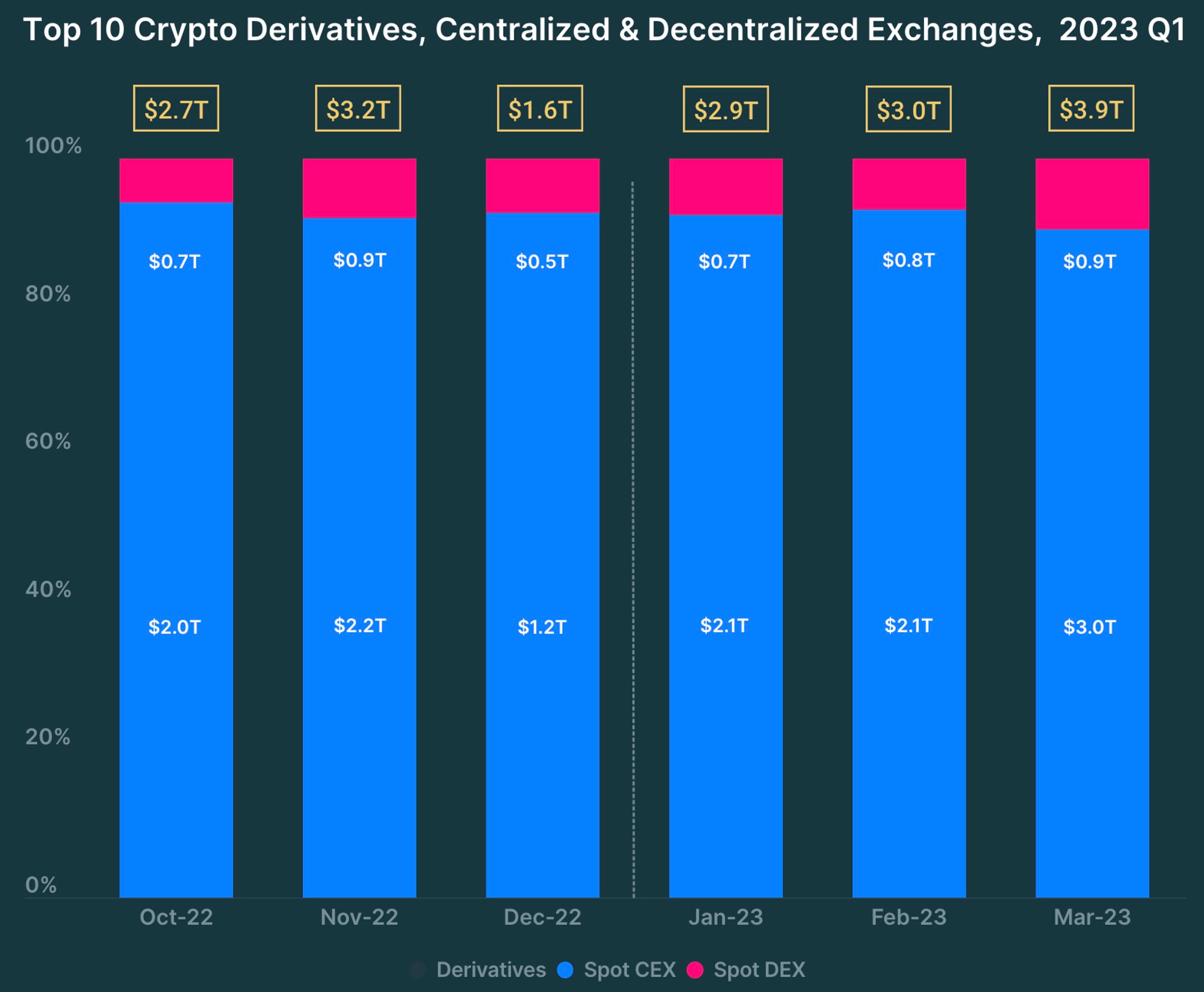
However, despite this promising vision, DEXs still cannot directly compete with CEXs. The reasons are well known: MEV, uncompetitive prices, high gas fees, and LPs struggling to earn profits. As illustrated in a chart from CoinGecko, CEXs still maintain overwhelming dominance. (DEX metrics in Q2 might look better due to a recent meme-driven surge in on-chain activity and skyrocketing trading volumes.)
So, what story does Uni v4 tell?
Customizability (Hook) and extreme cost reduction (The Singleton and accounting).
Extreme Customizability: The Hook feature allows anyone to deploy liquidity pools using custom contracts. This statement may sound abstract, so building upon the official examples—executing TWAMM orders, limit orders, dynamic fees, internalized MEV distribution mechanisms, and custom oracles—I’d like to expand with a few more illustrations of how Hooks support customized execution logic required by different developers:
1. Features implemented by Camelot: Variable pool fees and additional rewards for LPs. After v4 launches, deployers will be able to directly create such pools on Uniswap. For example, launching meme tokens could involve setting various transaction taxes directly through Uniswap v4. A precedent exists with $AIDOGE, which implemented transaction taxes and used $ARB to incentivize $AIDOGE liquidity. However, the advantage of Hooks lies in satisfying these needs while leaving room for further composability.
2. More protocols can leverage Uniswap v4’s Hook functionality: For instance, order book trading could offer traders more favorable pricing. Could perpetual DEXs build products based on v4 LPs? I believe this is a compelling possibility. In the future, we may see a vast Uniswap ecosystem emerge, forming a significant moat for Uniswap. In short, Hooks greatly enhance the composability and scalability of Uniswap’s liquidity.
That said, as @WinterSoldierxz pointed out, “Hook, being a simple JavaScript function, comes with its own shortcomings (i.e., dependency array).” Hooks do have some limitations, but in terms of programming difficulty, JavaScript has a low barrier to entry, enabling developers to quickly build liquidity pools and products on top of it.
Extreme cost reduction: The Singleton consolidates all LP contracts into a single contract, significantly reducing gas costs for creating LPs and executing multi-hop trades (cross-pool routing).
Additionally worth noting is v4’s accounting feature, which reduces frequent trading costs and also opens the door for market makers to enter the DEX space.
What problems does v4 solve?
Returning to the initial discussion of DEXs’ current challenges, what issues does v4 address?
1. MEV: The internalized MEV distribution mechanism for v4 liquidity providers offers a potential path to alleviate current MEV issues.
2. Pricing: Introducing market makers and limit-order trading helps mitigate this issue.
3. Gas fees: This is a major focus of v4. When deployed on Layer 2, these costs will be even lower.
4. LP income: Insufficient LP income stems from three main sources: 1) insufficient trading volume; 2) gas fees; and 3) impermanent loss. The root cause of low trading volume is that DEXs currently lag behind CEXs in product capabilities. v4 aims to tackle this, and reducing gas fees is one of its primary objectives. Impermanent loss may eventually be addressed through order-book-based market making—potentially leading future developers to build a limit-order exchange on top of Uniswap v4.
What else should we pay attention to?
In a section of their blog post, Uniswap mentions “depositing out-of-range liquidity into lending protocols,” implying that idle Uniswap liquidity could be used to provide liquidity to lending protocols.
Personally, I believe Uniswap’s ambitions are vast. While enabling developers to build on v4, the core team itself might also use Hooks to develop new products, such as lending protocols or stablecoin protocols. Today, former DeFi giants are expanding in similar directions—MakerDAO launching lending protocols, Curve and AAVE introducing stablecoins. v4 could become a pivotal opportunity for Uniswap’s evolution.
Additionally, Uniswap v4 brings native ETH back into trading pairs—a move aimed squarely at reducing user gas fees.
For other DEXs, simple forks of Uniswap will likely lose competitiveness going forward. Innovative DEXs like iZumi, which differentiate themselves through product features, will have stronger competitive advantages. iZumi published an article titled “iZUMi: How to Leverage Uni V4’s Limit Order Functionality to Build the Next ‘On-Chain Binance,’” which I found quite insightful.
Also worth mentioning is suzhu’s new CEX, OPNX. Strictly speaking, OPNX is a centralized exchange, but its product design shares similarities with Uniswap v4 in adopting an accounting model (only in structure), separating collateral from the matching engine. Traders deposit funds as collateral into OPNX and then trade within the platform.
In my view, Uniswap has successfully refocused market attention back onto the DEX赛道 (track/race), which is a positive development and provides valuable inspiration for future projects. However, we must not overlook existing competitors in the DEX space, such as Curve, TraderJoe, and iZumi.
Join TechFlow official community to stay tuned
Telegram:https://t.me/TechFlowDaily
X (Twitter):https://x.com/TechFlowPost
X (Twitter) EN:https://x.com/BlockFlow_News
 雨中狂睡Sleeping in the Rain






