








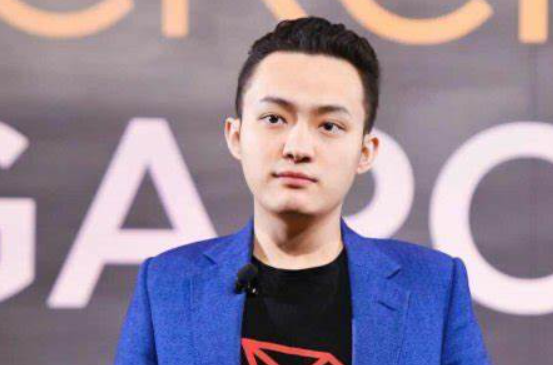
Revealing His Three Personal Roles for the First Time, Sun Yuchen at Thirty
TechFlow Selected TechFlow Selected
Revealing His Three Personal Roles for the First Time, Sun Yuchen at Thirty
Time can dispel the surface fog; at thirty, Sun Yuchen continues to press forward with his mission.
 Navigating Web3 tides with focused insights
Recently, the 2023 Hong Kong Web3.0 Festival concluded. With support from numerous political figures across Hong Kong and beyond, Chinese entrepreneurs gathered in the city, fueling this year’s most vibrant crypto narrative. Throughout the event, the most talked-about figure was undoubtedly Justin Sun, who arrived in Hong Kong on April 11. His presence became a focal point of the festival, drawing widespread attention.
During his visit, Justin Sun gave a rare in-depth interview to the media, sharing his latest thoughts on industry development and personal positioning. For the first time, he outlined his "three core roles": since entering the crypto space, he has consistently served as a steadfast evangelist, advocate, and builder within the crypto world. As the founder of TRON and a member of Huobi Global Advisory Board, Sun is clearly a long-term infrastructure developer for the industry. Starting with his appointment as Grenada's Permanent Representative and Ambassador to the World Trade Organization (WTO), over the past year Sun and TRON have engaged frequently with sovereign nations, international organizations, and regulatory bodies, effectively serving as a bridge between the cryptocurrency industry and regulators.
Although this journey has been accompanied by various incidents and controversies, Justin Sun’s role as an industry leader has become increasingly clear.
Proactively Engaging the SEC: Building a Bridge Between Industry and Regulation
After the SEC announced its legal actions against Justin Sun and Coinbase, SEC Chair Gary Gensler found himself under greater pressure—accused not only of lacking understanding of the crypto industry but also criticized for “driving innovation overseas.” Coinbase CEO Brian Armstrong even expressed consideration of relocating the company abroad, reflecting strong opposition.
In contrast, Justin Sun remained calm and composed. In an exclusive video interview with FT Chinese, he stated that the SEC’s allegations lacked substantive evidence and had minimal impact on operations. Following the collapses of Terra and FTX, both industry players and regulators re-examined the balance between regulation and technological innovation. However, what ultimately emerged were often blanket suppression tactics. The questions of where the industry should head and how regulations should be formulated have become pressing yet unresolved challenges.
When people gathered in Hong Kong and heard Chief Executive John Lee express openness toward Web3.0, they likely recognized the foresight behind Justin Sun’s early advocacy for regulatory engagement. Shortly after last year’s TOKEN2049 conference, TRON swiftly announced a landmark partnership with the Caribbean nation of Dominica, being designated as the country’s national public blockchain and becoming part of its critical infrastructure. This “marriage” between TRON and Dominica marked the boldest attempt yet by the crypto industry to embrace regulation—a move that later paved the way for Sint Maarten (Dutch side) to adopt blockchain technology and for Hong Kong to welcome Web3.0.
As blockchain and crypto enter their second decade, there is an urgent need to move beyond earlier phases of unregulated growth into a new era defined by compliance and regulatory cooperation. This shift is essential because the user base for industry products is expanding from millions to hundreds of millions—and eventually billions. While DeFi’s decentralization continues to attract praise, CeFi’s strong backing and enhanced security are also gaining recognition.
The path pioneered by Justin Sun and TRON offers the industry a novel operational model and builds a crucial bridge between innovators and policymakers. 2022 was a pivotal year for TRON in advancing regulatory compliance. Beyond sovereign partnerships, starting in March of that year, Sun, serving as Grenada’s ambassador to the WTO, held multiple dialogues with ambassadors from the U.S., Russia, and the EU on the application of blockchain technology and digital economies. These exchanges deepened mutual understanding among regulators, policymakers, and the industry, laying the foundation for progress in regulatory frameworks in 2023.
Long-Term Vision: Strengthening Industry Infrastructure
Winning over regulators isn’t easy—it requires tangible products that demonstrate how technology can deliver superior services. During the Hong Kong festival, Justin Sun participated in events hosted by Binance, TRON, Huobi, and Xinhuo Tech, spanning mining, public blockchains, exchanges, and asset platforms—covering major areas of crypto R&D and application. Sun and his TRON network stand among the most important contributors to blockchain infrastructure.
In the blockchain and crypto space, two figures are consistently mentioned. One is Vitalik Buterin, known as “Vitalik,” whose leadership in developing Ethereum created a platform for developers. The other is Justin Sun, whose creation, TRON, has become one of the most active, busiest, fastest, and cheapest public blockchains.
Today, TRON has evolved into a comprehensive ecosystem with a full suite of blockchain applications, offering developers a convenient environment while delivering end-to-end services to users through a robust product lineup. Currently, TRON supports 155 million users who generate over $6 billion in daily on-chain transaction volume, while consuming only 1% of the energy used by Bitcoin and operating at just around 30% of Ethereum’s transaction costs. This highly active and efficient infrastructure significantly impacts the broader industry, showcasing blockchain’s scalability and openness.
The most critical application of blockchain and crypto lies in asset mobility—an area where blockchain networks outperform traditional financial systems like SWIFT in terms of security and energy efficiency. The large-scale circulation of stablecoins on TRON further enhances network efficiency. To date, stablecoin volume on TRON exceeds $47.7 billion, including major tokens such as USDT, USDC, TUSD, and native TRON stablecoins USDD and USDJ. Notably, TRON-based USDT (TRC-20) surpasses Ethereum in circulation, accounting for 60% of total USDT volume globally.
Moreover, when the industry recently embraced new narratives like Layer 2 and LSD, TRON’s BTTC had already launched its Layer 2 solution back in 2021—two years ahead of the trend.
Beyond TRON, Justin Sun has supported the growth of Huobi, a leading exchange founded by Chinese entrepreneurs, through his role on the Huobi Global Advisory Board. Recognizing exchanges as the most widely accessed platforms in the crypto space, Sun advocates a “public chain + exchange” dual-engine strategy.
A Decade of Advocacy: Bringing Blockchain and Crypto into the Mainstream
At TOKEN2049 Singapore 2022, as a featured guest, Justin Sun revealed TRON’s next goal: becoming part of mainstream financial institutions. This vision holds profound implications not only for TRON but for the entire blockchain and crypto industry, reflecting Sun’s consistent commitment over the past decade as a tireless evangelist and advocate.
In 2014, Justin Sun returned from the U.S. to China and became one of the earliest promoters of blockchain and crypto technology in the country. Over the past ten years, regardless of the setting, he has consistently explained the features and real-world applications of blockchain technology, painting a vivid picture of a future digital society.
This relentless advocacy has drawn immense attention amid numerous controversial episodes, sparking skepticism, misinformation, and even personal attacks. Yet, Sun has never shown embarrassment or defensiveness, nor has he retreated.
Even at the 2022 WTO MC12 summit, addressing over 160 member nations, he emphasized the importance of applying blockchain and crypto technologies to revitalize the global economy. At the time, his remarks sparked debate on domestic social media, drawing ridicule from those who failed to understand. But during the 2023 Hong Kong Web3.0 Festival, the government’s open and welcoming stance toward the crypto industry made its intentions clear—leveraging blockchain and crypto to develop new financial models and help Hong Kong recover from the pandemic’s economic impact.
Sun has made repeated attempts to convince skeptics, including Sogou founder Wang Xiaochuan and investor Warren Buffett. Despite Buffett’s continued skepticism toward crypto, the collapse of Silicon Valley Bank highlighted the vulnerabilities of traditional finance—and coincided with a surge in Bitcoin’s price. Bitcoin’s value as “digital gold” is now evident, helping many navigate periods of asset devaluation.
Today, TRX, BTT, and USDT circulating on the TRON network have become legal tender in sovereign nations like Dominica. After a decade of advocacy, Justin Sun’s efforts are finally bearing fruit on the once-impenetrable walls of the traditional world. As ice begins to melt across Asia, blockchain and crypto technologies are gradually gaining global acceptance.
Time reveals truth beneath surface noise. At thirty, driven and determined, Justin Sun’s mission of advocacy continues.
Join TechFlow official community to stay tuned
Telegram:https://t.me/TechFlowDaily
X (Twitter):https://x.com/TechFlowPost
X (Twitter) EN:https://x.com/BlockFlow_News
 TRON DAO






