NFT Market Enters Darkest Hour: Analyzing Underlying Causes and Future Outlook
TechFlow Selected TechFlow Selected
NFT Market Enters Darkest Hour: Analyzing Underlying Causes and Future Outlook
The recent slump in the NFT market has caused significant anxiety.
 Navigating Web3 tides with focused insights
Author: Bitsha
Compilation: TechFlow
Recently, the NFT market's sluggish performance has caused widespread anxiety. Trading volume, active addresses, and transaction counts have all dropped significantly, while the proportion of new users continues to decline.
Crypto KOL Bitsha believes most analysts merely pile up data without truly understanding the market. Below are his insights on the NFT market.
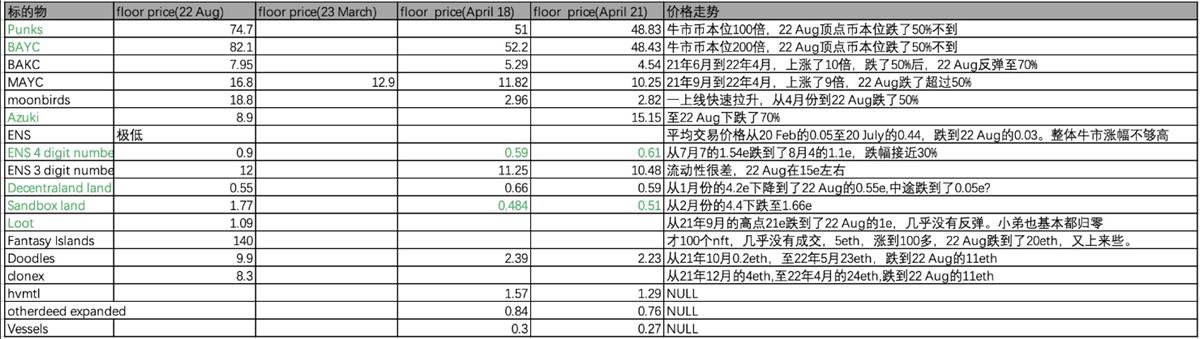
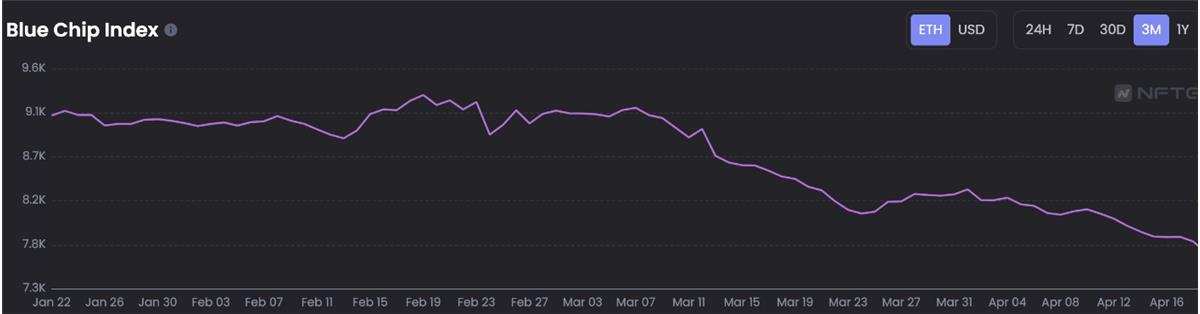
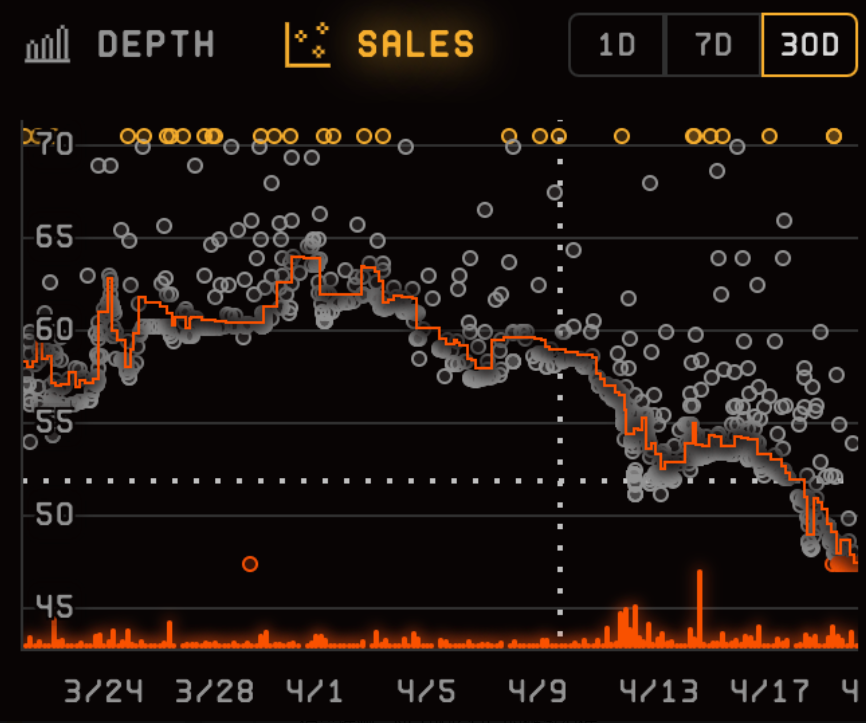
Since February, both prices and trading volumes have declined. Daily trading volume has dropped from 36,000 ETH to 10,000 ETH; the blue-chip index has fallen from over 9,000 to 7,500. During this period, many prominent NFT figures have faded into obscurity.
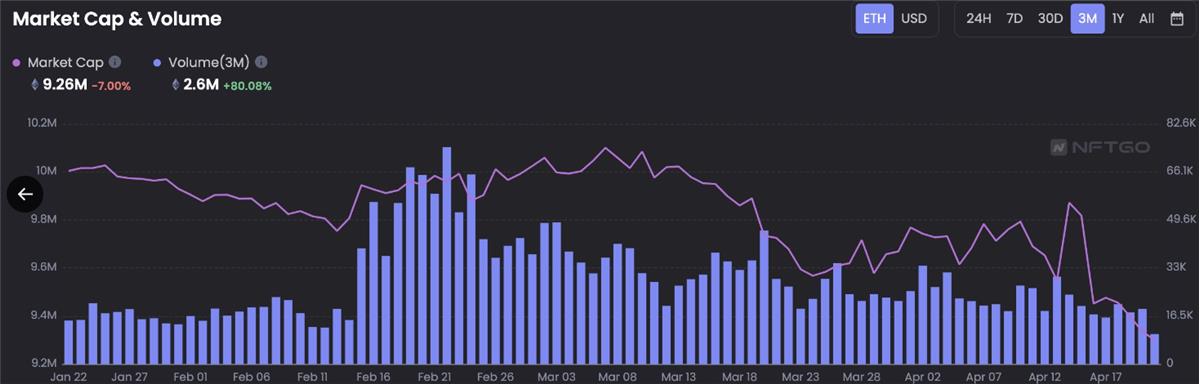
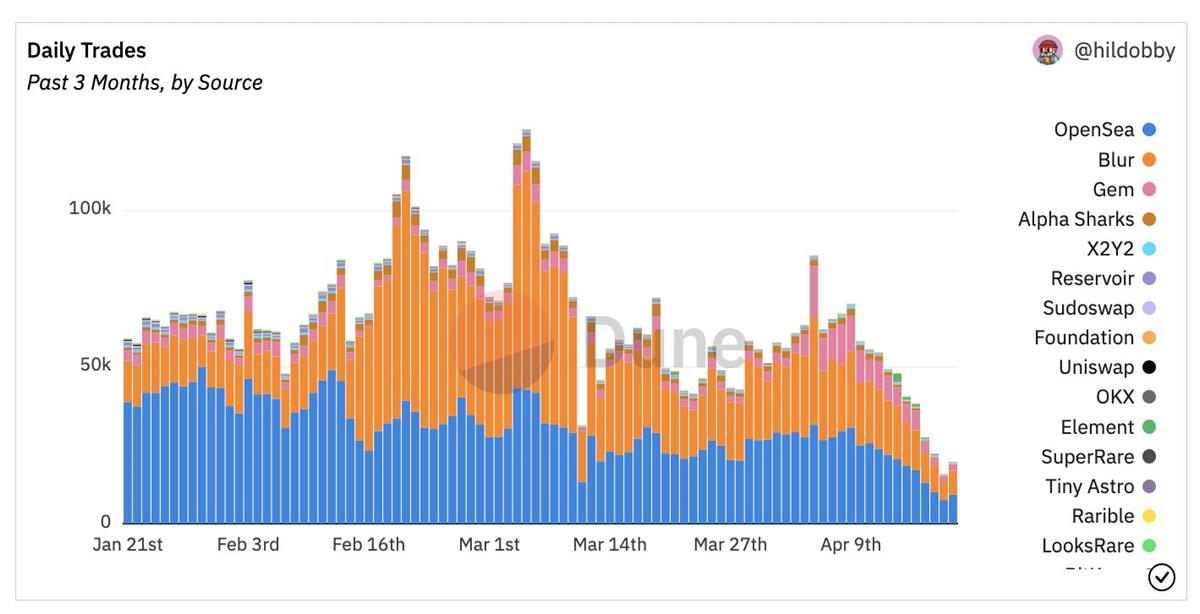
Transaction counts and active addresses have plummeted. Active addresses have decreased by 90% since February, while transaction counts have dropped by about 80% since that month.
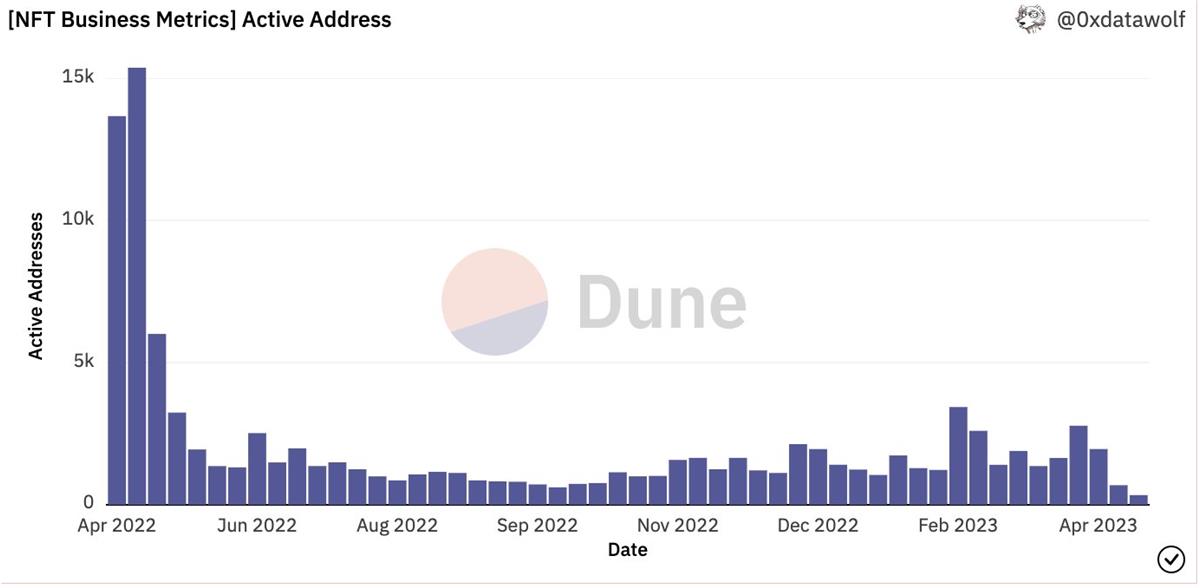
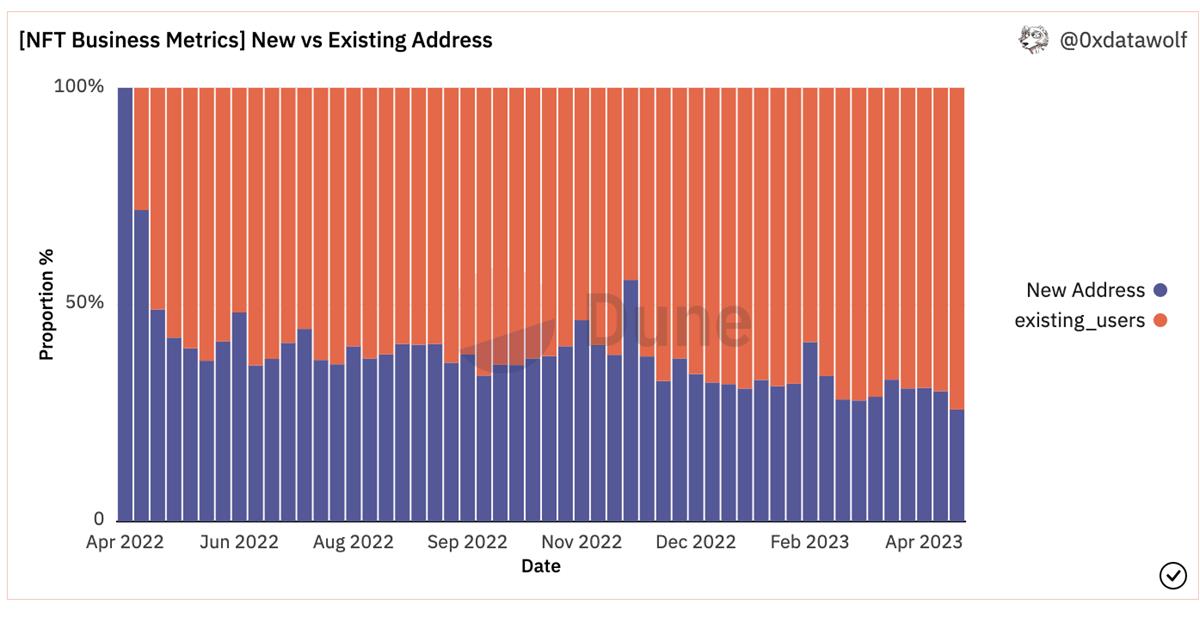
More alarmingly, there are virtually no new users entering the NFT space. Since April last year, the proportion of new users has steadily declined. A low ratio of new users means limited incremental capital. Clearly, the NFT market is indeed in a bear market with no signs of recovery.
Blur’s Impact on the NFT Market
Some analysts claim Ironside's Blur ruined NFTs.
-
First, they argue NFTs cannot withstand high-frequency trading. But according to Bitsha, increased NFT trading frequency results from reduced transaction friction costs. Lower friction improves transaction efficiency, which slightly benefits asset prices. Moreover, NFT trading volume has already sharply declined, yet NFT prices have not stabilized.
-
Second, they claim Blur made NFTs mainstream, taking them out of niche circles and causing price drops. This logic doesn't hold. NFTs have been publicly transparent on-chain since inception—during the OpenSea era, everyone could observe transactions.
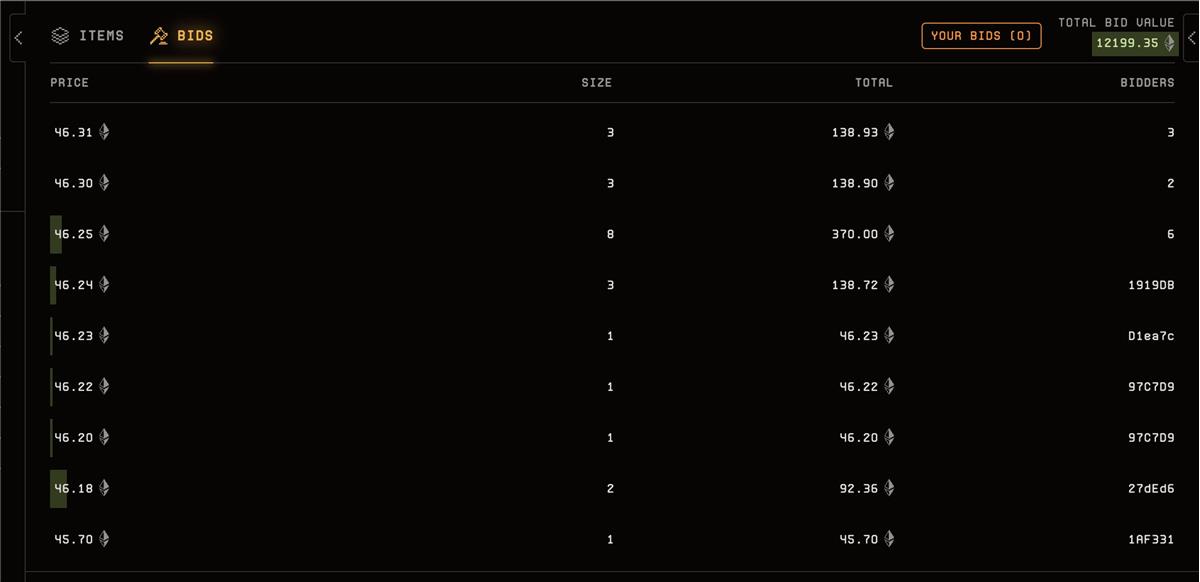
- Third, they say the massive liquidity brought by Blur crushed NFTs. This argument also falls apart. Taking liquidity to its extreme leads to fungible tokens. Numerous fungible tokens thrive in markets, so why would less liquid NFTs fail? Furthermore, injecting liquidity generally benefits asset prices.
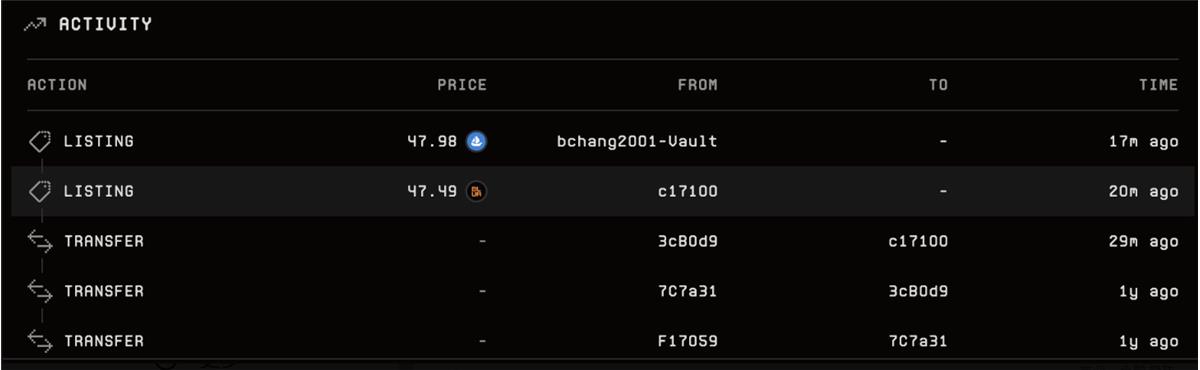
ETH Rises, So NFTs Fall
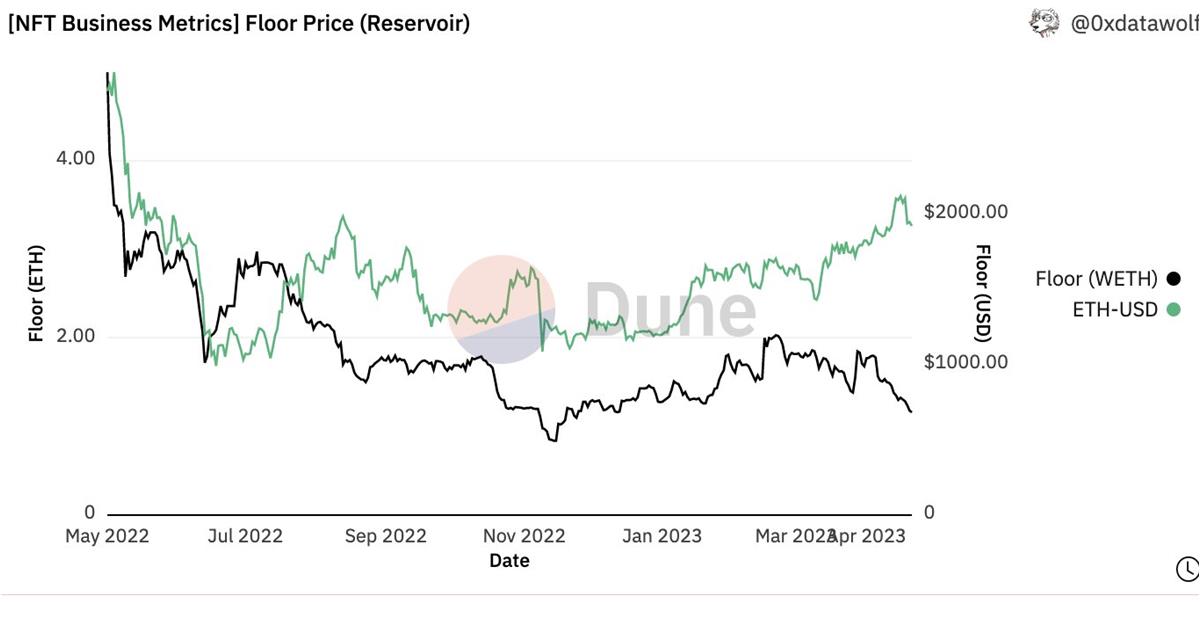
Some market analysts claim that because ETH rose, NFTs couldn't hold up.
When asked why, they vaguely respond that NFT investors look at USD-denominated returns, not coin-denominated ones.
A foolish question naturally invites a foolish answer.
Look at the data: ETH price and NFT prices are not entirely negatively correlated. Analysts blaming NFT declines on ETH gains aren't even worthy of being called bookworms.
Why Are Some NFTs Rising?
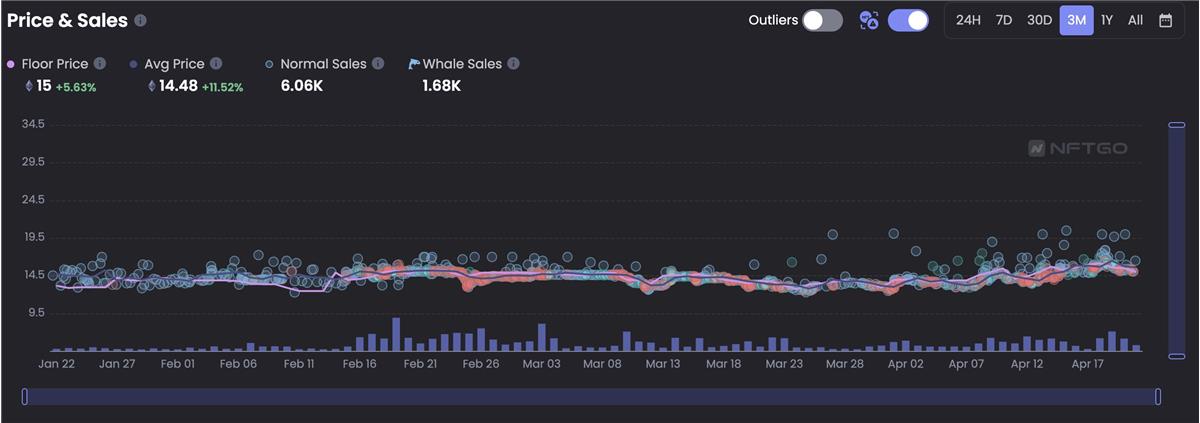
In such a weak market, even Yuga Labs' exceptional operational capabilities can't maintain prices. Then why can Azuki stabilize and rise?
Saying demand exceeds supply is circular reasoning.
Citing good PR—then how do you explain Yuga’s collaboration with Gucci failing to support token prices?
Bitsha believes the crucial overlooked factors are ownership concentration and operator capital, though external data on these is scarce.
NFTs Move on a Different Cycle from the Broader Market
The broader market peaked in November 2021, whereas NFTs peaked in April 2022—a five-month delay.
From June to July 2022, the broader market was grinding at the bottom.
During June to mid-July 2022, NFTs saw another small rebound.
What does this show? It shows the NFT market follows its own independent rhythm, out of sync with the broader market.
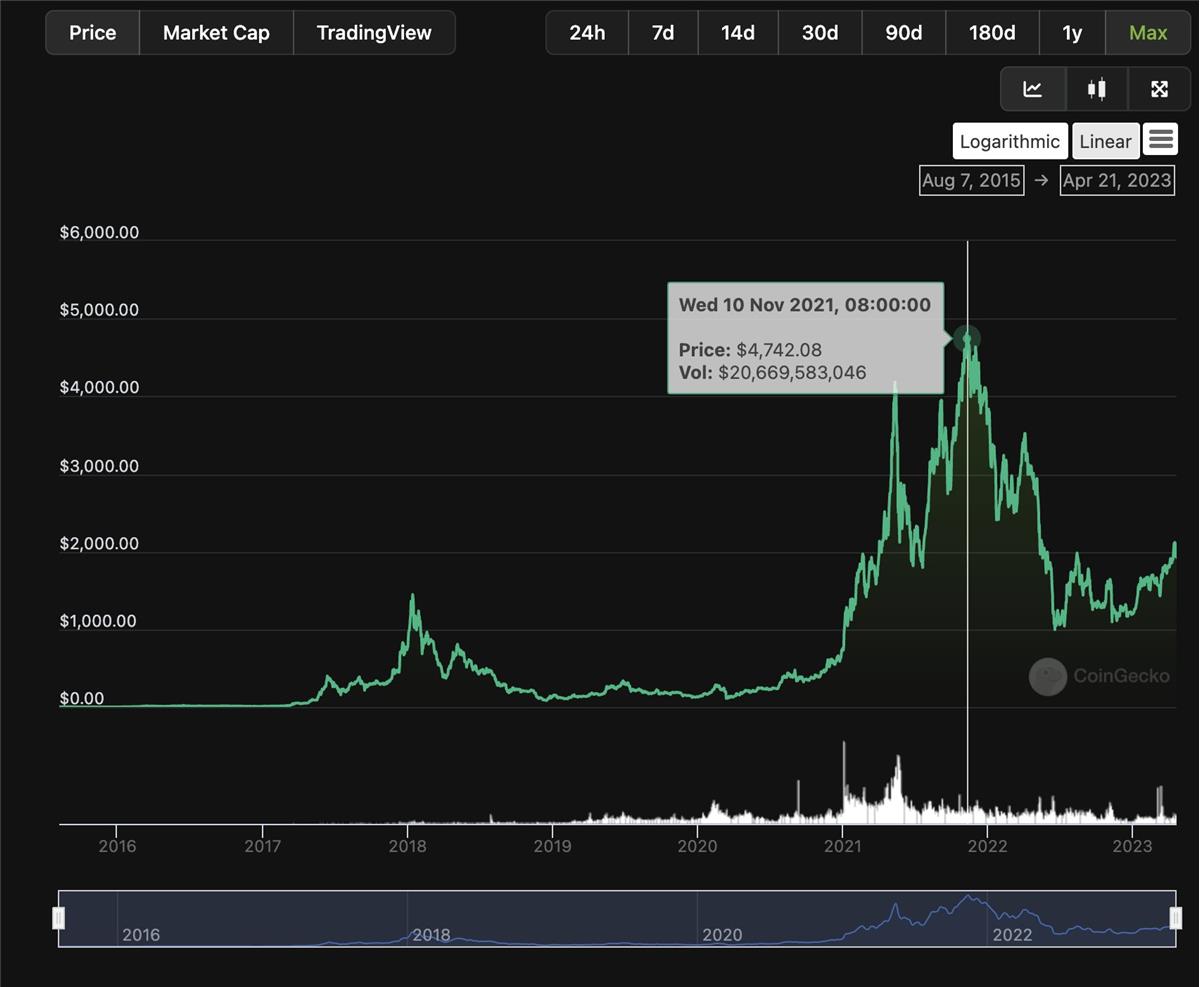
In the second half of last year, both NFTs and the broader market experienced volatile declines, yet nobody thought the NFT market was broken.
Bitsha believes we're still in an NFT bear market, so declines are normal.
It's not that the NFT market is sick—it's simply lagging behind the broader market cycle.
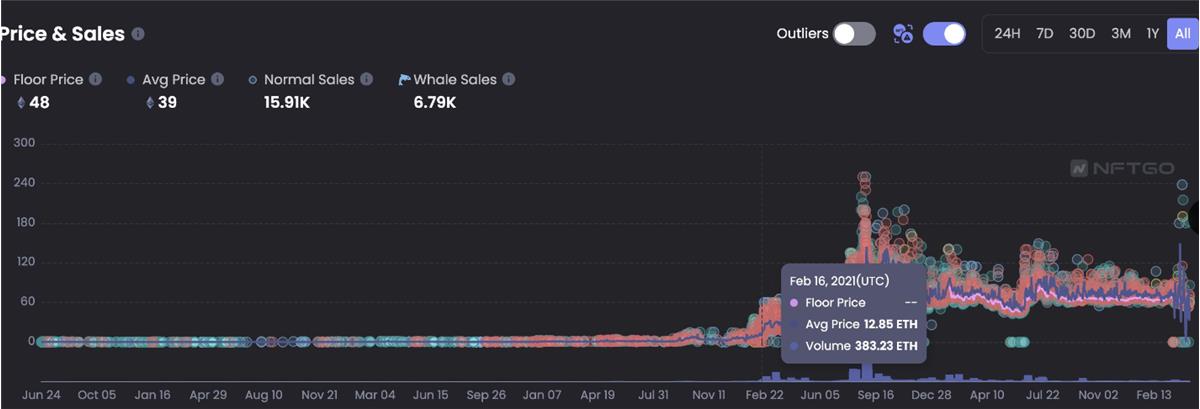
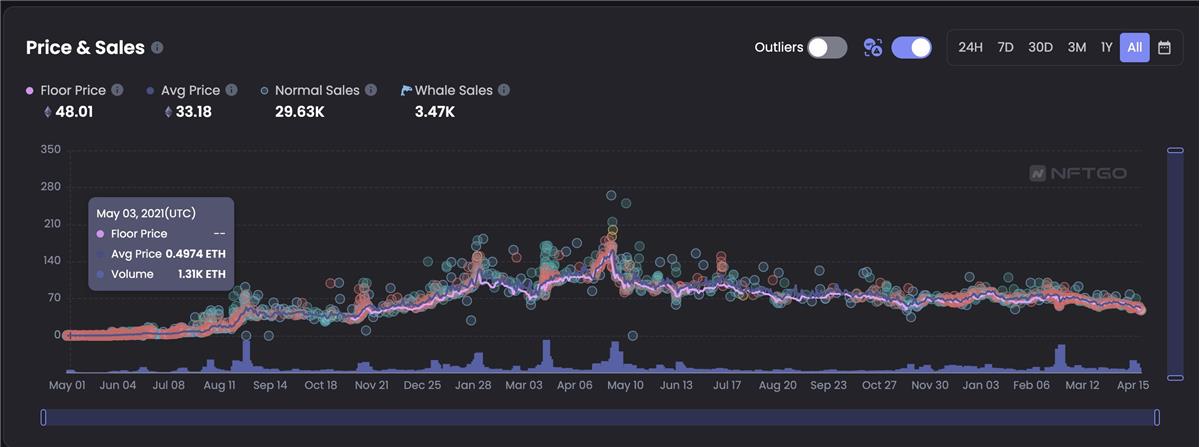
If cycles differ, how do we explain NFTs falling harder than the broader market?
Why Do NFTs Fall Harder Than the Broader Market?
Because compared to fungible tokens, maintaining the same market cap requires far less liquidity for NFTs.
Why do people prefer launching NFT projects in bear markets? Because they lack funds.
NFT projects can inflate larger market caps with smaller amounts of capital. In other words, NFT valuations are more inflated than those of fungible tokens.

Due to their inherent nature: NFTs can rise far beyond the broader market in bull runs and shrink even more drastically during bear markets.
Bitsha predicted this current NFT market slump back in August last year.
In short, the NFT market isn’t broken—it simply operates on a different cycle from the broader market, and due to the intrinsic characteristics of NFT assets, bear market declines are deeper.
Viewing Blur Amidst the NFT Bear Market
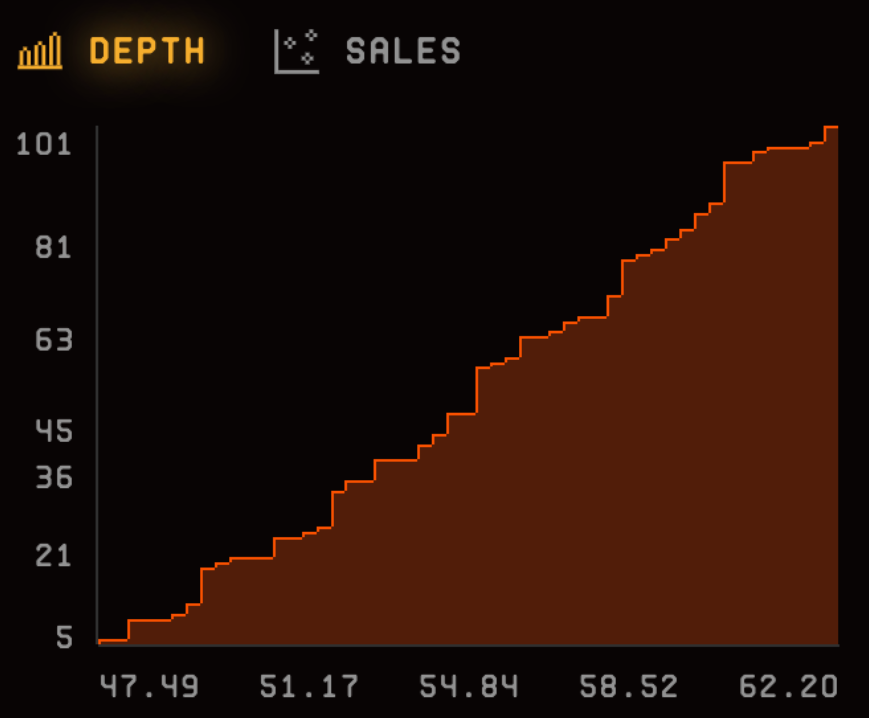
1. Blur’s trading mechanism downplays the uniqueness of individual NFT units, weakening premiums. This causes slight downward pressure on the NFT market.
2. In a declining market, Blur’s trading mechanism generates higher trading volumes for every unit of price drop. This increases project teams’ costs to defend prices, leading many blue-chip projects to abandon defense efforts. Overall, Bitsha believes this makes the NFT bear market even harsher.
Will NFTs Never Recover?
Since it's a bear market, NFTs broadly face two possible fates:
-
One is continuous decline, never recovering, eventually fading into oblivion.
-
The other is bottoming out and rebounding, staging a comeback.
Bitsha speculates the probability of NFTs disappearing entirely is very low.
-
First, the development of the digital world demands digital art as distinct wealth repositories. Currently, NFTs are the best available medium.
-
Second, NFTs have already formed a massive ecosystem comprising developers, investors, gaming studios, and metaverse builders. As long as this ecosystem survives, it will be competitive when the next bull market arrives.
-
Third, NFTs represent an innovative form of ownership expression—an innovation that cannot be erased.
-
Finally, NFTs have created a novel trading paradigm within the crypto space—one with tremendous appeal.
When Will NFTs Bottom Out?
Assuming NFTs will eventually recover, the key is understanding their macro cycle.
The previous bull cycle began at the end of 2018/start of 2019 and ended in late 2021. The NFT bull run started in early 2021 and concluded in April 2022.
Unfortunately, after achieving scale, the NFT market has completed only one full cycle, and the bear phase hasn't ended yet. Earlier NFT markets were too small to serve as meaningful references.
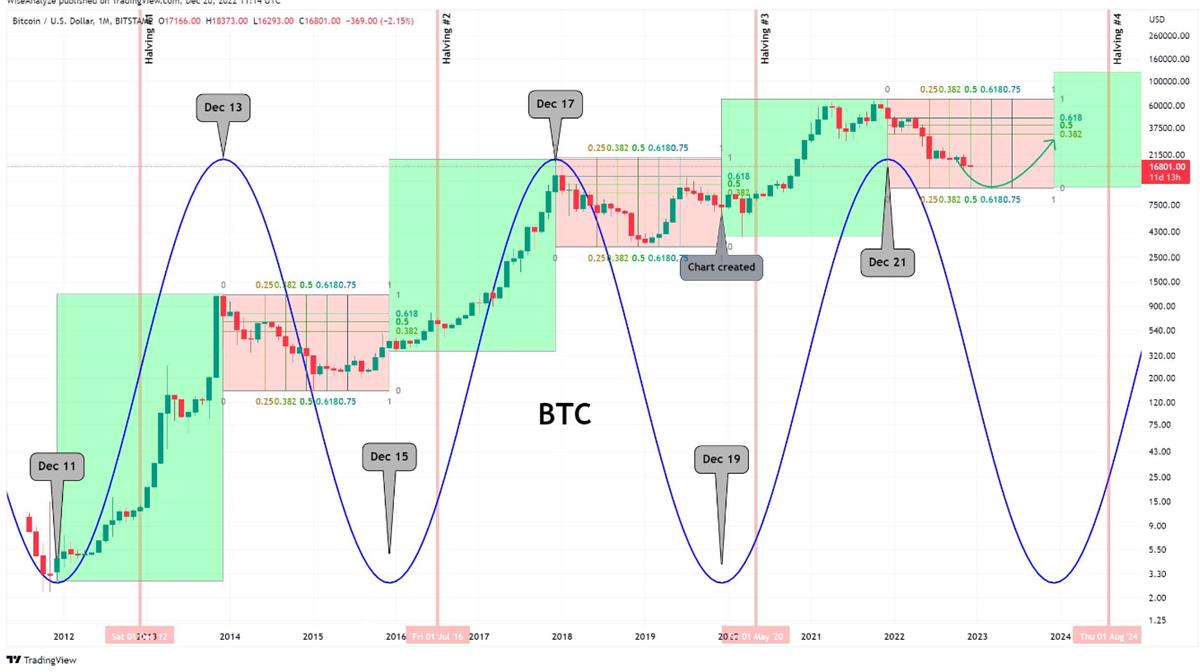
Bitsha estimates the NFT market will lag behind the broader market by 1–2 years.
If we consider ETH bottoming in June 2022, the NFT market should bottom around the end of 2023. However, if the broader market surges before year-end, spillover capital could cause the NFT market to rebound earlier.
This is an uncertain estimate, but it offers at least a rough guideline. Bitsha will continue monitoring key marginal shifts in the market.
How to Select NFTs
Here, Bitsha won't name specific projects, but will outline general principles.
-
Favor American youth aesthetics; avoid Japanese aesthetics.
-
Western culture remains dominant in Web3—people are willing to pay for American taste.
The reason for disliking Japanese aesthetics is Japan’s decline and rapid descent in cultural prestige. As a nation wanes, so does appreciation for its artistic sensibilities.
NFTs fall into two categories: Utility NFTs and Non-Utility NFTs.
-
Utility NFTs, like staking-for-mining NFTs, tend to have more stable prices but also face ceiling constraints.
-
Non-Utility NFTs suffer greatly in bear markets due to lack of utility, but in bull markets, unbound by cash-flow discounting, their value can skyrocket.
Bitsha favors assets that are despised and worthless in bear markets but soar to the skies in bull runs.
The Veteran Hunters Are Entering
Right now, the NFT market is breaking countless hearts.
But for veteran hunters, things are just starting to get interesting.
Calmly, the old hunter draws his rifle, mounts the scope, and prepares to capture a rare delicacy.
Join TechFlow official community to stay tuned
Telegram:https://t.me/TechFlowDaily
X (Twitter):https://x.com/TechFlowPost
X (Twitter) EN:https://x.com/BlockFlow_News
 比特傻
比特傻