
Multi-dimensional Data Analysis of Arbitrum DEX Competition: Who Will Emerge as the Ultimate Winner?
TechFlow Selected TechFlow Selected
Multi-dimensional Data Analysis of Arbitrum DEX Competition: Who Will Emerge as the Ultimate Winner?
Who will win this DEX war? Is the Arbitrum DEX market truly that profitable?
 Navigating Web3 tides with focused insights
Written by: Defi Mochi
Translated by: TechFlow
Since Arbitrum gained popularity, a new DEX protocol launches on Arbitrum every week. But how are the top four DEXs performing? Who will win this DEX war? And is the Arbitrum DEX market truly profitable? Next, I’ll use Dune to analyze the data and help you find the answers!

The Arbitrum DEX space has long been dominated by native DEX protocols, but recently it has attracted several V2 forks of established native DEXs such as SwapFishFi, CamelotDEX, and Shell Protocol—among which SwapFishFi briefly reached nearly $50 million in TVL.
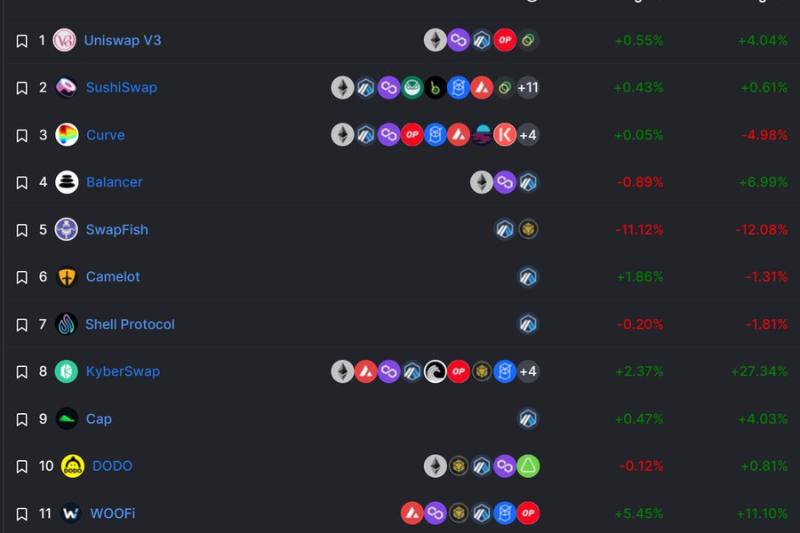
This raises an important question: Are non-native DEXs losing market share? Are DEXs really that profitable?
Looking at this chart comparing trading volumes of the top four non-native Dexes, we observe that despite the growth of the Arbitrum ecosystem, DEX trading volume has shown a declining trend:
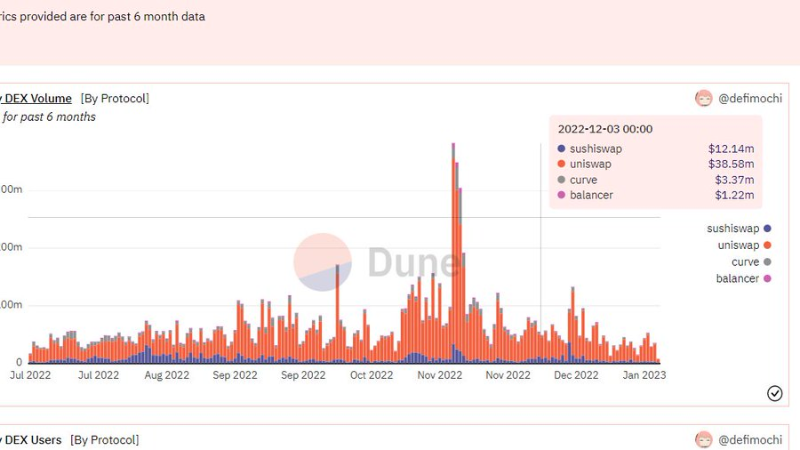
After December, with the influx of new entrants, non-native DEX trading volumes showed a clear downward trend. Among the four non-native DEXs, Uniswap still holds 80% of the market share on Arbitrum, while Curve Finance’s trading volume has significantly declined.
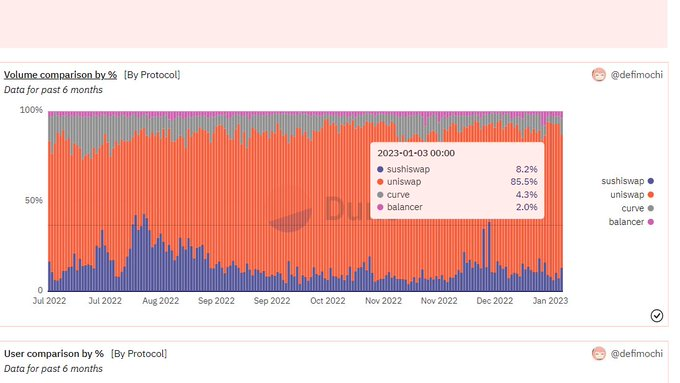
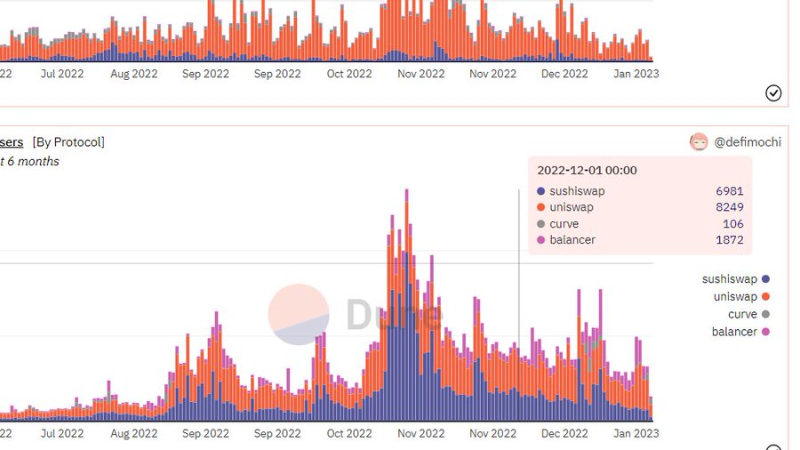
The only potential competitor managing to maintain around 7% of trading volume is SushiSwap, yet user comparisons paint a very different picture.
SushiSwap consistently attracts over 30% of users, while Balancer holds about 10%.
This suggests that each Uniswap user trades significantly more volume on average.
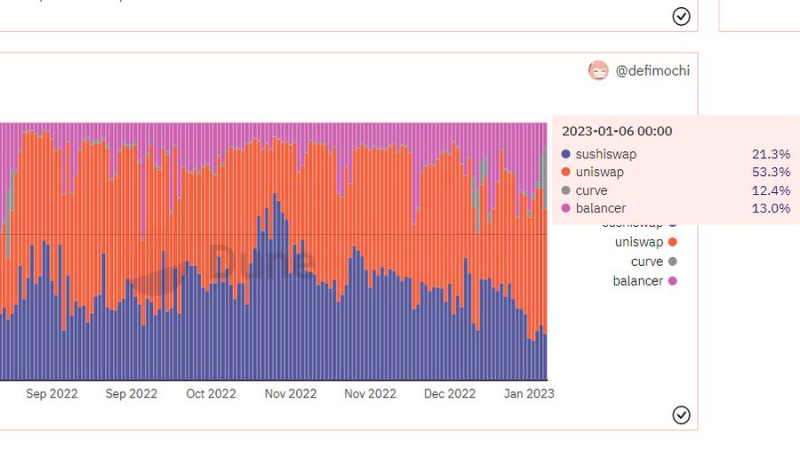
Looking at the DEX user table, we see that CurveFinance almost dropped below 100 users in December—it is nearly irrelevant.
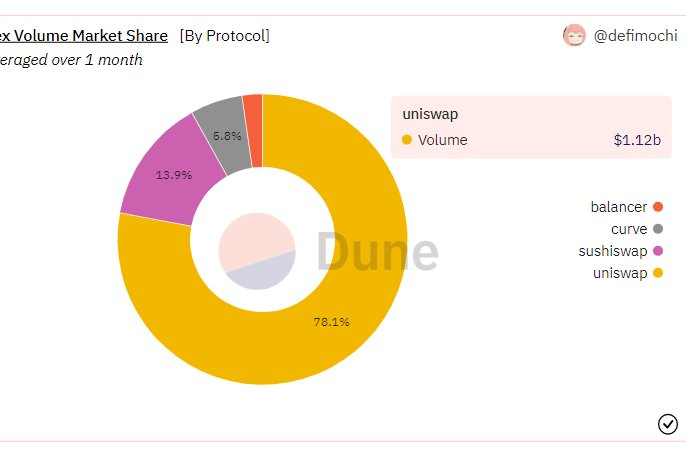
Let’s look at the past month: Uniswap generated over $1.1 billion in trading volume on Arbitrum, capturing nearly 78% of the market, while SushiSwap accounted for approximately 13% ($200 million in volume).
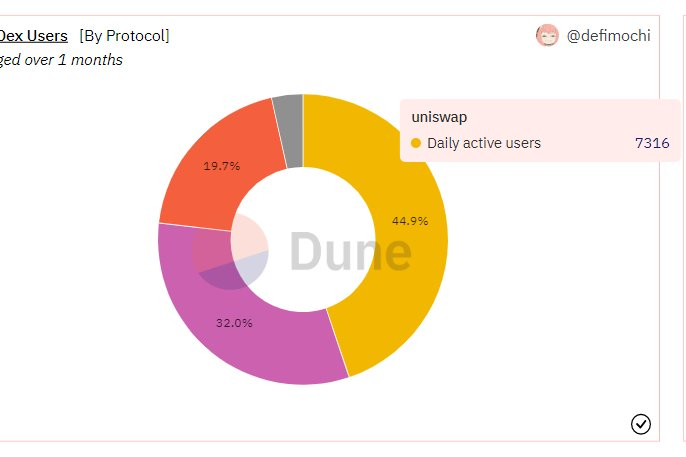
Zooming in on user numbers, SushiSwap averaged nearly 32% of daily DEX users over the past month, while Uniswap averaged only 44.9% of users.
Surprisingly, Balancer captured close to 20% of the DEX user market share.
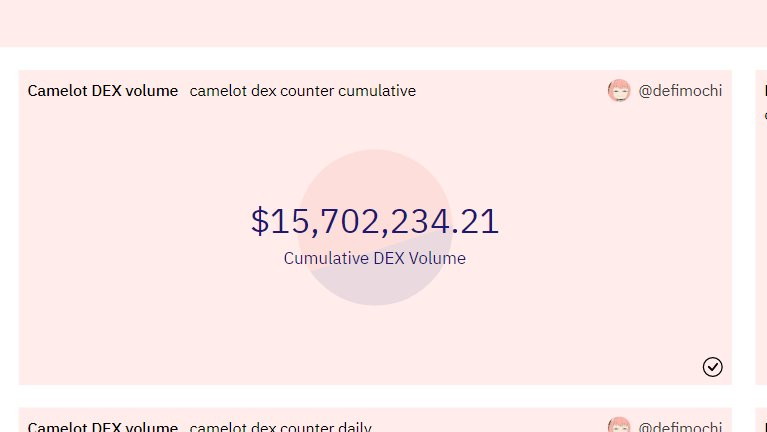
The strongest native DEX is Camelot, thanks to its solid partnerships and customizability.
They have already achieved $15 million in cumulative trading volume and are poised to overtake Balancer. This is impressive because, unlike other native DEXs, they provide liquidity for low-market-cap tokens.
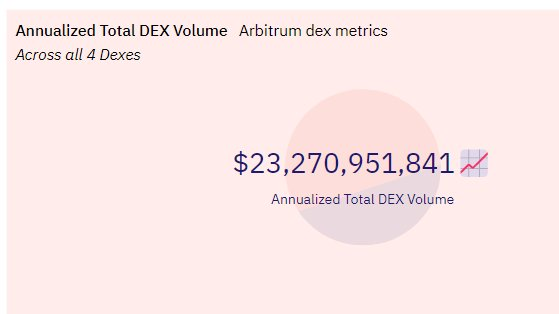
Over the past six months, the average annualized total DEX trading volume across these four protocols was $23.2 billion.
Based on the following swap fees, this represents the size of the Arbitrum DEX revenue market:
-
1.0% fee = $23 million
-
0.3% fee = $6.9 million
-
0.5% fee = $11.5 million
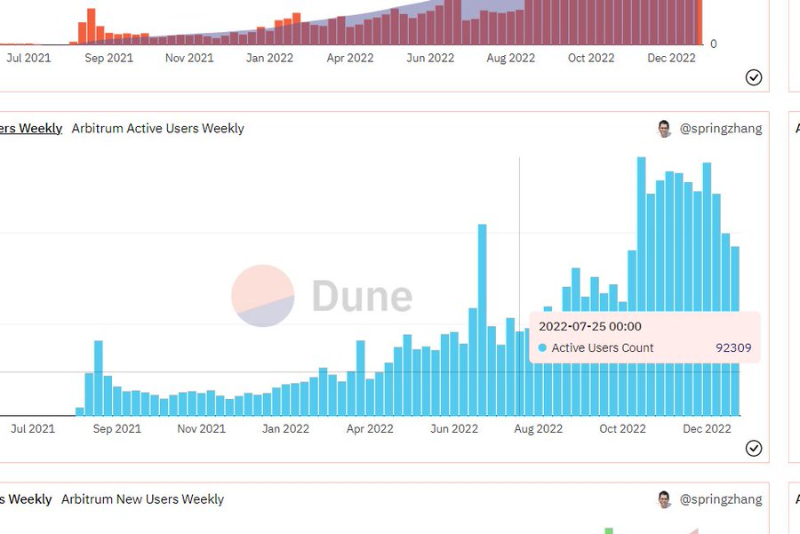
Despite a decline in overall DEX user counts, active user numbers are growing. A potential reason for this could be airdrops. The average DAU on Arbitrum is close to 200,000, while the average DEX DAU is 14,000—indicating a DEX penetration rate of about 7%.
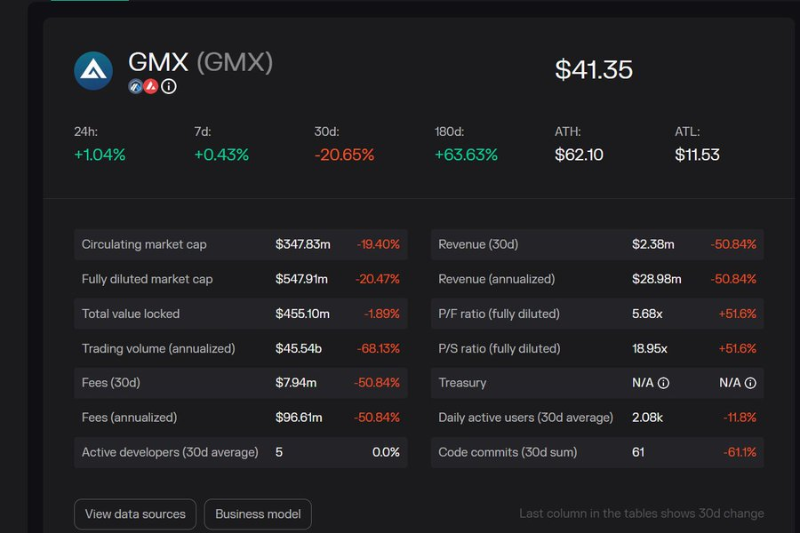
Personally, I don’t believe native DEXs have much room for further expansion, nor do I think DEXs can be as profitable as perpetual contract platforms like GMX, which generates nearly $96 million in annualized fees.
However, I support Orbital and Camelot’s efforts to onboard new protocols and build strong partnerships.
With innovative protocols like GammaSwap Labs solving issues for LPs, we may yet see growth in the DEX market on Arbitrum.
Join TechFlow official community to stay tuned
Telegram:https://t.me/TechFlowDaily
X (Twitter):https://x.com/TechFlowPost
X (Twitter) EN:https://x.com/BlockFlow_News
 @defi_mochi