








Top 60 New Public Blockchains of the Year: Modular, Purpose-Built Chains, Balancing Regulation and Decentralization... (Part 1)
TechFlow Selected TechFlow Selected
Top 60 New Public Blockchains of the Year: Modular, Purpose-Built Chains, Balancing Regulation and Decentralization... (Part 1)
This article will systematically review approximately 60 new public blockchain projects from the L0, L1, and L2 layers this year.
 Navigating Web3 tides with focused insights
According to the latest statistics from GlobeNewswire, the global blockchain technology market was valued at $3.4 billion in 2022 and is projected to reach $19.9 billion by 2026, growing at a compound annual growth rate (CAGR) of 43%.
Blockchain technology is becoming increasingly important. From conceptual innovation to practical applications, this technology has not only delivered disruptive experiences such as NFTs and the metaverse but also empowered traditional industries like finance, social networking, and sports, significantly expanding their development boundaries. Despite macroeconomic headwinds challenging the global economy this year—and the crypto market entering a winter as a result—the growing adoption of blockchain and related technologies in digital identity, payments, and transactions continues to drive long-term growth in the crypto space.
As the most critical foundational infrastructure in the crypto ecosystem, public blockchains must proactively build robust platforms today to enable richer and more comprehensive Web3 ecosystems in the future. Looking back at public chain projects during the last bull-bear cycle, standout performers such as Solana, Cosmos, and Avalanche emerged and matured during bear markets before seizing opportunities in bull runs to rapidly expand. At their peak, these networks achieved a combined market capitalization exceeding $300 billion.
Before introducing new public chains, let’s first review the current landscape of existing ones. In 2022, Ethereum remained dominant ("one leading far ahead"), while scalability concerns around it gave rise to EVM-compatible chains. Today, the EVM-based ecosystem forms a vast cluster of interconnected crypto projects, playing a pivotal role across the broader public chain landscape. Meanwhile, non-EVM chains such as DFINITY, Polkadot, and Flow have pursued diverse technological innovations, each making notable progress. Developers interested in learning more about the overall public chain landscape can refer to the article titled “Understanding the Public Chain Landscape: ‘Hundred Chains in Harmony’ as the Emerging Trend”.
To better seize opportunities, one must first understand them. Amid this bear market, which new public chain projects should we be watching? What developmental opportunities lie ahead? This article provides a systematic overview of approximately 60 new public chain projects emerging this year across Layer 0, Layer 1, and Layer 2. Given the large number of projects covered, this analysis will be published in two parts—this being the first. Readers are encouraged to save it for later. Those seeking a concise summary may scroll to the end. The first part focuses on Layer 0 and Layer 1 chains.
2022 New Public Chain Highlights
Key takeaways about 2022's new public chains:
-
The rise of Move-based newcomers;
-
Specialized chains for gaming, metaverse, DeFi, privacy, and more;
-
The emergence of modular blockchains;
-
Breaking “siloed chains” through cross-chain interoperability;
-
DAO-centric chains returning ownership to community users;
-
Fourth-generation public chains potentially overcoming the “blockchain trilemma”;
-
Green, eco-friendly blockchains gaining global popularity.
60 New Public Chains in 2022 (Part 1)
From a logical blockchain architecture perspective, public chains can be categorized into three layers: Layer 0, Layer 1, and Layer 2. In detail:
Layer 0 corresponds to the "transport layer." This is where the internet connects with hardware, enabling interaction between different blockchains. Projects like Polkadot and Cosmos operate at this level, creating cross-chain interoperable ecosystems. Because Layer 0 sits at the foundational base, developers building on the same Layer 0 do not need to start from scratch—many functionalities are reusable out-of-the-box.
Layer 1 corresponds to the "data layer, network layer, consensus layer, and incentive layer." This is where on-chain data processing, transaction execution, block dispute resolution, and other core technical operations occur. Ethereum is the most well-known Layer 1 public chain. However, the primary challenge facing Layer 1 chains is overcoming the so-called “impossible trinity” or “trilemma”—balancing decentralization, security, and scalability. Although Ethereum attempted to address this via The Merge upgrade, no Layer 1 chain has yet fully solved this dilemma.
Layer 2 corresponds to the "application layer and contract layer." These are third-party integrations used alongside Layer 1 to improve scalability and throughput. Current Layer 2 solutions include State Channels, Rollups, and Plasma. Among these, Rollups have gained favor within the Ethereum community, further divided into two types: Zero-knowledge Rollups and Optimistic Rollups.
Additionally, Layer 3 refers to the client application layer. As Layer 2 scalability and throughput still fall short of evolving demands, some propose moving inter-layer and intra-layer operations to customized Layer 3 solutions. However, Layer 3 lies outside the scope of standard blockchain logic and remains largely conceptual, hence not included in this classification. Below, we introduce new L0 and L1 chains; L2 chains will be covered in the next part.
Layer0
As the reality of multi-chain coexistence in Web3 becomes clearer, challenges around cross-chain transfer of information and assets inevitably arise. Layer 0, which enables blockchain interoperability, serves as a key gateway to breaking down “siloed chains.”
LayerZero – Lightweight Cross-Chain
LayerZero introduces Ultra-Light Nodes (ULN), a fully chain-agnostic interoperability protocol specifically designed for lightweight cross-chain messaging. LayerZero delivers trustless, guaranteed message transmission by relying on two parties—ORACLE and RELAYER—to relay messages across chain endpoints. It supports cross-chain state sharing, bridging, lending, swapping, governance, and more. Funding: over $135 million.
Website: https://layerzero.network/
Wormhole – Connecting Everything Across Chains
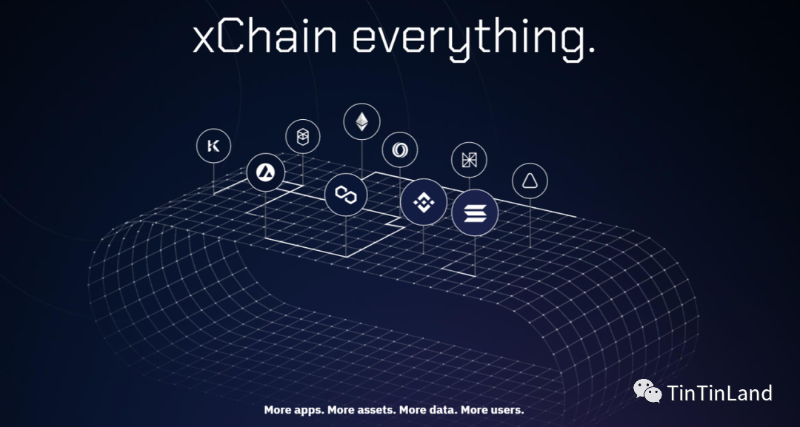
Leveraging universal message passing and a single SDK, Wormhole enriches xChain interactions more than ever before, enabling deeper exploration of user base expansion through cross-chain capabilities. The protocol has processed over $35 billion in total transaction volume and successfully transmitted millions of messages. Thousands of messages are submitted daily. This month, Wormhole made its first attempt to connect to the Cosmos ecosystem, achieving cross-chain integration.
Website: http://wormholenetwork.com/
Layer1
During the last bull market, competition among Layer 1 public chains was intense, with both EVM-based and non-EVM chains producing breakout stars. This year, despite the bear market, numerous new Layer 1 chains have emerged, focusing on innovations in network scalability, security, and tackling the “trilemma,” giving rise to a wave of fresh projects.
Move-Based Newcomers Surge Forward
This year, Move-based chains Aptos and Sui raised nearly $500 million in funding from top-tier VCs including a16z amid a downturn, quickly rising in prominence and becoming bright sparks in the crypto winter. We previously explored the appeal of the Move language in our article “Developer Hourly Wage Up to $1,200? Discover the Programming Charm of Move!” and compared the innovations of Aptos and Sui in “Aptos vs Sui: Comparing Two Leading Move-Based Public Chains,” both recommended reading for interested developers.
Sui
Sui is the first permissionless Move-based blockchain built from the ground up, designed to empower creators and developers to build experiences for the next billion users in Web3. With high throughput and low latency, Sui is ideal for building rich, dynamic on-chain assets ranging from games to financial applications. Funding: ~$336 million.
Website: https://sui.io/

Aptos
Aptos is arguably the fastest-moving Move-based Layer 1 chain in terms of development progress and ecosystem launch. Though not entirely new, it saw significant advancements this year. Designed for decentralized applications usable by billions, Aptos aims to redefine the Web3 user experience with high scalability, modularity, and developer-friendly smart contracts powered by the Move language. Its mainnet is now live. Funding: $350 million.
Website: https://aptoslabs.com/

Specialized Chains
Oasys Architecture – Gaming-Focused
Oasys Architecture is specifically built for game developers, combining the best of public L1 and private L2 blockchain solutions. This unique multi-layer Hub-Layer architecture offers high scalability and delivers fast, zero-gas-fee experiences for users. Funding: over $20 million.
Website: https://www.oasys.games/
Caduceus – Metaverse-Focused
Caduceus is the world's first blockchain dedicated to metaverse development. Built on distributed ledger technology, it features unique tools for efficient deployment and operation of metaverse applications. P2P communication, IPFS storage, and heavy workloads all run on the Caduceus Metaverse Protocol. It empowers creators to revolutionize travel, education, social media, film, TV, gaming, and entertainment. Funding: over $4 million.
Website: https://www.caduceus.foundation/
Sei – Native DeFi Chain
Sei is the first blockchain specifically designed for trading, featuring a native order-matching engine, frontrunning protection, and multi-level order bundling to give exchanges a competitive edge. With transaction speeds of 600 milliseconds, it ranks among the fastest chains available. Funding: over $55 million.
Website: https://www.seinetwork.io/
Onomy – Cross-Chain DeFi
Onomy is a Layer 1 blockchain built using the Cosmos SDK and leverages the Inter-Blockchain Communication (IBC) protocol to bridge with other Cosmos ecosystem projects. It is dedicated to delivering centralized exchange (CEX)-like experiences on-chain. Onomy currently facilitates access to large-scale forex markets in DeFi, offering a full ecosystem including Arc Bridge Hub, Access Mobile Wallet, and Onomy Exchange. Funding: over $15 million.
Website: https://onomy.io/#forex

Modular Blockchains
Celestia
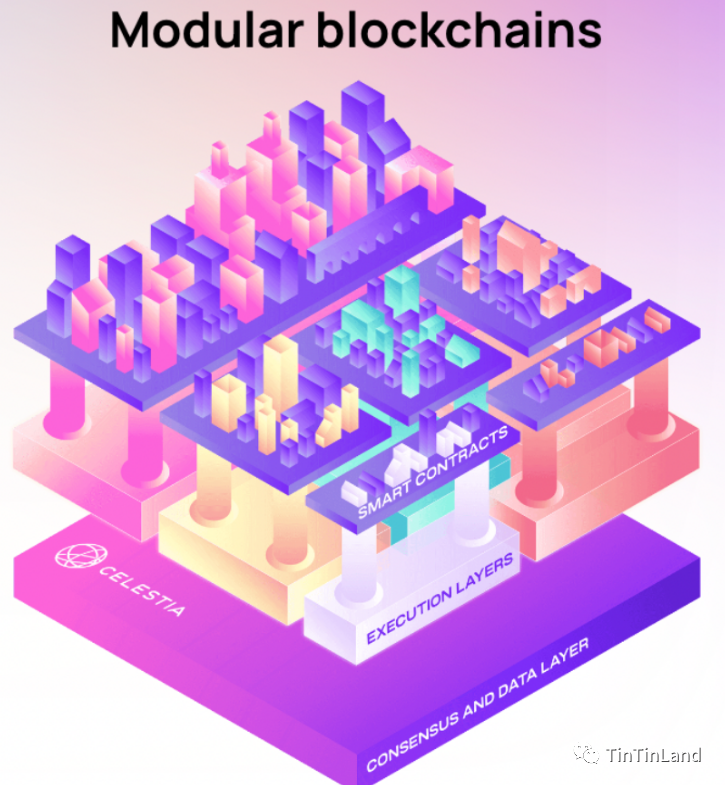
Celestia is the first modular blockchain network, allowing sovereign blockchains to break free from monolithic architectures. It enables flexible, permissionless blockchain creation under customizable conditions, aiming to make deploying blockchains easy and cost-effective. Funding: over $56 million.
Website: https://celestia.org/
Community & DAO-Centric Chains
Unit
Unit connects creators and communities in decentralized markets through powerful, secure, and user-friendly tools. It provides economic infrastructure for creating and managing DAOs, leveraging Web3 to elevate businesses or brands to new levels. Built using the Substrate framework under grant from the Web3 Foundation, Unit is a Layer 1 blockchain. Funding: over $13 million.
Website: https://www.unit.network/home
0L
0L is a new Layer 1 blockchain protocol. Open, permissionless, and community-governed, it combines cutting-edge blockchain technology with truly decentralized governance. A community-driven fork of Diem, 0L uses the Move programming language and emphasizes collective contribution and co-creation.
Website: https://0l.network/
Privacy Chains
Anoma
Anoma is a privacy-preserving protocol with the belief that "networks should benefit the public, not turn the public into commodities." It enables any digital representation of value to serve as a medium for exchange, payment, or trade, unlocking entirely new models of economic construction.
Website: https://anoma.net/
Partisia
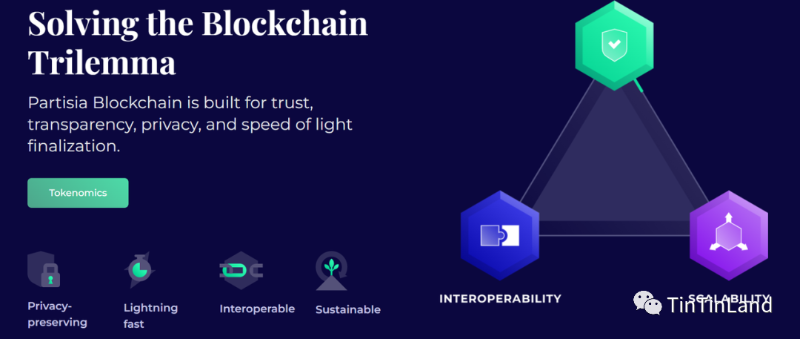
Built for trust, transparency, privacy, and speed, Partisia’s mission is to establish a Web3 infrastructure without single points of trust, enabling universal coordination of public and private data for all applications across all platforms. It adds an extra layer of data protection on-chain, allowing users to control data access via ZK Computations. Additionally, Partisia is eco-friendly, consuming only one-thousandth the energy of traditional blockchains. Funding: over $45 million.
Website: https://partisiablockchain.com/
Aleo
Aleo is the first platform to offer fully private applications. It achieves this by leveraging decentralized systems and zero-knowledge cryptography to protect user data online. Funding: $228 million.
Website: https://www.aleo.org/
Worldcoin
Worldcoin is building what it calls a Privacy-Preserving Proof of Personhood (PPPoP). By distributing Worldcoin tokens freely to everyone, it aims to become the largest and most inclusive crypto network globally. Its vision is to connect the first billion users through a collectively owned crypto network. Funding: over $125 million.
Website: https://worldcoin.org/
Balancing Regulation and Decentralization
Redbelly
Redbelly is particularly suited for regulated asset markets, achieving a first-of-its-kind balance between regulatory compliance, social legitimacy, and blockchain speed and efficiency. All participants on The Redbelly Network are identified through our off-chain digital identity provider network. Funding: over $3.6 million.
Website: https://www.redbelly.network/
Interconnecting Everything Across Chains
ZetaChain
The world’s first and only blockchain connecting everything. It enables cross-chain and cross-layer value transfers, message passing, and smart contract calls—making omnichain dApps (odApps) possible for the first time. These applications can leverage liquidity across multiple networks and read/update states on all connected chains. ZetaChain is the foundational layer for a multi-chain future. Its novel architecture enables multi-chain functionality without bridges or wrapped tokens, allowing seamless deployment of omnichain dApps (odApps). These apps can manage and connect data and value across all smart contract platforms—and even non-smart contract platforms. It solves both “cross-chain” and “multi-chain” challenges.
Website: https://t.co/gZhl1tZpT3

Trilemma Breakthroughs
Subspace
Subspace is a fourth-generation blockchain built for the next wave of crypto developers. It employs advanced technology to resolve the blockchain trilemma without sacrificing security or decentralization. By archiving the history of blockchain ecosystems, it enables simple, secure, and trusted bridges between networks, achieving true interoperability. It already supports interaction with Polkadot and Kusama. Funding: over $33 million.
Website: https://zh.subspace.network/
Quai
Quai Network is a proof-of-work blockchain network—the fastest and most secure—and creates the only decentralized solution scalable enough for all global commerce, enabling users to enjoy rapid transaction times without compromising decentralization or security. Capable of processing thousands of transactions per second, Quai is a scalable PoW solution preparing for mainnet launch.
Website: https://quai.network/
PraSaga
A cutting-edge next-generation Layer 1 blockchain—designed to overcome limitations faced by other blockchains and fully backed by a global community ecosystem. It eliminates smart contracts and has developed SagaPython™ to empower developers. Each chain boasts hash power over 100 times greater than Bitcoin blocks while reducing energy consumption by 100x or more. Offers truly innovative solutions to problems plaguing other Layer 1 chains. Funding: over $4 million.
Website: https://www.prasaga.com/
Minima
Minima aims to be accessible to as many people as possible. It is the world’s first fully decentralized blockchain, the only one fully controlled by users, and the only one running completely on mobile phones—enabling peer-to-peer value exchange without intermediaries. Hundreds of thousands of nodes are currently validating and building the network. Funding: $5.6 million.
Website: https://www.minima.global/
In addition, projects such as linera, Massa, Odsy, and Berachain are also tackling the decentralization trilemma, aiming to deliver higher performance, reliability, and scalability for decentralized applications with near-instant interactions and low end-user costs. Due to space constraints, they are not elaborated here—interested developers are encouraged to visit their official websites for more details.
Eco-Friendly Blockchains
5ire
5ire is designed with economic and environmental sustainability at its core. One of India’s fastest-growing unicorns, it enjoys strong support from global communities. Offering advantages such as interoperability, high throughput, and low fees, it enables sending assets, collectibles, or files to any chain, phone number, or Web3 address. The project aims to make blockchain sustainable and accessible to over one billion people by 2030. Funding: over $250 million.
Website: https://www.5ire.org/
Setting Sail Against the Wind: The Unwavering Vision of New Public Chains
With the arrival of the bear market, the crypto space has experienced turbulent times. Yet, from the development of emerging public chains, Web3 continues to radiate unique charm worldwide. Public chains are the most fundamental components in the blockchain domain. While Ethereum’s dominance (“one superpower among many strong”) remained unchallenged in 2022, new public chains surged forward against the odds, sprouting up like bamboo shoots after rain.
This article has presented an overview of new Layer 0 and Layer 1 public chains this year. First, at Layer 0, projects introducing ultra-light nodes for cross-chain communication have emerged, signaling significant improvements in cross-chain interoperability and security. Currently, almost all existing bridge and message-passing methods fall into two categories: one relies on forming consensus via an intermediary chain to verify and forward messages—a low-cost approach adopted by most projects; the other runs light nodes on-chain, offering high security but at great expense. The future growth of such projects’ ecosystems is promising, potentially solving the long-standing problem of blockchain silos.
Competition in the Layer 1 public chain space remains fierce this year. Overall, despite differing technologies, several common trends emerge:
First, new public chains have moved beyond traditional narratives.
New public chains are no longer solely focused on solving the blockchain trilemma. Beyond enhancing scalability and security while preserving decentralization, they are charting new paths to better support Web3’s evolution.
Second, a shift toward greener consensus mechanisms is inevitable, with public chains placing greater emphasis on environmental sustainability.
This trend aligns closely with this year’s surge in “green blockchain” initiatives, as the industry strives to shed the negative perception of blockchains harming the environment. Dedicated eco-friendly public chains have even emerged and gained widespread acclaim from global communities.
Third, aside from a few standout newcomers, most public chain projects face challenging fundraising environments.
We know that public chains—especially Layer 1 chains—require substantial early investment in funding, talent, and time. Amid the crypto winter and tightening markets, financial support may be insufficient, likely triggering a shakeout among many new chains.
However, high-quality projects will endure the test of time, leveraging technological innovation to survive the crypto winter—and possibly emerge as the next unicorn success stories. Only time will tell.
This is Part 1 of our 2022 New Public Chain Review. In Part 2, we will focus on developments in Layer 2 chains—stay tuned. Additionally, TinTinLand has launched a series of public chain deep dives—interested developers can check “Previous Highlights” at the end of this article. If you have favorite public chain projects or insights to share, feel free to leave a message in the backend to discuss with us.
Join TechFlow official community to stay tuned
Telegram:https://t.me/TechFlowDaily
X (Twitter):https://x.com/TechFlowPost
X (Twitter) EN:https://x.com/BlockFlow_News
 @OurTinTinLand


