









What are you actually playing when you're playing with NFTs?
TechFlow Selected TechFlow Selected
What are you actually playing when you're playing with NFTs?
The current state of the NFT market from a retail investor's perspective.
 Navigating Web3 tides with focused insights
Authored by: @0xstk & @RayYayZzz, NFTTrack
In September this year, OpenSea co-founder Devin Finzer expressed optimism about the NFT market this winter, predicting an explosion of innovation and utility across the NFT space. Winter has arrived as scheduled, yet we haven’t seen the anticipated surge in innovation and practicality. On the contrary, OpenSea itself has sparked controversy by launching a tool to enforce on-chain royalties.
The collapse of FTX spread panic throughout the crypto market, and a bleeding market kicked off this winter season. The NFT market was inevitably affected, becoming unusually "cold." Data shows that Ethereum NFT trading volume in November hit its lowest level since July 2021. Transaction counts dropped nearly 80%, from a peak of 4.998 million in April this year to just 1.113 million, while the number of active traders continues to decline.
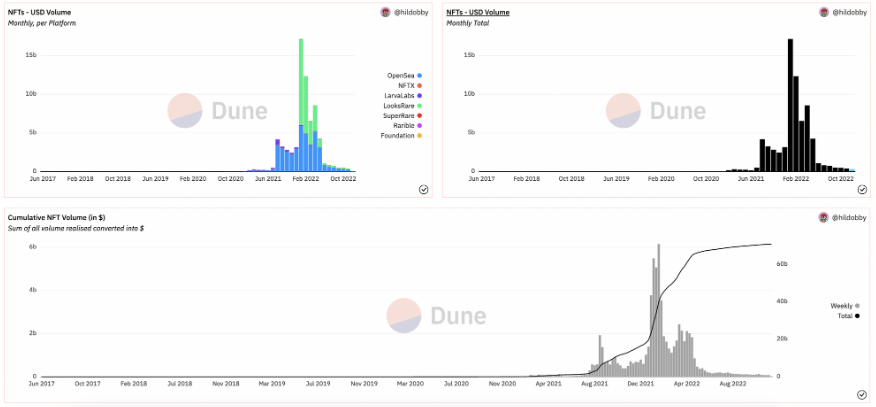
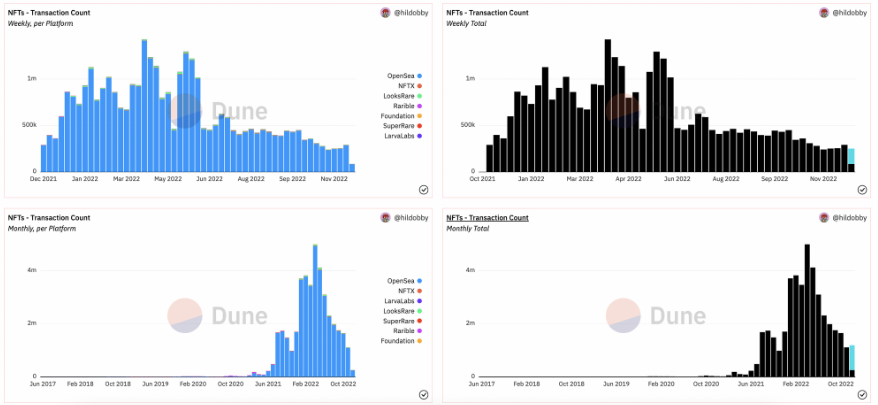
Data source:https://dune.com/hildobby/NFTs
Despite the market downturn and a visibly shrinking base of active participants, new projects of varying quality continue to emerge endlessly. Tactics like whitelist giveaways—essentially repackaged versions of old strategies—are still rolled out daily across communities. At this moment, this article aims to analyze and summarize the current state of the NFT market and common tactics employed by project teams. On one hand, we hope to share insights from a retail investor’s perspective on how to evaluate the value of an NFT project for potential returns.
On the other hand, the NFT market seems to have largely concluded a bull cycle centered around PFP (profile picture) narratives. As we approach the end of 2022, the authors also wish to offer a brief summary and outlook on this NFT cycle.
"A False Boom After the Peak"
The first step in launching an NFT project—and a key reason why the current market appears lively—is the allocation and distribution of whitelists. Generally speaking, today's NFT projects distribute whitelists through methods falling into the following categories:
-
Grind to get whitelisted: Users join a community (mainly Discord), increase their rank, and earn whitelist spots by being active, creating derivative content, or participating in community events—commonly known as “grinding for WL.” Due to excessive demands on users, this method is now rarely seen and has shifted toward lighter user-screening mechanisms.
-
Hold a recognized NFT to get whitelisted: Users qualify for a whitelist by holding specific NFTs designated by the project team. These are often previously launched collections from the same team, deeply partnered projects, or certain established blue-chip NFTs.
-
Giveaway & Raffle: Users complete tasks via Twitter giveaways or raffle tools (e.g., Premint, Alphabot, Superful, Heymint) to win whitelist spots. These initiatives fall into two main types: those launched directly by the project team and those run by partnered communities, projects, or KOLs.
-
Application process: Users fill out an application form and undergo review by the project team to obtain a whitelist spot—also called an application-based system. Depending on eligibility criteria, these applications can be public, code-restricted, or limited to Discord members.
Typically, a project combines multiple approaches above to distribute all whitelist spots. While these methods bring apparent benefits—such as rapidly gaining followers and strong engagement metrics via giveaways, or boosting Bluechip Index early on by airdropping to prominent communities—they collectively construct a false image of sustained prosperity after the initial hype has faded.
Below are problems and hidden issues associated with each whitelist distribution method, summarized from a retail investor’s perspective:
-
First, Grind to get whitelisted ("grinding"): As a traditional whitelist distribution method, it is still widely used by many new projects. When you enter such a project’s Discord server, you’ll often see high activity but little meaningful interaction. To secure a whitelist, many users flood channels with repetitive messages, sometimes even using bots to boost activity and rank, resulting in an environment saturated with spam. Although some projects use auxiliary measures to mitigate this, “grinding” may simply not be an effective way to distribute whitelists.
-
Second, Hold a recognized NFT to get whitelisted: The goal here is to attract high-net-worth players who already own certain blue-chip NFTs (who tend to be less price-sensitive and represent more loyal “diamond hand” holders). While this might help boost a collection’s blue-chip index at launch, it can backfire due to lack of community consensus, indirectly increasing selling pressure in the secondary market.
Distributing whitelist spots via Giveaway & Raffle is currently the most widespread method. With the rise of tools like Premint, Alphabot, Superful, and Heymint, users can participate in countless raffles every day. A subculture of “raffle hunters” has emerged, frequently employing bulk account registration and botting. This has also given rise to a secondary market dedicated to trading whitelist spots.
Undoubtedly, this method helps new projects quickly gain followers and impressive engagement metrics. However, precisely because of this, it becomes easy to confuse quality with quantity—projects of vastly different qualities can all present similarly strong data.
Moreover, since projects often collaborate with communities, KOLs, or other projects on giveaways, issues such as influencer monopolization and coordinated rug pulls arise. For example, recently, a major Chinese-speaking KOL was exposed for monopolizing BeVee’s whitelist in the Chinese community. After going viral, this caused significant reputational damage to both the project and its community, leading its secondary market floor price (FP) to plummet almost to zero.
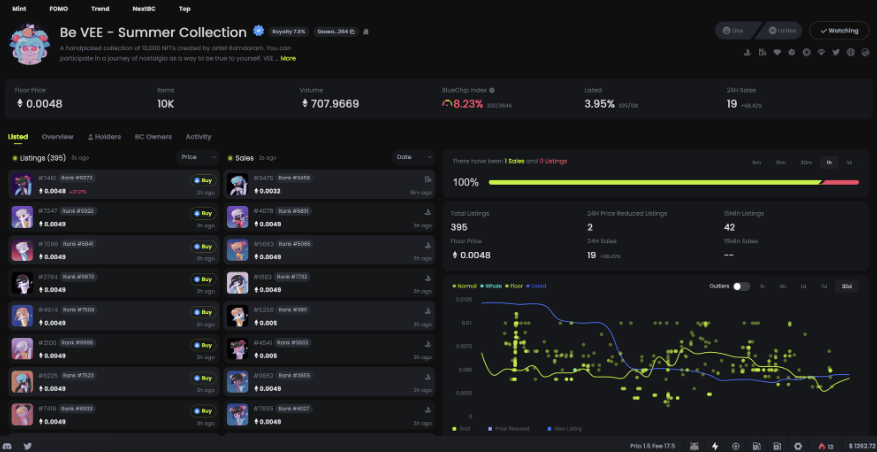
Data source:Be VEE - Summer Collection Real-time Floor Price Trend
Finally, distributing whitelists through Application Process submissions has been adopted by several high-profile NFT projects recently, including KPR and VALHALLA. Public Application Processes remain relatively accessible to retail investors, but Code-Based Application Processes undeniably reflect the "clique culture" within the NFT space. Why? Because for retail investors without connections or resources, securing a coveted code for a hot project can be extremely difficult—right from the start, it turns into a race based on networks, resources, and insider access.
Every market has a food chain. It's undeniable that retail investors typically occupy the bottom tier, struggling to survive. While the whitelist distribution methods mentioned above remain popular among most projects due to their effectiveness, they come with serious drawbacks. As the NFT market evolves, we hope to see more inclusive and fair distribution models. Expansion over internal competition—that’s what many truly desire.
"Innovation Gap in NFT Mechanics"
While whitelist distribution is important, a well-designed allocation strategy may lay a solid foundation for a project’s entry into the secondary market. But the real test comes after minting. In our view, a project’s survival hinges almost entirely on its ability to build and maintain strong community operations, marketing, and shared community consensus. Simply put, some projects are effectively dead before minting even begins; others die the moment minting ends; some only begin their countdown to death once the roadmap is revealed; while a few—with distinctive strengths in team, funding, innovation, branding, or community management—ultimately earn community trust, deliver value outward, and become long-term holdable blue-chip projects.
From post-mint, to Reveal (“unveiling”), to long-term roadmaps, project teams employ various tactics to reduce sell pressure and manage expectations. Below, we outline common mechanics in today’s NFT market, their core objectives, and representative examples.
Manual Reveal of NFT Blind Boxes
As the name suggests, manual reveal refers to users opening blind boxes and revealing NFT metadata manually. Compared to the standard method where the project team automatically uploads metadata, this approach increases user participation during the reveal phase and deliberately creates anticipation and psychological gambling around rarity outcomes.
This mechanic was first introduced by CloneX, popularized by RENGA, and later copied by numerous projects such as Gangster All Star and StreetMachine. However, aside from the first two achieving relative success, most imitators have struggled to sustain momentum—suggesting that market participants are growing tired of repetitive, outdated mechanics.

Data source: NFTTrack, RENGA Black Box Real-time Floor Price Trend
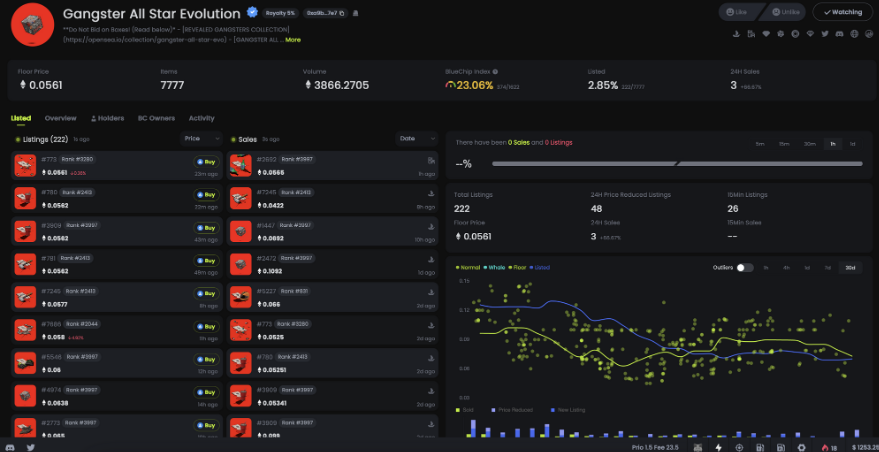
Data source: NFTTrack, Gangster All Star Evolution Real-time Floor Price Trend
Staking Mechanisms
Staking mechanisms are common across NFT projects—from blue-chips like Moonbirds to obscure newcomers. Countless projects have introduced staking, primarily as a way to delay sell pressure. By offering token rewards or other incentives, projects encourage users to delist from the secondary market and stake their NFTs, thereby slowing down immediate dumping.
This model may create a flywheel effect during bull markets, but in bear markets, it often fails as users abandon staking en masse. Moonbirds serves as a prime example: thanks to favorable timing and conditions at launch, staking helped maintain a high and stable floor price. However, with the onset of the bear market and insufficient follow-through from the team (especially shifting to cc0, which weakened community cohesion), prices collapsed. In contrast, Solana-based Degods and y00ts also implemented staking—but thanks to highly engaged founders and strong community presence, both have maintained stable floor prices (in SOL terms). Ultimately, sustained value relies on community consensus and visible long-term development. Staking alone is merely icing on the cake.
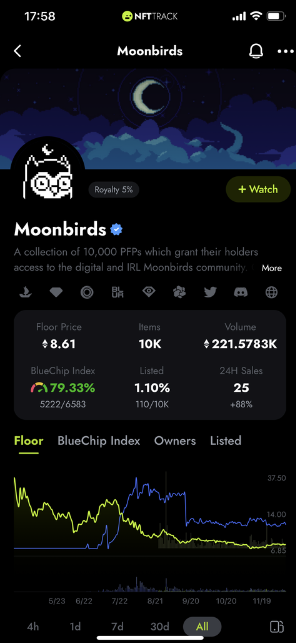
Data source: NFTTrack APP, Moonbirds Real-time Floor Price Trend
Token Plans
Launching a token alongside an NFT collection is no rarity in the NFT space and often goes hand-in-hand with staking. Users stake NFTs to earn tokens, though some projects skip staking altogether and instead airdrop tokens based on holding duration or NFT rarity. In bull markets, this dual appreciation of NFTs and tokens may work temporarily. But in bear markets, token plans risk becoming long-term liabilities. Most projects announce ambitious token launches but fail to follow through, easily falling into a death spiral of low liquidity and declining prices.
BAYC’s APE token price trajectory tells a cautionary tale. We could boldly argue that BAYC’s token launch and Otherside land sale drained an already parched NFT market of liquidity, contributing significantly to the prolonged market slump. Could cashing out upon token launch be a viable exit strategy for NFT holders? And how should tokens be empowered and integrated into sustainable ecosystems post-launch? These remain unresolved challenges—but also opportunities worth anticipating in the future.
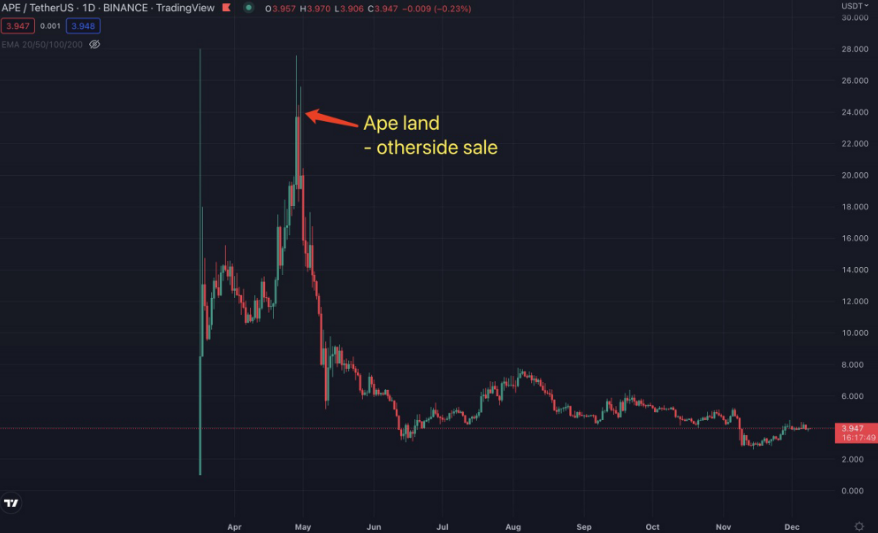
Data source: Tradeview, APE price peaks during BAYC Otherside land sale
Fundraising Plans
Fundraising itself isn't inherently problematic in project growth. However, ever since DigiDaigaku executed a stealth drop followed by an announcement of $200 million in funding—and saw strong secondary market performance—some projects have started misusing fundraising narratives. Common tactics include announcing completed funding prior to minting (truthfulness unknown) to trigger market FOMO, or announcing upcoming funding post-mint to execute soft rugs. Of course, these represent only part of the乱象 surrounding fundraising; legitimate teams with strong backgrounds receiving investments from reputable institutions fall outside this critique.
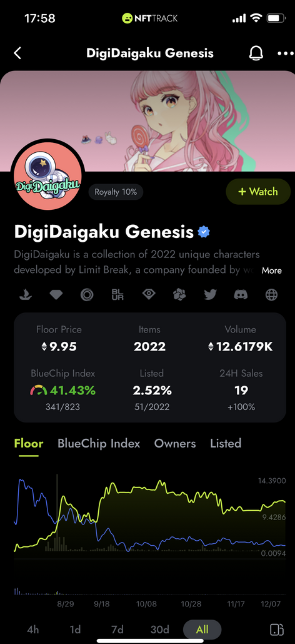
Data source: NFTTrack APP, DigiDaigaku Real-time Floor Price Trend
Even setting aside manipulation, whether fundraising benefits NFT holders and communities remains debatable.
Furthermore, will a funding announcement lead to short-term pump-and-dump cycles or genuine long-term value uplift? That depends on timing and whether the community buys into the narrative. For instance, Doodles’ price briefly rebounded after its funding announcement but soon reverted—proving that funding news alone isn’t a magic bullet for price recovery.
Metaverse & Gaming & Film & Animation Plans
NFT enthusiasts are likely familiar with project teams proposing metaverse, gaming, film, or animation initiatives. These often appear on roadmaps or as post-funding plans. The issue lies in execution: developing games, films, or animations requires professional teams, while building a full metaverse raises the bar even higher. Most NFT teams lack the necessary expertise. Only a few blue-chip projects with strong community foundations may succeed, and even then, results require long-term validation.
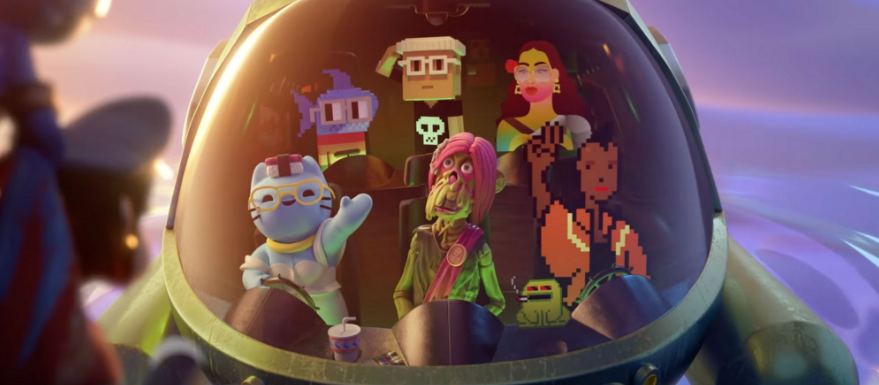
Image source: Bored Ape Metaverse Game Concept Art
Streetwear & Merchandise Plans
Previously, we admired the term “Web3 creation.” Producing merchandise is common in Web3—you might even spot people wearing branded apparel at events. Any project can make merch, but NFT projects benefit from having concrete visual identities, making their products more appealing. Still, merch contributes little to actual project growth. Building a true streetwear brand, however, demands much more: a powerful IP, art that resonates with mainstream aesthetics, and a capable team—particularly in capital strength and Web2 integration.
Azuki exemplifies this capability. From their iconic tiger double-sided jacket, to gold skateboard auctions, collaborations with Red Bull Racing F1, and recent co-branded accessories with Ambush, Azuki consistently innovates by bridging physical and digital worlds. This aligns perfectly with their founding vision: “a playground between the physical and digital worlds where we experiment with meta-games, interactive experiences, and novel ways to grow an IP.” We eagerly await whether such experimental efforts can elevate NFTs to a new level.
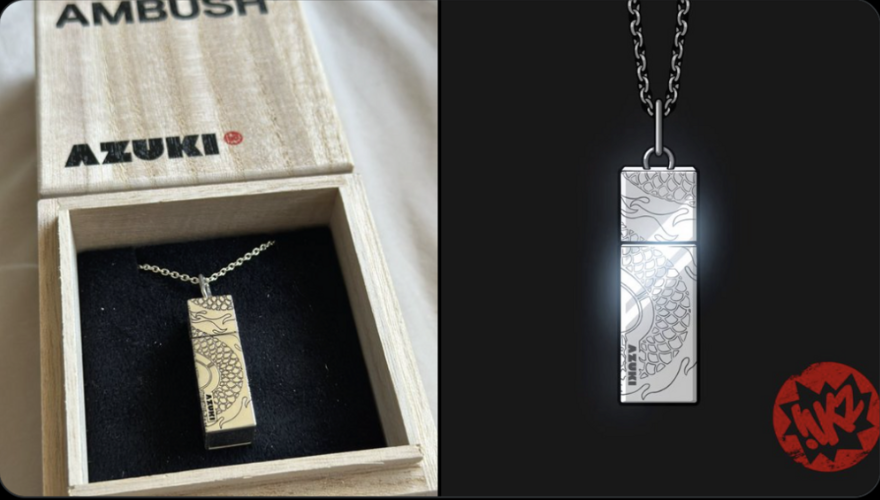
Image source: Twitter, Azuki x Ambush co-branded accessory (real-world on left, NFT on right)
"Conclusion and Outlook"
From NFTs gradually entering mainstream awareness, to the NFT Summer at the beginning of this year, to today’s NFT Winter, the NFT market has experienced a mini-hype cycle and is now navigating a downturn. Throughout this period, numerous innovations and mechanics emerged:
Conceptually: artworks, identity markers, sales receipts, brand IPs, metaverse games, etc.
Launch mechanics: primary market includes minting, blind boxes, whitelists, Dutch auctions, airdrops; secondary market includes tokenization, staking, physical goods.
Protocol-level innovations: ERC721A, ERC1155, and other NFT standard upgrades.
At the infrastructure layer: experiments like NFT fractionalization, staking, and lending aim to enhance liquidity.
Yet from today’s vantage point, the NFT market is clearly in an innovation gap. Most new projects simply retrace the paths of earlier blue-chip leaders: BAYC combines multiple mechanics and explores the metaverse gaming frontier; Azuki focuses on building the coolest metaverse brand through streetwear and animation; CloneX pioneered manual reveals and creative fashion integrations; Doodles announced strategies in music, art, consumer goods, and animation at this year’s NFT NYC...
These veteran blue-chip-led mechanics looked promising during the bull run. But as subsequent projects copy them mechanically, they’ve become symbols of laziness and innovation stagnation. Market education has raised user expectations—players won’t tolerate stale gimmicks anymore. This has steadily drained market liquidity, leaving the entire NFT ecosystem stagnant.
To welcome the next NFT Summer, the market urgently needs fresh, innovative models. Technologies are initially doubted, but endure beyond the burst of bubbles. NFTs remain a groundbreaking innovation—the fusion of blockchain technology and non-fungible assets—representing verifiable, unique, authentic, and original ownership.
In our view, when NFTs return to broader audiences in the next phase, they will no longer serve merely as PFPs, but find real utility across diverse applications. Functional NFTs are brewing and poised to shine in the following directions:
-
NFTs in gaming will spark a profound revolution: Currently, NFT applications in gaming are still in early stages, yet they hold immense potential. In the future, NFTs could become integral to richer game design, granting players true ownership of in-game assets. Games would evolve beyond entertainment into meaningful, valuable experiences. This could unlock new business models—NFT auctions, trading, premium zones, or paid features—all powered by NFTs.
-
Brands integrating NFTs across online and offline touchpoints: NFTs enable seamless connections between digital and physical brand experiences. For example, a brand could create a digital version of a product, allowing consumers to interact with the brand offline—by scanning QR codes or using technologies like NFC (Azuki has experimented with PBT tech for brand activations). Conversely, brands can use NFTs to drive offline engagement—launching games or events where participants receive unique digital collectibles. Overall, NFTs bridge online-offline gaps, enhancing brand visibility and customer experience.
-
As fundamental production assets, unlocking the metaverse: As foundational elements, NFTs can provide new infrastructure for the metaverse—enabling users to create, trade, and monetize unique digital assets, opening new revenue streams. However, both NFTs and the metaverse remain in early development. Despite growing adoption in niche areas, significant challenges remain—including technical hurdles, legal risks, and market readiness.
We cannot control how the world changes, but we can embrace the new world one step ahead of others.
Join TechFlow official community to stay tuned
Telegram:https://t.me/TechFlowDaily
X (Twitter):https://x.com/TechFlowPost
X (Twitter) EN:https://x.com/BlockFlow_News






