








Art Gobblers: A Paradigm-backed on-chain gallery and experimental ground for a new token economic model
TechFlow Selected TechFlow Selected
Art Gobblers: A Paradigm-backed on-chain gallery and experimental ground for a new token economic model
Art Gobblers was launched as a finished product, designed to foster a self-sustaining ecosystem.
 Navigating Web3 tides with focused insights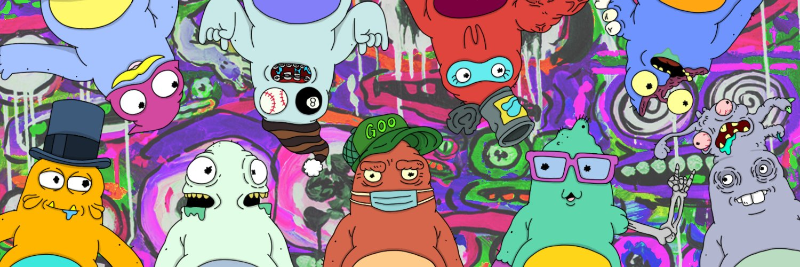
Which NFT projects are most worth watching in October?
Art Gobblers is definitely one of them—a project co-launched by Justin Roiland, co-creator of Rick and Morty, and the prominent crypto venture firm Paradigm.
The concept is simple: a self-sustaining, decentralized art gallery driven by its own economy, with a free-mint launch scheduled for October 31.
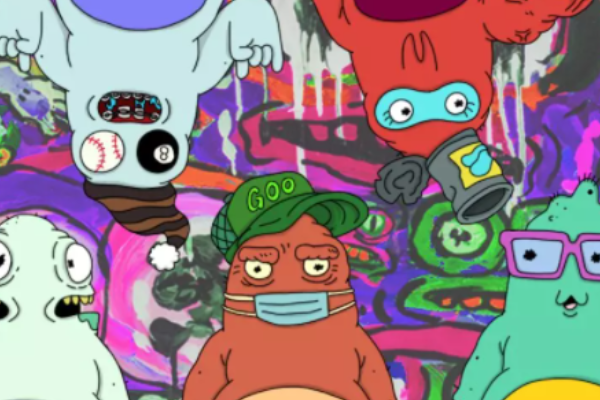
The Art Gobblers collection starts with 2,000 unique Gobbler NFTs. They’re called “Gobblers” because they consume art—every artwork a Gobbler eats becomes permanently displayed on its belly gallery, stored immutably on-chain.
If a Gobbler is later sold, all the artworks it has absorbed are transferred to the new owner as well.
What makes Art Gobblers special is its tokenomics. Paradigm has even designed several innovative mechanisms for it, including Variable Rate GDA (VRGDA) and GOO (Gradual Ownership Optimization). The former enables protocols to define customizable NFT sales curves over time, raising prices when sales outpace expectations and lowering them when sales lag. The latter primarily addresses the challenge of fairly distributing fungible tokens in NFT projects, aligning incentives between NFT holders and token holders.
Decentralized Gallery
Art Gobblers consists of three main components: Gobblers, GOO, and Pages.
Gobblers themselves are NFTs—fully animated ERC-1155 tokens. At launch, 2,000 Gobblers will be available for minting, with 300 (15% of supply) reserved for the development team. The supply will inflate continuously, adding up to 8,000 more Gobblers over ten years at an initial rate of about 200 per month. The core team will receive 10% of these newly minted Gobblers.
The defining feature of Gobblers is their ability to consume artwork. If you submit your digital artwork to a Gobbler, ownership is transferred on-chain to the Art Gobblers contract and permanently displayed within the Gobbler’s belly gallery.
When you sell a Gobbler, all artworks under its ownership are transferred to the buyer.
Additionally, Gobblers can generate an ERC-20 token called GOO—a utility token used to create new Gobblers and on-chain canvases (Pages).
GOO also accumulates automatically within Gobblers—the more GOO a Gobbler holds, the faster it generates additional GOO. There is no cap on total supply, a detail we’ll expand on below.
Art Gobbler Pages are another type of NFT, created using GOO. Think of them as on-chain canvases that allow owners to mint any artwork into an NFT. These canvases can then be traded, collected, or transferred to a Gobbler.
Token Economics
Both Gobblers and Pages are priced using the VRGDA mechanism designed by Paradigm.
VRGDA essentially sets a fixed schedule for NFT sales: if demand exceeds expectations, prices rise; if demand falls short, prices drop. Because the supply of GOO increases daily at an accelerating rate, setting a fixed GOO price for Gobblers or Pages would be meaningless.
Secondly, to address misaligned incentives between NFT holders and token holders, Paradigm research partner Dave White and research assistant proposed the Gradual Ownership Optimization model (GOO).
Art Gobblers generate the ERC-20 GOO token. The more GOO a Gobbler holds, the faster it produces additional GOO—meaning the total GOO supply accelerates daily with no upper limit.
Hoarding GOO without owning any Gobbler NFTs is a poor strategy, as others will keep generating GOO while your holdings get diluted. Conversely, owning many Gobblers but holding little GOO puts you at a disadvantage compared to other players.
This mechanism ensures GOO remains largely under the control of NFT holders over time, meaning early Gobbler owners will dominate a significant portion of the total GOO supply for the foreseeable future.
No matter how much GOO newly minted Gobblers produce in the coming years, they won’t surpass the GOO accumulation of the original (genesis) Gobblers, which continuously increase both their stockpile and production rate.
Of course, wealth-based strategies remain possible—buying both NFTs and GOO outright. Thus, we expect GOO will likely concentrate in the hands of a few Gobbler "whales," one of whom will almost certainly be the team itself.
In this sense, Art Gobblers resembles Olympus DAO, disproportionately rewarding early adopters and turning some into OHM whales—until the early big players eventually exit.
Notably, once launched, neither Roiland nor Paradigm intends to continue active development of Art Gobblers. As the Paradigm team stated, "Art Gobblers is launched as a finished product, designed to seed a self-sustaining ecosystem."
Therefore, this can also be seen as a social experiment.
Join TechFlow official community to stay tuned
Telegram:https://t.me/TechFlowDaily
X (Twitter):https://x.com/TechFlowPost
X (Twitter) EN:https://x.com/BlockFlow_News






