








PFP Status and Future: Finding the True Narrative of PFP
TechFlow Selected TechFlow Selected
PFP Status and Future: Finding the True Narrative of PFP
Think long-term and identify the IP with the greatest potential to go global from within the PFP space.
 Navigating Web3 tides with focused insights
Author: Shrimpwen.eth
Recently, due to innovations from SudoAMM and large-scale liquidations at BendDAO, the NFT market has regained a bit of momentum. Taking this opportunity, I’d like to discuss the true narrative behind PFPs—this will be the final piece in my trilogy on PFPs.
First, it's important to clarify that while NFTs are a broad category, this article focuses solely on PFPs, discussing their current state and future potential, aiming to uncover the genuine narrative of PFPs.
This article is divided into five parts:
1. Current bear market conditions & causes for PFPs
2. PFPs as a new paradigm for IPs
3. The advancement of Web3
4. PFP goal – becoming cultural symbols
5. IP revenue should replace royalty fees
1. PFP Bear Market Status & Causes
To understand the current state of the NFT market, let’s look at a statistic from OpenSea. Despite the rise of platforms like LooksRare and X2Y2, and factors such as ETH price drops, both user activity and transaction volume remain far below peak levels.
Looking at "blue chips," BAYC's floor price has dropped over 50%, while projects like Azuki and CloneX have seen floor prices fall by 70%-80%.
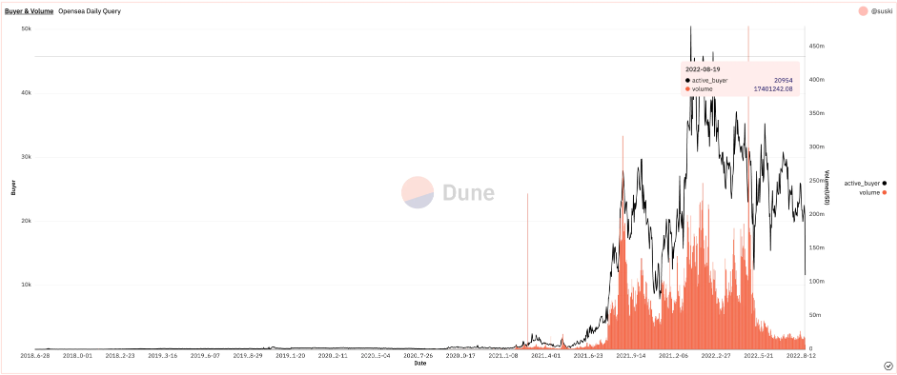
In my view, two main reasons explain this situation:
1. Typical bear market characteristics: Reduced profit incentives lead existing holders to sell rather than hold. Without fresh capital inflows or new participants, funds continuously exit the NFT market. This results in declining floor prices for blue-chip assets and near-total loss of liquidity across most PFP communities.
2. Failure of the PFP narrative: The path pioneered by BAYC relies heavily on external benefits via airdrops. Whether it's BAKC, MUTANT Ape Yacht Club (MAYC), or Otherside land allocations, these are all examples of issuing new assets to enhance value for the original NFT holders. However, this model isn't sustainable. During bull markets, there are buyers; but in bear markets with limited capital, where does the value of newly issued assets come from?
Meanwhile, narratives around cultural DNA, emotional resonance, and identity have failed to evolve, leading to an overall collapse of the PFP narrative.
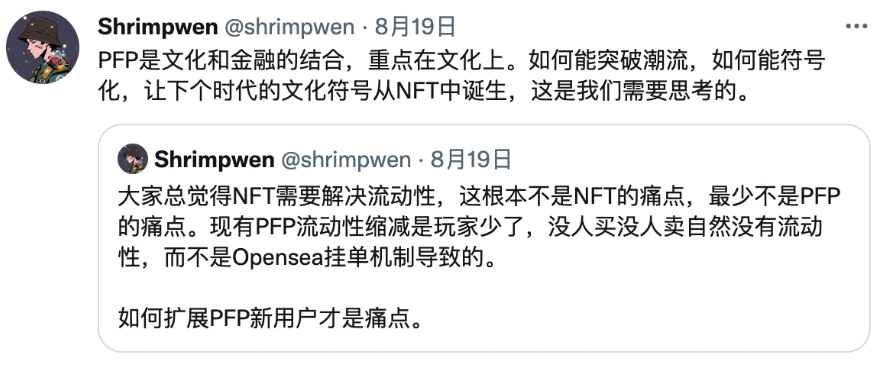
In summary, the core challenge facing today’s PFP market is developing authentic narratives and attracting new users.
2. PFPs as a New Paradigm for IPs
Let’s go back to basics and ask: What exactly is a PFP? PFP stands for Profile Picture—the name itself reveals that PFPs reflect the value of avatars within social networks. People are willing to pay for PFPs they love, giving rise to narratives around identity and new forms of social networking.
I’ve previously explored in detail how PFPs represent a new paradigm for intellectual property (IP).
PFPs are a new paradigm for IP: They are essentially IPs born in the Metaverse—new brands for the digital era.
IP is the true narrative behind PFPs. Once we recognize this, we can better envision the future trajectory of PFPs. The power of IP exceeds imagination—it is one of the most effective ways to penetrate human consciousness.
IPs have existed throughout human history—figures like God or Buddha are themselves IPs, concrete manifestations of cultural symbols.
Let’s establish two key facts:
1. In different eras, IPs take different forms and carriers. From oral traditions and written texts to film, television, and the internet, each technological shift brings new mediums. Disney built its IP empire through TV. So what will be the next carrier for IPs?
2. Each era demands cultural symbols aligned with its spirit. From ancient philosophical movements like the Hundred Schools of Thought and the Renaissance, to modern phenomena like The Beatles and rock music. Prometheus stealing fire, Adam and Eve eating the fruit of knowledge, Nezha removing his bones, Sun Wukong rebelling against heaven—these are all cultural symbols from different times.
Once an IP becomes a cultural symbol, it gains immense cohesion and longevity, capable of transcending time.
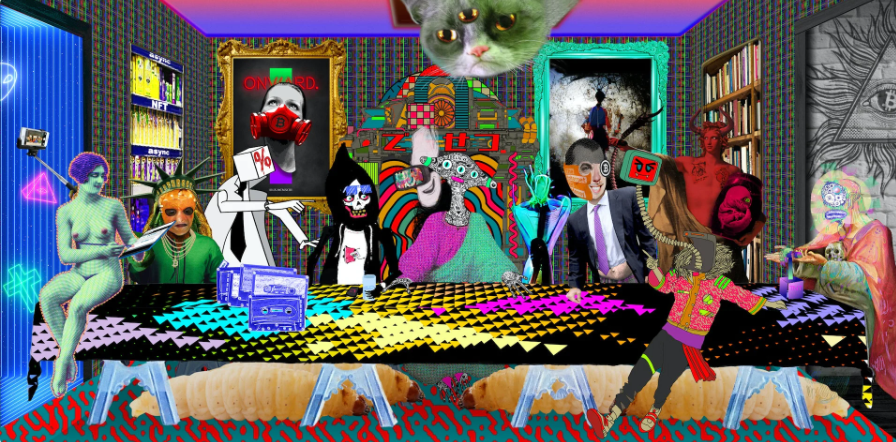
PS: The image below shows “First Supper,” an NFT artwork co-created by multiple artists including XCOPY, paying homage to Leonardo da Vinci’s “The Last Supper.”
3. The Advancement of Web3
Now we must ask: Why NFTs and Web3? Why do I believe Web3 will give rise to globally dominant IPs?
The strength of Web3 lies in making every action valuable—Web3 unleashes human creativity. I’ll quote from my earlier article “PFP: A New Paradigm for IP” without repeating details.
The difference between Metaverse IPs and traditional IPs also lies in value transfer. In the Web2.0 era, if I love Pikachu, I can only express it by playing Pokémon games, watching anime, or buying merchandise. That means I can only show affection through consumption—my creative efforts are truly “free labor.” Even if my fan art significantly promotes the IP, I receive no compensation. All profits go to the IP owner—the company.
Metaverse IPs work differently. If BAYC gains more attention, that increased interest naturally reflects in the NFT’s price. Holders then benefit directly from the expansion of the IP. Every rise in a PFP’s floor price represents a growth in the overall IP value.
Isn’t this the essence of Web3.0? Web3.0 liberates human creativity. As a result, every PFP holder has strong motivation to contribute creatively to the IP. These actions are no longer just free labor—we own the value we create.
Those who build the best communities and harness community creativity will most likely capture the benefits of Web3. PFP IPs won’t be built solely by project teams—community members are already actively contributing in their own ways.
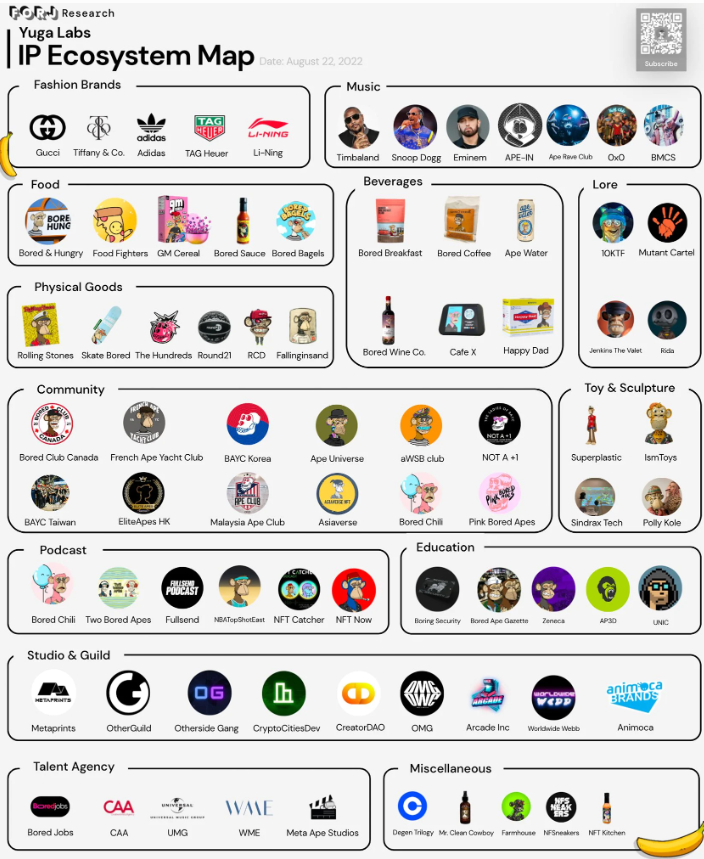
Below is a BAYC IP ecosystem map compiled by @Harry_forj, showing how BAYC’s IP licensing has diversified. BAYC is extending its IP from Web3 into Web2 markets, attempting to “Ape” the world.
4. PFP Goal: Becoming Cultural Symbols
Next, let’s consider the narrative aspect.
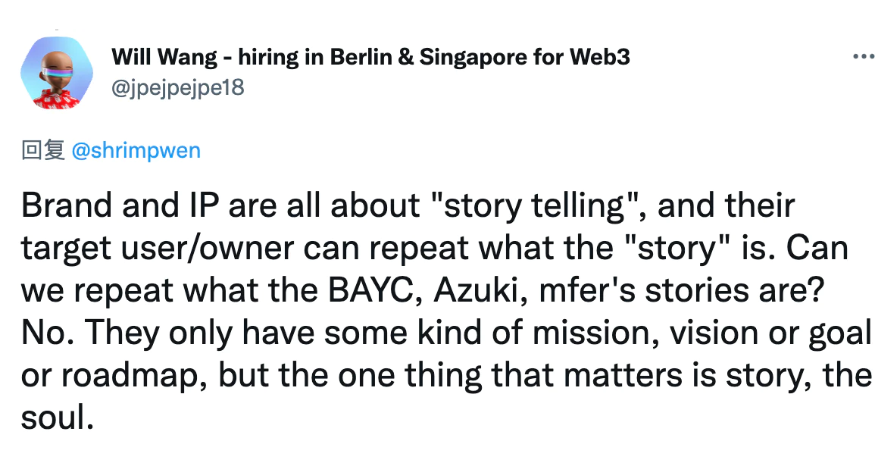
As Will once said, current PFPs lack stories and souls. To me, soul resides within storytelling. God needed the Bible to spread his gospel; Buddha taught the Dharma through acts like feeding eagles with his flesh.
Can PFPs become cultural symbols of our time?
First, they need compelling stories—content creation is indispensable to building an IP. For example, BAYC chose to build a metaverse to convey its spirit: monkeys freely roaming the Metaverse.
Some may think linking PFPs to cultural symbolism is excessive. But this image captures my perspective.
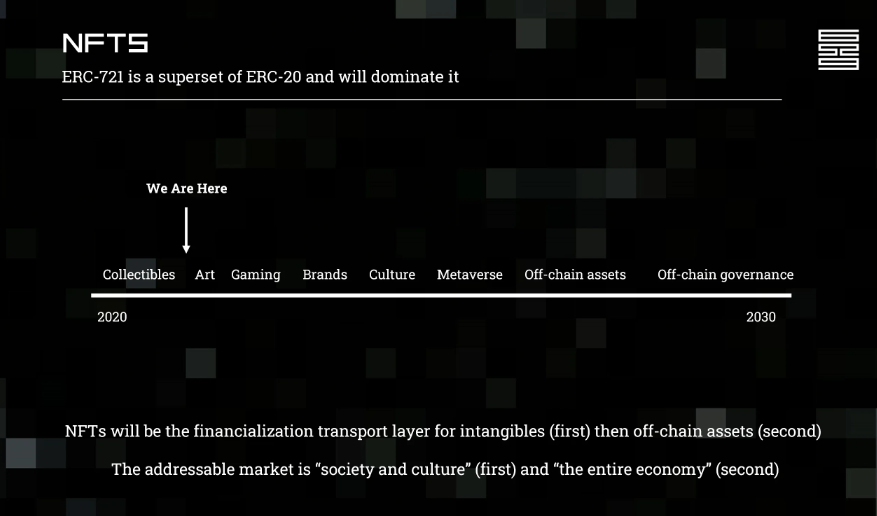
I believe NFTs will eventually become deeply embedded in everyone’s lives. NFTs have already entered the “Brands” phase; what comes next is “Culture”—NFTs may well become vessels for the spirit of our age.
Start by telling great stories—build the soul of PFPs. Use IPs to reach wider audiences, make them hear the stories, connect with the spirit. Only then can PFPs escape the negative cycle of falling prices and user attrition.
I don’t expect PFPs to become myths lasting thousands of years, but I do hope to see PFP projects rivaling top Web2 IPs. PFPs blend culture and finance—maximizing cultural attributes is essential to solving current challenges.
5. IP Revenue Should Replace Royalty Fees
The rise of Sudo has sparked concerns that 0% royalty fees might sound the death knell for PFPs, depriving projects of their primary income source. Yet the nature of NFTs makes it inevitable that platforms with zero royalties will emerge—some people simply won’t want to share their earnings.
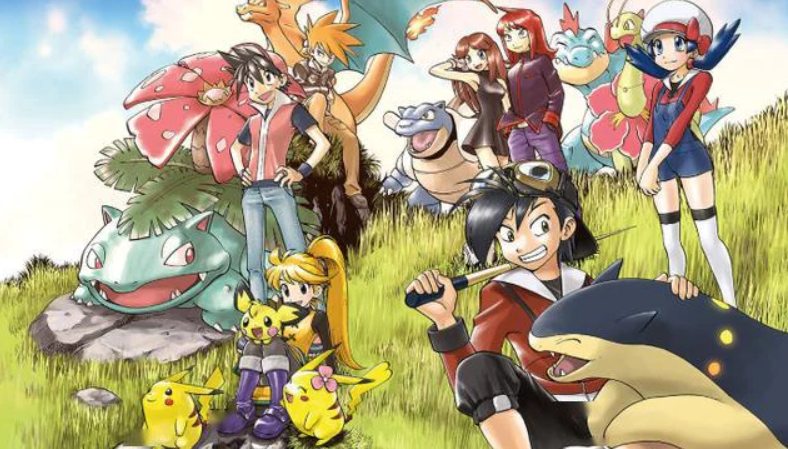
We should learn from the biggest IP in Web2: Pokémon—and follow its growth path. Let IP licensing, brand partnerships, and real-world businesses gradually replace royalty fees as the main revenue stream for PFP projects. This ensures sustainable development, allows every PFP holder to benefit, energizes the community to be more creative, and creates a positive feedback loop.
In a previous article, I discussed why CC0 is unsuitable for PFPs—mainly because it forfeits IP licensing revenue.
Also, let’s remember that PFPs have only existed for about a year. BAYC was minted last May, and Azuki has only been around for seven months. Their growth speed already exceeds expectations, but they need more time to solidify their foundations.
If you believe Web3 will eventually permeate everyday life and user numbers will grow exponentially, don’t fixate on short-term price fluctuations.
Think long-term—find the PFPs most likely to become global IPs.
Join TechFlow official community to stay tuned
Telegram:https://t.me/TechFlowDaily
X (Twitter):https://x.com/TechFlowPost
X (Twitter) EN:https://x.com/BlockFlow_News


