Tell Stories with NFTs: Ten Things You Should Communicate When Promoting NFTs
TechFlow Selected TechFlow Selected
Tell Stories with NFTs: Ten Things You Should Communicate When Promoting NFTs
NFTs are merely a new medium for an ancient tradition: storytelling.
 Navigating Web3 tides with focused insights
Author: Boba Epicure
TechFlow authorized translation and publication
"Young man, in mathematics you don't understand things. You just get used to them." – John von Neumann
Ah, another case of hindsight.
After a long night, you're in the shower, recalling how you explained mfers to your friends. You remember the fleeting concern that flickered across their faces when they nodded along at your wild claims. You also remember nervously shaking your head when your (ex) partner questioned why you spent rent money on pictures of monkeys after EDC morning.
Then suddenly, it clicks. A lightbulb flashes in your mind—you think: God, I wish I had said this! You realize exactly who you are. If this feeling is familiar, this guide is for you. Below are the things I wish I remembered when explaining why I proudly own NFTs.
"Yeah bro, these goblins are intentionally ugly."
Note: This is a practical guide, not a technical deep dive. For a more data-driven approach to NFT operations, check out this one below.
Scenario 1
Your friend’s only impression of NFTs is “those monkey pictures Elon Musk mentioned on Twitter.” When you try to explain how different NFT projects are building global brands (producing anime, hosting parties, giving out merch), he shuts you down with, “NFTs feel like a massive bubble.”
NFTs aren’t necessarily monkey pictures.
● In real life, they could be your car keys, passport, or Casablanca membership card.
● Online, they could be your Facebook profile picture (it's not just me, right?), LinkedIn certification, avatar in a 3D social space, favorite song, or your RPG character usable across multiple games.
Yes, it does feel like a bubble. There's definitely speculation involved, and prices may crash further if macro conditions worsen.
But behind the noise, NFTs are simply code running on blockchains with specific properties enabling interaction with other code; inherently, they’re meaningless. Their meaning and value come entirely from consensus-based communities or societies—just like why your Gucci hoodie costs ten times more than your Uniqlo one despite lower production costs. On the flip side, as more niche communities discover the benefits NFTs offer for community-building, they’ll drive crypto’s next wave of mass adoption. Ultimately, Web3 and NFTs usher in an era of creative sovereignty. The Pandora’s box has opened—it can’t be sealed again.
NFTs will continue evolving alongside social platforms (even web3-native ones like Gallery.so or Lens Protocol), so naturally more people will discover them. Tell people that once Instagram and TikTok integrate NFTs, they'll be able to "show off" their NFTs to billions globally. Right now, you can own your online social connections, forming a fully composable, decentralized social graph anchored by your PFP NFT from your Web3 identity. Beat Meta through "read, write, and own."
Even if they don’t seem like show-offs, emphasize how easily they can find like-minded community members/share beliefs via NFTs. Tell them you can often gauge someone’s personality just by their PFP (if they emit goblin vibes, that’s a dead giveaway). Take those BuzzFeed quizzes—I’d literally pay you to do them.
Scenario 2
Your friend highlights that NFTs have no real-world utility—"They can't get you a date!" he says.
First, admit he’s not wrong. “Otherwise, how am I still single?”
Jokes aside, say: “NFTs are just a new medium for an ancient tradition: storytelling.
Remember Harari’s *Sapiens*? How he argued that ‘Homo sapiens is a storytelling animal, thinking in stories rather than numbers or charts, believing the universe itself is like a story filled with heroes and villains, conflict and resolution, climax and happy endings. When we seek meaning in life, we want a story explaining what reality is and our unique role in the cosmic drama—a role connecting us to something greater, giving all our experiences and choices significance.’”
We all crave belonging, to be part of something bigger. You could never convince a monkey to give you a banana by promising infinite bananas in monkey heaven after death. That’s strictly human.
Human society runs on stories. With our new tech, you can actually become a character in your favorite multimedia franchise. You might even influence how the story unfolds through community governance. To me, NFTs don’t need to be metadata in VR like *Ready Player One*, though they’ll likely play a crucial role in your future online avatar or identity. NFTs are also about enhancing real-life experiences, solving existing problems with new technology.
More specifically, highlight how “as we speak, new social experiences are emerging—only possible via the web3 tech stack. Projects like Azuki are building community-owned lifestyle brands focused on growing their IP through parties, merch, stickers, skateboards, art, mini-statues, even an anime series. Recently, a project called Goblintown brought 200 people together screaming like goblins for two hours. Another project named Anata promises to turn you into a virtual idol during Zoom calls.”
Other news:
https://www.azukiloveisland.com/
Scenario 3
The classic knockout punch: right-click save
"Sure, save my NFT—go ahead and use it however you want!"
Embrace it—don’t be defensive. Many still see this as the biggest criticism, but once you explain digital ownership, they’ll understand. This is often where change begins.
Say: “While you *can* pirate your old professor’s linear algebra textbook on libgen.rs and deprive him of royalties, every time you right-click save my NFT, you actually increase its memetic value. Can you right-click save the Mona Lisa or Guernica?”
Obviously not literally—but you can save representations, which only increases their value. Van Gogh’s *Starry Night* isn’t merely a depiction of the night sky. He flattened pictorial space and applied thick layers of paint using impasto technique, giving his masterpiece an almost sculptural presence. This heightened physicality allows the work to claim status as a sublime object, a Kantian noumenon. NFTs are the same. Apes aren’t digital proxies for primates—they represent a new kind of primitive, a new mode of digital ownership and existence: they are you.
Moreover, as cultural significance grows around the artist behind a painting (Van Gogh was practically the archetype of the tortured genius artist), owning iconic works becomes more appealing. If Van Gogh had minted his works as NFTs, his family could enjoy continuous secondary royalties as the fame of his work exploded posthumously across Europe. By owning an NFT, collectors gain traditional art ownership benefits while enjoying unrestricted global distribution of their collection, accumulating even more value through wider exposure.
Now you realize, the metaverse is just Impressionism spreading across the digital world, layered over our reality like Van Gogh did. When you buy a Birkin bag not for soft leather but for Instagram likes and access to exclusive Hermès customer chat groups, you’ve already entered the metaverse. Can your friend right-click save that bag? How about a Rolex watch, my special edition Charizard Pokémon card, or my Coachella ticket?
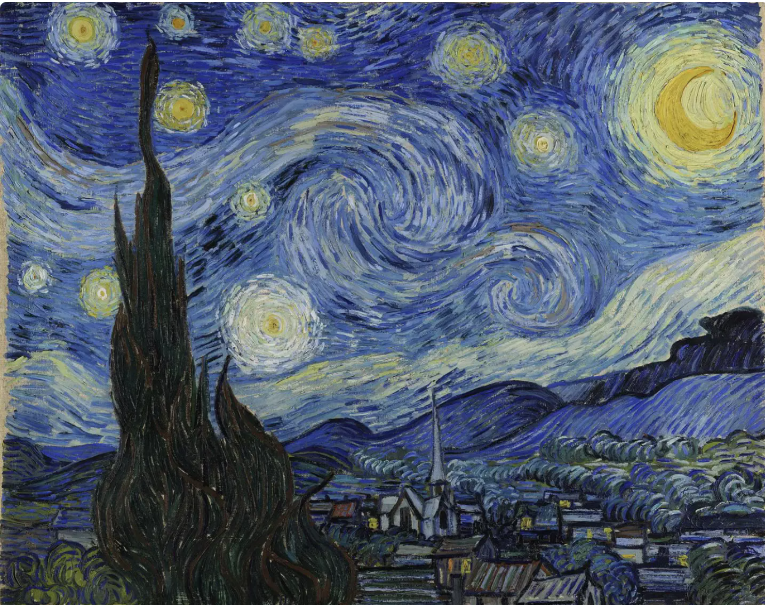
Vincent van Gogh’s *The Starry Night*
Scenario 4
Your friend grudgingly admits he can’t fully right-click save your NFT, yet dismisses it anyway, insisting he could directly create another NFT series called Fatigued Orangutan Jetski Club with similar traits.
Say: “The difference between Web3 and Web2 lies in open ownership. All project code is fully open-source. So if you want to use what I built—or even my ideas—you can fork your own version within five minutes. The problem? Unless there’s innovation, nobody will care. Web3 encourages innovation because traditional barriers to entry don’t exist here.”
Sometimes, the art itself is so innovative it cannot be replicated. Show your friend this dynamic generative art masterpiece by Zancan on fxhash.
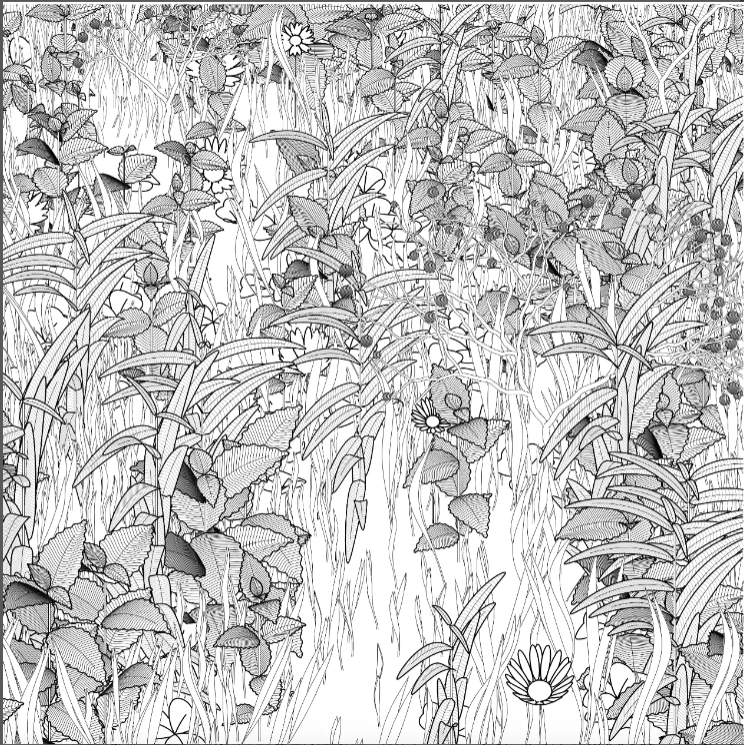
Garden, Monolith #232 – fxhash
Scenario 5
Your friend now grasps the value of digital ownership but remains unimpressed by how NFTs innovate.
Say: “When the digital universe emerged, people gained access to all human knowledge on their phones. As a side effect, due to copy-paste invention, information became drastically devalued. Blockchain reintroduces scarcity. NFTs offer the best of both worlds—they’re digital tokens representing ownership. Everyone in the world can view my token, but the provenance of my ownership is recorded on-chain. They can save the JPEG visually representing my NFT, but they can’t duplicate my token unless they break the Ethereum network. My token is non-counterfeitable, digitally secure, easily transferable—and most importantly, composable. I can let others build on top of it, or create interoperable virtual worlds.”
Now that they’re engaged, mention some cool experiments. I usually say: “There’s a project called Loot—it’s literally just a list of adventuring gear from 2000s MMORPGs like WoW. It’s just white text on black background. Yet, by creating this foundational NFT for an entire fantasy world, anyone can build anything on it. It’s like Tolkien providing the conceptual framework for Lord of the Rings, then telling the community to take it wherever they want. I believe one day, NFTs will secure ownership registries for everything we cherish—massively impacting artists, creators, and everyday users like you and me. The creative core is already here.”
You can emphasize that due to accessibility and composability, NFTs capture meme-driven monetary value. They create value pools for memes. Capturing meme value via brand awareness expands adoption and disrupts traditional media: you can make memes with your NFT and share on Twitter, gaining followers (and attention). UGC will power the web3 economy—those who master meme production become kings of the metaverse. If you build a meme on my NFT—a cultural artifact, if you will—the value accrues back to my NFT. If I write an article explaining how to talk about NFTs, my NFT gains value.

Dancing Pallbearers NFT sold for 327 ETH on Foundation
Scenario 6
Your friend attended a guest lecture on NFTs where some hipster claimed they’re like high-end art. He asserts, “Art market is $60B, NFTs around $30B—they’ve peaked.”
We already see many NFT projects aiming far beyond collectible art like Fidenzas or Chromie Squiggles. My two favorites: Otherside/Yuga ecosystem is Fortnite + Roblox + player-owned p2e economy; Azuki is Sanrio + Supreme + PopMart + animation studio—all decentralized. GenZ gets this quickly.
I can wear my Tiffany-made Cryptopunks necklace, custom Moonbird hat, ride my Azuki skateboard to the gym. I can attend meetings at my local Doodles workspace while drinking Coffeedoods coffee (I earn a percentage of all sales thanks to my Doodles NFT). At night, I go to an upscale nightclub wearing Byredo X RTFKT perfume, using my CloneX as a membership pass. All these NFTs are part of me. Fashion, luxury, video games—these are industries NFTs will permeate.
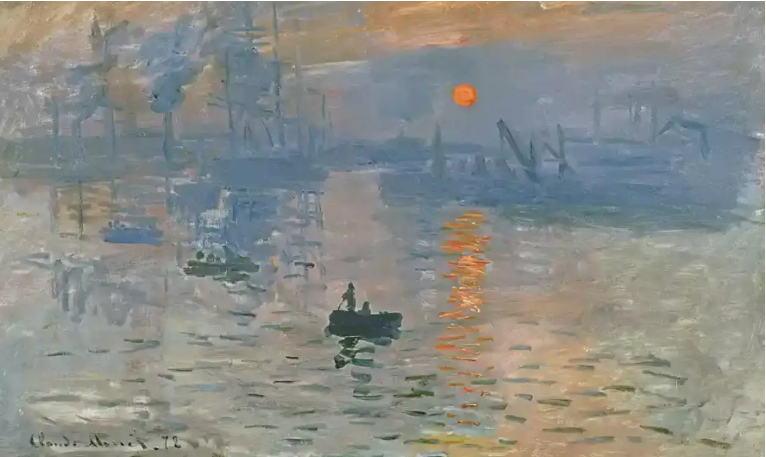
Gently remind their art history professor that Dadaism, Impressionism, and Abstract Expressionism all began as countermovements, rejected by elitist art snobs in their salons.
Seriously, some art critics thought Impressionism was a joke.
Scenario 7
If your friend is actually your mom.
In addition to the above points, if your audience is parents/grandparents, try comparing NFTs to digital designer handbags or Maotai liquor boxes. If it works on my grandpa, it’ll work on yours.
"The logic is simple: you understand elastic demand, right? Compared to NFTs, Lamborghini’s potential elasticity is actually limited. NFTs can be instantly viewed by anyone, anywhere in the world. You can buy and sell them 24/7. They even have potential as stores of value—you can think of them as steroids for Ether. Buying an NFT ultimately means you’ll be able to find and join a community of like-minded interesting people who value this novel technology and share the narrative we co-create."
Young man/woman, if you talk to your mom like this, you’ll need to explain yourself.
Scenario 8
Your friend praises your storytelling skills but notes no NFT project has truly achieved the goals you described.
Say: “You’re right—but if what I said were already real, we wouldn’t be early adopters with fighting chances. Still, countless people build daily, and innovation speed here is unmatched. One day, NFTs will be everywhere—you won’t even notice they’re NFTs. If NFTs drive crypto’s next adoption wave, as I believe, that day isn’t far off.”
Scenario 9
Despite your persuasion, your friend still sees NFTs as speculative investments.
Say: “Of course. But what I tell every friend is this: beneath every bubble lies substance that accelerates adoption. Without dazzling prices, our monkey brains would never leap into the fire. No railroad bubble—no laid tracks; no gold rush—no California. Just remember, Bitcoin has been declared dead over 400 times.”
Tell him it’s fine to hold his dollars while keeping an eye on cool projects. OpenSea’s top 100 projects by 24-hour volume change daily.
There’s no moral to this story. I’m the first to admit this might sound like an intricate internet rabbit hole straight out of Carroll’s imagination to my friends (and me a few years ago). Yet, as Kierkegaard said, “Life isn’t a problem to be solved, but a reality to be experienced.” Sometimes, it takes a little faith, a temporary suspension of logical teleology. Then he’ll have confidence.
Scenario 10
Your friend needs one final push. Go!
Know your enemy. If they trade Pokémon cards, start with Pokémon cards. Same for any collectibles trading.
If they love art, say NFTs allow artists fair monetization of creations, and collectors can own beloved art (capped supply, store of value, strong consensus around specific artists, enable collectibility, foster collector communities in creator economy). Mention Hirst and Murakami are doing NFTs, and many others are watching closely.
If they love basketball, say Curry owns a monkey, NBA has official NFT collections tracking player performance.
If they love gaming, tell them you can own immutable in-game items and extract money from game economies due to open crypto economics (tell them to imagine WoW or Clash Royale, except you can exchange in-game gold for USD).
If they’re crypto natives skeptical of NFTs, explain scarcity and pump dynamics apply equally to NFTs, and social utility is as legitimate an application as financial utility (perhaps the most important type, since it ties to human nature).
NFTs are revolutionary because they provide direct liquidity to social capital, allowing free exchange with financial capital at the click of a button. If you think NFTs aren’t as cool as your DeFi liquidity protocol, dive deeper anyway—your funds are probably already with the master.
Conclusion
I hope this quick guide helps those wanting to explain NFTs to friends from a more top-down theoretical perspective. I hope these scenarios feel somewhat realistic and practically useful. If done correctly and sincerely—acknowledging many NFT projects are hype-fueled speculation and dumps—you can open minds to this new form of digital primitivism. In the end, few can resist the prospect of endless stories enabled by technology.
P.S.
Finally, if they think NFTs aren’t eco-friendly, tell them to trade $SOL NFTs and delete their friend. Sorry you had to go through this.
Acknowledgments: Thanks to Celia Wan, Bofan Ji, Jay Yu, Akiyo Tani, and many others from The Secret Garden for thoughtful feedback.
About the Author
Boba Epicure (Andy Zeng) is a junior in the Philosophy Department at Harvard University, founding member and investment committee member of HBC (Harvard Blockchain Club), former community ambassador at Sky Mavis, investor at Dragonfly Capital Partners, and an Azuki maxi.
Join TechFlow official community to stay tuned
Telegram:https://t.me/TechFlowDaily
X (Twitter):https://x.com/TechFlowPost
X (Twitter) EN:https://x.com/BlockFlow_News