Bear Market Wealth Code: How to Get Higher Returns on Stablecoins?
TechFlow Selected TechFlow Selected
Bear Market Wealth Code: How to Get Higher Returns on Stablecoins?
This article will show you how to simply and efficiently choose stablecoin staking.
 Navigating Web3 tides with focused insights
Author: Covduk
Translation: TechFlow intern
Stablecoin staking is always one of the best options, especially during bear markets. But how exactly do you do it? What are the different choices available? What are the pros and cons?
This article will show you how to simply and efficiently choose stablecoin staking.
As one of the low-risk, high-appeal options, we’ll dive deep into the following aspects of stablecoin staking:
Lending protocols
Yield aggregators
Liquidity incentives
Leveraged staking
Risks involved
Finding the right game for you
In DeFi, there are many different protocols that allow you to earn stablecoin yields, such as:
Lending protocols like Aave and Compound
Yield vaults like Yearn and Tokemak
Incentivized liquidity protocols
Auto-compounders like Beefy & YikYak
Lending Protocols
The logic behind lending protocols is very simple. Lenders deposit their stablecoins at a certain APY, while borrowers take loans at a higher APY than lenders receive. The interest spread goes to the lenders.
Top-tier blue-chip lending protocols like Aave and Compound have been around for some time and are relatively safer, with large amounts of capital locked in their pools. Stablecoin APYs on these platforms are typically lower but still significantly higher than traditional savings accounts.
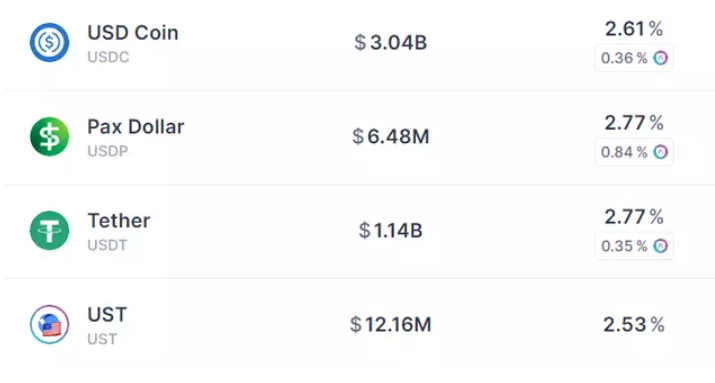
Aave currently offers 2.61% APY on USDC and 2.77% APY on USDT. If you just want to park your money safely, earn some yield, and forget about it, this type is clearly designed for you.
So, advantages of top-tier blue-chip lending protocols:
Simple and straightforward
Secure
High TVL
Low yield, but good place to store funds
Low cost
Disadvantages:
Lower APY compared to options
Fewer asset choices
Other Lending Protocols
There are many niche lending protocols like Rari. Fuse is Rari’s lending protocol, which allows for customizable pools.
There are plenty of options within lending protocols where you can easily find higher yields than on Aave or Compound.
Advantages:
- Simple
- Wide range of assets available
- Easy to forget once deposited
Disadvantages:
- Low stablecoin asset yields
Yield Vaults
Yield aggregators like Yearn are protocols where you deposit stablecoins, and they automatically shift funds into higher-yielding DeFi projects for liquidity mining.
They use a series of strategies to maximize returns while adjusting for risk.
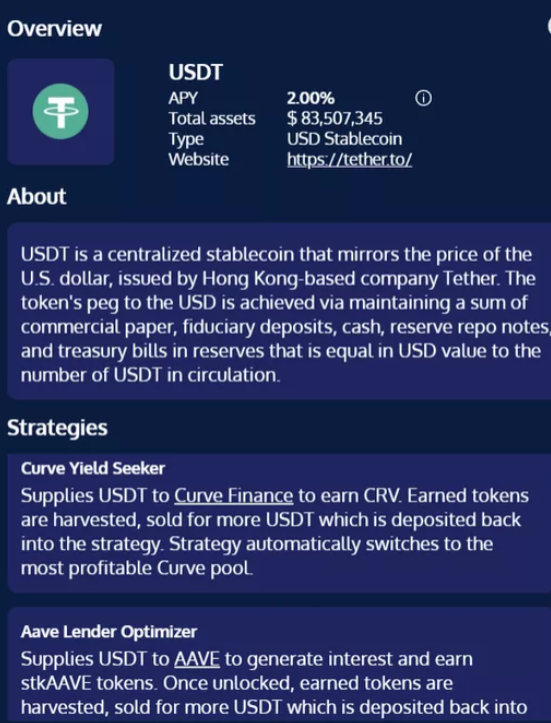
DeFi yield farming is tedious work. Yearn helps you handle it by moving funds across platforms like Aave and Compound. The problem is that most stablecoin yields are still relatively low, and they charge a high 20% performance fee from earnings.
Advantages of yield vaults:
- Simple
- Smart routing to optimal yield strategies
- Potentially higher returns than lending protocols
Disadvantages:
- High fees
- Riskier than lending protocols
Liquidity Incentives
These types of protocols (like Curve) reward you with their native tokens when you provide liquidity.
Currently, Curve’s 3Pool (Dai-USDC-USDT) offers up to 1.17% APY in incentives. Sometimes, this number reaches as high as 10%. APR mainly comes from the value of CRV tokens and the number of liquidity providers.
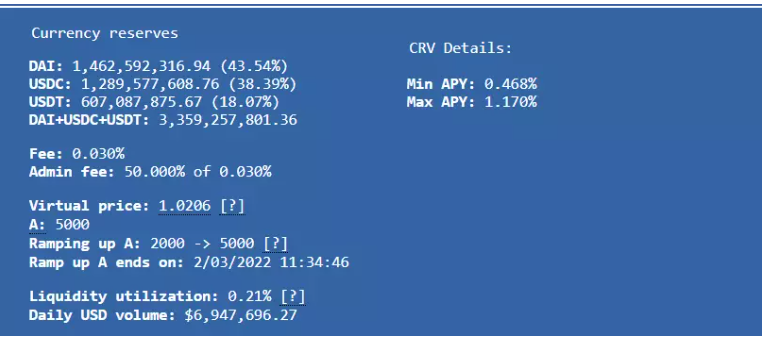
Generally, these types of protocols offer higher yields than lending protocols, but come with greater risks. So, advantages of liquidity incentives:
- Higher yields
- Variable APY, can reach 10% even for stablecoins
Disadvantages:
- Higher risk
- Uncertain APY
- Harder to understand
- High fees
Leveraged Staking
If you want to earn even over 20% returns on your stablecoins, leveraged staking might be suitable for you.
You can stake your stablecoins to borrow more funds (leverage), increasing your position size relative to your principal. However, this carries greater risk—you face liquidation if market conditions move against you.
So, advantages of leveraged staking:
- High multiples (if positioned correctly, easy to achieve outsized returns).
Disadvantages:
- High risk
- Liquidation risk if direction is wrong
- Not suitable for beginners
Finally, which stablecoin staking strategy suits you best comes down to several key factors:
Your risk tolerance
Your account size
How much time you have
Risk Tolerance
Your risk tolerance largely determines your approach. Want your stable assets to be as safe as possible while still outperforming traditional banks? Lending protocols may be right for you. Want higher returns—seeking 10%-20% yields—and willing to accept more risk? Liquidity incentives might be your choice.
Account Size
Gas fees can eat into your profits, especially on chains like Ethereum. Gas costs could amount to roughly 1% of your portfolio just for approval and another 1% for withdrawal, meaning it might take months to recoup gas expenses. If your account balance is too small, staking stablecoins on ETH doesn’t make sense.
Time
Transaction fees when swapping tokens into a pool are about 0.35% of the trade value. For a pool with 5%-6% APR, it might take a month just to break even—you must consider whether you have enough time to keep your funds deposited.
New projects emerge daily. Generally, the highest yields are on the newest platforms. But to recover gas and trading fees and break even, you may need to lock your funds there for a period.
However, as more people join, yields decline, and the protocol could collapse at any moment. Simply chasing high yields without considering this is extremely risky for investors.
Ultimately, to maximize returns, you’ll likely need to use multiple protocols simultaneously. The more protocols you use, the greater your exposure—the total risk multiplies with each additional protocol, reaching peak levels where losing money becomes obvious.
In crypto, everything is interconnected. If one piece fails, it can trigger a domino effect—even threatening your stablecoin holdings. It's rare, but possible. This has happened before, and if you're not careful, we may see it happen again.
Join TechFlow official community to stay tuned
Telegram:https://t.me/TechFlowDaily
X (Twitter):https://x.com/TechFlowPost
X (Twitter) EN:https://x.com/BlockFlow_News