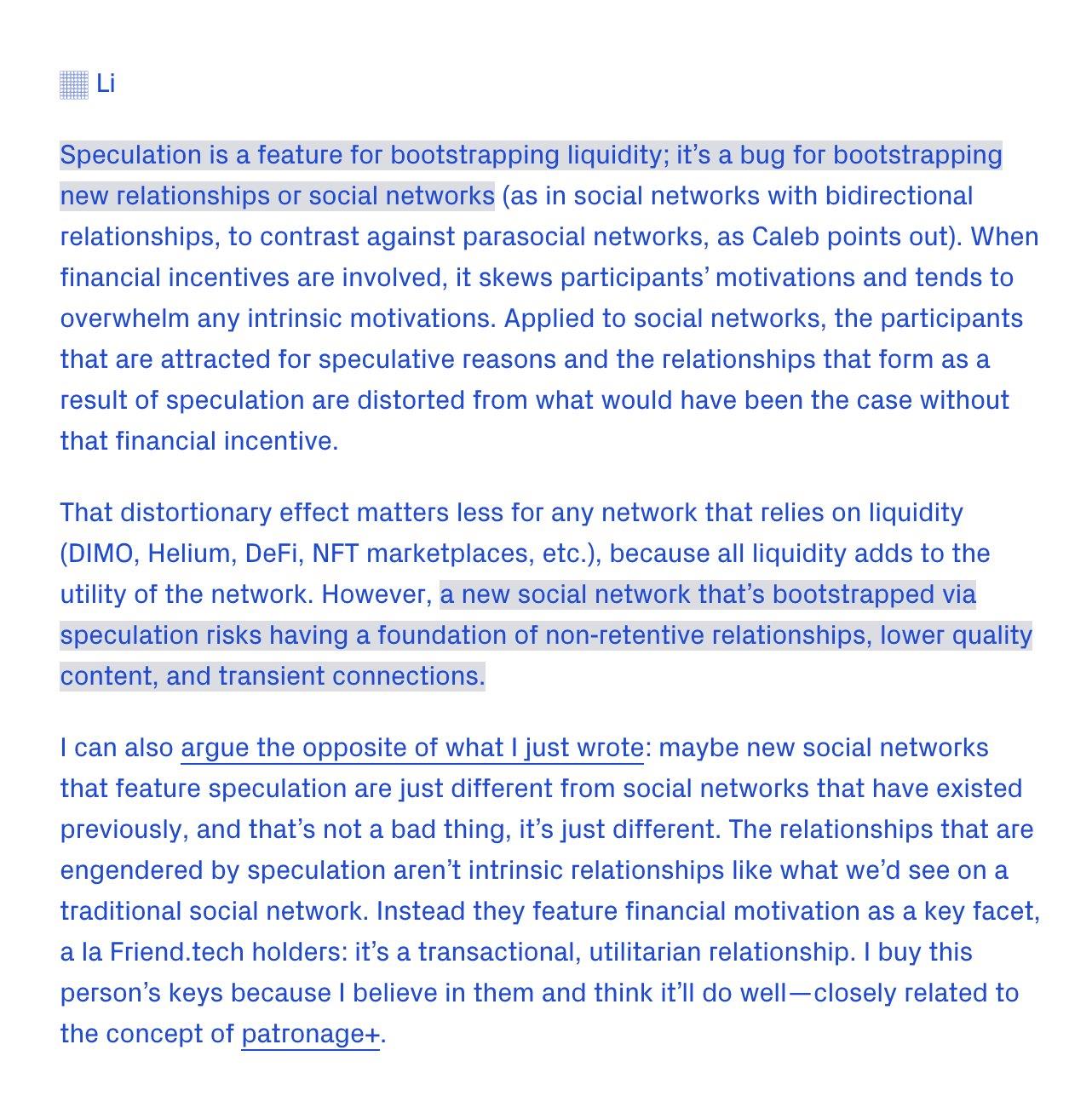
TechFlow news — Li Jin, co-founder of Variant Fund, tweeted that speculation can be beneficial in helping projects build liquidity, but may pose problems when it comes to forming new relationships or social networks. Particularly when financial incentives are involved, speculation can alter participants' motivations, often overshadowing intrinsic motivation. When applied to social networks, the people attracted by speculation and the relationships formed as a result may differ significantly from those formed without monetary incentives.
This effect is less impactful for networks that rely on liquidity (such as DIMO, Helium, DeFi, NFT markets, etc.), since all liquidity contributes to the network's utility. However, new social networks launched through speculation may face challenges such as less durable relationships, lower content quality, and unstable connections.
Yet an opposing view is also possible: perhaps these new social networks centered around speculation are simply different from previous social networks, and this isn't necessarily bad—just different. Relationships formed through speculation aren't the same as the intrinsic bonds found on traditional social networks; instead, they resemble transactional, instrumental relationships driven by financial motives, similar to holders on Friend.tech: I buy this person's key because I believe in them and think they will succeed.