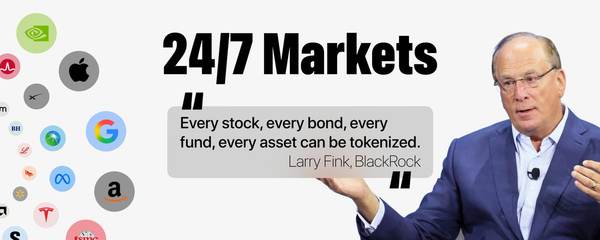
TechFlow news, December 17: Stablecoins have verified that "fiat tokenization" can circulate efficiently on a global scale, and the market has begun shifting attention toward "on-chain U.S. stocks." Analysts at BiyaPay pointed out that tokenization itself is not the end goal; the real bottleneck lies in the fragmentation between issuers and trading scenarios, leading to insufficient depth and higher slippage. In the future, a unified liquidity layer that supports "cross-issuer, cross-chain" operations will be required to enable on-chain assets to achieve pricing and execution experiences closer to traditional markets, further integrating broker and market maker systems to drive upgrades in trading and settlement efficiency. In the short term, the scalability of on-chain U.S. stocks depends on regulatory clarity and the ability to aggregate liquidity. In the medium to long term, once a unified liquidity layer matures, it will significantly alleviate the current "24/7 in name only" depth issue and unlock more possibilities for stock-like assets and DeFi combinations.
On the BiyaPay front, the platform continues expanding multi-asset trading and USDT-based trading for U.S. stocks, Hong Kong stocks, futures, and other scenarios, meeting users' needs for cross-market asset allocation.