One Security, Multiple Chains: Anthropic’s IPO Reveals the “Fragmentation” Dilemma of Tokenized Assets
Author: Murtuza Merchant, Forbes
Translated by: Saoirse, Foresight News
Anthropic’s listing on Nasdaq has also exposed a thorny problem in the tokenized asset space: its stock-backed tokenized products are deployed across multiple blockchains, while the New York Stock Exchange opted to build its own platform atop Avalanche. Investors urgently need to clarify the differences between underlying public chains, understand where the assets trade, how easy they are to liquidate, and what safeguard mechanisms are in place.
Anthropic Listing Highlights Competitive Landscape in Blockchain Sector
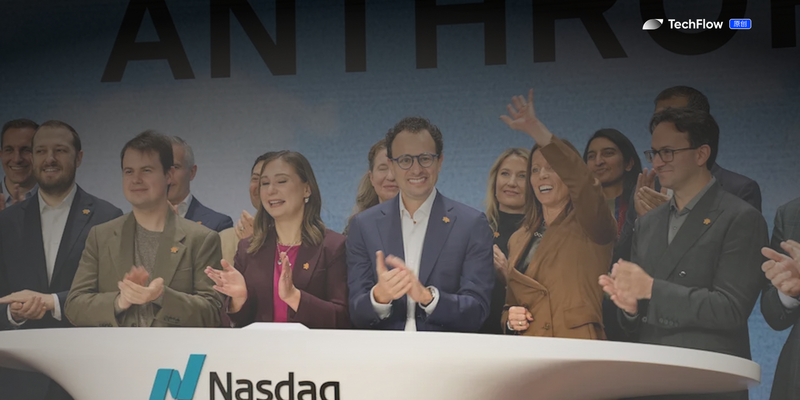
Trading under the ticker ANT, Anthropic listed on Nasdaq at 3 AM Beijing time on November 20, with an IPO price of $83 and raising approximately $81 billion in funding. Major crypto trading platforms quickly followed suit to lay out their positions.
Ondo Finance launched the price-tracking token ANTon for international qualified investors; Backpack Securities issued tokenized stocks on the Solana chain; tokens related to xStocks and bStocks were listed on the BNB Chain… In most cases, token holders only have economic exposure to stock price fluctuations and do not directly hold Anthropic’s native shares.
Not all companies endorse this model. JPMorgan, Microsoft, and several other top blue-chip firms have recently voiced opposition to unauthorized private tokenization of their own shares.
Wall Street’s Push into Tokenized Assets: What Lies Ahead?
Major institutions have made different technology selections. On November 9, the NYSE selected Avalanche as the underlying ledger for its round-the-clock tokenized securities trading platform, which plans to officially launch after regulatory approval this quarter.
The platform will also support securities issued on other public chains. ICE, the parent company of the NYSE, will also partner with crypto exchange OKX to launch another independent tokenized stock trading market on November 23. On November 19, Ant Group rolled out a settlement system for clearing trades of tokenized deposits and tokenized money market funds, with DBS Bank and Franklin Templeton participating as pilot partners.
Ethereum Remains Top, but Market Share Continues to Decline
Ethereum remains the mainstream carrier today. Data from RWA.xyz shows that approximately $46 billion in real-world asset tokens across the market are distributed across more than 30 public chains, with Ethereum hosting around $22 billion. However, its share is gradually shrinking.
A report released jointly by Allium and Stellar shows that as of September 30, on-chain tokenized assets on Stellar grew to $4.12 billion, increasing its market share from 4.9% a year ago to 12.7%. Paris-based asset manager Spiko is the ecosystem's primary source of capital.
What Are the Core Considerations for Institutions Choosing Public Chains?
Institutional evaluation logic differs significantly from a few years ago. Raja Chakravorti, Chief Business Officer of the Stellar Development Foundation, stated, "Three years ago, the industry focused primarily on regulatory compliance of the model; later shifted to system security. Today, institutions prioritize time-to-market and the richness of ecosystem participants."
"Regulatory compliance, costs, and transaction speed are the basic thresholds for public chains to make it on the shortlist. Final decisions ultimately depend on counterparties: which institutions are willing to accept our funds as collateral, which custodial wallets are compatible, and who the cooperating clearing houses are." Most large asset management firms simultaneously issue products on multiple public chains to observe which one can attract and retain genuine liquidity.
Matt Mudano, founder and CEO of full-stack on-chain bank Arch Network, holds a different view. He believes that current institutional orders largely flow to public chains that accumulated resources early in the crypto cycle, have mature teams, and can handle customized institutional development and long-term pilots. "This is more of a business-level victory rather than a definitive market conclusion." As relevant technologies gradually standardize, he predicts issuers will follow distribution channels and prioritize public chains already used by clients.
Liquidity is paramount. Daniil Kozin, CEO of crypto market maker EasyMM, noted, "Capital flows toward areas with concentrated users and liquidity." When banks select a public chain, they value buyer, custodian, and market maker resources within the ecosystem, as well as a bottom-layer security architecture proven over time. This is also key to Ethereum's continued leadership. Currently, all public chains supporting tokenization offer issuers access controls and token freezing permissions. "Compliance is often not the decisive factor in selecting a public chain."
Should Blockchains Natively Integrate Compliance Controls?
Regulated issuers must possess capabilities for investor accreditation checks, token freezing, and asset recovery. Some public chains (like Stellar) bake this control mechanism directly into their underlying protocols; in the Ethereum ecosystem, these capabilities are implemented by issuers through custom smart contracts. Allium data shows that over the past 12 months ending September 30, Stellar chain issuers completed 7,050 rounds of holder accreditation and removal operations, initiated 11 token recovery actions. Franklin Templeton also relied on this native toolset to conduct 372 investor qualification reviews for its BENJI money market fund.
Chakravorti added, "Regulators focus on two core points: who bears responsibility, and whether asset halts can be triggered after incidents." Natively embedded controls mean compliance teams only need to audit a single set of uniform rules rather than examining custom contracts for each product individually.
Mudano, however, argues the discussion direction is off: "The core issue isn't where the freeze function is implemented, but whether the chain's underlying architecture can fit the business scenario." Institutions also need an incident response mechanism to handle major sudden risks. "After the Bybit $1.4 billion hack, Ethereum developers and the community rejected on-chain rollback solutions. While this aligns with Ethereum's design philosophy, it inherently poses a risk for institutions acting as asset endorsers."
Control mechanisms also carry costs. According to Kozin, for licensed issuing institutions, the negative impacts of controls are concentrated at the trading level. Every additional layer of access restriction reduces the number of trading venues and market makers willing to quote spreads. Consequently, tightly controlled tokens typically suffer shallower market depth. He believes public chains like Stellar, which natively integrate control modules, lower banks' compliance audit costs; whereas solutions relying on smart contracts require contract redeployment every time they migrate to a new chain.
Is Wall Street Actually Using Public Chains?
Many industry insiders question this premise. Columbia Business School adjunct professor Omid Malekan pointed out, "The vast majority of Wall Street institutions have not truly adopted permissionless public chains."
In his view, networks many institutions use are only nominally classified as public chains. He speculates the NYSE likely utilizes an Avalanche private subnet, and Ava Labs officially defines this NYSE architecture as "dedicated infrastructure."
Malekan believes the motivation for choosing private subnets does not stem from compliance pressure. Institutions like BlackRock and Franklin Templeton have already issued permissioned tokens on permissionless public chains. A shift toward private networks essentially means leading intermediaries want to maintain their industry moats and delay the disruption of their existing business models.
Eswar Prasad, Cornell University trade policy professor, echoed similar concerns: "If assets issued and traded on public chains face highly centralized control, it defeats the original purpose of decentralized finance on public chains." The boundary between public and private chains is increasingly blurring.
In his paper, Malekan points out that the core value of public chains—integrating with the DeFi ecosystem and enabling instant settlement—can only be realized when issuers do not arbitrarily intervene in token status. No issuer has achieved this yet, but he believes that in the long run, the market will favor autonomous, permissionless participants.
Will Multi-Chain Asset Distribution Spawn New Risks?
The initial goal of tokenization was to solve fragmentation in traditional financial markets; today, however, the assets themselves are instead scattered across dozens of different public chains.
Prasad warns that while banks compete to put Wall Street assets on-chain, cross-chain asset distribution causes liquidity fragmentation: price discovery becomes harder, arbitrage opportunities widen, and asset volatility intensifies. Emerging niche public chains also harbor technical, governance, and liquidity vulnerabilities that mature chains like Ethereum have largely solved.
Market makers feel this fragmentation first. Taking BlackRock's BUIDL fund as an example, the product is deployed simultaneously on Ethereum, Solana, BNB Chain, and other chains. Each new chain fragments the existing buyer base and thins out order book depth, while market makers must continuously provide two-way quotes across all chains," explained Kozin.
In related research, Malekan posits that assets on niche public chains carry higher counterparty, clearing, and operational risks. He predicts that in the long run, only a handful of public chains will survive: "Apart from centralization traits, blockchain offers no clear advantages in other dimensions. If decentralization is abandoned, it essentially becomes an unregulated database, posing extremely high counterparty risk."
Chakravorti, meanwhile, predicts the sector will evolve into a multi-power landscape: "Payment and capital markets have historically operated on multiple clearing channels, and migration to on-chain will not change this." Mudano forecasts that the asset issuance side will remain fragmented, but clearing activities will consolidate onto a few specialized ledgers, consistent with traditional financial market logic: numerous issuers, but only a handful of clearing institutions. Kozin similarly believes liquidity will concentrate on a few public chains. Most public chains built specifically for tokenized assets struggle to capture existing users from Ethereum or Solana, with Canton being a notable exception designed for banking privacy needs.
What Investors Should Clarify Before Buying Tokenized Assets
For tokenized assets (including the tokenized products tied to Anthropic此次发行), the underlying public chain is no longer an inconsequential technical detail.
Investors need to confirm whether they directly hold the underlying asset or only gain price-tracking exposure; whether the token can be used as collateral and transferred cross-border; and which entities have the authority to freeze tokens or cancel abnormal transactions.
The most fundamental issue is the exit channel. Kozin advises, "Make absolutely sure about your exit channel." If a chain lacks market makers, the execution price of such tokenized stocks may deviate significantly from the underlying stock's true price, or trading may fail entirely; for corresponding fund products, investors must verify that redemption pathways are smooth.
Equally important is verifying the traceability of transaction records. Malekan said, "If it is not a truly public network, we cannot verify actual trading volumes."
Join TechFlow official community to stay tuned
Telegram:https://t.me/TechFlowDaily
X (Twitter):https://x.com/TechFlowPost
X (Twitter) EN:https://x.com/BlockFlow_News
 Forbes