Melvin's New Article: The Next Five Years Will Depend on Whether You Understand These 7 Changes
Written by: Melvin
Translated by: TechFlow
Hey, I’m Melvin. At Capital of One, we study the AI economy the same way investors study markets.
The only difference is that what you’re allocating is yourself: your work, skills, assets, relationships, and attention.
Each week, we share new ways to think, build, and grow.
It seems everyone carries a checklist of “what to learn next.”
Most of these lists get the order backwards. People pick out a batch of skills they think are important, then draft convincing-sounding reasons for each one. Coincidentally, they might just be trying to sell you a course.
Thanks, but no thanks.
We follow the money: we look at hiring data, shifts in business models, and corporate profits, then work backward to find which skills are appreciating.
One CEO believed in this trajectory so strongly that he willingly sacrificed $60 million in annual recurring revenue (ARR) to get there first.
Let’s dive in.

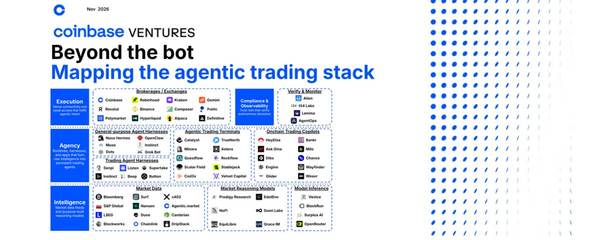
Figure: Discover → Choose → Validate → Sell → Build → Compound → Defend
Trend 1: Career ladders haven’t even been climbed before AI dismantles them
Companies increasingly need people who can evaluate AI outputs. Yet that judgment is usually forged while doing the very tasks AI is taking over.
So where does the next generation of experienced workers come from?
A few numbers:
- Stanford (August 2026, wage data): For workers aged 22–25 in roles most vulnerable to AI, employment levels are roughly 19% below expected trends.
- Indeed (May 2026): Junior job postings fell 7.5% year-over-year, while senior job postings rose 14.7%.
- ZipRecruiter (July 2026): 38% of employers have handed junior foundational work to AI, while 31% have raised experience requirements for junior roles due to AI.
This accounting firm now expects juniors to develop judgment earlier
In the past, junior accountants at PwC spent years collecting data, reconciling figures, and preparing audit files.
Now that AI is handling more of these tasks, PwC is adjusting its training model for new hires.
According to PwC’s Jenn Kosar, new accountants will spend less time preparing audits and more time reviewing AI-generated outputs.
They need to learn earlier how to spot errors, question results, and understand what the numbers actually mean.
The Skill: Cultivate Specialized Judgment
Your value depends on your ability to judge AI outputs: when to trust them, when to intervene, and what to do next.
If you’re already experienced, this is a head start worth refining. If you’re just starting out, you’ll need to find alternative ways to build it.
How to sharpen your judgment:
First, become exceptionally good at something small. A recent reader told me that after specializing, their progress accelerated dramatically. That makes sense. A generalist marketer might encounter a similar problem three times a year; someone focused solely on onboarding emails might face the same issue three times a week. After practicing hundreds of times, they catch errors others miss.
Second, keep a decision journal. Remember that campaign you were certain would succeed? Six months later, you’ll have a dozen hindsight explanations for why it failed. Before you know the outcome, write down your reasoning. Then compare your predictions with reality.
Third, steal the framework, not the answer. Before watching a great designer revise a website, solve the problem yourself first. Then compare what they noticed versus what you missed, and why they chose a different approach. We’ve found that learning from these gaps teaches you far more than just watching someone deliver flawless work.
Trend 2: Money is shifting from “deliverables” to “outcomes”
SaaS companies used to charge per seat. Agencies charged hourly. Now, AI is putting pressure on both models.
Why charge hourly when a task takes minutes to complete? Why charge per seat when AI handles the bulk of the work?
More companies are starting to bill by outcome:
- Salesforce charges $2 per resolved customer issue; if its Help Agent escalates to a human, it’s free.
- HubSpot charges $0.50 per resolved conversation and $1 per qualified lead recommended for outreach.
- Sierra bills by completed outcomes and hit $100 million in ARR in just seven quarters.
- McKinsey reports that over 30% of its fees are now directly tied to client outcomes.
The CEO who walked away from $60M in revenue to sell his company for $3.6B
When Eoghan McCabe returned to Intercom as CEO in 2022, growth had stalled.
Then ChatGPT arrived, threatening to make Intercom’s legacy software obsolete: AI could now resolve customer issues, rendering the software unnecessary.
He shifted nearly 80% of R&D funding to Fin, Intercom’s AI customer service agent. At the time, Fin contributed less than 10% of the company’s revenue.
He also redesigned pricing, charging $0.99 per resolved issue. Initially, this move cost Intercom roughly $60 million in ARR.
By March 2026, Intercom’s ARR reached $400 million, with Fin contributing nearly $100 million.
Three months later, Salesforce agreed to acquire the company for approximately $3.6 billion.
The Skill: Redesign What You Sell
A website designer can promise to deliver a finished site. Whether it drives more sales is another matter entirely.
This skill means figuring out what clients truly want to achieve, how much of it you can actually deliver, and what they’re willing to pay for it.
How to make the pivot:
First, observe what happens after delivery. A lead list still needs qualification. A website still needs to convert visitors into customers. Understand what clients do once they receive your output. If you take ownership of the next step, a commodity service can become significantly more valuable.
Second, price by outcome without going all-in. We’ve experimented with performance pricing and found that a “base fee plus success bonus” often works better than full risk-sharing. The base covers costs, the bonus rewards results. You capture upside without betting the whole house.
Third, watch who your pricing attracts. Performance-based deals tend to attract distressed businesses with little downside risk. Sales Higher learned this the hard way, switching from pay-per-lead to subscription. We reserve outcome-based pricing for clients with clear, immediate needs. Otherwise, you might end up subsidizing someone else’s commercial experiment.
Trend 3: The cost of validating a business idea is collapsing
Sam Altman recently nailed it: you can now test several ideas before putting your life on hold for months on just one.
Build a rough prototype, put it in front of customers, and see if anyone bites. No interest? Move on.
TBPN quotes Altman saying that two years ago, the standard advice was: “Pick one thing and go all in, because you can’t do all 30 things.”
“Now, you can make all 30 things happen.”
This founder booked 12 events before building the app
Brian Shin and his girlfriend wanted to turn disposable cameras into an app for weddings and parties. They built a crude web version in a week or two and tested it at a friend’s Halloween party.
It kept breaking.
The guests loved it anyway.
Next, Brian wanted to see if strangers would pay for it. So he set a goal: secure 10 event bookings before building the mobile app.
He landed four through friends, then scoured Instagram for people planning weddings and birthdays, sending roughly 250–300 direct messages. About 15 replied, and 12 booked.
That was enough.
Brian and his co-founder built the mobile app using AI tools like Claude Code. In a May 2026 interview with Starter Story, he revealed that within 83 days of launch, monthly revenue hit $20,000.
The Skill: Validate Demand
Dating teaches a useful lesson here.
You can spend hours guessing if they like you, analyzing every glance, and asking five friends for advice. Or you can walk up and ask directly.
The same applies to business ideas. Get better at walking up and asking.
How to stop guessing:
First, test your biggest assumption. We like to start with the hypothesis that could kill the entire idea. Brian did exactly that. He knew people love taking photos at parties, but wasn’t sure if they’d bite on his disposable camera concept. Identifying and testing your weakest assumption first saves months of wasted effort.
Second, find people who need it right now. Brian targeted couples planning weddings and birthday hosts. They have deadlines and real stakes. People who are already spending money, patching together workarounds, and actively searching for solutions send far stronger signals than those who simply “think your idea sounds cool.”
Third, require a small commitment upfront. Flattery is free. Signing up for a waitlist costs nothing. Getting someone to pay, change their routine, or entrust you with an important event requires real effort. If they won’t make even a tiny commitment now, don’t bet months of work on their enthusiasm.
Trend 4: AI is creating a buyer shortage
AI is squeezing businesses from both sides.
First, it lowers barriers for competitors. Second, AI assistants are changing how customers discover and buy products: they compare options, recommend brands, and check out on behalf of users.
The result? More competitors fighting for fewer recommendation slots.
Consider the data:
- Lovable (June 2026): Users create roughly one million new projects weekly. Of surveyed developers, 80% identify as non-technical.
- Sensor Tower (July 2026): New App Store launches doubled, reaching roughly 560,000 in H1 2026. Downloads grew by just 2%.
- Ahrefs (February 2026): When an AI Overview appears, average clicks on the #1 Google result drop by 58%.
- Salesforce (September 2026): Shopping journeys initiated via AI search grew 200% year-over-year.
- Shopify (October 2026): Shopify opened a catalog of over one billion products to AI agents via Shop MCP. Agents can search products, build carts, and initiate checkout.
How Base44 reached 250K users against larger rivals
Maor Shlomo built Base44, an AI tool that lets non-coders create apps. He entered a market where Lovable and Bolt already had much larger user bases.
On LinkedIn, Shlomo shared new features, revenue numbers, and technical challenges. Soon, users started showcasing their own builds. He rewarded them with extra credits, giving them more reason to share their work.
Within six months, Base44 hit roughly 250,000 users. In May 2025, Shlomo disclosed a profit of $189,000. A month later, Wix acquired the company for an initial $80 million.
The Skill: Cultivate Buyer Preference
Keep two things separate for now.
Distribution gets your product in front of people.
Buyer preference is getting them to choose you among dozens of other options.
People always say distribution will be the ultimate moat in the AI era. We’re skeptical.
While writing this very piece, Lovable announced that it can now create ads and run marketing campaigns.
So what’s left? Give customers a reason to seek you out, pick you over competitors, and recommend you to others. That’s the power of cultivated preference.
“When I launched Base44, ready-made solutions already existed in the market (like Bolt and Lovable), so I either had to build a better product that some users preferred, or the company was dead, because their distribution was clearly superior (and their capital reserves much deeper).”
— Maor Shlomo wrote on Reddit
How to make clients choose you:
First, find a reason to switch them from the market leader. Base44 couldn’t compete with Lovable’s reach, so Shlomo focused on customers who wanted “everything in one product.” Identify pain points with leading alternatives. You must significantly outperform them on what matters most to a specific segment.
Second, get known before you’re needed. 6sense found that 95% of winning B2B vendors were already on the buyer’s shortlist when the decision phase began. Figure out where prospects learn, ask questions, and discover new solutions, and consistently provide value there. By the time they’re ready to buy, you want to be a familiar name.
Third, turn your customers into your next distribution channel. Noticing users sharing their Base44 builds, Shlomo rewarded them with credits. Think about what your customers already want to show off. Designers showcase finished projects; runners share personal bests. Engineer these moments to bring in new customers.
Trend 5: AI made employees faster, but companies didn’t adapt
In a McKinsey survey, 80% of employees said AI made them more productive. Yet only 37% reported it positively impacted operating margins.
Everyone’s saving time. So why aren’t companies making more money?
- Gartner (September 2026): 85% of business leaders plan to increase AI investment, yet only 22% of organizations have successfully scaled AI across multiple business units or adopted an AI-first approach.
- Workday (January 2026): Nearly 40% of the time saved by AI is being reinvested in fixing mistakes, rewriting, and reconciling.
- McKinsey (July 2026): Only 11% of companies have redesigned work around AI. Among those, 48% reported significant gains, compared to just 13% of companies that primarily provided AI tools.
This AI overhaul left Meta with a mountain of fixes
Zuckerberg hoped AI agents would allow teams to shrink drastically. In early 2026, Meta considered cutting some teams by up to 60%.
AI enabled employees to write vastly more code. Internal software changes increased 220% year-over-year. Yet changes that actually delivered new or improved features to users grew by only 36%.
Meanwhile, major technical and security incidents rose by 40%. Employee time spent fixing them jumped 70%.
According to a Reuters investigation in August 2026, Meta ultimately scrapped its second round of layoffs amid employee pushback and disappointing AI results.
The Skill: Find the Bottleneck
When AI speeds up one part of the workflow, the next part becomes critical. This skill is recognizing where work starts to pile up and redesigning that section.
How to spot the work AI leaves behind:
First, run a “10x test.” We ask: If AI makes a task 10x faster, what stops us from earning 10x more? Freelancers might build sites faster but struggle to find clients. Logistics firms might process orders quicker but choke on delivery.
Second, watch where work accumulates. Over a week, notice what’s constantly waiting: drafts unreviewed? leads uncontacted? decisions deferred? If you have a team, see where their workflow bottlenecks. If you work solo, that unfinished todo list tells you plenty.
Third, tackle constraints before automating. If you can draft 10 proposals a day but only close one client per month, speeding up proposals won’t help much. Attack the link limiting the final outcome. Measure shipped projects, sales, and profit—not hours saved.
Trend 6: Bringing people together is becoming a growing business
Turning out, helping strangers make friends is shaping up to be a solid business.
As AI makes digital interactions cheaper, we expect demand for real-world experiences to rise—and rise sharply.
The data supports this:
- Eventbrite (2026): Among 18–35-year-olds surveyed in the U.S. and UK, 74% believe in-person experiences are more important than digital ones. Another 79% plan to attend more events in 2026.
- Live Nation (2025): Concert attendance reached ~159 million, up from 151 million in 2024. Concert revenue grew 10% to $20.9 billion.
- ClassPass (2025): Fitness bookings grew 36% year-over-year, wellness bookings up 37%, and community fitness bookings rose 24%.
Getting paid to pull people off their phones
A free running club generated $640,000.
Owen Akhibi Herrera founded Peak and Pace in New York in 2024. Runs are free; parties and trips are paid. In 2025, the community logged over 30,000 participants and generated $640,000 in revenue.
A dinner-organizing platform reached €18 million in ARR.
Maxime Barbier founded Timeleft, which organizes dinners for strangers. Customers pay Timeleft a matching and booking fee, then pay restaurants separately for meals. By October 2025, it reported €18 million in ARR, with 150,000 monthly participants across 200+ cities.
A founder monetized hiking alongside other founders.
After moving to San Francisco, Alena Beliauskaya started organizing hikes and camping trips for founders. Her community, “12 Scrappy Founders,” grew to over 600 members. By October 2026, monthly revenue exceeded $10,000, generating $2,000–$3,000 in profit from dues, sponsorships, and events.
The Skill: Build Community
Get good at creating experiences where strangers meet, form friendships, and actually want to return.
You can build it into a standalone business or foster it within an existing one. The bonds they form create a moat competitors can’t replicate.
How to turn strangers into regulars:
First, let the activity do half the social work. Throw 20 strangers into a room and tell them to “network”—most struggle to even speak. Take them hiking, and suddenly you’ve created common ground. Shared activities eliminate much of the awkwardness of meeting new people.
Second, target people experiencing a social shift. New city residents need friends. So do career changers, new parents, and startup founders. The Mom Walk Collective started with two moms meeting for walks and expanded into a community spanning 650+ cities. Look for moments when people suddenly need connections they don’t yet have.
Third, bigger crowds can actually hurt community. You host a 50-person event and everyone has a blast. Next week, another 50 show up. Nobody remembers anyone, because they’ve never met. Lock in a core group of 20 and gather them regularly—only then do friendships begin to form.
Trend 7: Capital is grabbing a larger slice; labor is getting smaller
Even if you master every skill mentioned above, you could still spend your life building wealth for others. You need to carve out a stake in the value you create.
- U.S. Bureau of Labor Statistics, Q2 2026: Workers received only 52.8% of U.S. business output in wages and benefits—the lowest level since records began in 1947.
- Goldman Sachs, September 2026: The worker income share has fallen 7.5 percentage points since the 1990s, with 4.5 points attributed to rising corporate profits, automation, and weakened bargaining power.
- U.S. Bureau of Economic Analysis, Q2 2026: Annualized U.S. business profits hit $4.71 trillion, up from $4.33 trillion the prior quarter.
Riding the AI wave, these factory workers earned $240k apiece
In 2023, KKR acquired data center cooling company CoolIT Systems and granted employee equity.
Then AI demand exploded, skyrocketing CoolIT’s valuation. Three years later, KKR sold the company for $4.75 billion. The ~650 employees received an average payout of $240,000. Some received amounts exceeding eight years’ salary. The reason is simple: they owned a piece of the company.
The Skill: Turn Work Into Assets
Start measuring your career by two things: what you earned, and what you own.
Here’s a useful lens: after five years in the same role, what have you accumulated? More experience and higher earnings? Or assets that continue creating value?
If you already run a business: AI can drastically boost margins. But so can competitors using the same tools. Your job is to build assets that compound as you operate.
If you don’t: Your skills, experience, and network can help you earn equity at a growing company, or push you to build something yourself. Find a way to participate in the value you help create.
How to claim more of the value you create:
First, build something of your own. Industry knowledge and networks help you spot problems worth solving. One reader spent a decade in construction before founding the materials ordering platform SubBase. His first customer was a subcontractor he already knew.
Second, build or buy a company that strengthens with AI. Some businesses get richer as AI cuts costs; others devalue as AI cheapens services. Learn to tell the difference before you commit. We developed a five-year stress test to identify businesses that gain value as AI advances.
Third, buy an existing business and improve its economics. You don’t need to start from scratch. Look for mature companies with paying customers but high operational costs and heavy reliance on manual labor. AI can automate admin, improve sales, and serve more customers without adding headcount.
Final Thoughts
The biggest mistake you can make is letting current profitability dictate what you learn.
AI is reshaping what companies need, what customers will pay for, and where profits will pool. Some skills will become cheapened. Others will appreciate precisely because everything around them is becoming cheaper.
In this issue, we traced along these shifts because we believe the best opportunities hide within them.
Find the shift that gives you the greatest edge, master it, and build something uniquely yours along the way.
Five years from now, you’ll thank yourself for starting today.
— Melvin