Diverging Paths for Stock Tokens: Nasdaq + Kraken Face Off Against Robinhood
By Xiaobing
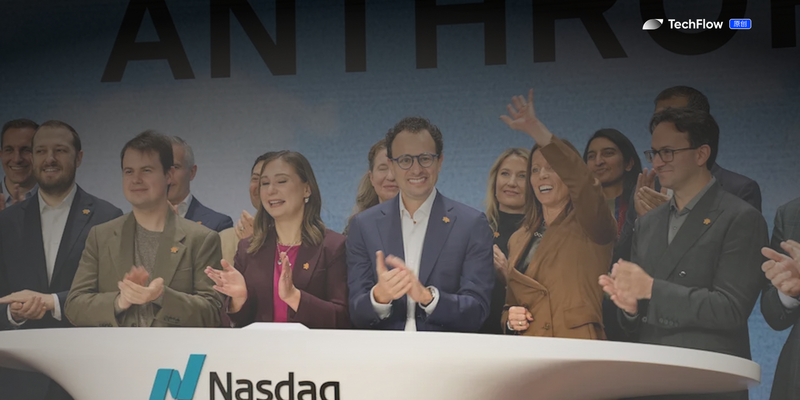
On September 10, Nasdaq Ventures invested $100 million into Payward, the parent company of Kraken, valuing it at approximately $21 billion on a post-money basis.
That same day, Robinhood CEO Vlad Tenev defended the company's stock token product on CNBC, pushing back against public pressure from AMC CEO Adam Aron, who demanded an end to the issuance of tokenized AMC shares. Aron called Robinhood's actions "contemptible" and threatened to file a complaint with the SEC.
Within 24 hours, these two moves outlined the fundamental bifurcation forming in the tokenized equity sector:One path is issuer-centric, preserving all legal attributes of the underlying stock. The other bypasses the issuer entirely, wrapping price exposure in debt instruments.
This is a battle over architecture, and the winner will define the infrastructure for stock markets over the next decade.
Two Architectures, Two Legal Realities
Nasdaq’s solution is called Nasdaq Equity Token (NET), which announced its framework in March of this year and is expected to launch in the first half of 2027. Its core design principle is issuer-led. Public companies actively participate in the tokenization process, with blockchain records directly integrated into the issuer’s official shareholder register. Transferring one token equates to transferring ownership of the underlying security.
This means that investors holding a Nasdaq stock token hold the exact same rights as investors holding traditional shares under the law: voting rights, dividend rights, participation in corporate governance, and distribution of residual assets upon liquidation. A rule change filing submitted by Nasdaq to the SEC explicitly states that tokenized, DTC-eligible securities must "convey an equity interest in the underlying company, the right to receive dividends paid by the company, the right to exercise shareholder voting rights, and the right to receive remaining assets in the event of a company liquidation."
Robinhood’s approach follows a different path. Its stock tokens are issued by Robinhood Assets (Jersey) Limited, an offshore affiliate registered in Jersey, and operate under the Regulation S framework exclusively for non-U.S. clients. Each token is backed 1:1 by the underlying stock held as collateral, custodied at U.S. broker Alpaca Securities.
However, the legal nature of the tokens themselves is debt securities, not equity. Holders acquire a creditor claim against the token issuer (i.e., Robinhood’s Jersey entity), not direct ownership of the underlying company (such as AMC or Apple). Holders may receive price adjustments reflecting dividends but lack voting rights and do not appear on the issuing company’s shareholder register.
Tenev stated on CNBC, "The issuer has control over the rights and obligations of the shares they issue, but that does not mean they control everything related to them."
The legal implication of this statement is:Robinhood believes it does not need authorization from listed companies to issue tokens pegged to their shares, because the tokens constitute independent financial products that merely reference publicly traded stock prices.
The AMC Dispute: Public Exposure of Architectural Flaws
AMC CEO Adam Aron’s pushback is more than just a PR stunt. His core argument is that Robinhood, without AMC’s permission, is using AMC’s name and brand to distribute a financial product that decouples stock ownership from voting rights, potentially interfering with AMC’s control over its own capital structure.
Aron has hired outside securities counsel to review Robinhood’s token structure and stated he is considering filing a complaint with the SEC and pursuing legal action.
This dispute touches on a structural vulnerability in Robinhood’s model. When token holders lack voting rights, whose votes do the underlying collateralized shares represent? Tenev dodged this question during the interview, stating that Robinhood "has not yet disclosed its voting plans."
This is no small matter.
If Robinhood tokenizes 5% of AMC’s outstanding float as collateral, but the voting power of those shares is exercised by Robinhood or its custodian rather than the token holders, this effectively creates a concentration of proxy voting power. The issuing company didn’t authorize it, token holders aren’t aware of it, and the voting rights are actually controlled by a third party.
Nasdaq’s NET framework sidesteps this issue entirely because, legally, the tokens and the shares are the same asset. Voting rights travel with the tokens, and updates to the shareholder register are automatic.
Behind the $21 Billion Valuation
To understand why Nasdaq was willing to assign Payward a $21 billion valuation, we need to look at what has happened to Payward over the past 12 months.
In November 2025, it raised $800 million at a $20 billion valuation. In March 2026, it became the first crypto company to connect to the Federal Reserve’s core payment system. Later that month, it announced a partnership with Nasdaq to develop a gateway for converting stock tokens. In April, Deutsche Börse bought a 1.5% stake for $200 million. On September 1, it announced a collaboration with the London Stock Exchange to tokenize the 100 largest London-listed companies through xStocks. To date, xStocks has processed over $25 billion in cumulative trading volume.
Three major traditional exchange operators (Nasdaq, Deutsche Börse, and LSE) have all entered into asset tokenization partnerships with the same crypto company within six months. ICE, the parent company of the New York Stock Exchange, chose a different route, investing in OKX at a $25 billion valuation and planning to open its tokenized stock market to OKX’s 120 million accounts.
This landscape is crystallizing into two camps:
Nasdaq/LSE/Deutsche Börse have selected Payward/Kraken as the distribution and settlement infrastructure for tokenized equities.
Payward functions like a “crypto utility,” where traditional exchanges mint the tokens and Payward handles their circulation, settlement, and regulatory compliance within native crypto channels.
ICE/NYSE has opted for OKX to follow a similar path.
Robinhood, meanwhile, is building its own infrastructure, constructing an independent tokenization system via Robinhood Chain and its Jersey entity that operates without requiring issuer participation.
The Winner Isn't Necessarily Robinhood
Robinhood is far ahead in execution speed. Two months after the launch of Robinhood Chain, it has accumulated $47 billion in DEX trading volume, supporting tokenized stock listings for roughly 190 companies, with daily peak trading volumes nearing $1.7 billion. These figures represent the head-start advantage Robinhood can build before Nasdaq’s NET framework officially launches in the first half of 2027.
But this speed advantage could be offset by architectural weaknesses.
From a regulatory standpoint, Robinhood’s debt-security structure faces an unprecedented legal gray area. The challenge from AMC is only the beginning. If more public companies object to Robinhood tokenizing their shares without authorization, the cost and uncertainty of collective legal action will rise significantly. Robinhood’s Chief Legal Officer Dan Gallagher is a former SEC commissioner, and his ability to manage legal risk is a core asset for the company, but individual judgment cannot replace established legal precedent.
At the issuer level, Nasdaq’s approach naturally attracts cooperation from listed companies because it allows issuers to retain control and gain a more direct channel for shareholder communication. Robinhood’s model, by contrast, threatens issuers, whose shares are being repackaged by a third party into an uncontrollable financial product.
Regarding investor protection, Nasdaq token holders are genuine shareholders. Robinhood token holders’ legal claims point to a limited liability company registered in Jersey. In extreme scenarios (such as bankruptcy at Robinhood Assets Jersey), recovering assets under the latter is far more complex than under the former.
In terms of institutional adoption, compliant asset managers require positions that can enter the shareholder register, not debt instruments pegged to price feeds. Nasdaq’s framework is natively compatible with existing institutional custody, reporting, and compliance systems. Robinhood’s framework requires additional legal and operational wrapping.
The Intersection in 2027
The tokenized equity track officially split into two distinct paths on September 10, 2026.
One is the "compliance camp," led by issuers, preserving full shareholder rights, and backed by traditional exchanges; the other is the "speed camp," platform-driven, bypassing issuers, and using debt instruments to provide price exposure.
In the short term, the speed camp holds a first-mover advantage, with tokenized stock trading on Robinhood Chain already reaching hundreds of millions of dollars daily, while Nasdaq’s NET framework still needs another year to go live.
But the endgame for tokenized equities will come down to which side can get both institutional capital and issuers aligned.
The arena is certainly bustling, but it remains to be seen who will ultimately emerge victorious.
Join TechFlow official community to stay tuned
Telegram:https://t.me/TechFlowDaily
X (Twitter):https://x.com/TechFlowPost
X (Twitter) EN:https://x.com/BlockFlow_News
 深潮TechFlow