US Stock Market Trends (August 21): Long-Term Bond Repo Fails, Walmart Earnings Miss Drags Dow Jones Down 700 Points
Written by: Trend Research

The US stock market had just halted its decline the previous day thanks to the Treasury's repurchase of long-term bonds, but was pushed back down overnight by surging long-end yields and oil prices. The Dow Jones Industrial Average plummeted 703.84 points, down 1.32%, while the S&P 500 fell 0.87% to 7,641.16 points. The Nasdaq dropped 1.00% to 26,067.17 points, and the Nasdaq 100 recorded a fifth consecutive daily decline. The VIX rose 7.51% to 16.38, marking its largest single-day gain since late July. The signal from the market is clear: the Treasury can temporarily ease liquidity pressures in the bond market, but as long as the 30-year US Treasury yield approaches recent highs, highly valued assets will struggle to truly recover. This adjustment is not driven by a single tech stock; instead, soaring oil prices have reignited inflation concerns, Walmart's earnings expose consumer-side pressures, the Magnificent Seven collectively retreated, and only memory chips, optical communications, crypto, and resource sectors retain localized strength.
Long-Term Bond Pressure Returns, Treasury Intervention Lasts Only One Day
The impact of the US Treasury's expanded long-term bond repurchases lasted only one day. Overnight, the yield on the 10-year US Treasury note rose 4.35 basis points to 4.6902%, surpassing levels prior to the announcement of accelerated repurchases. The 30-year Treasury yield climbed approximately 4 basis points to around 5.26%, nearly erasing Wednesday's decline and approaching the August 18 peak of 5.3361%, a near-20-year high. The 2-year Treasury yield increased 1.88 basis points to 4.1811%.
This is precisely what markets fear most. Repurchases can improve short-term liquidity in the long-bond market, but they cannot alter structural pressures such as the scale of US debt, fiscal deficits, sticky inflation, and fierce competition for capital from AI capital expenditures. The US federal debt has surpassed $40 trillion, more than doubling over the past decade. Tech companies are raising massive funds for AI data centers, while the Treasury continues to issue bonds, with both demands pressing against long-end interest rates. Bessent's remark that "repurchases can be further increased" did nothing to stabilize the market. Instead, it made investors realize the Treasury itself is powerless against long-bond yields. If repurchases could actually solve the problem, there would be no need for repeated statements like "we can add more."
The US Dollar Index staged a V-shaped reversal, briefly recovering 0.38% above its intraday low. The yen depreciated by approximately 0.6% during the session, while the previously strong offshore RMB also cooled slightly. Currency movements indicate that the market has not fully entered a dollar-selloff mode, but rather appears to be re-pricing long-term debt risk premiums.
Surge in Oil Prices Reignites Inflation Fears, Pressuring Energy and Consumers Simultaneously
The second major theme overnight was oil prices. Trump issued stricter sanctions threats against Iran, compounded by shipping risks in the Strait of Hormuz. WTI crude oil futures closed up 2.33% at $87.83 per barrel, while Brent crude oil futures rose 2.36% to $93.78 per barrel, both hitting their highest levels since July 24. The impact of rising oil prices extends far beyond the energy sector itself. More importantly, it undermines market confidence in returning inflation, driving up risk premiums for long-term rates. Just days after the Treasury managed to suppress long-bond yields, oil prices once again brought inflation trading back into focus.
Rising oil prices are eroding household disposable income, bringing corresponding pressures to the consumer side. Walmart weighed heaviest on the Dow overnight. Despite reporting Q2 revenue of $187.94 billion and adjusted EPS of $0.81, both beating expectations, its shares still plunged over 9%. What truly worries the market is that domestic same-store sales growth has slowed to 2.6%, a multi-year low, with full-year earnings guidance falling short of forecasts. Walmart's significance extends beyond a single company's earnings report. As America's largest retailer, it reflects the actual purchasing power of middle- and lower-income consumers. While transaction volumes remain stable, the declining average spend per transaction indicates households are adopting a more cautious spending stance. The retail recovery optimism sparked by Target's earnings report the previous day failed to hold up against Walmart's results, pushing consumer stocks back into a fundamentals-driven divergence.
Moderna Surges Then Plunges 23%, Tech Sector Divergence Continues Internally
Moderna plunged over 23% on Thursday, reversing gains from the previous day when it surged nearly 180% on successful Phase III trial results for an mRNA cancer vaccine. Merck simultaneously pulled back, falling approximately 5%. A 180% gain inherently prices in extremely high expectations. The market directly equated "successful Phase III trials" with "commercial success," but the journey from trial approval to market launch and generating stable cash flow is still long. Capital choosing to quickly cash out after Wednesday's surge indicates that speculative sentiment faded faster than anticipated.
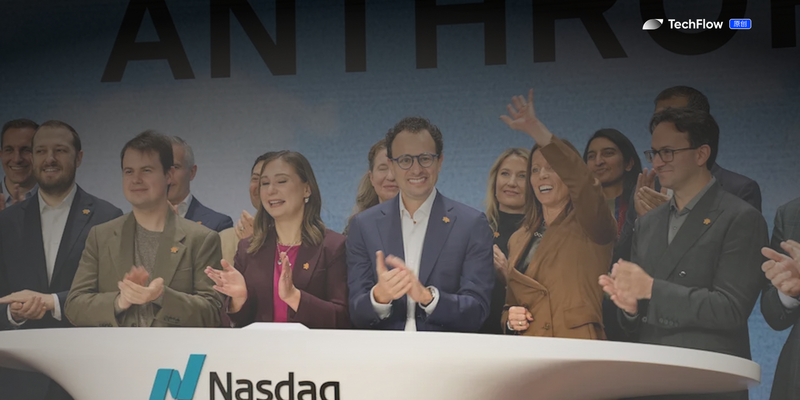
Moderna's sharp drop was merely the tip of the iceberg regarding tech stock pressures that day. The real drag on the index came from a collective weakness among the Magnificent Seven. The group declined broadly overnight; Amazon fell over 2%, leading large-cap tech losses, while Tesla saw a noticeable pullback. These giants failed to act as a floor when the broader market sold off. However, semiconductors were not uniformly weak. Memory and optical communication stocks bucked the trend, with Marvell up 5.8%, Lumentum up 6.2%, and Micron up 3.97%. Their common denominator is concrete industrial catalysts. Marvell is supported by logic surrounding custom AI chip collaborations with Google, while Micron benefits from commitments to $10 billion in memory R&D over the next decade. Yet this does not mean AI hardware pressures have vanished. Previously reported slowdowns in OpenAI's revenue growth, Anthropic's push toward an IPO, and Broadcom seeking over $60 billion in debt financing are all shifting the pricing paradigm for the AI supply chain from "order growth" to "capital expenditure sustainability." Markets are now asking finer questions: who possesses genuine cash flows, and who is merely financed by debt/equity raises. Capital hasn't fled the entire AI chain; the screening criteria have simply become much stricter.
Bitcoin Breaks $72,000, Gold Hammers Around $4,500 Mark
Digital currencies surged for a second consecutive day. Bitcoin breached $72,000 for the first time since early June, climbing roughly 5% intraday and accumulating a 15% weekly gain; Ethereum added over 20% across two days. Gold briefly dipped below $4,500 before reclaiming its intraday losses, rallying over 2% from its daily low. Spot gold closed up 0.08% at $4,519.36 per ounce, while spot silver gained 1.16% to $68.09 per ounce. Gold has been grinding back and forth around the $4,500 level, with geopolitical risks and a weaker dollar providing support, though rebounding US Treasury yields cap further upside.
China Concept Stocks' Focus Shifts Back to Earnings
Alibaba's Q2 revenue grew 9% year-over-year to RMB 268.95 billion, slightly exceeding expectations. However, heavy investments in AI infrastructure drove up capital expenditures, expanding quarterly free cash outflows to RMB 44.7 billion. The earnings call disclosed that ARR for AI-related products surpassed RMB 49.5 billion, with T-Head chips expected to ramp up volume in the second half. Alibaba Cloud's external commercial revenue jumped 45% annually, and AI-related revenue has grown three-digits for 12 consecutive quarters, demonstrating that AI cloud services are already generating recognized revenue, even as the Capex cycle weighs on short-term cash flows. Unitree Robotics, which listed earlier, dropped over 18% on its second day of trading. Founder Wang Xingxing noted that commercial deployment still requires time, signaling a shift in the robotics sector's valuation from scarcity pricing to delivery capability pricing.
Today's Watch
The market will focus on two key areas this Friday.
First, whether long-end US Treasury yields can stabilize. Following the rapid fade of the Treasury repurchase effect, whether the 30-year yield can hold below 5.3% will directly dictate the upside potential for tech stocks.
Second, the remarks by Fed Chair Walsh at the Jackson Hole Global Central Bank Symposium. Wednesday's meeting minutes already signaled a hawkish bias. Walsh's speech will set the tone for the September meeting. If inflation risks continue to be emphasized, rate hike expectations will rise further; if downside economic risks are mentioned, market sentiment may get some breathing room.
The core message from overnight US equities is that the market has confirmed Treasury intervention in the bond market only buys time, not trend reversal. Moving forward, long-term Treasuries are the master switch, oil prices are the inflation switch, and for tech stocks to truly stabilize, we must see both the Philadelphia Semiconductor Index and the Magnificent Seven repair their valuations simultaneously.
Join TechFlow official community to stay tuned
Telegram:https://t.me/TechFlowDaily
X (Twitter):https://x.com/TechFlowPost
X (Twitter) EN:https://x.com/BlockFlow_News
 @chaoxiangooo