AI Leverage, US Treasury Yields and the Strait of Hormuz
By: Long Yue, Wallstreetcn
This summer, global markets have been repeatedly pulled by three events: the liquidation of highly leveraged AI positions, long-end US Treasury yields hitting a 19-year high amidst a rate cut cycle, and the Hormuz Strait ceasefire agreement being signed and torn up repeatedly.
These three events belong to three different markets and appear unrelated to each other.
On August 10, Goldman Sachs placed them within the same framework: global markets may be shifting from "savings glut" to "capital scarcity." AI is burning cash, governments are borrowing, and the Strait is blocking physical supply—three forces simultaneously consuming limited global capital.
And central banks, which have been responsible for continuously injecting liquidity into the market and suppressing interest rates over the past two decades, have less they can do this time.
This judgment does not mean the three events will continue to worsen. But it points to a question: if global capital is truly becoming more expensive and scarce, is the market ready? Even if any one of these three events subsides individually, the pattern of global competition for capital may not disappear. The extreme volatility seen in July—stock markets plummeting then surging, US Treasury yields rising despite rate cuts, crude oil rebounding half its losses in three days—may not be an accident, but the beginning of a high-volatility cycle.
AI Leverage: The Logic Was Right, the Leverage Was Wrong
Among the three events, the AI leverage exploded first.
The hedge fund under "AI God of Stocks" Leopold Aschenbrenner saw its net asset value surge 439% in the first half of the year, relying on 4x leverage to go long on AI hardware and short software stocks. In July, the Philadelphia Semiconductor Index fell 28.6% in a single month, killing both longs and shorts. The entire $16 billion public position was dumped onto Citadel—Millennium and Jane Street evaluated and exited entirely; there was only one buyer on all of Wall Street.
JPMorgan Chase warned afterwards: institutions' capacity to absorb AI assets has declined significantly. If something happens again, "only retail investors can hold the bottom."
But at the same time, TSMC's July revenue grew 44.7% year-on-year, hitting a record high. The backlog of orders from the three major US cloud vendors totaled $2.3 trillion. AI demand has not slowed. The direction is not wrong; the problem is that the money to buy into the direction is disappearing.
A more essential signal came from Nvidia. On August 10, Jensen Huang did not promote faster chips, but instead teamed up with BlackRock, Blackstone, and six other major asset managers to set up a financing platform—customers could no longer afford chips and needed Nvidia to help them find money from institutions. The market did not buy it: the stock price fell that day, and CDS approached historical highs.
"Dr. Doom" Jim Chanos said this reminds people of 2008. The reason the market did not buy it is simple: if the essence of $500 billion is "borrowing money to customers to buy their own chips," how long can this cycle last? A track that needs hundreds of billions of dollars in financial engineering to sustain its life is itself proof of a lack of money.
US Treasuries: An Explanation for the Ineffectiveness of Rate Cuts
AI is burning money, and the government is also borrowing at record levels.
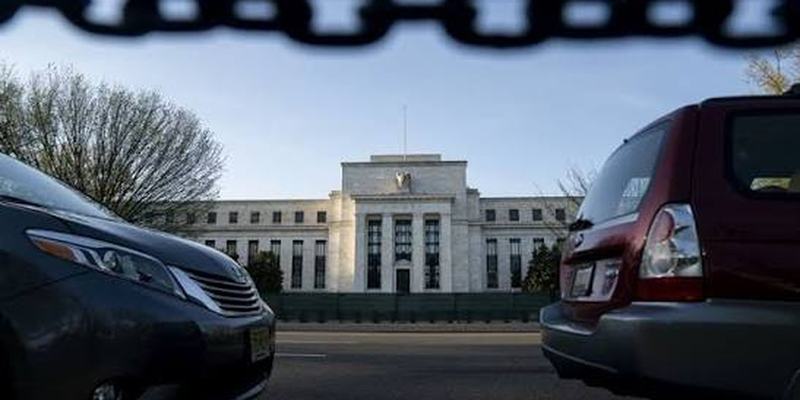
The Federal Reserve cut rates 6 times, cumulatively 175 basis points, yet the 30-year US Treasury yield climbed all the way, touching 5.27% on August 1—the highest since 2007. The market is no longer pricing in the Federal Reserve; it is pricing in US fiscal policy.
US federal debt exceeded $40 trillion in August, with FY2026 net interest expenditure at $1.039 trillion, surpassing the defense budget for the first time. For every $5 of tax collected, $1 goes directly to paying interest. $15 trillion in debt matures within a year for refinancing; for every percentage point higher the interest rate on borrowing new to repay old, the deficit automatically expands. The proportion of US Treasuries held by foreign central banks has fallen from 34% to below 24%.
Goldman Sachs stated it plainly: the world has shifted from "savings glut" to "extreme capital scarcity." AI infrastructure exceeds $800 billion annually, reindustrialization and defense restructuring are proceeding simultaneously across countries, and sovereign debt refinancing needs are surging simultaneously—these financing needs simultaneously collided with a Treasury market where buyers are retreating. Buyers are retreating, supply is expanding, and interest rates can only go up.
The Federal Reserve is not united internally. Chairman Wash reduced forward guidance significantly, stating "the market has already undertaken most of the tightening work"—no rush to raise rates, let the market tighten itself. Cleveland Fed President Hammack publicly sang a different tune: current interest rates "have not formed significant restrictions," "may require multiple rate hikes." Goldman Sachs' judgment is: the Federal Reserve is more like a "passenger" than a "driver."
The reason Aschenbrenner's 4x leverage was fragile was not only because positions were concentrated—but also because the money he borrowed might be becoming more expensive. AI's capital feast collided with the government's borrowing peak, and central banks no longer have enough space to bail out both like in the past.
Hormuz: Why a Ceasefire Agreement No Longer Works
The financial world is pricing in the scarcity of capital, and the physical world is simultaneously giving signals.
Since the US-Iran war broke out at the end of February, Brent has followed a repeatedly oscillating curve: $126 (March hostilities) → $72 (June ceasefire) → $85 (July breakdown) → $87.72 (August Iran proposed 6 conditions, Trump replied "semi-negotiation status"). Each round of rise and fall repeated the same pattern: the market first priced in "it's going to stop," then repriced for "it's fighting again." After several repetitions, no one dares to easily bet "this time is real."
The question is no longer "whether to fight," but "how long the ceasefire can last." Secretary of Iran's Supreme National Security Council Zolqadr said if the US does not change behavior, the Strait remains closed. Trump responded preparing to increase economic pressure. Both sides are talking, neither has retreated.
OVX (Crude Oil Volatility Index) is currently around 60—3.2 times that of VIX. The message from the options market is clear: the biggest tail risk is not in US stocks, but in the waterway.
Complicating the situation further, the US cushion is thinning. Strategic Petroleum Reserve (SPR) fell to 298.7 million barrels, dropping below 300 million for the first time since 1983. Pre-war was 415 million barrels, after releasing 172 million barrels in one go in March, it has been net consumed all the way. The International Energy Agency (IEA) characterized it as the "largest scale in history" supply disruption in the global oil market. The next time the Strait has problems again, the US government's ability to release reserves to stabilize oil prices is the weakest in forty years.
Intersection of Three Hidden Threads: From "Savings Glut" to "Capital Scarcity"
The three events may not be a coincidence.
AI leverage blew up because 4x leverage is unsustainable in a rising interest rate environment. Long-end US Treasury yields surged because governments and enterprises are simultaneously competing for money with global investors. The Hormuz Strait problem, on the surface is geopolitical, at the bottom is physical capital like oil suddenly becoming scarce. The three forces have different directions—stock market, bond market, commodities—but share the same root: the global capital supply and demand pattern may have undergone a structural reversal.
Goldman Sachs calls this transition "from savings glut to capital scarcity." The world after 2008 was: many savings, few projects, low interest rates. Central bank QE bailouts, governments borrowing almost without paying interest. This framework lasted for nearly twenty years.
In 2026, it was breached from both ends simultaneously. On the supply side, global central banks turned from net buyers of US Treasuries to net sellers. On the demand side, AI infrastructure, reindustrialization, defense spending, energy transition—four directions, trillion-level capital demand released simultaneously. Goldman Sachs specifically pointed out that AI capital expenditure among these four forces "has the most significant upward pressure on interest rates"—it simultaneously pushes up risk-free rates and credit spreads.
Even if Hormuz navigates tomorrow and all AI leverage positions are cleared, the structural pressure on interest rates will not disappear. The root is not in events, but in paradigms.
Change Perspective: This Is a "Liquidity Triple Kill"
Change the names of the three forces, and they are three liquidity pressures. Different directions, times collided together.
Trading liquidity had problems first. AI funds' 4x leverage was liquidated concentratedly in the short term, Philadelphia Semiconductor Index -28.6% in a single month, "fall → liquidate → fall more → more liquidation"—forcing all funds with exposure to stop losses.
Bond liquidity is a bigger well. $15 trillion matures within a year for refinancing, FY2026 still needs net increase of about $2 trillion new debt. The Treasury siphons hundreds of billions from the market every month, but buyers are retreating. Interest rates can only go high, the heavier the interest, the larger the deficit, the more new debt—a self-reinforcing loop.
Physical liquidity is the third cut. 27% of global seaborne crude oil channels were cut off, no alternative routes, SPR cushion consumed to a 40-year low.
The three liquidity pressures overlapped highly in time, constituting a rare "liquidity triple kill" resonance. July's extreme market conditions—Nasdaq rebounded 2.8% in a single day after six consecutive falls, 30-year yield hit 19-year high, Brent fell 14% in two weeks then rose back half in three days—was precisely the price expression of this resonance.
This framework is not a prediction tool. It explains why July was so violent, but cannot tell you how August will be. The three pressures have different mitigation conditions: AI positions depend on when Citadel distributes to the market, US Treasuries depend on the Treasury's issuance rhythm, Hormuz depends on the game rhythm. The three are not synchronized. But their resonance is enough to explain one thing: why this summer's volatility feels more intense than any single indicator suggests.
After This Summer: High Volatility Is a Rehearsal for the New Normal
On the US stock side, Q2 earnings have verified the AI demand side clearly enough—cloud vendor growth rates collectively hit new highs, backlogs broke records. But July's liquidation proved the other side: in crowded and highly leveraged tracks, there is a huge distance between "judging correctly" and "living to realize it." JPMorgan's warning is especially worth remembering—after institutional absorption capacity declines, only retail investors can hold the bottom; the next round of adjustment will lack buyers even more than July.
On the US Treasury side, Goldman Sachs' statement is worth reading again: the Federal Reserve is a "passenger" not a "driver." If the fiscal path does not change, the structural pressure on long-end interest rates will not disappear due to a few rate cuts. Whether the 10-year can return below 4% does not depend on the next FOMC, but on whether global savings are willing to flow back into US Treasuries—this is beyond the Federal Reserve's capacity.
On the crude oil side, Hormuz's risk premium has changed from "one-time shock" to "continuous discount." Even if a temporary ceasefire agreement is reached, the huge spread between OVX and VIX will not disappear in the short term. SPR is at a 40-year low—when the next supply-side accident comes, the market will be more fragile, and the government more powerless. Goldman Sachs' baseline judgment is "both sides seem to have no intention of large-scale escalation, energy prices should remain bounded," but this judgment itself is fragile—the market has moved too much in the opposite direction, "worries easily resurface."
The true legacy of the summer of 2026 is not the price volatility of an asset. But that the market has finally started to pay a premium for the new paradigm of "capital scarcity." The three forces are just three facets of a grand narrative; they collided together in the summer, but the underlying structural forces have not yet been fully released.