
War Enters Dangerous Phase, Oil Prices May Break 2008 Historical High of $146
TechFlow Selected TechFlow Selected
War Enters Dangerous Phase, Oil Prices May Break 2008 Historical High of $146
The sharp deterioration of the situation in the Middle East is pushing the global energy market to the most dangerous brink in decades.
 Navigating Web3 tides with focused insights
By Bu Shuqing, Wallstreetcn
Brent crude is rapidly approaching the $100 per barrel mark, as the sharp deterioration of the situation in the Middle East pushes the global energy market to the most dangerous edge in decades.
On Thursday, Brent crude futures surged nearly 5% in a single day, touching $100 per barrel intraday. Previously, the Houthi rebels joined the conflict, threatening a blockade of the Bab al-Mandab Strait, a key maritime channel, while the Strait of Hormuz remains partially obstructed. Pressure on both strategic chokepoints simultaneously has caused market risk premiums to skyrocket.
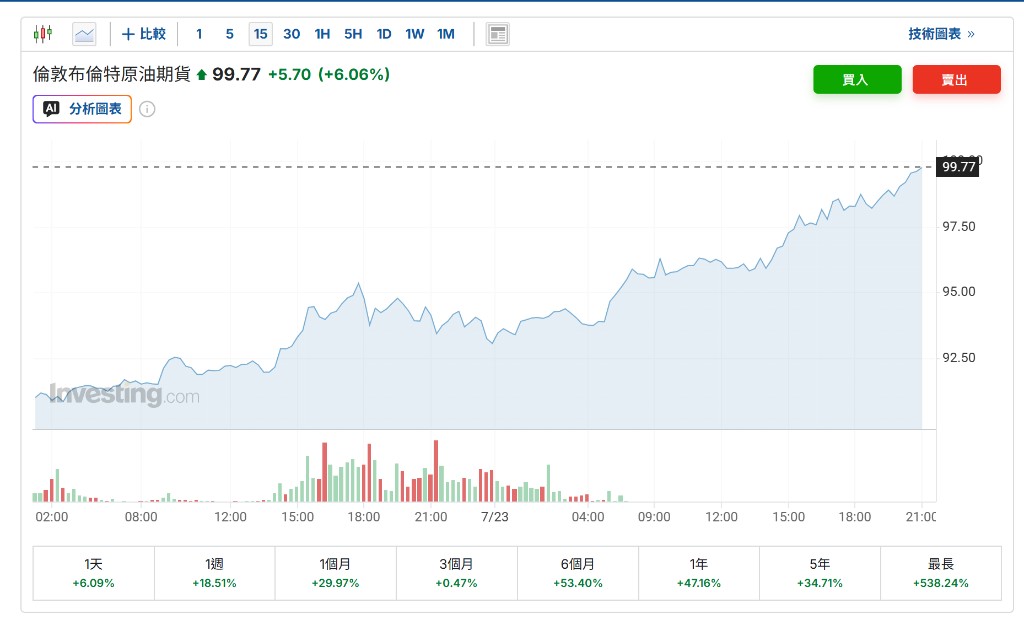
Helima Croft, Global Head of Commodities Strategy at RBC Capital Markets, warned that "the war is entering a dangerous phase, with the Red Sea and critical infrastructure at risk," and pointed out the possibility that oil prices could break through the $128 per barrel high seen during the 2022 Russia-Ukraine conflict, or even challenge the 2008 historical peak of $146.
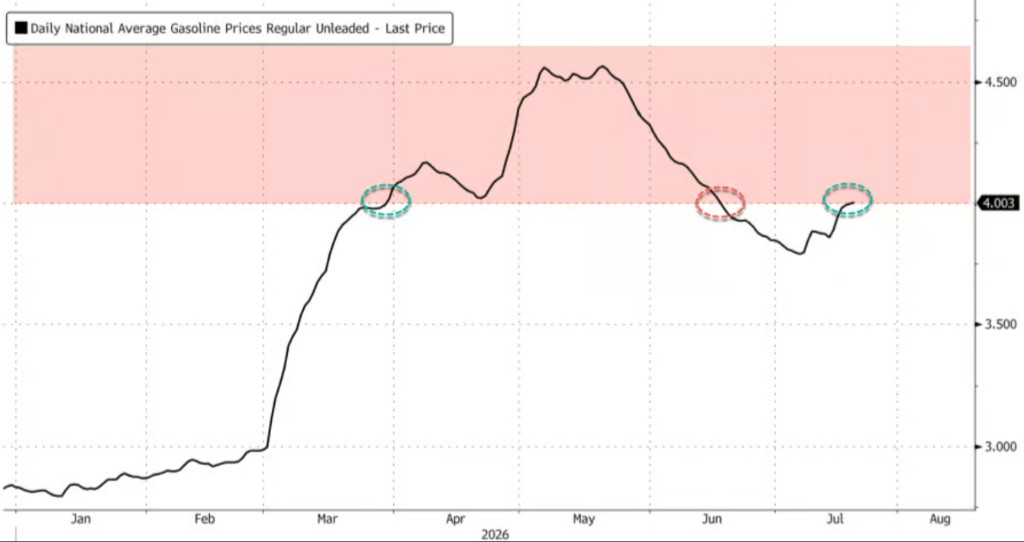
This surge in oil prices occurs against the backdrop of significantly depleted global oil buffer inventories; Cushing crude inventories are reported to be near "bottom of the tank" levels, leaving the market with little capacity to absorb sustained supply shocks. Meanwhile, the U.S. national average price for regular gasoline broke through $4 per gallon on Monday, further increasing political pressure on the Trump administration to push for Gulf diplomatic mediation.
Double Chokepoints Under Pressure Simultaneously, Supply Risks Escalate Suddenly
The direct trigger for this round of sharp oil price increases is the Houthi rebels' renewed action against Red Sea shipping.
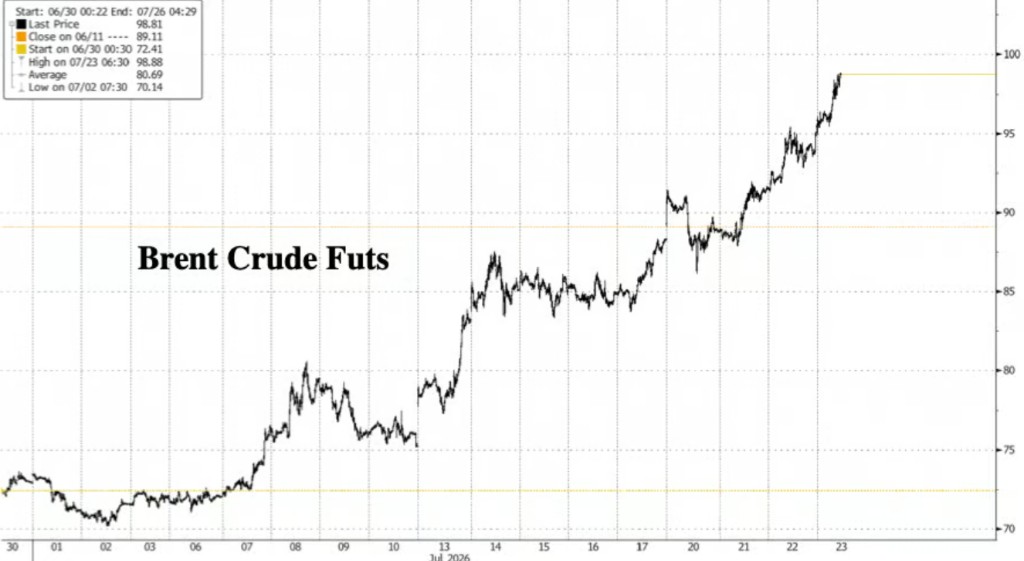
According to Xinhua News Agency, Yemen's Houthi rebels stated early morning local time on the 23rd that they had attacked two Saudi oil tankers in the Red Sea, claiming these tankers violated the maritime embargo recently announced by the organization. After the news broke, Brent crude jumped above $95 in after-hours trading.
Entering Thursday, as war risk premiums continued to accumulate, oil prices further rose to $98.70.
Currently, oil tankers have once again bypassed the southern Red Sea route; shipping traffic, which had briefly resumed after the 2023 Houthi attack subsided, is facing a new reversal. Meanwhile, the partial blockade of the Strait of Hormuz has not yet been lifted; chaos in both of the world's most important energy transport channels simultaneously has caused market supply expectations to tighten sharply.
Saudi Arabia has issued a strong signal, stating it will respond forcefully to any attacks on its oil tankers or onshore energy facilities, further exacerbating the risk of escalation.
RBC: Oil Prices Could Break 2008 Historical Peak in Worst-Case Scenario
Helima Croft's wording in a report sent to clients on Thursday was unusually strong. She pointed out that although Brent crude has cumulatively risen over 30% since July 1, the current price is still "a lagging indicator of extreme pressure in the region."
Croft stated that given the dangerous escalation currently unfolding, there is a potential for oil prices to break through the $128 per barrel high created during the 2022 Russia-Ukraine conflict, and in the worst-case scenario of a full-scale regional war, could even challenge the 2008 historical peak of $146.
She specifically highlighted the profound impact of Houthi involvement: the Houthi rebels' participation in the war could further expand supply losses caused by the war by undermining the effectiveness of the East-West Pipeline alternative route.
Saudi Arabia previously relied on the East-West Pipeline, with a daily transport capacity of 7 million barrels, to route some crude oil around the Strait of Hormuz to Red Sea export terminals. However, once the Bab al-Mandab Strait also becomes impassable, this alternative route will lose its significance; oil tankers heading to Asia will be forced to detour around the Cape of Good Hope, not only significantly pushing up freight costs but also delaying delivery times by several weeks, further tightening physical market supply.

Goldman Sachs Also Issues Warning, $120 Could Become Q4 Scenario
RBC is not the only institution issuing warnings.
According to reports, Goldman Sachs commodities expert Daan Struyven warned on Monday that if shipping disruptions in the Strait of Hormuz continue, Brent crude futures could surge to over $120 per barrel in the fourth quarter. He also pointed out that this is not his baseline forecast scenario.
Statements from both institutions jointly outline the current market risk map: the baseline scenario is already severe, while tail risks are even more extreme.
Inventory Emergency Plus Political Pressure, Trump's Diplomatic Mediation Space Narrows
What worries the market even more is that this supply shock occurs at a time when the global oil safety cushion has been significantly thinned. Cushing crude inventories are reported to be near "bottom of the tank," leaving the market with almost no extra buffer space to absorb a protracted supply interruption.
On the demand side, the U.S. national average price for regular gasoline broke through $4 per gallon on Monday; the rise of this politically sensitive indicator is increasing internal pressure on the Trump administration. Analysts believe that once the U.S. military completes a sufficient level of strikes on Iran's missile and drone capabilities used to threaten commercial shipping, oil price pressure will prompt Washington to seek diplomatic solutions again.
In terms of supply scale, the risk is too significant to underestimate. The Strait of Hormuz carries about one-fifth of the global oil supply; while under normal circumstances, the amount of oil passing through the Bab al-Mandab Strait daily reaches 8 million to 9 million barrels. If both channels become paralyzed simultaneously, the global energy market will face an unprecedented supply stress test.
Join TechFlow official community to stay tuned
Telegram:https://t.me/TechFlowDaily
X (Twitter):https://x.com/TechFlowPost
X (Twitter) EN:https://x.com/BlockFlow_News