Market Does the "Rate Hike" Work, Warsh Goes All Out to "Fight Inflation"
TechFlow Selected TechFlow Selected
Market Does the "Rate Hike" Work, Warsh Goes All Out to "Fight Inflation"
Waller's hawkish remarks provide an anchor for the market, with a September rate hike nearly becoming consensus.
 Navigating Web3 tides with focused insights
By Zhao Ying, Wallstreetcn
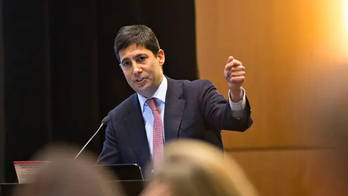
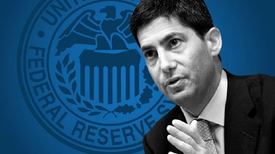
The sharp rise in US Treasury yields has, to some extent, substituted for the effect of actual interest rate hikes, while Federal Reserve Chair Wash's hawkish stance has provided a clear anchor for this market pricing. A rare tacit understanding is forming between the bond market and the Federal Reserve.
The US Consumer Price Index (CPI) for June recorded its first monthly decline since 2020, giving the market a brief sigh of relief, and positions betting on a Fed rate hike this month were quickly closed out. However, Wash immediately stated clearly on Capitol Hill that the June CPI data does not mean the anti-inflation task is complete. Kansas City Fed President Jeff Schmid, Dallas Fed President Lorie Logan, and Cleveland Fed President Beth Hammack also issued similar signals subsequently.
Currently, traders' expectations for a July rate hike have largely faded, but there is still a widespread bet that the Federal Reserve will raise the benchmark interest rate by 25 basis points in September or October, and a rate hike before the end of the year is almost seen as a certainty. Meanwhile, since the end of February, the two-year US Treasury yield has cumulatively risen by about 75 basis points to nearly 4.2%, far higher than the Fed's current policy rate range of 3.5% to 3.75%. The rise in Treasury yields has substantively acted as a brake on the economy by pushing up mortgage and other loan costs.
Inflation Pressure Persists, Rate Hike Expectations Loom
Although the June CPI data brought a brief respite, market concerns about inflation prospects have not dissipated. After the US-Iran ceasefire agreement collapsed, oil prices rose again; large-scale capital expenditure in the artificial intelligence sector continues to inject stimulus into the economy, even though bubble concerns have emerged in some tech stocks. Inflation has remained above the Federal Reserve's 2% annual target for the past five years, and this persistent situation makes it difficult for the market to casually speak of a turnaround.
Columbia Threadneedle Portfolio Manager Ed Al-Hussainy stated: "If nothing is done, are you confident inflation will fall back to 2% or 2.5%? The answer is no. The Federal Reserve should feel more confident in raising interest rates without worrying too much about downside risks." He currently holds a position where long-term bonds outperform short-term bonds, a strategy that will benefit from a more hawkish policy path by the Federal Reserve.
Bank of America economists expect the Federal Reserve to raise interest rates at three meetings in September, October, and December respectively. After the June CPI data was released, the bank pointed out in a client report that inflation remains far above target, "we need to see several more similar data points before reconsidering our current judgment".
Market Has "Done the Work", Wash Can Wait and See
The spontaneous pricing of the bond market is objectively sharing the Federal Reserve's policy pressure. DoubleLine Deputy Chief Investment Officer Jeffrey Sherman pointed out that, judging from federal funds rate forward pricing, the bond market has previously led the Federal Reserve's actions multiple times, and the most important change currently lies in the fact that the market is no longer continuously betting on rate cuts like in the past three years, but is starting to reflect the possibility of rate hikes in the coming year.
Sherman stated that this forms a sharp contrast with previous policy cycles: "The market heard Powell announce the end of rate hikes and began expecting rate cuts, but the rate cuts did not truly materialize." And now, "the market seems to be saying: perhaps the Federal Reserve will raise interest rates at some point in the next 12 months."
In his view, this means Wash may not need to take action immediately right now. "What you are seeing now is that the market has actually done the work for the Federal Reserve—the yield curve has shown an upward slope, and the policy rate is lower than all other rates on the curve. Therefore, Chair Wash might not need to take any action for the time being and can wait and see." Sherman summarized: "The bond market is fulfilling its duty; it is sniffing the data."
Wash's Hawkish Stance Clear, But Deliberately Retains Flexibility
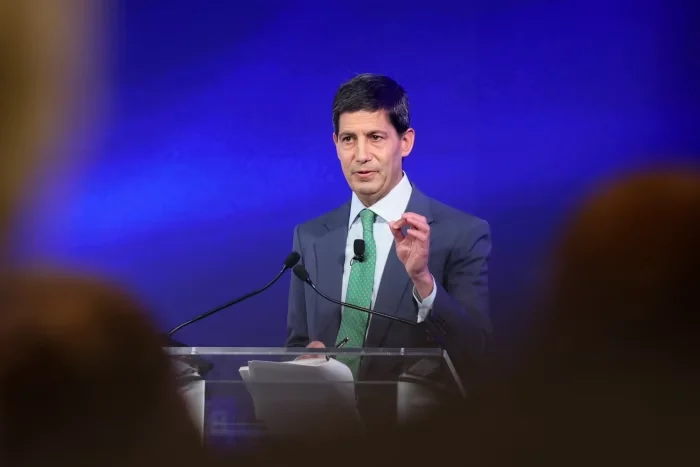
Wash took office as Federal Reserve Chair two months ago and has always listed lowering inflation as the top priority since taking office. When hosting his first post-meeting press conference last month, he repeatedly emphasized the necessity of controlling inflation; while testifying before Congress last week, he reiterated that the June CPI data does not represent mission accomplished.
It is worth noting that Wash did not give clear signals regarding the timing of rate hikes and tends to downplay the Federal Reserve's forward guidance on interest rate prospects, on the grounds that overly clear guidance might leave policymakers passive and difficult to adjust flexibly. Federal Reserve officials will enter the routine quiet period ahead of the two-day meeting starting July 28 this week, and the market will lack new policy signals during this period.
Since the last rate cut in December last year, the Federal Reserve has remained inactive. At that time, the employment market rebounded from the February low, coupled with the Trump administration's military action against Iran bringing a new round of inflation shock, and the previous market expectation for the Federal Reserve to resume rate cuts was consequently dashed. Wash clearly stated that he would maintain the Federal Reserve's political independence and would not yield to Trump's pressure for rate cuts.
Market Divergence Remains, Caution Still the Main Theme
Although rate hike expectations dominate the market, some institutions hold a more prudent judgment on the pace of the Federal Reserve's actual actions. Chi Chen, Co-Manager of the $18 billion Total Return Fund under BlackRock, stated: "The market's pricing of the Federal Reserve's policy path is more hawkish than we expected, provided our judgment on inflation declining and growth slowing in the second half of the year is correct. The Federal Reserve may continue to maintain a hawkish stance, waiting for data to eventually tend towards moderation." Her team currently tends to allocate to medium-term and short-term bonds, believing that after the sell-off following the Iran war, "valuations are significantly more attractive than before".
Sherman also holds reservations about the threshold for a September rate hike, believing that "substantial data" is needed to force the Federal Reserve to make this decision, especially against the background of approaching elections and lingering political pressure.
Al-Hussainy spoke plainly: "Now is not the time to stick your neck out." With the policy path still unclear, avoiding heavy bets on Fed-sensitive positions may be the safest choice for now.
Join TechFlow official community to stay tuned
Telegram:https://t.me/TechFlowDaily
X (Twitter):https://x.com/TechFlowPost
X (Twitter) EN:https://x.com/BlockFlow_News