Space Recap | When Gas-Free Ends the “Gas Barrier,” Will Web3’s Next Phase Be Mass Adoption or Full Web2-ification?
TechFlow Selected TechFlow Selected
Space Recap | When Gas-Free Ends the “Gas Barrier,” Will Web3’s Next Phase Be Mass Adoption or Full Web2-ification?
Will an “imperceptible experience” taken to the extreme rob Web3 of its soul? This article deconstructs the innovation logic behind Gas-Free solutions and explores the balance Web3 must strike between mass adoption and decentralization.
 Navigating Web3 tides with focused insights
GasFree, a smart wallet developed by JustLend DAO—the core protocol of the TRON ecosystem—represents a substantive breakthrough in Web3’s user interaction experience. It directly addresses the long-standing industry pain point that “on-chain transfers require users to purchase native tokens in advance,” innovatively enabling users to deduct gas fees directly from the tokens they’re transferring. Today, ordinary users can transfer USDT via GasFree without needing to hold any additional TRX—gas fees are automatically settled in USDT.
Since its launch, GasFree has rapidly lowered the barrier to entry for newcomers thanks to its minimalist, “invisible” user experience. Its momentum surged during the recent “JUST 6th Anniversary × GasFree Super Carnival Month” campaign, igniting unprecedented community engagement. Yet this extreme convenience—achieved by seamlessly hiding complex underlying logic—has also triggered profound industry reflection.
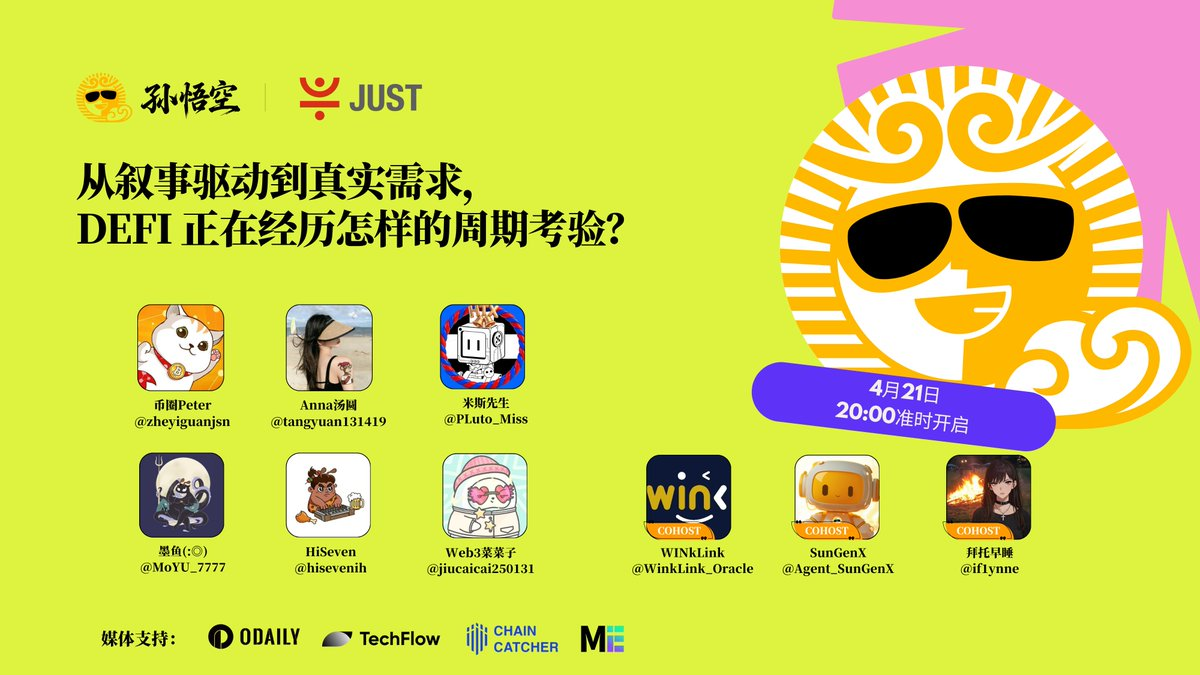
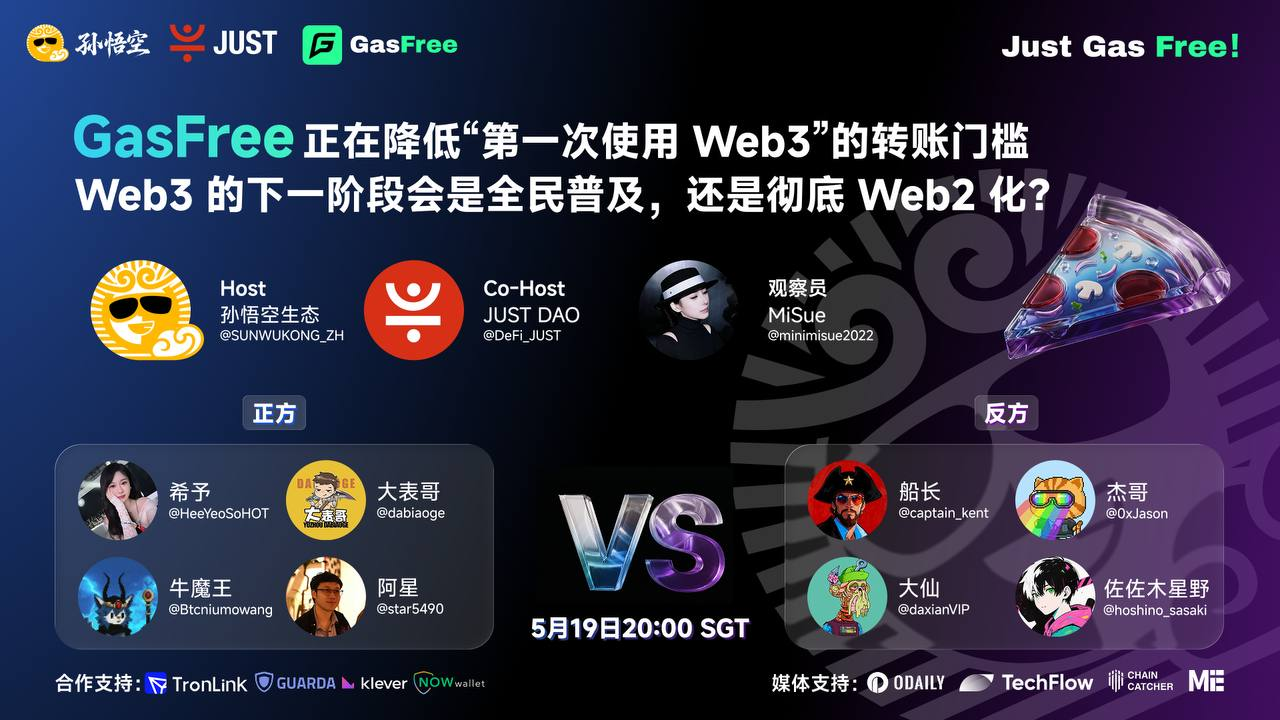
This special X Space discussion centered on precisely this phenomenon: As GasFree lowers the barrier to “first-time Web3 usage,” will Web3’s next phase usher in mass adoption—or, in pursuit of convenience, fully morph into Web2?
Some firmly believe great technology should abstract complexity away from end users, letting them operate “invisibly.” Others worry that if users cease perceiving the chain, gas, and asset control, Web3 risks losing its defining decentralized value. In this Space dialogue, multiple seasoned industry KOLs gathered to engage in a deep, incisive exchange between “pursuing invisible UX” and “upholding on-chain purism.”
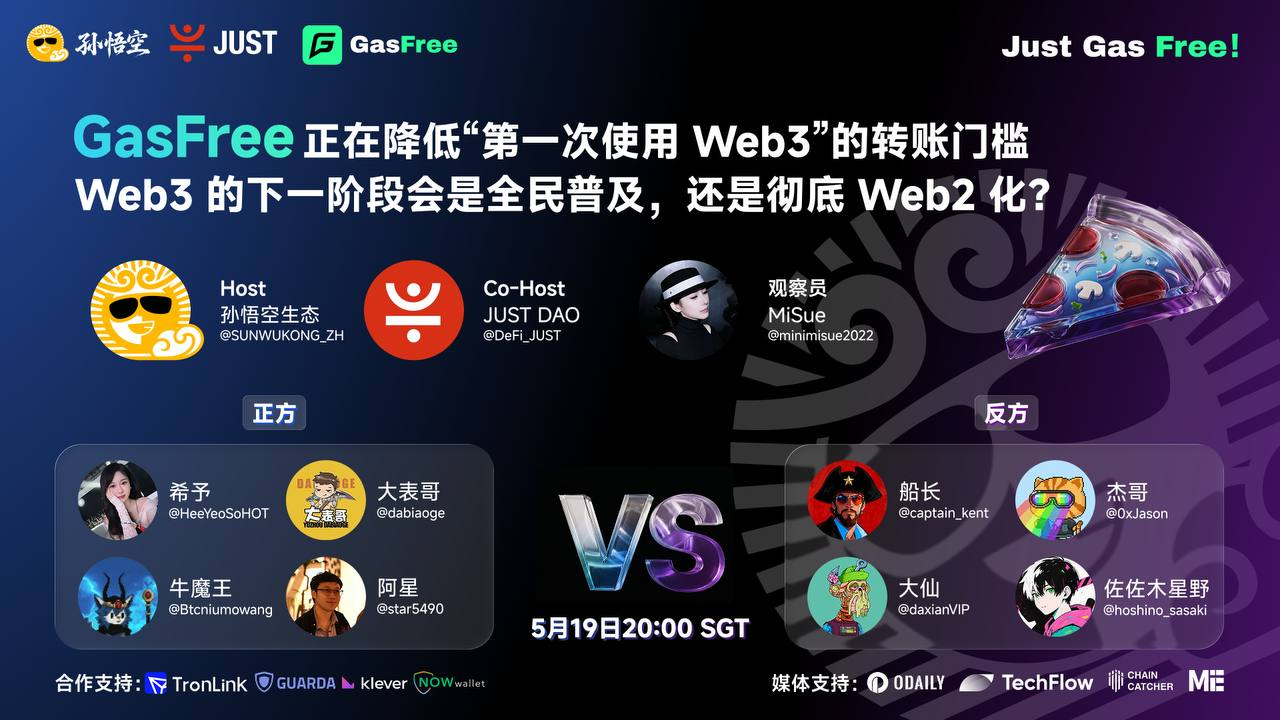
Core Debate: Is Web3’s “Invisible Experience” an inevitable path to mass adoption—or fertile ground for Web2-ification?
First proponent Xi Yu argued that truly successful technology should render itself “invisible” to users. Web3’s persistent failure to achieve genuine mass adoption stems fundamentally from excessively high user barriers. Just as the general public uses WeChat or browses the web without understanding TCP/IP protocols or router node matching logic in Web2, requiring every new Web3 user to first learn how to buy native tokens, grasp cross-chain mechanics, and manage private-key authorizations reveals the industry’s immaturity. Treating technical complexity as a marker of “elitist arrogance” not only blocks fresh talent but also contradicts decentralization’s core promise: empowering the masses.
Moreover, the pro side emphasized that “invisibility” in UX does not equate to centralization or loss of decentralization at the protocol level. Second proponent Niu Wangmo stated that mandating native-token-only transfers is essentially a form of “coercion” imposed on users by arbitrary rules. GasFree’s innovation restores focus to assets themselves—for instance, letting users pay gas fees directly in USDT, eliminating the cumbersome “hostage situation” of being forced to hold TRX or ETH. This neither eliminates gas fees nor alters blockchain’s foundational properties: on-chain settlement, public transparency, and immutability. On the contrary, only by drastically lowering barriers—transforming Web3 from a niche “geek celebration” into infrastructure anyone can use effortlessly—can it credibly claim future ecosystem prosperity and value realization.
Yet behind the pro side’s optimistic vision of “mass adoption,” the con side identified serious, non-negligible risks. They countered sharply: Web3’s greatest value has never been “convenience”—but absolute user sovereignty and decentralization. If we lower barriers limitlessly to appeal to mainstream users—erasing their awareness of private keys, gas, and chains—Web3 will inevitably regress into Web2-style custodial logic.
Second con-side debater Jie Ge stressed bluntly: “No understanding means no respect.” When users no longer grasp underlying mechanics, they easily fall into a “trust illusion” regarding platforms or wallet providers. Should a platform act maliciously or suffer a hacker breach, users face centralized risks once again—asset losses with no recourse.
Additionally, Sasaki Shino drew on past bull markets to argue: “Moderate friction isn’t just part of blockchain’s security architecture—it’s a catalyst for industry innovation.” Historically, what attracted massive user adoption was always breakthroughs in underlying technology—and the resulting wealth effects (e.g., DeFi, NFTs, inscriptions)—not mere UX optimizations. If today we hide gas for usability, tomorrow we might sacrifice decentralization and immutability for efficiency. When Web3 feels indistinguishable from Alipay or WeChat, blockchain forfeits its irreplaceable, unique value. The con side firmly believes short-term user growth must never come at the cost of sacrificing Web3’s core soul.
Bridging the Divide: How Does GasFree Balance Experience and Sovereignty?
While the debate rages fiercely, real-world industry building demands a nuanced balance between idealism and pragmatism. Stepping beyond binary “either/or” thinking and examining actual use cases reveals that lowering barriers and upholding decentralization need not be mutually exclusive. GasFree—the smart wallet built by JustLend DAO within the TRON ecosystem—is precisely such a breakthrough product, offering today’s optimal solution at the intersection of “extreme invisibility” and “transparent on-chain sovereignty.”
In traditional on-chain transfer logic, users moving USDT must first buy TRX on an exchange, withdraw it to their wallet, then use it to pay gas fees. This multi-step process is not only lengthy but also exposes users to asset slippage due to price volatility or operational errors. As the pro side noted, this “native-token hostage” rule remains the highest barrier preventing outsiders from entering.
GasFree’s core product logic does not strip users of private-key control, nor does it move assets onto centralized custodial servers. Instead, it performs a radical “subtraction” at the smart-contract interaction layer. Functionally, it innovates a direct token-deduction mechanism: when users initiate transfers (e.g., TRC20-USDT), they no longer need to pre-hold TRX or other native tokens for gas—making operations feel as seamless as “using what you’re sending.” More importantly—and as a powerful rebuttal to con-side concerns—GasFree’s “invisibility” applies solely to UX, not custody: all fund flows remain fully public and transparent, guaranteeing users’ absolute control over their private keys and assets.
This sovereignty-friendly yet convenient underlying design is now deeply integrated into everyday user touchpoints. Wallets supporting GasFree include TRON’s official wallet TronLink, plus Klever, Guarda, and NOW Wallet. In practice, USDT holders and TRON ecosystem users alike can leverage these wallets for GasFree-powered transfers—significantly reducing onboarding friction for new users.
The market has always possessed razor-sharp intuition for products that genuinely solve pain points. Since GasFree’s official launch in March 2025, its “invisible” experience—targeting the most acute user frustrations—has ignited explosive market response, with notable jumps in new-user retention and activity. To date, GasFree has processed over 5.16 million transactions, totaling $8.93 billion in volume—and has saved users over $6.28 million in gas fees. These impressive figures confirm that once unnecessary technical barriers are removed, pent-up real-world Web3 payment demand surges dramatically.
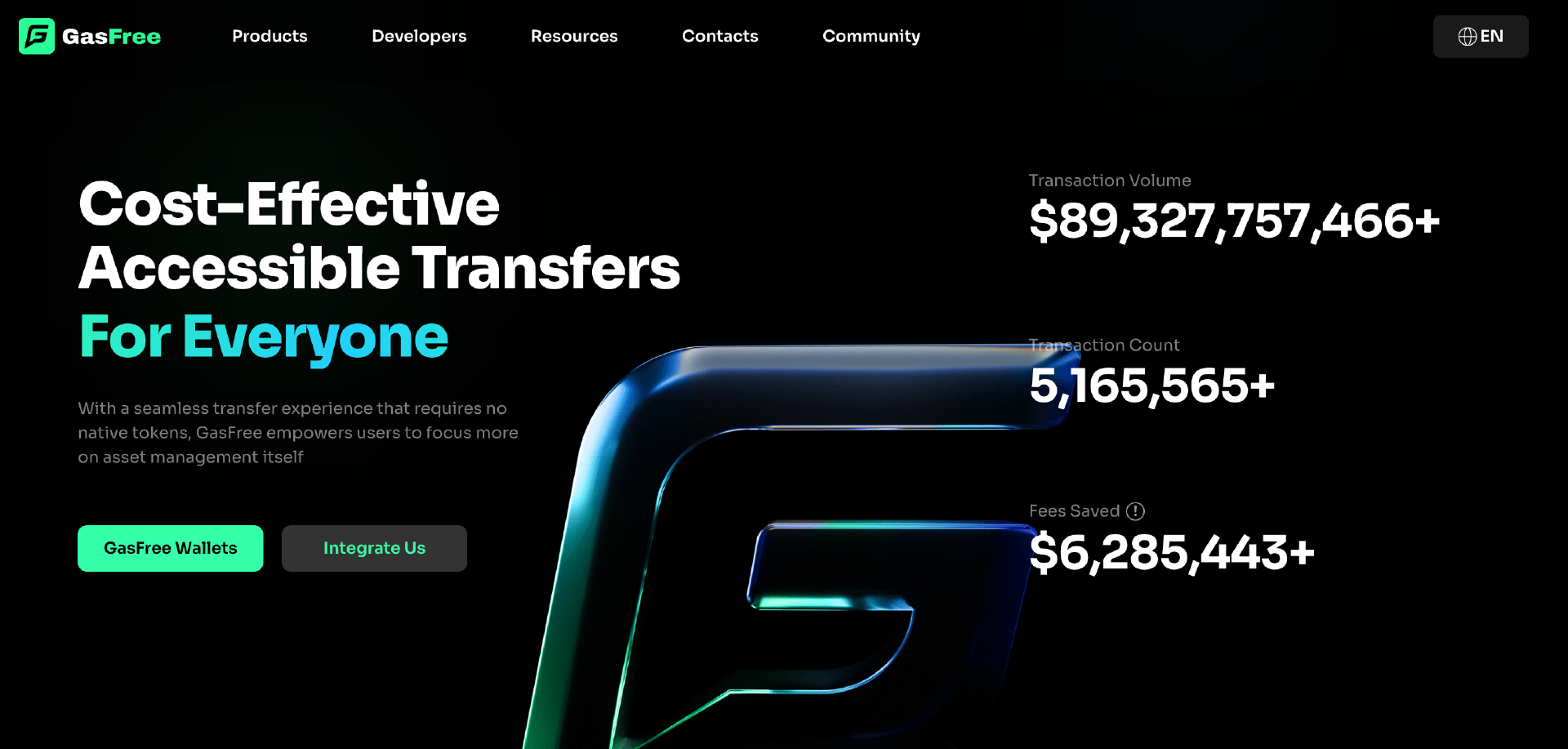
Whether Web3’s ultimate trajectory leads to full “mass adoption” or retains its “geek-tier” financial niche, one thing is certain today: infrastructure like GasFree—which relentlessly elevates UX while steadfastly defending sovereignty—is actively expanding the industry’s boundaries. GasFree proves in practice: asset sovereignty and best-in-class UX aren’t mutually exclusive. Rather than fearing Web3’s assimilation into Web2, we should recognize that infrastructure like GasFree—quietly performing “subtraction” at the base layer—is precisely what gives Web3 the confidence to onboard millions of users at scale.
Join TechFlow official community to stay tuned
Telegram:https://t.me/TechFlowDaily
X (Twitter):https://x.com/TechFlowPost
X (Twitter) EN:https://x.com/BlockFlow_News