May 7 Market Recap: All Four Major Indices Hit Record Highs; One-Page Memo Sends Brent Crude Below $100
TechFlow Selected TechFlow Selected
May 7 Market Recap: All Four Major Indices Hit Record Highs; One-Page Memo Sends Brent Crude Below $100
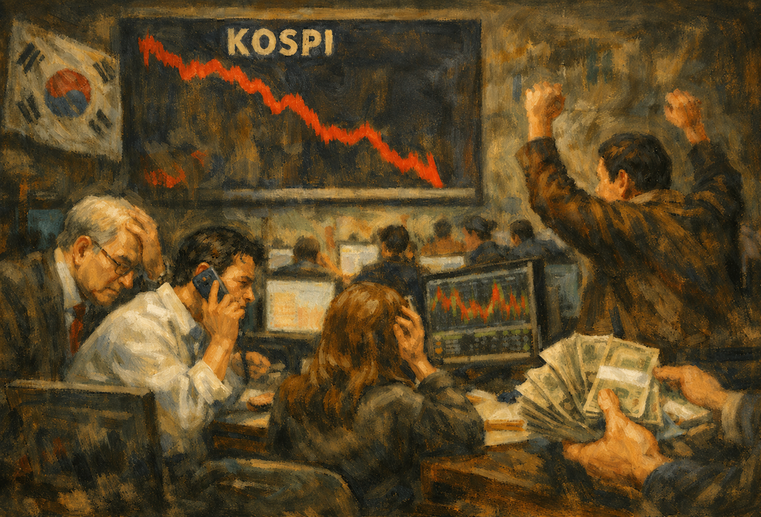
This market is waiting—simultaneously—at all the most critical integer thresholds, for the signature on a single piece of paper.
 Navigating Web3 tides with focused insights
Author: TechFlow
U.S. Equities: On This Day, Everyone Hit the Accelerator in the Same Direction
On Wednesday, something extraordinary happened on Wall Street—so extraordinary it felt like a moment worth capturing on camera: the S&P 500, Nasdaq Composite, Dow Jones Industrial Average (DJIA), and Russell 2000 all closed at record highs on the same day.
The S&P 500 rose 1.46% to close at 7,365.12—a new all-time high. The Nasdaq surged 2.02%, closing at 25,838.94—the first time ever it has closed at this level. The DJIA jumped 612.34 points (+1.24%) to close at 49,910.59, just 90 points shy of the symbolic 50,000 threshold. The Russell 2000 gained 1.52% to 2,888.24, marking a fresh record high for small-cap stocks.
This was a day ignited by two sparks: “the one-page memo” and AMD.
First, the one-page memo.
On Wednesday morning, Axios cited two U.S. officials reporting that the White House believes it is nearing a “one-page memorandum of understanding” with Iran to end the war. The framework reportedly includes suspending uranium enrichment, halting hostile actions, and laying groundwork for more complex nuclear negotiations. Within 30 minutes of the news breaking, Brent crude plunged over 11%, briefly dipping below $100 per barrel—the first time since the war began ten weeks ago that Brent traded under $100. WTI hit an intraday low of $91 before closing at $91.54—a 10.5% decline. Brent closed at $99.12, down 9.8%, fully erasing a week’s worth of war-related premium.
The oil price collapse delivered an adrenaline shot to equities. Inflation expectations cooled instantly, and the 10-year Treasury yield fell roughly 7 basis points to 4.35%. Market bets on a June Federal Reserve rate hike rapidly receded. A sentiment dubbed the “peace dividend” spread across trading desks. Consumer discretionary, industrial, and small-cap stocks—previously weighed down by high energy prices—staged a broad-based catch-up rally; the Russell 2000 even outperformed the Nasdaq that day.
Yet Trump’s afternoon remarks tempered some of that optimism: “This is a ‘maybe’—a huge assumption—that Iran will agree to our terms.” He neither denied negotiations nor confirmed any agreement. It was classic presidential space management—maintaining ambiguity to keep markets oscillating between hope and doubt, maximizing trading intensity.
The energy sector fell over 4%—the only major decliner—and stood out as a jarring red blotch amid an otherwise sea of green on the heat map. Oil companies’ losses that day were, in effect, the market’s advance celebration of war’s end.
Semiconductor Parade: AMD Ignites, SMCI Amplifies, ARM Keeps Rising After Hours
If the “one-page memo” served as the macro trigger, AMD was the micro detonation.
AMD, up 15% after hours the previous evening, continued its ascent Wednesday, closing up 17.77%. CEO Lisa Su appeared on CNBC to explain why the company had sharply raised its Q2 guidance—not because demand for datacenter GPUs accelerated, but because Agentic AI (AI agents) is driving explosive demand for server CPUs. She used the phrase “tremendous demand.” This is a newly pivotal term in the current AI narrative: AI agents consume compute differently than standard LLM inference—they run continuously and execute tasks in parallel, demanding robust CPU performance—not just GPU power. AMD happens to be best positioned in the CPU arena.
Wedbush analysts put it bluntly: “The CPU stole today’s headlines.” It’s the most profound industry signal of this earnings season: AI is no longer Nvidia’s solo narrative—compute demand is broadening across the spectrum.
Supermicro (SMCI) soared 24.5% after reporting better-than-expected results and significantly raising forward guidance—creating a dual-track validation of “software-defined hardware demand” alongside AMD. Nvidia itself rose 5.93%. Intel gained 4.22%, buoyed further by rumors Apple may use its chip manufacturing services; Intel’s share price has surged from $40 to $108 over the past month—the undisputed comeback champion among chip stocks.
Corning (GLW) rose 17%, the most intriguing supporting actor of the day. Nvidia announced a partnership with Corning to jointly build three advanced fiber-optic interconnect manufacturing facilities in North Carolina and Texas—expanding Corning’s U.S.-based fiber interconnect capacity tenfold and creating at least 3,000 new jobs. Physical infrastructure construction for AI datacenters has now reached the fiber-optic layer. Two years ago, Nvidia sold only GPUs; today, it signs long-term factory-building partnerships with glassmakers—a transformation worthy of note.
ARM rose 13.6% during regular trading. After the close, it reported Q4 earnings with both revenue and profit exceeding expectations—sending its stock up another 8% post-market. Its AGI-optimized CPU architecture, purpose-built for datacenter Agentic AI workloads, already counts Meta and OpenAI as confirmed customers. ARM is evolving from a company that licenses chip designs to others into one that builds chips itself—a fundamental expansion of its business model that the market is actively repricing.
Disney (DIS) rose 7.60%, the best-performing component of the DJIA that day.
New CEO Josh D’Amaro’s inaugural earnings report cleared every major hurdle: revenue of $25.17 billion (+7% YoY), beating consensus of $24.85 billion; adjusted EPS of $1.57, above expectations of $1.50 and up 8% YoY. Streaming’s operating margin broke into double digits for the first time—reaching 10.6%—with operating profit surging 88% YoY: the clearest receipt yet showing Disney+ climbing out of its loss-making abyss. Parks and cruise operations also posted record quarterly revenue.
D’Amaro also raised the full-year share buyback target from $7 billion to $8 billion and projected 12% adjusted EPS growth for fiscal 2026 and continued double-digit growth in 2027. The market’s first impression of the new CEO? That 7.6% gain.
Oil & Gold: Brent at $99—What the Loss of the Triple-Digit Threshold Really Means
Brent crude falling below $100 was the most symbolically significant price event of the day.
The number itself remains open to interpretation: Is the drop from $126 to $99 evidence of real negotiation progress—or just another emotionally driven trade reversible within 48 hours? Trump’s subsequent “huge assumption” phrasing, along with Iran’s Foreign Ministry statement that it is “assessing the proposal and responding via Pakistan as intermediary,” confirms no formal agreement exists yet. Twenty-three thousand seafarers remain stranded in the Persian Gulf; the Strait of Hormuz remains closed; and Chevron’s CEO’s warning from last week still echoes: “Even if the strait reopens, supply normalization will take months.”
Yet the gap between $99 Brent and $126 Brent represents $27 in inflationary pressure. That $27 determines whether airline stocks can turn profitable, whether the Fed hikes in June, and whether consumer confidence rebounds before summer. Today, the market chose to believe it.
Gold rallied strongly—up 3.44% to $4,725.70—while silver surged 6.3% to $78.19. At first glance, this contradicts the oil plunge: falling oil typically signals lower inflation expectations, which should weigh on gold. But today’s logic ran in reverse: oil fell because “peace is near”; peace implies the Fed may pivot away from hawkishness, weakening the dollar—and giving gold room to rise. It was a rare, intuitive, non-adversarial market—not one fighting against itself.
Cryptocurrency: $82,320—Bitcoin Approaches That Line
On May 6, Bitcoin touched $82,320 early in the session and traded tightly between $82,000 and $82,500 throughout the day.
This level carries outsized technical significance—the 200-day moving average sits near $82,228. Since Bitcoin’s October 2025 all-time high, it has never successfully closed above this line on a daily basis. A sustained close above it would confirm a technical trend reversal; failure to hold it would mark yet another rejected attempt.
Wednesday’s oil crash reshaped the entire crypto macro landscape: lower inflation expectations → fading Fed hike expectations → weaker dollar → lower discount rates for risk assets. Bitcoin’s position in this chain shifted—it is no longer struggling inside the pressure cooker of “high inflation, high rates,” but standing at the starting line of the “peace dividend.”
Ethereum rose to $2,409 (+1.31%) on the same day. Global crypto market capitalization surged, and the Fear & Greed Index rebounded rapidly from last week’s “fear” zone.
One quietly released signal deserves attention: Anthropic CEO Dario Amodei said in an interview, “If your moat is ‘our software is so complex, others can’t replicate it,’ that moat is disappearing.” His comment targeted the entire SaaS industry—and explained why software stocks broadly sold off following the January launch of Claude’s Cowork platform. The arrival of the AI agent era isn’t just rewriting the semiconductor demand curve—it’s rewriting the valuation logic for the entire software industry. Lisa Su’s “Agentic AI drives CPU demand” and Amodei’s “SaaS moats are vanishing” are two sides of the same coin.
Today’s Summary: All Four Major Indices Hit Records, Oil Breaks Below $100, Bitcoin Nears That Line
May 6 saw markets deliver their strongest collective performance in two months.
U.S. Equities: S&P 500 closed at 7,365.12 (+1.46%), Nasdaq at 25,838.94 (+2.02%), DJIA at 49,910.59 (+1.24%), Russell 2000 at 2,888.24 (+1.52%)—all four indices set new all-time highs simultaneously. AMD rose 17.77%, SMCI gained 24.5%, Nvidia climbed 5.93%, Corning surged 17%, and Disney rose 7.60%. Energy was the sole losing sector, down over 4%. ADP’s April private-sector job growth came in at 109,000—the highest in over a year.
Oil & Gold: Brent closed at $99.12 (-9.8%), WTI at $91.54 (-10.5%)—the first close below $100 since the war began. The catalyst was Axios’s exclusive report on U.S.-Iran progress toward a “one-page memo.” Gold rebounded 3.44% to $4,725.70; silver rose 6.3%. Normal market logic—driven by peace expectations—is reasserting itself.
Cryptocurrency: Bitcoin touched $82,320, trading tightly around its 200-day moving average ($82,228)—its highest price in three months. Ethereum stood at $2,409. Global crypto market cap surged, and the Fear & Greed Index rebounded sharply.
After-Hours ARM Earnings: Revenue and profit exceeded expectations, prompting an additional 8% post-market gain—set to carry over into Thursday’s open.
The market now asks just one question: Will that one-page memo actually be signed?
If the U.S. and Iran formally confirm the framework agreement within the next 48–72 hours, Brent could fall further toward $90—or even $85—U.S. equities may see another catch-up rally, and Bitcoin could close above its 200-day moving average within May. If Trump’s “huge assumption” proves false—if Iran rejects uranium enrichment terms—oil could rebound to $110 within 48 hours, and today’s gains would swiftly reverse as sentiment-driven trades unwind.
At least for today, history records it thus: the DJIA stood 90 points short of 50,000; Brent fell just 99 cents short of holding above $100; and Bitcoin remained $228 short of definitively crossing its 200-day moving average. This market stands simultaneously at all the most critical numerical thresholds—waiting for a single signature on a piece of paper.
Join TechFlow official community to stay tuned
Telegram:https://t.me/TechFlowDaily
X (Twitter):https://x.com/TechFlowPost
X (Twitter) EN:https://x.com/BlockFlow_News
 深潮TechFlow