








"One plate of egg fried rice costs 10 dollars," "40-meter-long queues for stockpiling goods," a direct look at the current situation in Venezuela.
TechFlow Selected TechFlow Selected
"One plate of egg fried rice costs 10 dollars," "40-meter-long queues for stockpiling goods," a direct look at the current situation in Venezuela.
Amidst the smoke of war and panic, the Chinese community in Venezuela, alongside local residents, confronts the harsh reality of their nation being invaded and their president taken captive. Behind a $10 plate of fried rice with eggs lies the epitome of countless individuals struggling to survive amidst turmoil and poverty.
 Navigating Web3 tides with focused insights
At 2 a.m. local time on January 3, in a hotel in Caracas, the capital of Venezuela, Guo Yan, who was on a business trip, was awakened from his sleep by a colleague. "War has broken out!" Those three short words instantly jolted him awake.
He rushed to the window and saw, about three kilometers from the hotel near the airport, flames shooting into the sky and several bright mushroom clouds rising. In the quiet night, apart from the sounds of bombing and air raid sirens, only a few barks of dogs could be heard.
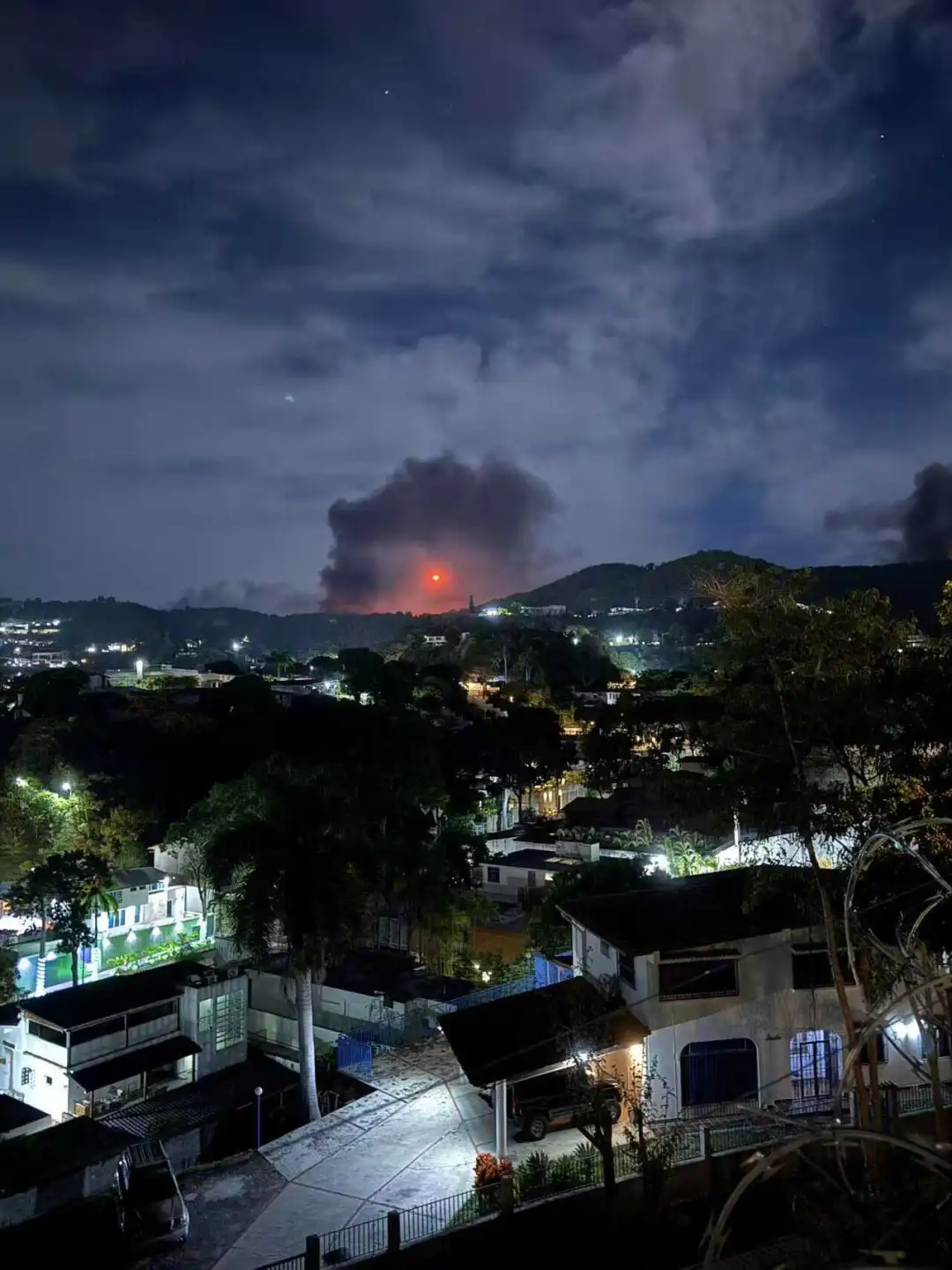
Photo provided by interviewee
When the bombing occurred, even some local military officers were confused and at a loss. Panicked people flooded into the live stream on Venezuelan President Maduro's social media platform but still couldn't obtain any effective information. It wasn't until the president was captured and taken away at an astonishing speed.
This large-scale strike by the United States against Venezuela impacted every corner of local society and profoundly affected compatriots who had crossed oceans to make a living in Venezuela.
Among them, some lived near the bombing sites, were awakened in the middle of the night, sought shelter everywhere, and even hid in subway stations; some frantically hoarded supplies, with local supermarket sales increasing tenfold in a single day, and lines for panic buying stretching 40 meters long; some were eager to return to China but encountered flight bans and cancellations; and there were entrepreneurs who had just arrived, with a batch of televisions shipped from China at high cost over three months, now stuck in warehouses, unsure of what to do next...
01 Awakened by the Sound of Bombing
The bombing occurred during the night when people were most off guard.
Guo Yan, exhausted after a busy day, had already gone to bed. His colleague Xu Lu was still handling work calls. The initial loud explosions didn't catch his attention; he thought it was just thunder. But a friend who lived only one kilometer from the air force base called, his voice urgent: "Something big has happened! What do we do?" This shattered the original tranquility.
Xu Lu quickly woke Guo Yan, and the two immediately called several familiar local military officers. Some didn't answer, and some weren't even clear about what had happened. "The attack was too sudden," they said.
The bombing started around 2 a.m., with successive explosions lasting about an hour, stopping after 3 a.m., but the roar of helicopters continued incessantly. They waited for over an hour more, calling various parties to report they were safe. It wasn't until 4 a.m., with no new explosions, that they prepared to rest.
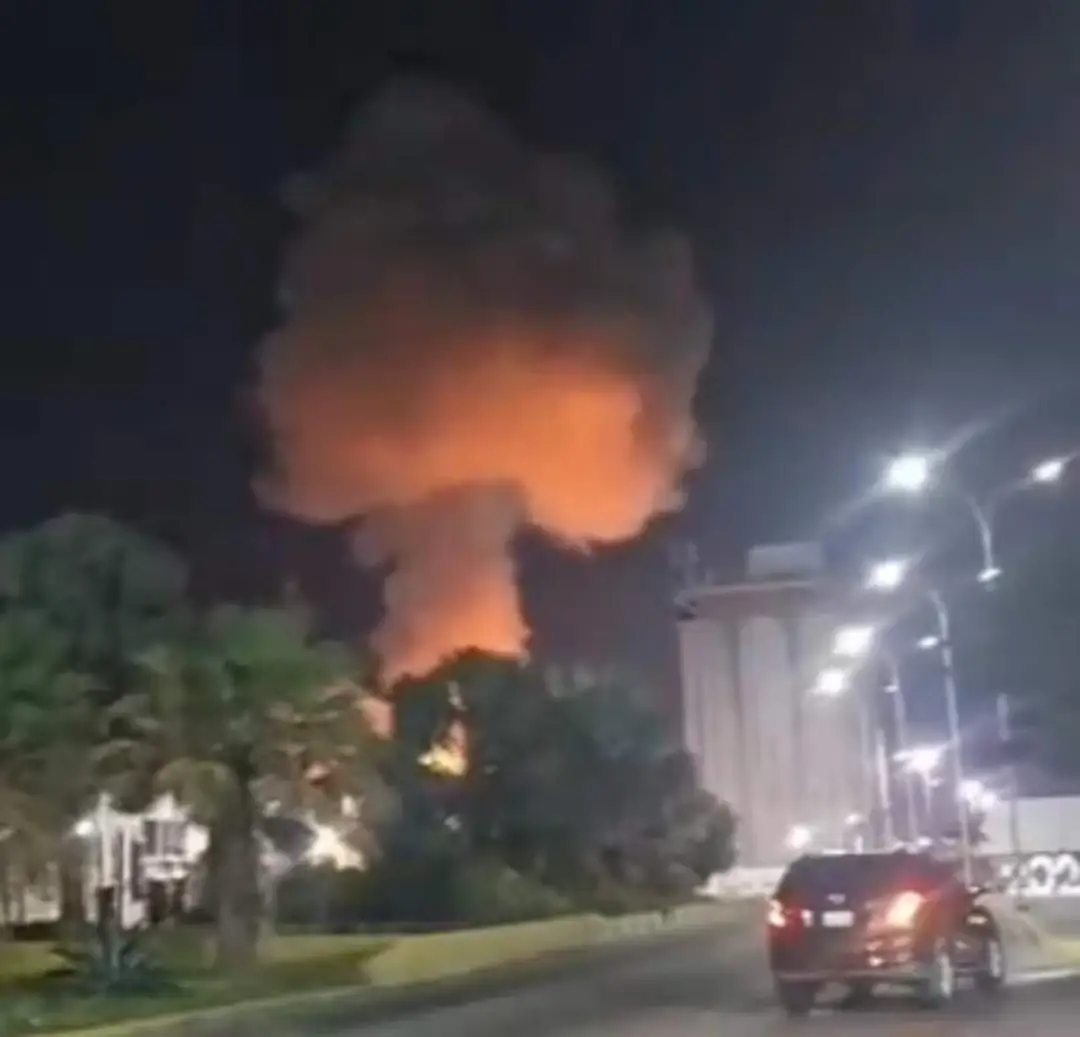
Photo provided by interviewee
According to the Venezuelan government announcement, U.S. military airstrike targets included Caracas as well as civilian and military targets in the states of Miranda, Aragua, and La Guaira.
Guo Yan, with military experience, was very familiar with military operations. He noted that although the airstrike scene was terrifying, the bombing range seemed very small, appearing highly precise, with few nearby civilian buildings affected.
Shortly after the bombing began, he recognized the model of aircraft flying overhead, judging that they were not bombers. "I had a feeling they were probably transporting troops to capture someone," he said.
To get the latest news, the two opened President Maduro's social media account. However, they didn't see Maduro himself in the live stream; someone was only reading historical documents related to Venezuela. This made them think the capture operation had failed. It wasn't until 8 a.m., upon seeing the message released by Trump, that they finally confirmed the president had been taken away.
"That aircraft came in, and within minutes, they took him away. It was too fast, almost without resistance," Guo Yan said, expressing his surprise and confusion at the speed.
According to U.S. media reports, the Trump administration captured Maduro using intelligence provided by informants within the Venezuelan government, with drone swarms monitoring Maduro. Although the helicopters came under fire, Maduro and his wife ultimately gave up resistance.
Long before the U.S. began its military deployment, Guo Yan sensed that war was approaching. He believed that if Maduro had resisted fiercely, the capture operation might not have succeeded; local forces at least had the ability to hide him or buy time. "But in that case, civilian casualties would have been high. The U.S. military might have launched another military operation, causing even greater losses to the country and its people," he said.
In the hours following the airstrike, the local Chinese community was filled with unease. Xu Lu recalled, "No one knew what would happen next; after all, many were experiencing war for the first time."
The friend who lived near the air force base, too close to the bombing site to dare go home, went straight to the streets, heading to crowded places like subway stations. As for Guo and Xu, after seeking help everywhere, the advice they received was: it's best to stay indoors and not move around easily.
02 Hoarding! Supermarket Lines Stretch Over 40 Meters
The day after the airstrike passed without the expected storm. Most people stayed behind closed doors, but at the same time, outside major supermarkets in Venezuela, crowds gathered, with private cars and electric motorcycles lining the roads. They were eager to stock up on supplies. Some had to queue for at least half an hour; others piled seven or eight bulging shopping bags at their feet.
Xiao Lin works at a supermarket run by relatives in Venezuela, located in Bolívar state. Although about 600 kilometers from the turbulent Caracas, locals here had already begun frantically hoarding. On the afternoon of January 3 local time, the sales at Xiao Lin's supermarket increased tenfold compared to usual days. In the 600-square-meter supermarket, the hoarding line stretched over 40 meters long. At the checkout, the line stretched from one end to the other, turning a corner and extending another ten-plus meters.
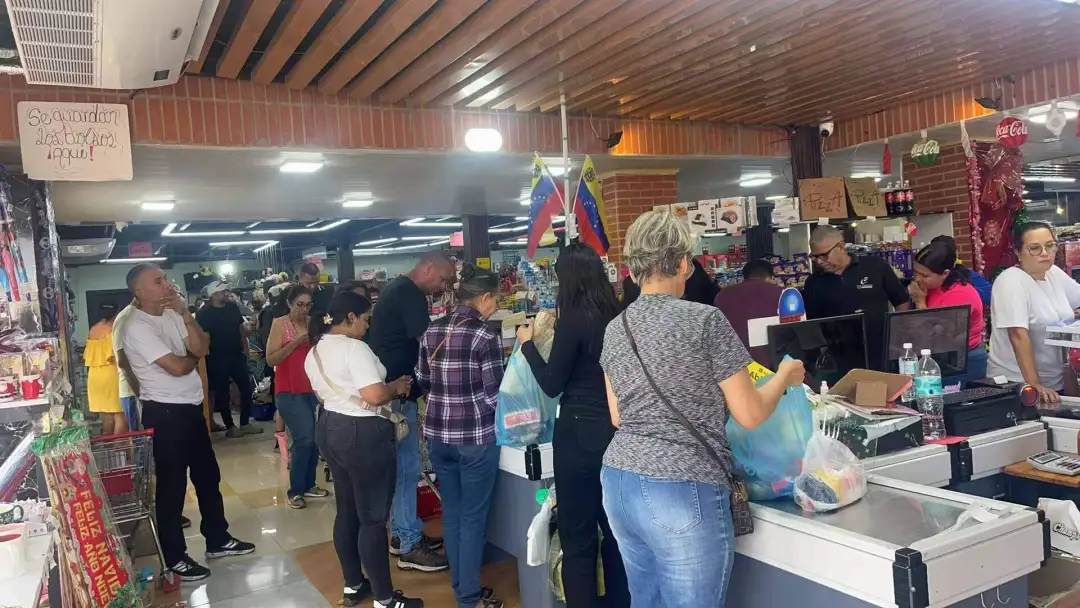
Photo provided by interviewee; local supermarket queue situation
Most hoarding customers came by car for easier transport, mainly buying food and daily necessities like rice, flour, oil, meat, eggs, coffee, bread, and toilet paper. Many, worried about potential power outages, bought candles. Xiao Lin estimated that each customer spent an average of $50, with one customer spending up to $850 on supplies.
The quantity of goods the supermarket requested from upstream suppliers also doubled compared to usual. However, Xiao Lin isn't currently worried about significant price hikes for supplies. They are from Enping, Guangdong, and have always sourced wholesale goods from fellow Enping people, so their channels are relatively stable.
Jia Ping, who works in management in the western region hundreds of kilometers from the capital Caracas, told Phoenix News' "Storm Eye" that the Chinese Embassy in Venezuela had actually started contingency planning very early. In early December, the embassy held a meeting with the Chinese Chamber of Commerce, attended by many heads of Chinese-funded enterprises. He specifically mentioned that overseas Chinese from Enping, Guangdong, are numerous in Venezuela, mainly engaged in businesses like supermarkets and small commodities, distributed throughout the country, not as concentrated as Chinese-funded enterprises. The chamber of commerce also targeted them with relevant information.
"Therefore, everyone had some psychological preparation," Jia Ping said. They started preparing reserves like dry rations and food very early. In his view, this incident leans more towards "regime change," with a lower likelihood of large-scale use of force against civilians or civil war, so attitudes are relatively calm. "Today, where I am, there are fewer pedestrians on the road than on a normal workday. Some communities have closed their outer gates as a precaution, but I haven't seen police cars with sirens running everywhere. Overall, it's still very calm," he said.
Lao Huang is a community leader among overseas Chinese in Venezuela (referring to influential figures within the local overseas Chinese community), living in Zulia state, about 600 kilometers from Caracas. Currently, there is no difference from usual here; the vast majority of shops are open for business. However, from what he understands, the "Venezuela Capital Chinese Association" New Market group announced through its secretariat that the market would be closed for one day on January 4.
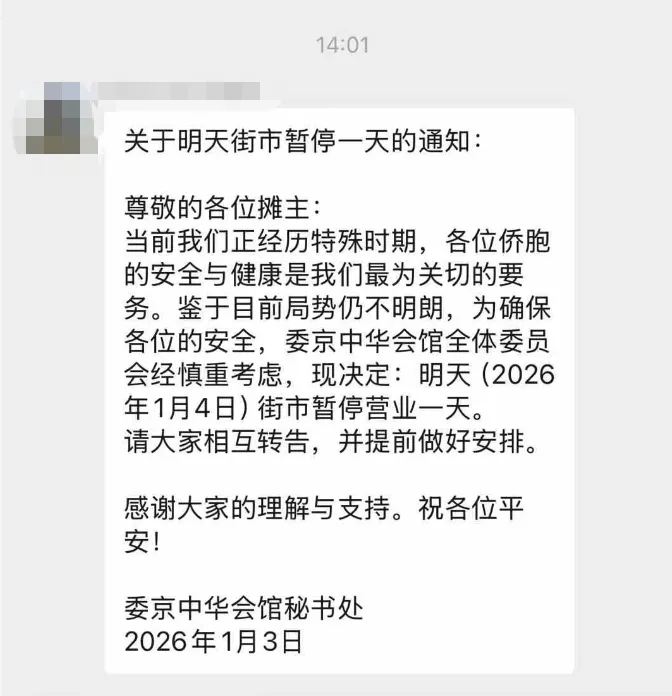
Provided by interviewee
There is some debate in some groups about whether businesses should continue operating. "It's not okay not to open; now the whole nation is scrambling to buy food," someone said.
Currently, Jia Ping is most worried about fuel supply. Normally, refueling requires long queues; under the current situation, the problem might become more prominent.
His company held a meeting on January 3 to set a strategy: "Reduce personnel, decrease consumption, and stockpile more fuel through various channels."
"Many people originally planned to return to China before the New Year, but recently air tickets have been expensive and hard to buy. After the airstrike, the U.S. Federal Aviation Administration issued a flight ban. All international flights are currently grounded, with an unknown resumption time," Jia Ping said. The company is considering letting non-essential staff return to China as a priority once flights resume, aiming to reduce personnel density and lessen pressure for possible evacuation.
"After all, no one can say for sure whether this situation will end in a week or drag on for a long time," Jia Ping said.
03 Ordinary People at a Crossroads
Venezuela is located in northern South America, with proven oil reserves of approximately 303 billion barrels, accounting for about one-fifth of the world's crude oil reserves, ranking first globally. Oil is its economic lifeline and also the root of its turmoil. External pressure and internal political struggles intertwine, keeping the country in persistent instability.
A Zhi, who sells electrical appliances like televisions and air fryers in Venezuela, arrived in early July 2025. At that time, 1 US dollar could exchange for 117 bolívars. Now, the official exchange rate is 1 dollar to 304 bolívars, while on the local black market (the underground economy against the backdrop of local economic imbalance), 1 dollar can exchange for over 500 bolívars, showing the extent of Venezuela's currency depreciation in just half a year.
"A simple egg fried rice costs $10," A Zhi explained. Many people he knows earn a monthly salary of $200-$300, "that's just over 2,000 RMB. Ordinary people simply can't afford to consume. Some eat only one meal a day, usually just bread." Here, he also lives frugally.
He lamented that even during the peak of Venezuela's oil economy, it was constructing globally attention-grabbing skyscrapers and attempting to advance large-scale infrastructure like high-speed rail as early as the beginning of the 21st century. But later, due to a single economic structure and over-reliance on oil, it fell into困境 after oil prices plummeted. Even now, people's living standards remain low.
In Jia Ping's view, local people seem to have become accustomed to regime changes. He first came to Venezuela in 2013, experiencing multiple political upheavals after President Chávez's death. He feels the public's emotions regarding the president's capture are complex: "Venezuelans either support the government or the opposition; this division objectively exists."
Xu Lu has lived locally for over a decade. After the airstrike, he特意 went out to look around and didn't see the online rumors of celebratory scenes; the city was quiet. "Your own country is invaded, your president is captured, and you go celebrate? That's not realistic; it might just be a局部 phenomenon," he said.
How the local situation will change in the future, no one knows. What is实实在在 is the impact on ordinary people's lives now.
A Zhi has recently been running markets in eastern Venezuelan cities. What worries him most is his inventory.
Televisions and other appliances shipped from China over three months are still囤积 in a warehouse in Caracas. The shipping costs were expensive, the costs are high, the currency has depreciated, and now with the unstable situation, what should be done with these goods? "Everyone thinks overseas business is高大上; those who truly make money have suffered a lot," he sighed.
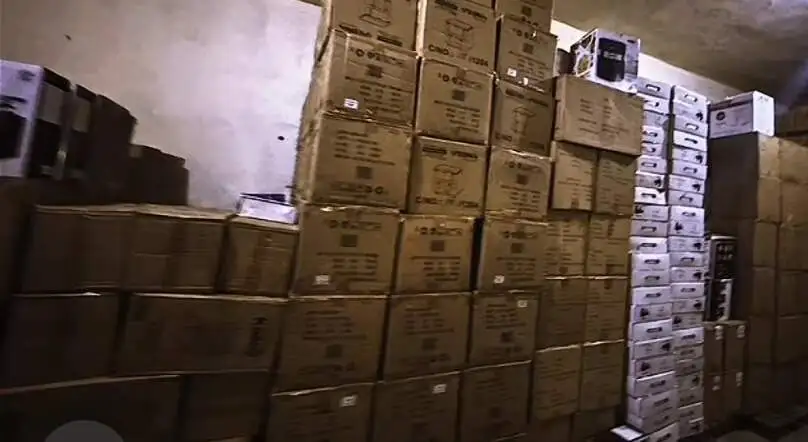
Goods in A Zhi's warehouse; video screenshot
Just two days earlier, on New Year's Eve, many streets and neighborhoods in Venezuela were still decorated with lanterns and colorful lights, ablaze with brilliance. Chinese people and locals looked up, raised their phones, counted down together in different languages, and stepped into the New Year as fireworks shot into the sky.
They didn't know what changes their ordinary lives would迎来.
(At the request of the interviewees, all names in the article are pseudonyms.)
Join TechFlow official community to stay tuned
Telegram:https://t.me/TechFlowDaily
X (Twitter):https://x.com/TechFlowPost
X (Twitter) EN:https://x.com/BlockFlow_News


