








Gold prices have surged again—can ordinary people still get on board?
TechFlow Selected TechFlow Selected
Gold prices have surged again—can ordinary people still get on board?
High-quality assets with stable appreciation are becoming scarce.
 Navigating Web3 tides with focused insights
Author: Bourbon
"The era of making money by blindly buying anything is truly over." Topics at friends' gatherings have quietly shifted from previous years' discussions about buying property and stocks to "where can we still invest a bit of money."
In the second quarter of 2025, household deposits surged past one trillion yuan again. In stark contrast, Yu’e Bao's seven-day annualized yield dropped below 2%, and most bank wealth management products fell below 3%. Stock markets fluctuated sharply, with the "Mao Index" and "Ning Combo" taking turns to retreat, giving many investors a rollercoaster experience.
An increasingly clear consensus is emerging: high-quality assets offering stable appreciation are becoming scarce.
Meanwhile, on social media, the topic #YoungPeopleStartHoardingGoldBars has surpassed ten billion views. On Xiaohongshu, ordinary users’ posts sharing their experiences of "saving gold beans" have received tens of thousands of likes.
In recent years, gold has strongly returned to the spotlight. In live-streaming rooms, hosts from major jewelry brands rapidly pitch their products as more and more consumers treat purchasing gold as a painless form of "savings-type consumption"—achieving both the pleasure of spending and asset preservation, while also being able to liquidate when needed.
On the investment front, a surge in gold prices is unfolding. Yesterday, international gold prices reached $4,400 per ounce, climbing steadily from just over $2,600 per ounce at the beginning of 2025. Domestic prices have also risen from 600 yuan per gram to break through the 900–1,000 yuan range, an increase of over 60%. Notably, the market set new highs more than 30 times in 2024, and in 2025 alone, it has broken records over 50 times. As prices rise, gold continues to dominate news headlines and social media trends.
"When domestic gold was 300 yuan per gram, I thought it was too expensive and didn’t buy. At 600 yuan, I was sure it had peaked. Now it’s at 900 yuan—what could be worse?" joked Zhang Chen, a 30-year-old internet product manager, during a gathering with friends.
Now, Zhang Chen is seriously pondering one question: "How exactly should one invest in gold?"
01 In an Uncertain World, Why Do We Still Trust Gold?
Gold prices often correlate directly with how tumultuous global news appears. Recently, for example, prospects for peace talks between Russia and Ukraine remain unclear, while the U.S. is once again threatening Venezuela. According to data from the World Gold Council, central banks worldwide continued buying gold throughout 2025. To borrow a line from a comedy sketch: "The world is chaotic, full of scheming; looking at global affairs, (gold) stands out as the only bright spot."
Beneath this lies a timeless consensus: in uncertain times, gold remains the most reliable form of wealth. As the old Chinese saying goes: "In prosperous times, antiques; in turbulent times, gold." When the world faces challenges and new uncertainties, assets like antiques and jade that depend on specific cultural contexts and social stability tend to fall in value, while gold’s safe-haven attributes shine once again.
Looking back at human civilization, gold has played a persistent, universal, and multifaceted role. With its dual stability in physical form and value recognition, coupled with strong liquidity and ease of conversion into cash, gold has long been recognized globally as a "preservation miracle." The ancient Egyptians called gold "touchable sunlight," and from golden masks in Mesopotamian civilizations to the gold standard under the Bretton Woods system, gold has always served as the ultimate store of value and anchor of trust.
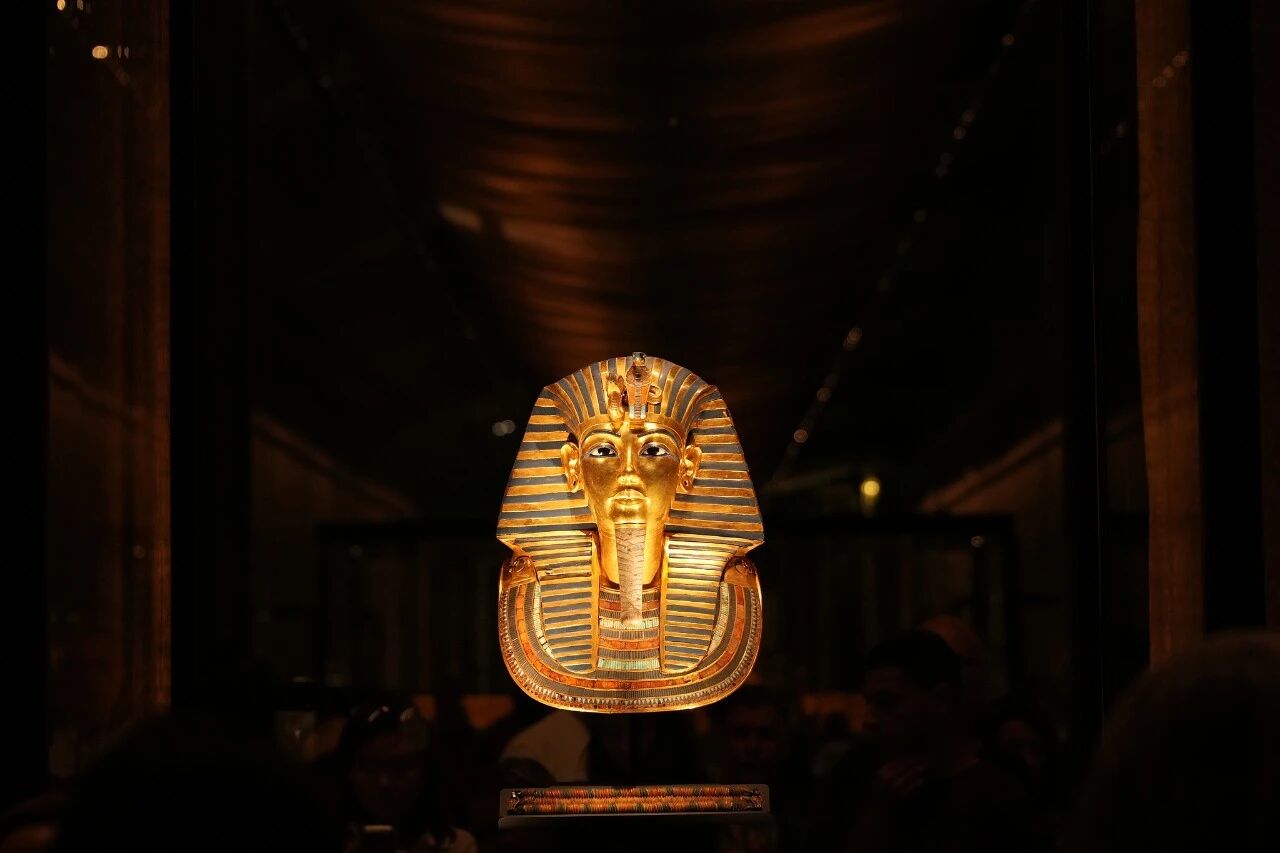
Ancient Egypt, Tutankhamun's Golden Mask
Investments like stocks, real estate, and financial products often rise or fall together. But gold acts like a 'lone wolf,' frequently moving independently of them.
History provides powerful evidence: during the market turmoil triggered by the pandemic in 2020, U.S. stocks experienced multiple circuit breakers, crude oil futures plunged into negative territory, and the global economy hit pause. Gold stood out, rising from around $1,500 at the start of the year to a record high above $2,000 by August—a standout performer among mainstream assets. A more recent example is 2022, when traditional stock-bond portfolios suffered double losses amid decades-high global inflation and geopolitical conflicts. The S&P 500 dropped nearly 20%, while gold held steady, demonstrating relative resilience.
As a monetary asset independent of any government or institutional credit, gold naturally becomes the ultimate safe-haven choice due to its globally recognized independence, liquidity, and value storage function. This demand surges during periods of heightened uncertainty, driving up prices and helping offset losses in other parts of an investment portfolio.
Beyond risk hedging and serving as a safe haven, gold also possesses monetary qualities—it has been the ultimate "anchor" behind money for thousands of years. This imprint runs deep in people’s minds. Though it pays no interest, it consistently appreciates over time.
Remember, printing presses never stop, and the purchasing power of cash quietly erodes. Factories can endlessly produce phones and clothes, but underground gold reserves are finite and cannot be rapidly expanded. Therefore, gold is one of the key tools enabling ordinary people to preserve wealth against inflation and protect purchasing power. It safeguards not just numbers on paper, but what those numbers can actually buy.

Gold’s reserves and extraction rates mean its supply cannot grow quickly
Over the past 20 years, gold priced in RMB has delivered an annualized return exceeding 10%, outperforming not only the Shanghai Composite Index but also returns from stable investments like 10-year government bonds.
Today, it's not just individuals buying gold—major investment institutions and central banks are accumulating large quantities as well. Underlying this trend is the broader shift toward deglobalization and de-dollarization, positioning gold as the most solid foundation for wealth accumulation.
02 From Ballast to Engine: The "Golden" Ratio in Asset Allocation
In 2025, as central banks continue increasing gold reserves and institutional investors reevaluate their portfolios, gold’s role is undergoing a quiet transformation: evolving from an ancient store of value into a strategic cornerstone in modern investment portfolios.
For individuals, families, and even institutions, gold is gradually shifting from a tactical short-term tool to a long-term strategic asset—a ballast. If your investment portfolio were a football team, gold would be the defensive midfielder: anchoring the defense, neutralizing threats (systemic market risks), and serving as the first passer in transition, linking the entire team and delivering steady returns. Its presence makes the formation more stable and the strategy more composed, better equipped to handle unexpected situations.
Whether you're adding accumulated gold savings, allocating part of a fund dollar-cost averaging plan to gold-themed products, or habitually buying one or two small gold bars each year, you’re already practicing the idea of integrating gold into a diversified portfolio—achieving risk hedging, asset preservation, and long-term appreciation. Today, there's a trendy term for this long-term approach to gold allocation—" Gold+."
Integrating gold into a diversified portfolio enables risk hedging and asset preservation, aiming for long-term appreciation
Li Wei, a partner at a Shanghai-based private equity fund, is a devoted practitioner of this philosophy. After all, “the market taught me a lesson.”
Li Wei vividly remembers the market volatility in 2022: "My portfolio didn’t include gold at the time. When A-shares plunged deeply, even bonds failed to provide adequate protection, and the overall drawdown kept me awake at night." After that experience, she studied the data and found that gold’s correlation with core domestic assets like the CSI 300 has remained close to zero over the long term.
As a typical non-credit asset, gold’s price movements don’t rely on corporate earnings or interest rates, making it less correlated with other investments. We often say not to put all eggs in one basket—but gold isn’t just in a different basket; it’s not even on the same table. This means that when stocks and bonds fail, gold often offers a rare source of uncorrelated returns, serving as a true ballast. Since then, Li Wei has treated gold as a fixed, long-term allocation.
"The question isn't whether to buy gold, but how to add it." Today, Li Wei shows clients screenshots of her portfolio: 60% bond products, 30% equity funds, and 10% gold ETFs.
"Many people treat gold as a tool—buying high in panic and selling hastily during volatility," Li Wei observes. "But in reality, gold is more like the daily vitamin you take. It won’t cure acute illness, but over time, it strengthens your body (portfolio resilience), giving you greater confidence to face life’s ups and downs (market fluctuations)."
Gold investments have low correlation with other assets, relatively stable value, and inherent risk-resistance characteristics
If you imagine your household investments as a simple piggy bank split evenly between stocks and bonds, adding just 10% gold over the past two decades would have softened the blow during downturns and delivered steadier long-term returns. Over the past 20 years, RMB-denominated gold prices have yielded average annual gains exceeding 10%—a substantial return. But what’s even more valuable is that when everyone else panics, gold often holds firm, sometimes even creeping upward, acting like a calming pill.
A simple comparison illustrates this: if in December 2015 you invested 10,000 yuan in an ETF tracking the Shanghai A-share market, after a decade of ups and downs, the current value would be approximately 8,500 yuan. But if you had allocated 10% of that amount to a gold ETF and 90% to the Shanghai Composite ETF, the total portfolio value today would be around 12,000 yuan.
So how should ordinary people invest in gold? You understand the principle, but when it comes to action, you hesitate. "I know I should add some gold, but how much is right? Is it too late now that prices are so high? What if I make the wrong move?" It’s like knowing you need balanced nutrition but feeling overwhelmed by endless ingredients and complex recipes, instantly killing your motivation to cook.
People like Li Wei, who have investment experience and clear strategies, are few. Most lack understanding of gold investment options and timing, making them hesitant to dive in directly.
Is there a one-stop "nutritional package" for gold investing? Today’s gold investment landscape is highly diverse. You can store physical gold bars in a home safe, opt for modern forms like bank accumulation gold—allowing regular or sporadic purchases of gold rights in grams or smaller units, with low thresholds and strong saving-investment synergy. Or, via securities, banking, or online platforms, you can trade gold ETFs that track domestic prices—offering stock-like convenience, excellent liquidity, and efficient exposure to gold price movements. Additionally, various structured gold-themed funds and gold-linked wealth management products are available.
Yet for most investors seeking simplicity and efficiency, researching each product and determining optimal allocations and timing remains a time-consuming, expert-level task. What ordinary people may need isn’t more choices, but a professionally crafted, optimized solution.
03 Professionalism Replaces Solo Efforts: A New Way to Invest in Gold
Hence, "Gold+" investment portfolio products have emerged—like carefully calibrated investment meal plans, packaging professional asset allocation logic into accessible financial products for everyday investors.
Wang Tao is a classic case. "I’m a complete novice—no time to study markets, and afraid of making mistakes," says Wang Tao, a busy tech company employee. In early 2024, he purchased a multi-asset wealth management product with a 10% gold allocation, recommended by his bank’s financial advisor.
The "Gold+" product Wang Tao bought is issued by professional financial institutions and includes a multi-asset portfolio with over 5% allocated to gold, either within performance benchmarks or asset allocation strategies. It removes the burden of answering the difficult question—"Should I buy gold now?"—by letting the product manager systematically combine gold with other assets (such as stocks and bonds) based on predefined objectives and strategies. This transforms complex portfolio engineering into a single-click solution, making strategic gold allocation as simple and direct as choosing a ready-made financial plan.
"I don’t need to monitor gold prices constantly or understand the exact mix of stocks and bonds," Wang Tao says. "The professionals have done the work for me. I just need to know my portfolio includes this stabilizer called gold. Over the past year, my overall return has exceeded 10%, and I’ve seen some 'Gold+' products achieve over 40% returns in two years."
Wang Tao’s experience shows that "Gold+" brings not only returns but also a shift in mindset. "I’ve realized that watching gold’s ups and downs over one or two years doesn’t matter much. Only by holding on long-term does its role as a strategic anchor truly emerge." Today, Wang Tao no longer obsesses over short-term swings but focuses instead on the long-term logic of asset allocation.

Long-term holding better reveals the value of gold investment
Of course, believing in gold’s value doesn’t mean putting all your money into it. Going "all in" on any single asset inevitably brings significant volatility risk and psychological stress—essentially putting all your eggs back into one basket.
Many interested investors get stuck on practical issues: unsure of the right allocation percentage, unable to time entry points, and struggling to manage emotional reactions to price swings. "Gold+" products largely address these concerns. They’re like a personal trainer for asset allocation—standardizing complex decisions through built-in strategies (such as fixed gold allocation ratios, professional macroeconomic analysis, and structures encouraging long-term holding). Moreover, individual investors often lack discipline, panicking at minor dips and rushing to sell on small gains. In the movie *Goodbye Mr. Loser*, Dachun buys property based on advice but sells too early—an exaggerated portrayal of poor investment discipline. "Gold+" products help institutionalize emotional volatility, allowing ordinary people to execute long-term gold allocation plans with relative stability.
According to the World Gold Council, from 2021 to mid-2025, the number of domestic products explicitly using the "Gold+" strategy grew from just one to 24. As of June 2025, 45% of China’s 515 FOF products hold gold. "Gold+" is no longer a niche experiment—it’s becoming a mainstream consensus in the asset management industry.
In short, these products perform a clever transformation: integrating professional asset allocation knowledge, macroeconomic judgment, and disciplined behavior into a clear product structure. They turn gold’s strategic "ballast" value—from abstract concepts and complex data—into a concrete, actionable, and holdable solution within investors’ accounts.
The value of gold investing lies not only in stability but also in its variety—everyone can find a method suited to their needs. In today’s world, each of us might consider how to capture the "dividend of the times" through gold. Among the many gold investment options, at least in terms of ease of use, "Gold+" is undoubtedly one of the most user-friendly products for ordinary people.
True wealth management isn’t about chasing shortcuts to overnight riches, but about building a resilient, long-term mechanism capable of weathering economic cycles.
Join TechFlow official community to stay tuned
Telegram:https://t.me/TechFlowDaily
X (Twitter):https://x.com/TechFlowPost
X (Twitter) EN:https://x.com/BlockFlow_News


