








Perplexity CEO's Survival Rules: How to Break Through Amid Encirclement by AI Giants?
TechFlow Selected TechFlow Selected
Perplexity CEO's Survival Rules: How to Break Through Amid Encirclement by AI Giants?
Your only mode is speed. You have to innovate faster than everyone else. It's like running a marathon at an extremely high pace.
 Navigating Web3 tides with focused insights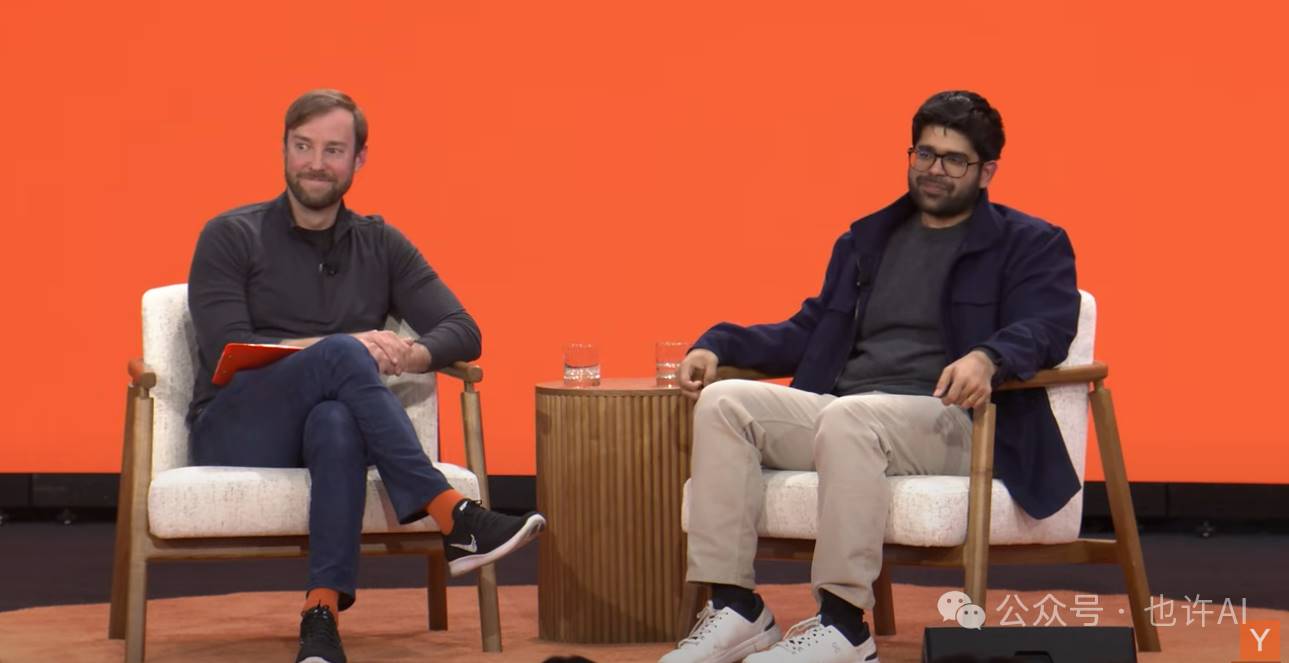
In 2025, building AI applications has become easier than ever—yet surviving as a startup is harder than ever.
It's not because of technical barriers. It’s because giants like OpenAI and Google are using capital and traffic to crush every emerging innovator. When ChatGPT can generate code with one click and Gemini auto-completes business plans, what chance do startups have?
Recently at a Y Combinator founder session, Perplexity CEO Aravind Srinivas pulled back the curtain in an unusually candid talk—revealing how an AI startup can survive and grow between Google and OpenAI.
This 40-minute high-density conversation isn’t motivational fluff. It’s a survival manual for AI startups:
- Speed is life: When giants copy your idea, your product iteration must outpace their decision-making
- Precision targeting: Build a "cognitive moat" in niches where giants can’t fully commit
- Embrace flaws: Turn every bug into an opportunity to co-create with users
This article breaks down how Perplexity broke through the giant blockade in just three years, distilling three ironclad rules for startup success in the AI era: single-point focus × extreme speed × user co-creation.
01 Find the battlefield where giants “can’t go all-in”
"Google has the world’s best engineers—but they still can’t build great AI search," Aravind said bluntly on stage.
As the audience gasped at this provocation, he followed up with a sharp insight: A giant’s greatest strength is often its biggest weakness.
The 2023 Google Bard demo failure, which wiped 6% off Alphabet’s market cap, has become a textbook case of the AI era.
Aravind offered a fresh take: "It’s like asking an Olympic gymnast to compete in weightlifting. Google’s ad machine generates $200 billion annually—and that means:
1. They can’t directly integrate AI answers into core search (it would break the ad ecosystem)
2. They can’t afford public mistakes (stock price sensitivity)
3. They won’t rebuild their business model around AI (too high opportunity cost)"
This “dancing in chains” dilemma gave Perplexity its precise opening:
"We focus exclusively on what Google cannot do—deliver ad-free, accurate answers with clear sources."
A detail from the live demo was particularly convincing: When searching “scenic hotels near Golden Gate Bridge in San Francisco,” Google prioritized paid booking platform ads, while Perplexity listed qualifying hotels with real TripAdvisor ratings and direct booking links.
"This is what search should be," remarked a serial entrepreneur in the audience. "Google knows the right answer—but their business model won’t let them show it."
02 When AI writes code, what is real defensibility?
"Today, we fix bugs faster than we used to build new features."
Aravind’s development workflow stunned traditional developers:
▪ Product managers snap UI issues with their phone and import them into Cursor AI
▪ AI automatically generates SwiftUI code suggestions
▪ Engineers review and deploy hotfixes immediately
Example: In March, users reported being unable to save long conversation histories. A traditional company might need:
1 day to reproduce the issue
3 days to discuss solutions
1 week for development and testing
Perplexity’s timeline:
10:00 AM: User email lands in CEO’s inbox
10:15 AM: AI generates 3 solution options
11:30 AM: Solution selected and coded
2:00 PM: Update rolled out to 20% of users
5:00 PM: Full release based on feedback
"This isn’t magic—it’s cognitive reengineering," Aravind explained. "We stopped chasing ‘perfect first versions.’ Rapid iteration beats perfection. Fixing 20 bugs a day matters more than shipping one flawless update per week."
The compounding effects of this speed are staggering:
- 3x higher user retention (response time measured in hours)
- 5x engineer productivity (AI handles 70% of repetitive coding)
- Faster iteration than Google’s feature update cycles
"Google I/O launches one ‘new AI search mode’ per year. We ship major updates every two weeks," Aravind said, showing a timeline comparison that drew knowing laughter from the room.
03 The browser: A forced D-Day landing
"If we only stayed in search, ChatGPT would eventually consume us."
When Aravind announced going all-in on a browser, even YC partners looked surprised.
This seemingly risky move was driven by cold survival math:
The countdown to traditional search’s demise
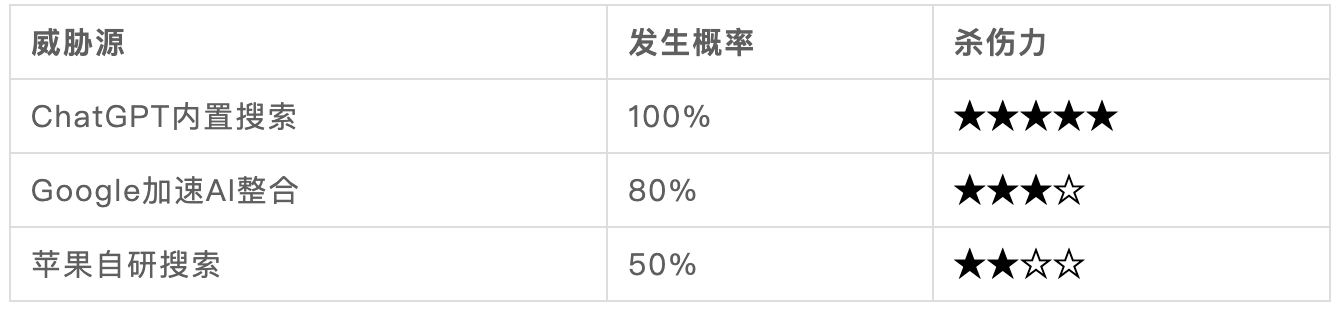
"The browser is our D-Day," Aravind said, using a military metaphor for this desperate leap. "When all coastlines are guarded, you must create your own beachhead."
Cognitive OS vs chatbox
Perplexity Browser’s killer use cases were eye-opening:
🔺 Use Case 1: Auto price comparison
"Find the cheapest San Francisco–London flights in the past six months, excluding red-eye flights" → Automatically scans 10+ sites and generates a pricing report
🔺 Use Case 2: Research assistant
"Compile recent AI drug discovery funding cases from the last three years" → Parallel-scans Crunchbase, academic papers, and earnings call transcripts
🔺 Use Case 3: Personal concierge
"Using my calendar and email data, find the three best times next week to work out" → Automatically books gym slots
"This isn’t just a tool—it’s an extension of the neocortex," Aravind demonstrated, showing the browser running 12 asynchronous tasks simultaneously—including monitoring competitor product updates, auto-renewing cloud services, and tracking package deliveries—all via natural language commands, like background processes but fully conversational.
04 The CEO’s new role: Chief Bug Hunter
"This morning I personally fixed three bugs. Probably the worst example of CEO time management."
Aravind’s self-deprecating joke resonated deeply with founders.
In this age of AI transformation, the leader’s role is subtly shifting:
Traditional CEO
- Strategy planning
- Fundraising pitches
- Team building
AI-era CEO
- Product sensitivity radar: Can smell bad code
- User feedback decoder: Extracts signal from complaints
- Defect miner: Turns every bug into an improvement catalyst
The "Kitchen Theory" of Management
Aravind shared a striking team culture:
"I treat the company like a restaurant kitchen. All engineers rotate through customer support. When you see a user miss a flight due to a search error, that pain hits harder than any KPI."
This “immersive management” delivered astonishing results:
- Support response time dropped from 6 hours to 23 minutes
- Engineers organically launched weekly “bug marathons,” fixing 100+ edge cases
- 60% of product improvements came directly from user emails
"Google will never achieve this," whispered a former Google engineer in the audience. "Their CEO will never see real user pain."
05 The small company’s overtaking lane
"AI hasn’t changed the nature of business—it’s just reduced innovation costs from millions of dollars to the price of a lunch."
—Aravind Srinivas, closing line of speech
The most powerful moment? A side-by-side chart Aravind displayed:
An asymmetric war
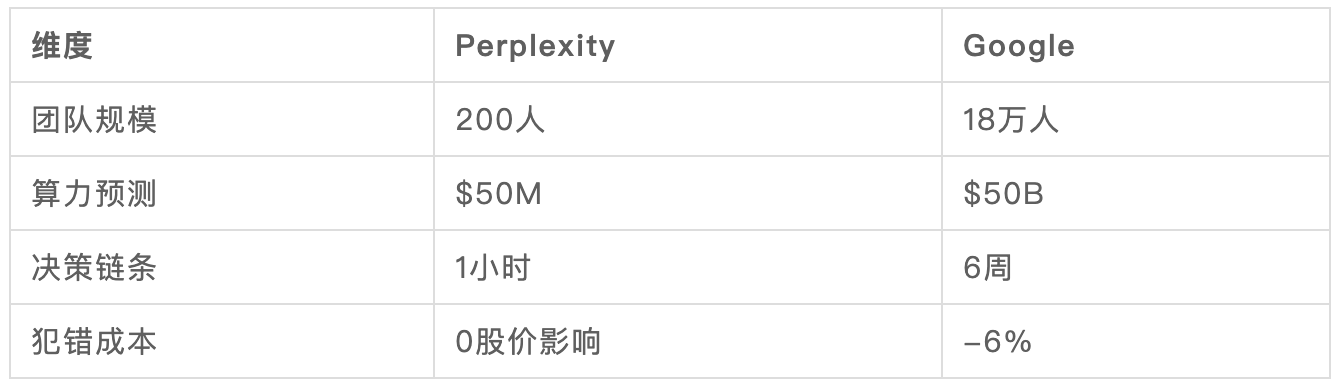
"This is the real startup advantage," Aravind concluded firmly. "When giants fight with aircraft carriers, you can land behind their blind spots with a speedboat."
As attendees left, each received a special “gift”—a card listing every known public bug in Perplexity. "Come challenge our weaknesses," the subtle, zen-like gesture may well be the sexiest startup manifesto of the AI era.
Join TechFlow official community to stay tuned
Telegram:https://t.me/TechFlowDaily
X (Twitter):https://x.com/TechFlowPost
X (Twitter) EN:https://x.com/BlockFlow_News


