Digital Gold Amidst the Smoke of War: Decoding Bitcoin's Immunity Genes Through a Decade of Data
TechFlow Selected TechFlow Selected
Digital Gold Amidst the Smoke of War: Decoding Bitcoin's Immunity Genes Through a Decade of Data
Data from the past decade shows that Bitcoin has demonstrated significant price elasticity during geopolitical conflicts, but its safe-haven属性 has not yet been fully confirmed.
 Navigating Web3 tides with focused insights
Author: White55, Mars Finance
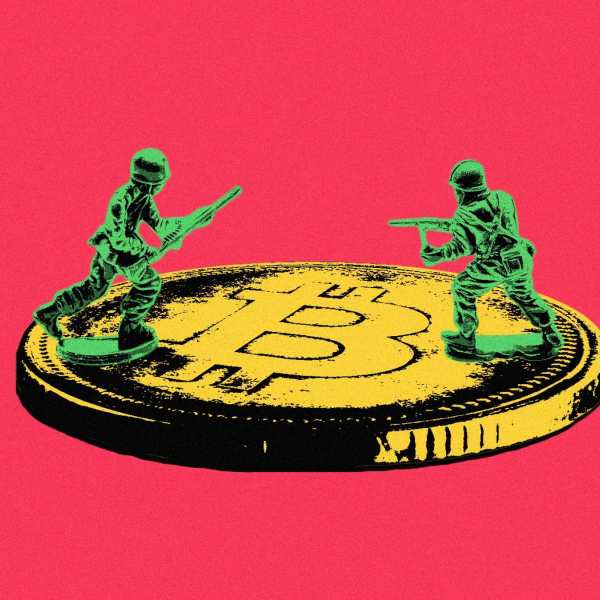
Financial market data from the past decade reveals a striking phenomenon: Bitcoin has consistently demonstrated remarkable resilience during wars and armed conflicts.
As tensions escalate recently between Israel and Iran in the Middle East, Bitcoin’s market price has once again remained stable, continuing this unique characteristic. Historical analysis of past conflicts shows that multiple factors have collectively shaped this trait, with the global adoption of cryptocurrency and increasing institutional capital participation playing pivotal roles.
Market observers share a consensus on the initial price reaction following the outbreak of conflict. André Dragosch, Research Head at ETC Group (an ETP platform under Bitwise), noted that in the short term after a geopolitical crisis, Bitcoin prices often face downward pressure. Although BTC's overall volatility has declined in recent years, it is still categorized as a high-risk asset, making panic-driven sell-offs highly probable amid sudden shocks. However, Mithil Thakore, Co-Founder and CEO of Velar (a Bitcoin L2 liquidity protocol), explained to Cointelegraph the inverse logic chain: "From a long-term perspective, geopolitical conflicts boost Bitcoin's value through three transmission mechanisms—fiscal expansion, monetary policy turning accommodative, and supply chain disruptions coupled with commodity price volatility—all of which drive up global inflation expectations, thus creating a favorable environment for Bitcoin appreciation."
Historical data confirms Bitcoin’s exceptional resistance to downturns during geopolitical crises. However, it must be clarified that price stability does not equate to an established safe-haven status. Bitcoin’s market response exhibits complex, multi-factor coupling, where institutional involvement depth and regional adoption levels may serve as critical variables. The following section presents empirical analysis through typical conflict cases over the past decade: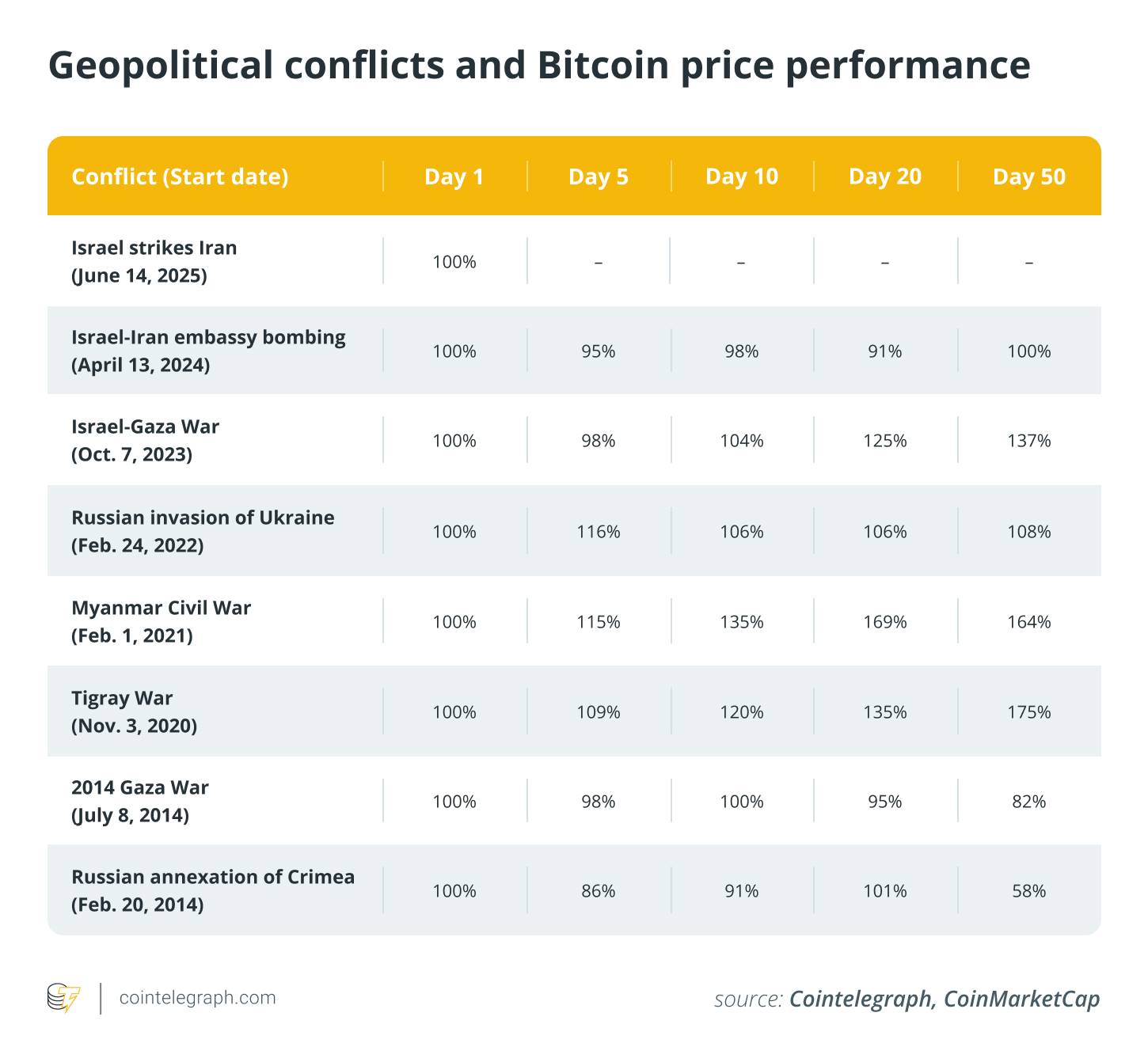 Bitcoin prices show elasticity during conflicts but may also depend on adoption or institutional participation.
2025 Israel-Iran Full-Scale Conflict (Erupted June 13)
In the early hours of June 13, Israeli forces conducted precision strikes on over thirty strategic targets within Iran, marking the largest military operation since the Iran-Iraq War of the 1980s. In the days that followed, these two long-standing adversaries engaged in sustained strategic missile exchanges, further escalating tensions. Despite risks of uncontrolled escalation—especially amid potential U.S. intervention—financial markets exhibited unexpectedly calm reactions. The Bitcoin market mirrored this trend, showing an upward trajectory immediately after the conflict began.
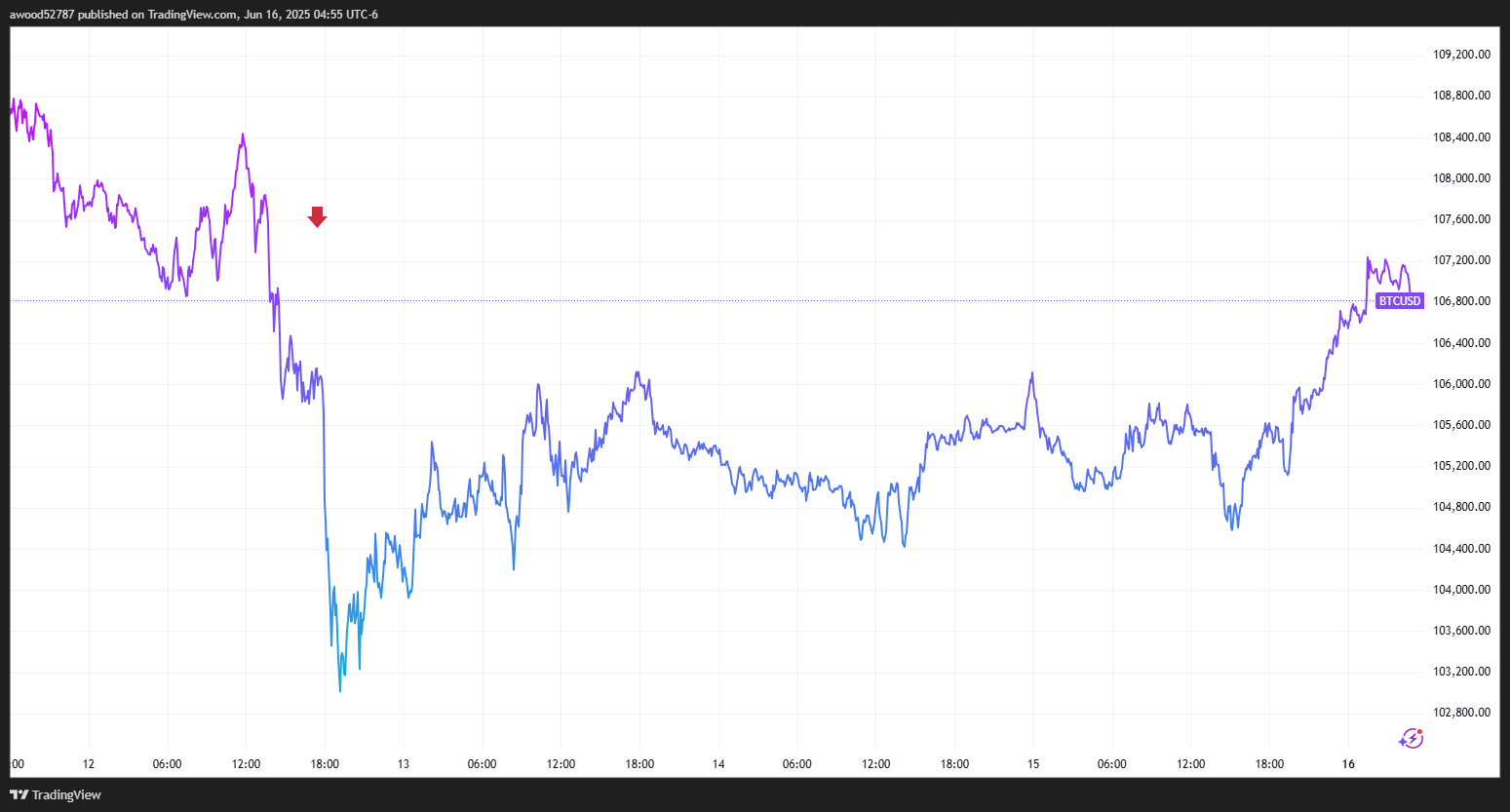
Bitcoin price rose immediately after Israel launched missile attacks on Iran. (Red arrow marks the start date of the conflict.) Source: TradingView
An initial dip occurred across crypto markets following the explosions but prices quickly rebounded to baseline levels. Prominent analyst Za emphasized on social media: "Current market sentiment indicates that Bitcoin investors are significantly less concerned about the Israel-Iran military confrontation than traditional asset holders." Symbolically, Michael Saylor, one of Bitcoin’s most ardent advocates, displayed strategic composure during this period. His digital asset holding company, Strategy, purchased 10,001 Bitcoins for $1 billion on June 16—just days after its third Bitcoin-backed preferred stock offering, STRD, successfully listed on Nasdaq (trading commenced June 11)—highlighting institutional confidence in the long-term value of cryptocurrencies.
2024 Israel-Iran Embassy Crisis (Triggered April 1)
On April 1, 2024, Israel carried out a targeted bombing on the Iranian embassy in Damascus, Syria, killing several individuals including senior military commanders. In strong retaliation, Iran’s Revolutionary Guard seized the Israeli-linked merchant vessel "MSC Series" on April 13 and launched a large-scale missile counterattack.
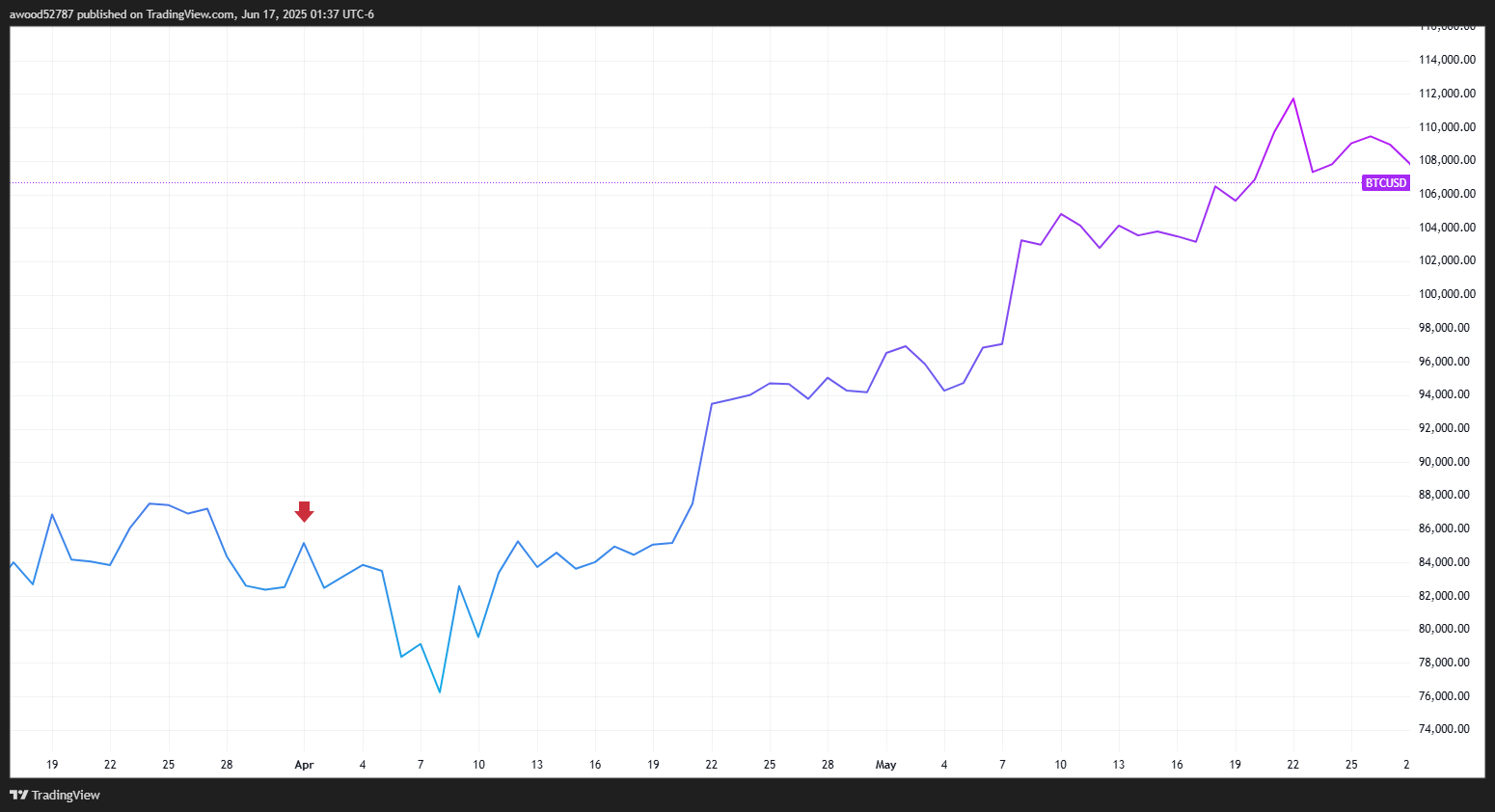 After Israel bombed the Iranian embassy, Bitcoin prices initially fluctuated sharply before recovering. (Red arrow marks the start date of the conflict.) Source: TradingView
Both key events triggered short-term turbulence in the Bitcoin market, particularly on April 13 when the retaliatory military action began, causing a single-day drop exceeding 8%. Notably, market self-correcting mechanisms activated swiftly afterward. As conflict intensity stabilized, Bitcoin not only recovered losses but gradually entered a new upward cycle, demonstrating its capacity for rapid recovery amid unexpected crises.
2023 Israel-Hamas Gaza War (Erupted October 7)
On October 7, 2023, Hamas militants in Gaza launched a surprise attack on Israeli territory, resulting in over a thousand civilian casualties and triggering an ongoing humanitarian crisis. In the immediate aftermath, Tel Aviv’s stock exchange plunged dramatically, while defense giant Lockheed Martin saw its shares surge—highlighting stark divergence among traditional assets.
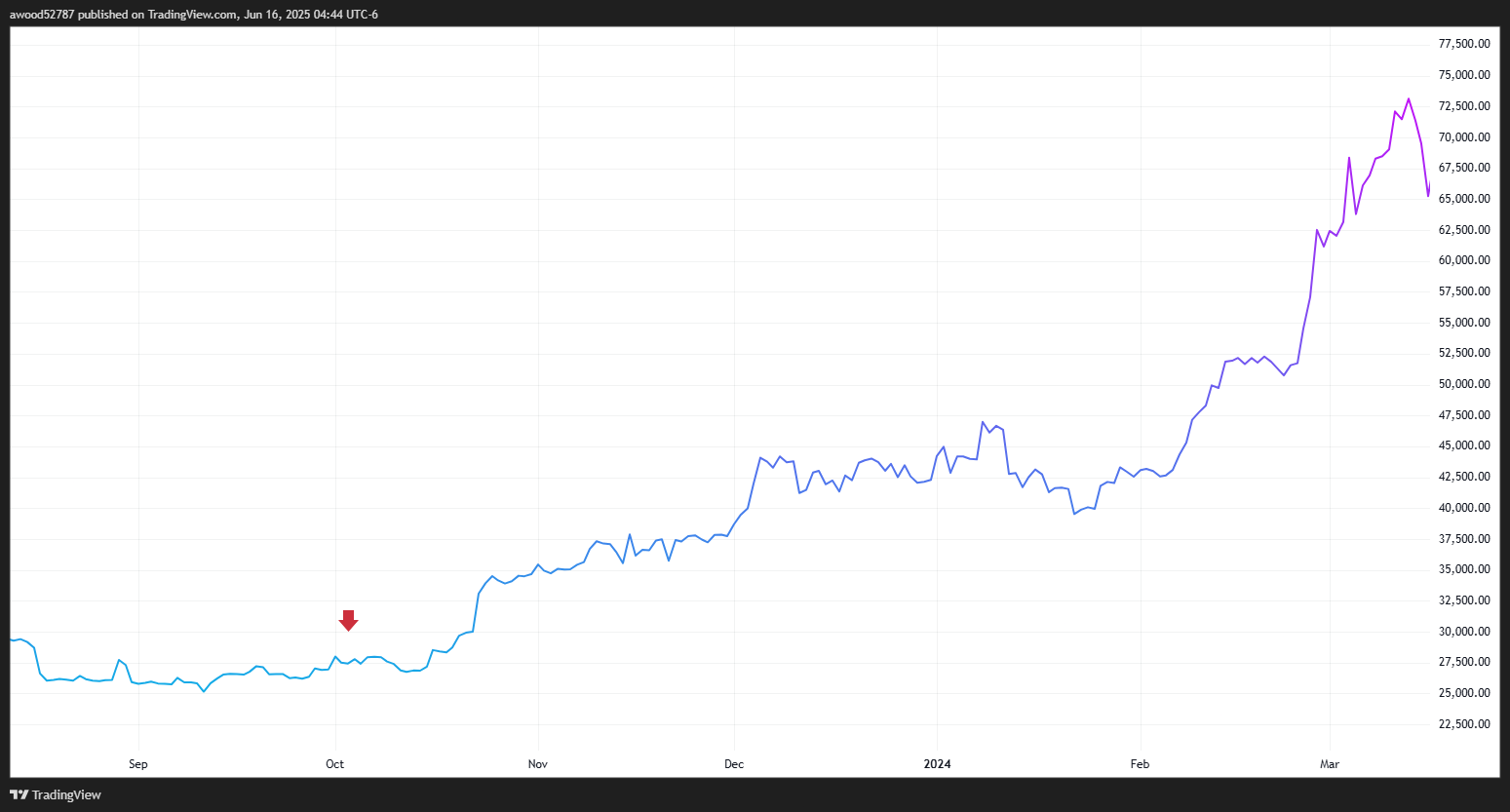 Bitcoin prices soared following the outbreak of the Gaza war. (Red arrow marks the start date of the conflict.) Source: TradingView
During this crisis, Bitcoin demonstrated remarkable independence, appreciating far beyond baseline levels within 50 days of the conflict’s onset. Notably, allegations that Hamas used cryptocurrencies for fundraising caused regulatory tremors. The U.S. Treasury promptly sanctioned Gaza-based crypto payment platforms suspected of links, prompting global regulators to tighten compliance requirements. However, blockchain forensics authority Elliptic released a special report clarifying: "Chain data currently available does not support claims of systematic cryptocurrency financing by Hamas."
2022 Russian Full-Scale Invasion of Ukraine (February 24)
Following eight years of low-intensity conflict in Donbas, Russian forces launched a full-scale military offensive on February 24, 2022. Global financial markets were instantly shrouded in uncertainty, with Eastern European economies suffering severe damage. In contrast, Bitcoin prices surged 16% within five days of the invasion, standing in sharp contrast to traditional assets.
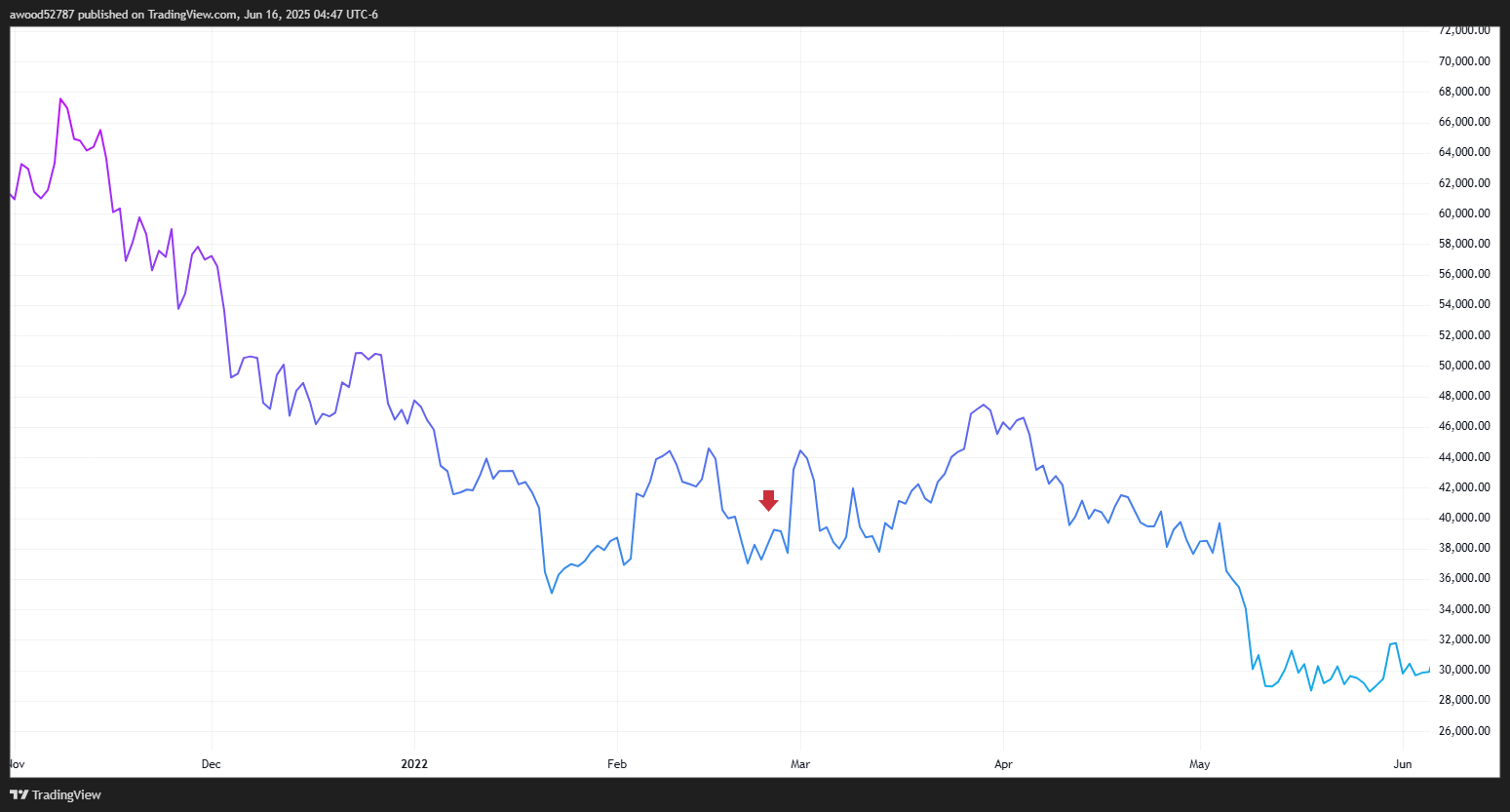 Bitcoin prices spiked after Russia invaded Ukraine. (Red arrow marks the start date of the conflict.) Source: TradingView
Field investigations revealed a unique phenomenon in conflict zones: Ukrainian and Russian crypto exchanges experienced significant premium trading as citizens turned to digital assets to circumvent local currency controls. More strikingly, within the first week of the war, the Ukrainian government received over $70 million worth of cryptocurrency donations—primarily in Ethereum. It is worth noting that Bitcoin’s year-end collapse was mainly driven by endogenous market events such as the Terra stablecoin system crash, rather than prolonged effects from the war in Ukraine.
Divergent Performance During Internal Conflicts in Emerging Markets
While cryptocurrencies have shown safe-haven traits in certain regional conflicts, their price responses to internal armed unrest in Asia, Africa, and Latin America have been muted. In November 2020, Ethiopia’s Tigray region erupted into full-scale civil war between federal forces and the Tigray People’s Liberation Front—a conflict dubbed “the world’s forgotten war” by Near East Welfare Association—resulting in hundreds of thousands dead and over a million displaced.
At that time, Bitcoin’s price movement showed clear decoupling from the war’s progression. Dominant market drivers included global inflation fears sparked by the pandemic and transformative asset allocation moves by publicly traded firms like Block (formerly Square) and Strategy (formerly MicroStrategy). A similar pattern emerged following Myanmar’s military coup on February 1, 2021, which overthrew the democratically elected government and triggered ongoing civil war. Just a month later, Bitcoin reached its all-time high of $69,000, underscoring its low correlation with peripheral geopolitical risks.
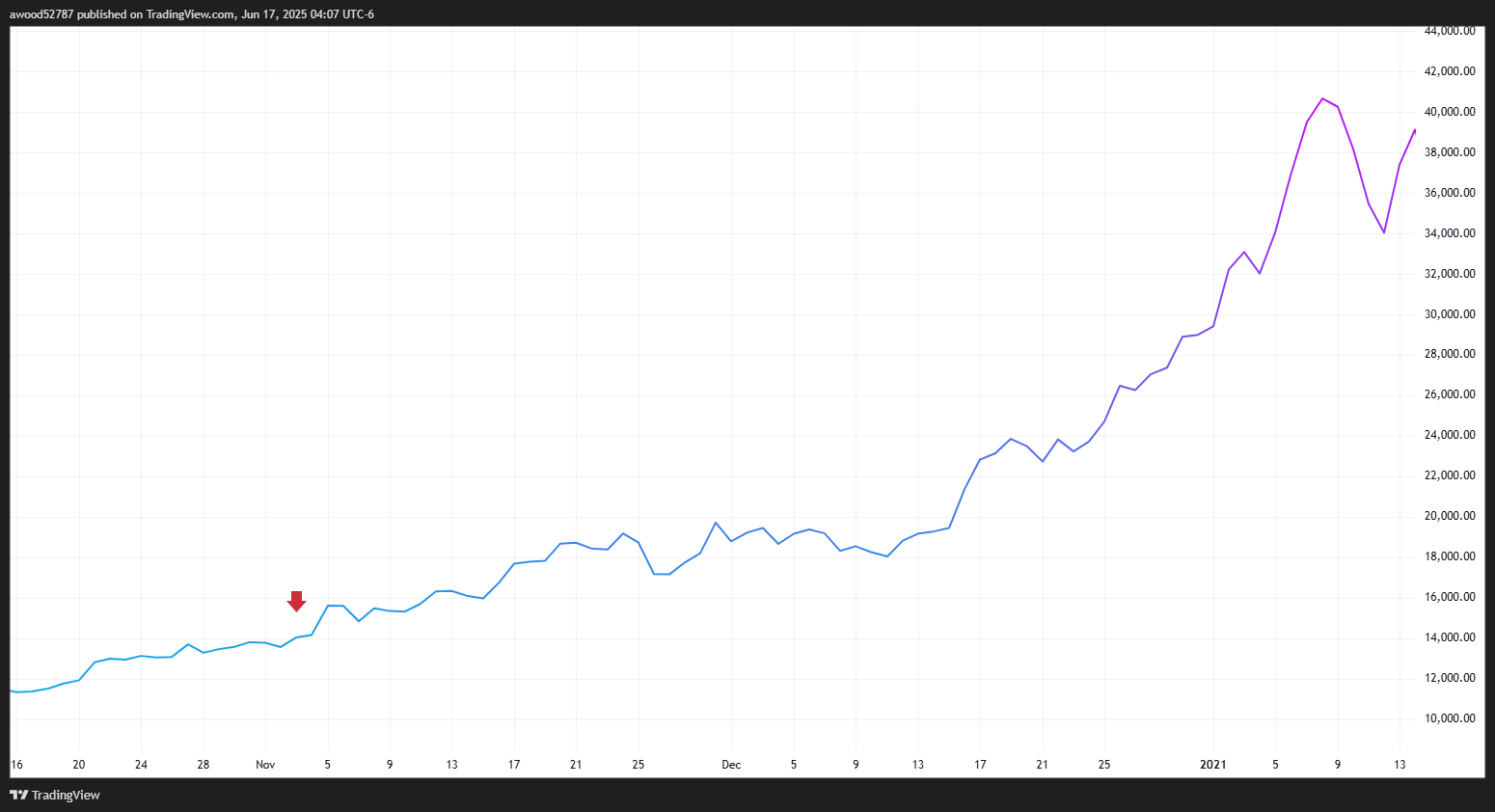 Bitcoin’s 2020–2021 bull run coincided with the Tigray civil war. (Red arrow marks the start date of the conflict.) Source: TradingView
Structural Shift in Geographic Proximity Effects
The core variable explaining Bitcoin’s sensitivity to armed conflict lies in “market depth interconnectivity.” Economists observe a proximity effect in traditional markets: the closer a conflict is geographically to financial centers, the more intense the market reaction. The Chainalysis 2024 Global Cryptocurrency Adoption Index reveals a paradoxical reality: developing economies—led by India, Nigeria, and Indonesia—lead in retail adoption, measured by centralized exchange transaction volume, on-chain retail value transfers, and DeFi protocol activity.
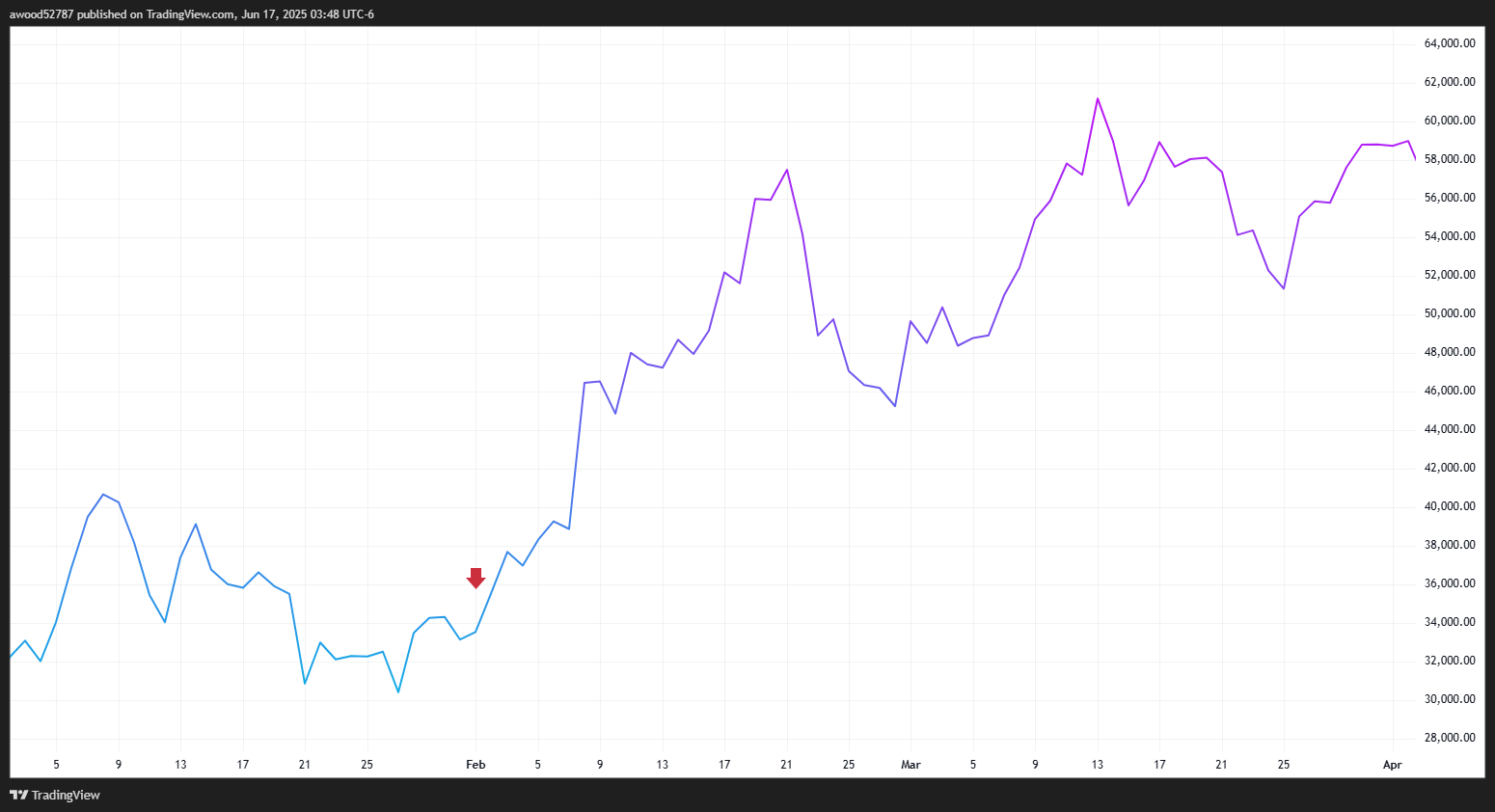 Bitcoin prices were near their 2021 all-time highs when the Myanmar civil war broke out. Source: TradingView
In stark contrast, there has been a fundamental transformation in Bitcoin’s ownership structure. By the end of 2024, institutional investors held over 1% of circulating supply via financial products like ETFs—surpassing even the legendary Satoshi Nakamoto wallet. Top holders now include BlackRock and other ETF issuers, regulated exchanges like Coinbase, and even seized assets held by the U.S. government. This qualitative shift in ownership has tied Bitcoin to the traditional financial system more tightly than ever before.
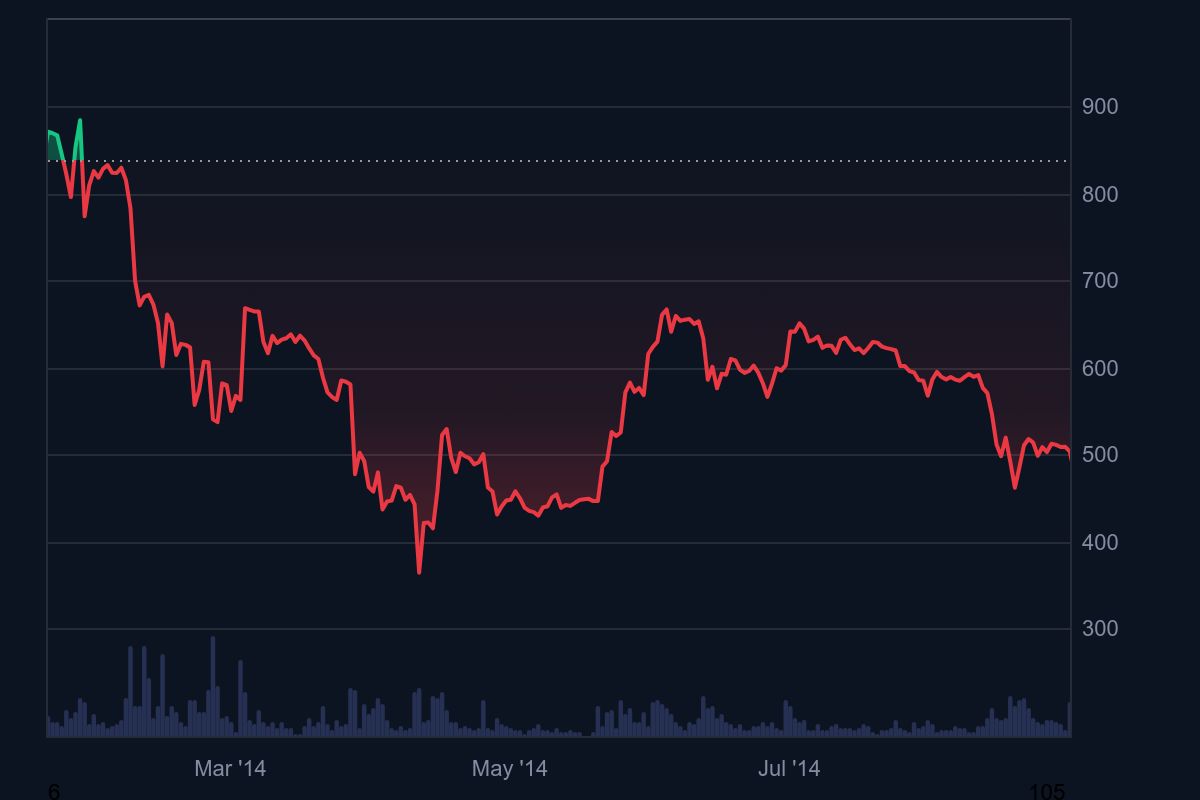 Bitcoin price after the outbreak of war in Donbas. Source: CoinMarketCap
Looking back to the “wild west” era of cryptocurrency: in 2013, Bitcoin experienced its first epic bull run, soaring from $13 at the beginning of the year to over $1,000 by year-end. During the same period, the Donbas War (including Crimea’s annexation) and the 2014 Gaza conflict unfolded. While regional stock markets swung wildly, Bitcoin—which was still a niche product—received little attention from mainstream markets. Exchanges like Coinbase and Kraken were in their infancy, miners could use consumer-grade GPUs, institutional investors were almost entirely absent, and public perception largely viewed Bitcoin as a tool for darknet transactions.
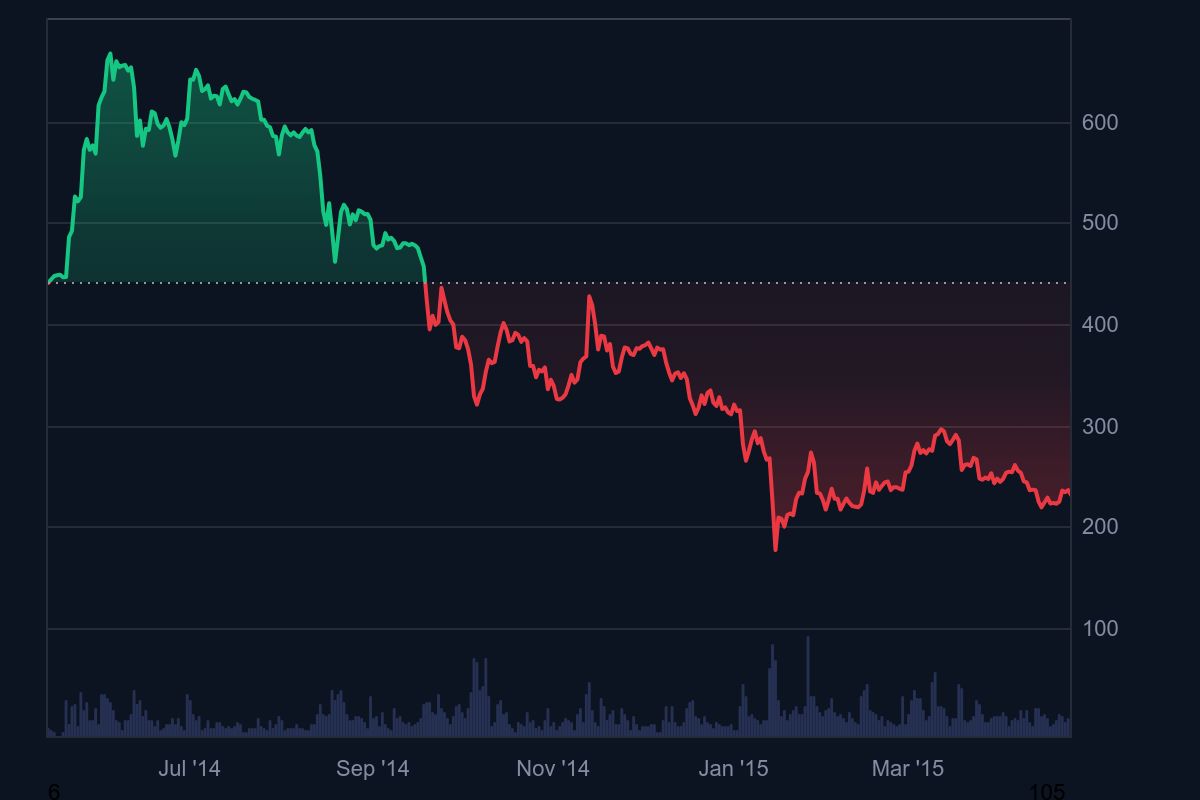 Bitcoin price after the 2014 Gaza conflict. Source: CoinMarketCap
Paradigm Shift: Conflict Response Mechanisms in the Institutional Era
The current Bitcoin market has undergone a revolutionary transformation. Three structural shifts are reshaping its response to geopolitical conflicts: first, deep engagement by traditional asset managers like BlackRock; second, increasing clarity in U.S. regulatory frameworks; and third, the normalization of globally influential industry summits. Under this new paradigm, negative spillovers from traditional financial markets due to armed conflict may actually amplify downward pressure on Bitcoin.
It is worth reflecting that most of the earlier cited conflict cases occurred before Bitcoin’s institutionalization phase, and prices generally rebounded quickly post-conflict. These historical precedents validate the early narrative of Bitcoin as “digital gold.” But as Bitcoin’s correlation with traditional risk assets continues to rise, its asset classification has effectively shifted toward risk-on. Current market analysts remain cautiously optimistic. QCP Capital warned in its June 16 market report: if Iran blocks the Strait of Hormuz causing oil prices to spike, or if U.S. military forces directly intervene, it could trigger a cascading wave of panic selling across global risk assets.
History demonstrates Bitcoin’s unique resilience in times of crisis. Yet the true test ahead is this: when traditional financial markets are shaken by war, can this now-mainstream digital asset preserve its legendary抗压基因—the genetic code of resilience—in an era dominated by institutional investors?
Join TechFlow official community to stay tuned
Telegram:https://t.me/TechFlowDaily
X (Twitter):https://x.com/TechFlowPost
X (Twitter) EN:https://x.com/BlockFlow_News