Falling into the BTC Shadow Trader Conspiracy Theory? Unveiling Tether's Bitcoin Strategy in Full
TechFlow Selected TechFlow Selected
Falling into the BTC Shadow Trader Conspiracy Theory? Unveiling Tether's Bitcoin Strategy in Full
From bitcoin reserve asset allocation to mining operations, from ecosystem investments to infrastructure development, Tether is penetrating the nerve center of the global financial new order.
 Navigating Web3 tides with focused insights
By Nancy, PANews
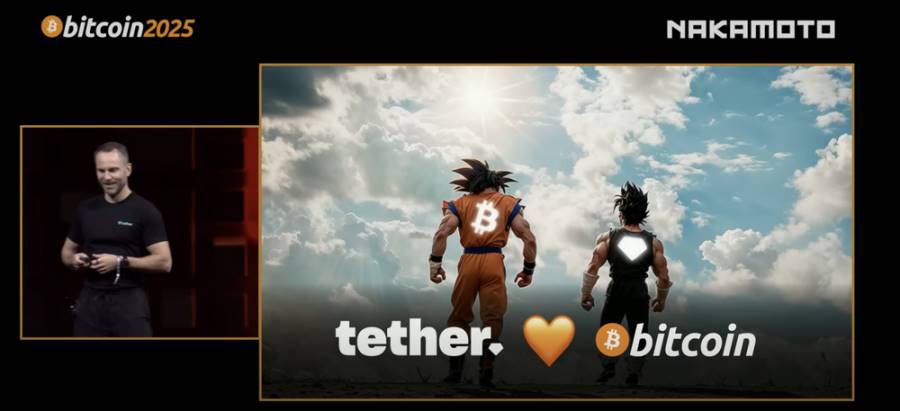
At the center stage of the 2025 Bitcoin Conference, Tether CEO Paolo Ardoino stood before an image of Sun Wukong and said, "Bitcoin is my Monkey King—it's our friend."
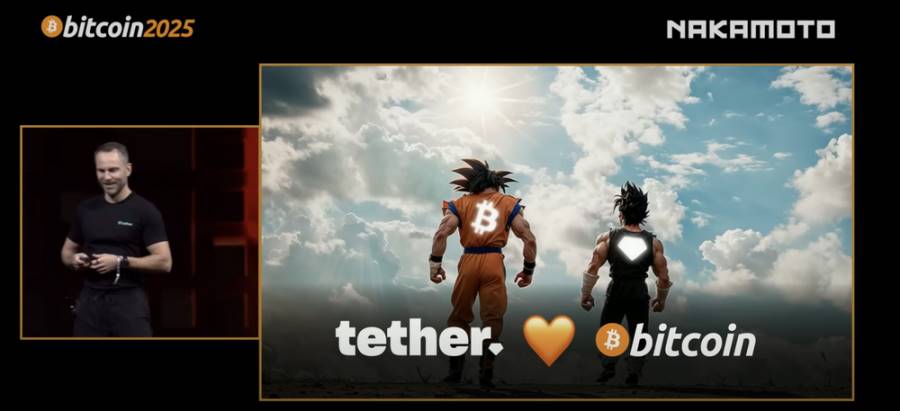
This seemingly emotional statement in fact encapsulates Tether’s strategic core. As the issuer of the world’s largest stablecoin USDT, Tether is positioning itself as a builder deeply embedding into multiple layers of the Bitcoin ecosystem—from reserve asset allocation and mining operations to ecosystem investments and infrastructure development—penetrating the nerve center of a new global financial order.
It is precisely because of Tether’s deep integration within the Bitcoin ecosystem that its actions have sparked increasing conspiracy theories and intense overseas debate, with critics accusing it of artificially inflating Bitcoin prices through continuous USDT issuance, creating a self-reinforcing “closed-loop bubble” cycling between Bitcoin reserves, gold backing, and USDT issuance.
Building a Bitcoin Reserve Strategy: Accused of Being the Sole Major Buyer
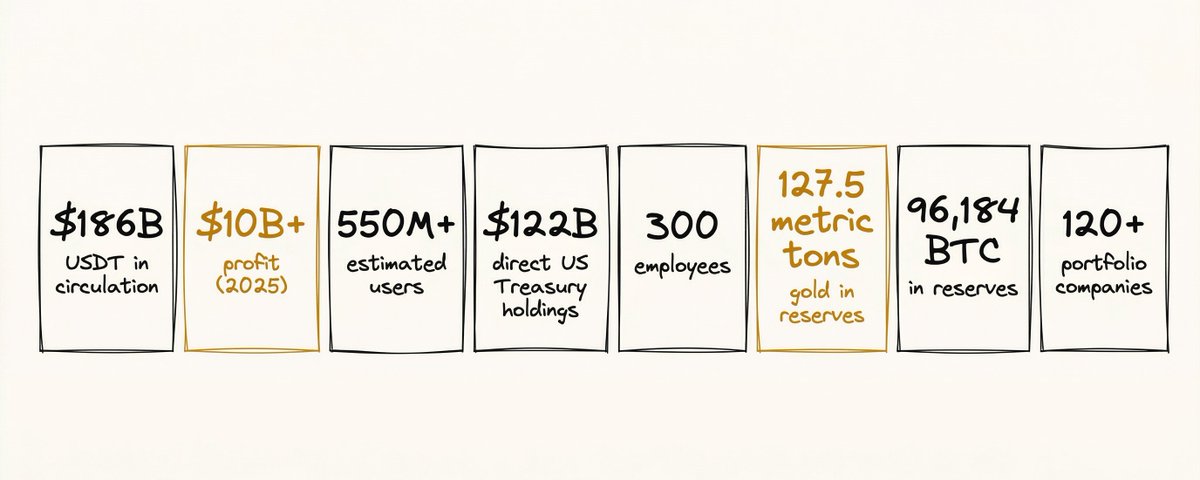
Since May 2023, Tether has announced plans to allocate up to 15% of its realized net operating profits periodically toward purchasing Bitcoin. Tether expects that its current and future Bitcoin holdings will not exceed shareholder capital buffers, aiming instead to strengthen and diversify its reserves. As of Q1 2025, Tether holds approximately $7.66 billion worth of Bitcoin, a significant increase from the previous quarter.
The “gold + Bitcoin” dual-reserve mechanism serves as Tether’s hedge against sovereign fiat risks and has delivered tangible financial returns. Ardoino recently disclosed that Tether currently holds over 100,000 BTC and more than 50 tons of gold. In 2024 alone, Tether reported a net profit of $13.7 billion, with around $5 billion contributed by investments in gold and Bitcoin. Ardoino emphasized that holding gold is not meant to challenge Bitcoin but rather to challenge centralized fiat systems.
However, Jacob King, founder of WhaleWire, pointed out: “Relying on constant printing and buying pressure, Tether is now the only major buyer in the entire Bitcoin market. It prints new USDT, pumps Bitcoin prices, sells off excess holdings, then uses dollars and gold as reserves to justify its legitimacy.” He described this model as the “ultimate house of cards”—once stablecoins face regulatory scrutiny or Bitcoin demand dries up, the entire system could collapse.
Tether’s ambitions for Bitcoin go far beyond simply accumulating coins. In April this year, Tether co-founded Twenty One Capital alongside SoftBank and Cantor, launching a cryptocurrency investment joint venture aimed at building a global Bitcoin asset acquisition and management platform with a total scale of $3 billion. This initiative is widely seen in the industry as Tether’s structural response to MicroStrategy. In this venture, Tether holds 42.8% equity and 51.7% voting rights, giving it de facto control. Meanwhile, Cantor owns 5% of Tether, and its CEO Brandon Lutnick is the son of U.S. Commerce Secretary Howard Lutnick.
"Jack Mallers (CEO of Twenty One Capital) is deeply connected with Tether and Bitfinex. His other company, Strike, has long had close ties with Tether. They claim there's massive market demand, yet most of the Bitcoin in their reserves comes directly from Tether. This is nothing but a shell game within a larger liquidity illusion," Jacob King stated bluntly on social media. He added that if stablecoins come under U.S. regulation, Tether would struggle to keep injecting capital—and recent months of substantial net outflows from Bitcoin spot ETFs suggest institutions are rapidly pulling back.
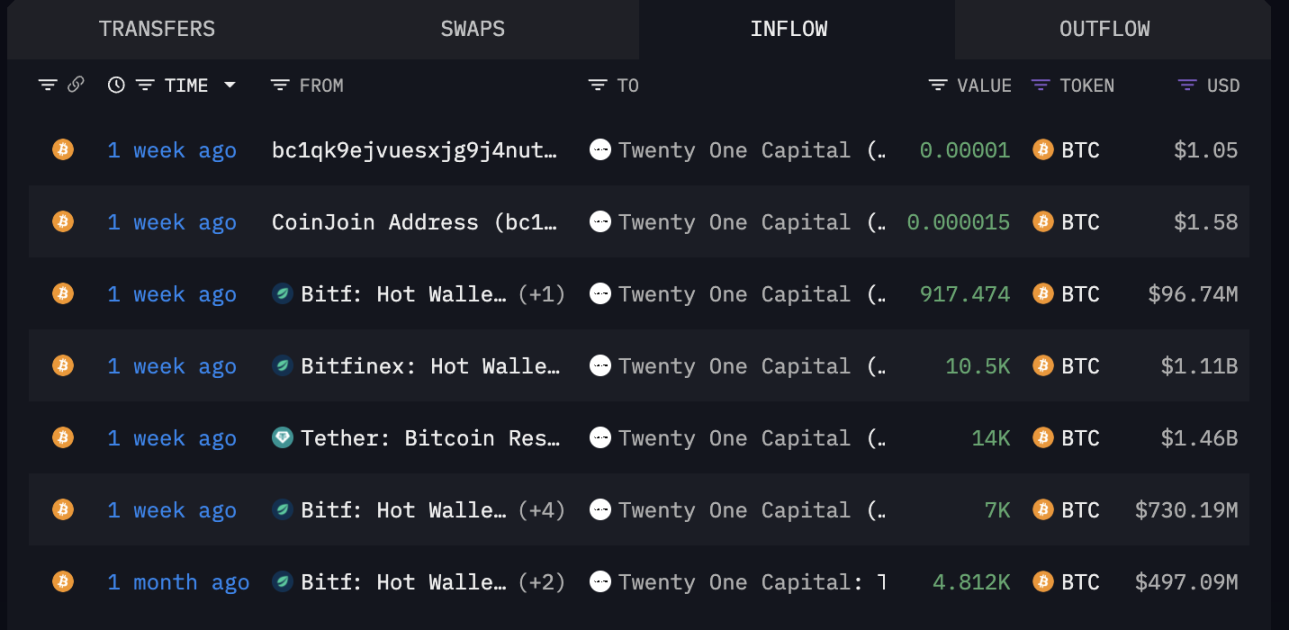
On-chain data shows that Twenty One Capital’s Bitcoin reserves originate from Tether, which recently transferred over 37,000 BTC—worth nearly $4 billion—in five transactions.
Rumble, the video platform in which Tether has invested over $770 million, has also established its own Bitcoin treasury, citing Bitcoin’s potential as an inflation hedge.
Self-Built Mining Farms and Strategic Investments: Aiming to Become One of the World’s Largest Miners
Tether’s ambitions extend well beyond asset reserves. As early as 2023, Tether launched a renewable energy-powered Bitcoin mining project in Uruguay, leveraging the country’s abundant clean energy resources such as hydropower and wind to build efficient, sustainable mining facilities. Soon after, it joined El Salvador’s volcanic energy initiative, becoming one of the key financial forces behind what aims to be the world’s largest geothermal Bitcoin mine. Since then, Tether has continued expanding its energy footprint across Latin America, investing a cumulative $500 million in mining基地 construction across Uruguay, Paraguay, and El Salvador.
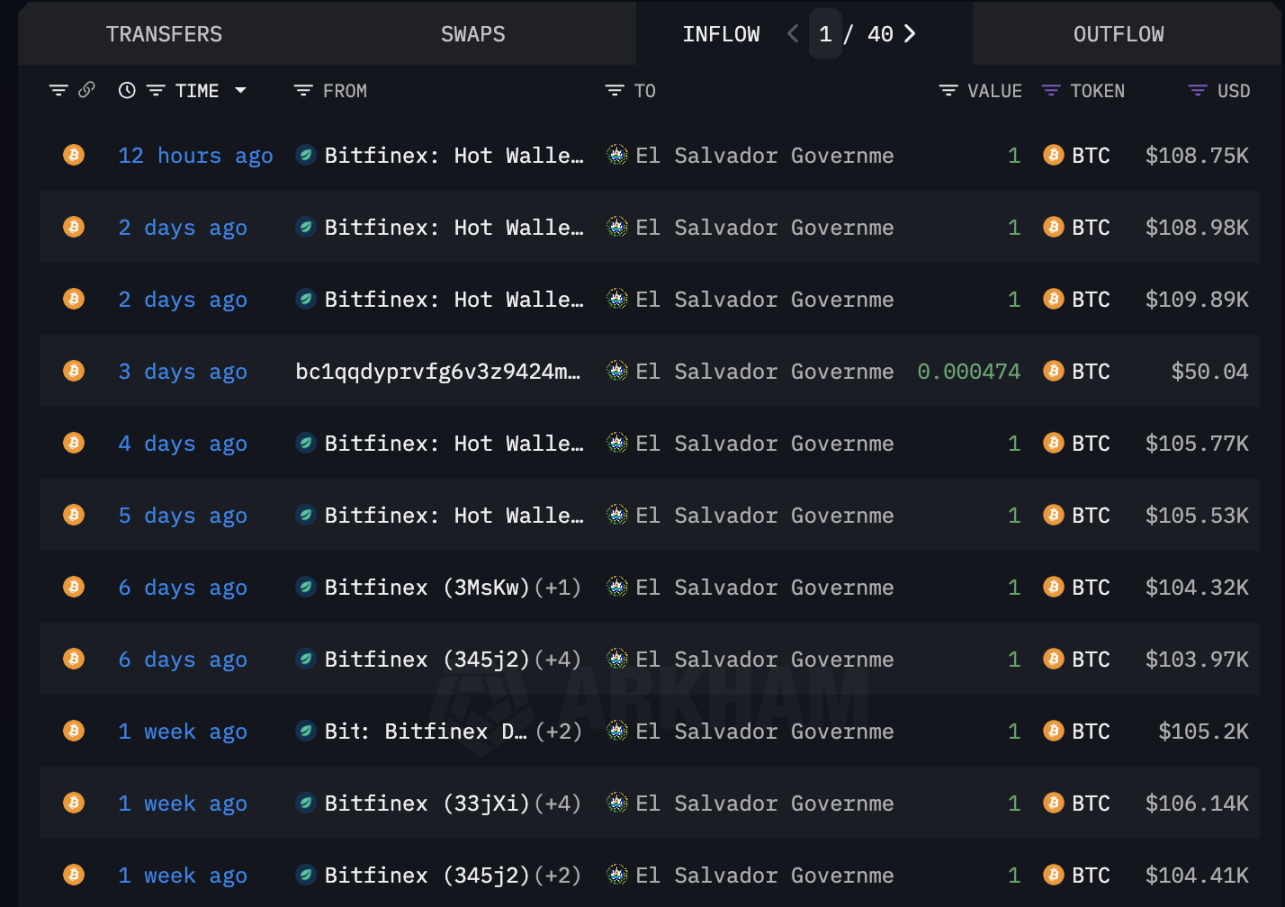
"El Salvador’s so-called Bitcoin investment is actually a carefully crafted illusion. The Bitcoin in its national treasury was directly transferred from Bitfinex and Tether. Tether even personally drafted all of El Salvador’s Bitcoin legislation. But few noticed that El Salvador has quietly abandoned the rollout of Bitcoin as legal tender. Tether and its internal network can no longer sustain this because there is simply no real market demand," claimed Jacob King—a view lacking definitive public evidence. However, in February this year, El Salvador did officially repeal Bitcoin’s status as legal tender via legislative amendment, removing mandatory acceptance by merchants and institutions and excluding it from tax payments. Public opinion polls show that the vast majority of citizens have not benefited, and economic conditions remain unchanged.
Beyond building its own mines, Tether has actively expanded its global mining footprint through investments and acquisitions. To date, it has taken stakes in companies including Bitdeer, Northern Data Group, Blockstream, and Swan Mining, covering chip procurement, server manufacturing, data center construction, and enterprise-grade hash power hosting—key levers supporting Tether’s broader Bitcoin mining strategy.
This year, Tether took another step forward by deploying hash power to the OCEAN mining pool, advancing decentralized Bitcoin mining infrastructure. Additionally, Tether recently announced plans to open-source its Bitcoin mining software, enabling new miners to enter the market without relying on expensive third-party providers.
According to Ardoino’s disclosure at the Bitcoin 2025 Conference, Tether has already invested over $2 billion in energy and infrastructure, with even greater actual spending on Bitcoin mining. He projected that by year-end, Tether will become the world’s largest Bitcoin mining operator—including among all publicly listed firms.
Full-Stack Expansion: From On-Chain Issuance to Cultural Penetration
Tether is advancing a full-stack strategic layout, continuously expanding the boundaries and influence of the Bitcoin ecosystem.
Technically, beyond issuing USDT on blockchains like Ethereum and TRON, Tether has deployed USDT across Bitcoin-based protocols including Omni, Liquid, Lightning, and RGB, as well as popular Bitcoin sidechains such as Plasma, where native USDT support is expected. On the wallet front, Tether AI launched WDK, a self-custody wallet natively supporting Bitcoin and USDT, allowing enterprises, apps, websites, and even AI agents to integrate easily—lowering barriers to Bitcoin financial infrastructure. In payments, Tether donated to the open-source project BTC Pay Server to support ongoing development and optimization of its crypto payment processor.
Culturally and educationally, Tether co-hosted the Plan B Summit with the Swiss city of Lugano and sponsored a local football club, embedding Bitcoin’s brand into European stadium culture. Through the Tether Education Initiative, it has partnered with universities worldwide to promote Bitcoin literacy and cultivate the next generation of crypto natives. Twenty One Capital will also focus on普及 Bitcoin-related knowledge, producing educational content and video media, and developing a suite of Bitcoin-linked financial and consulting services.
"For me, what matters most is contributing to building a more accessible, resilient, and useful Bitcoin ecosystem. If I can make an impact in infrastructure, technology, and education, that’s enough. The story of Bitcoin has never been about any single individual—it’s about a global community’s unwavering commitment to an idea: building the future steadfastly, even in downturns, even when misunderstood. If I can play a role in helping more people join this ecosystem and empowering them with tools of sovereignty and security, that will be a mission worth remembering," Ardoino said in a recent interview with Bitcoin News.
Join TechFlow official community to stay tuned
Telegram:https://t.me/TechFlowDaily
X (Twitter):https://x.com/TechFlowPost
X (Twitter) EN:https://x.com/BlockFlow_News
 PANews