4% Ownership, 337 Million Users: Is Bitcoin Still 30 Snapchats Away From Going Mainstream?
TechFlow Selected TechFlow Selected
4% Ownership, 337 Million Users: Is Bitcoin Still 30 Snapchats Away From Going Mainstream?
Bitcoin is still far from true mainstream adoption.
 Navigating Web3 tides with focused insights
Source: cryptoslate
Translation: Blockchain Knight
"We're no longer in the early days." This phrase has become widely echoed across Crypto Twitter. Last week, 35,000 people attended the 2025 BTC Conference—ranging from BTC enthusiasts and U.S. senators to White House staff, BlackRock analysts, and even Ross Ulbricht, the imprisoned founder of Silk Road. With the spot price of BTC soaring well beyond $100,000, supporters are celebrating its "mainstream breakthrough."
Yet beneath the applause and ETF-fueled price charts lies a more sobering reality: BTC remains far from true mainstream adoption.
Despite record-high prices and growing acceptance on Wall Street, only 4% of the global population holds BTC. In absolute terms, about 337 million people own BTC—half the number of Snapchat users. Even when including all holders of alternative assets, the total reaches just 659 million, still hundreds of millions short of mainstream user scale.
Despite its trillion-dollar potential, BTC remains a fringe tool within an ecosystem still very much in development.
BTC is at the same stage as the internet in the late 1990s
Compare BTC's adoption curve with that of the early internet:

In 2025, BTC resembles the internet before email became widespread—a space full of innovation, but nowhere near ubiquitous. Using a BTC wallet or reading this article is like having an AOL account or installing the latest Netscape browser from a CD bundled with your computer magazine.
At 4% adoption, BTC today mirrors the state of the internet on New Year's Eve 2000—a time when the world feared leaving computers on past midnight, dreading that the Y2K bug would destroy civilization.
Back then, Nokia 3210 phones filled streets and classrooms, images loaded line by line, downloading an album took all day, and web searches were handled by an online butler named Jeeves. Since then, the internet has transformed completely—and for BTC to follow a similar path, deep ecosystem integration will require significant changes.
Some attendees in Las Vegas may feel they’ve arrived late. But statistically, they’re still early adopters.
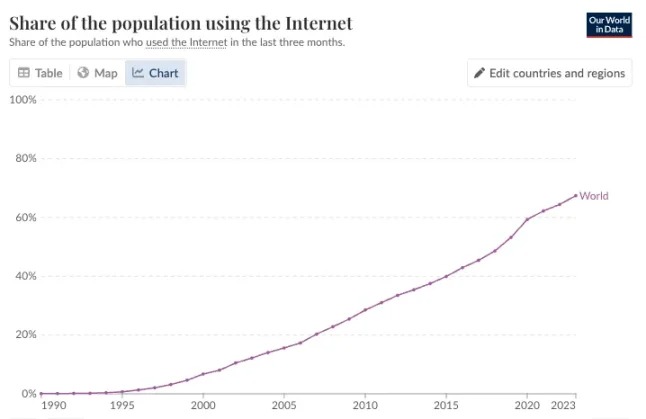
Internet penetration rate (Data source: Our World in Data)
Wall Street buys in, but the public doesn't use it
The narrative around crypto increasingly centers on institutional participation. Since the SEC approved spot ETFs in early 2024, over $44 billion has flowed into U.S. spot BTC ETFs. Pension funds, asset managers, and family offices now hold BTC as a portfolio hedge.
Yet BTC’s daily utility hasn’t improved. Daily active addresses have declined from a peak of 1.1 million in 2021 to nearly 700,000 today. While traditional finance (TradFi) capital has legitimized BTC as an asset class, it hasn’t translated into broader transactional use. The presence of Ross Ulbricht—the symbol of BTC’s rebellious roots—at the conference underscores the tension between BTC as a political instrument and as an institutional commodity.
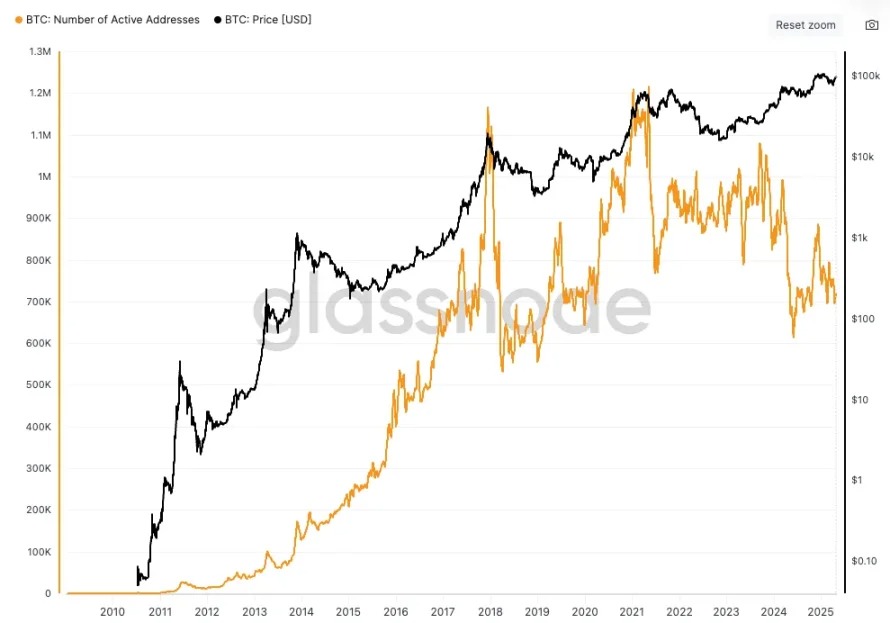
BTC active address count (Data source: Glassnode)
Despite rising awareness, BTC faces major hurdles on the road to mass adoption:
-
Poor user experience: Setting up wallets or managing seed phrases remains non-intuitive. Mistakes can lead to permanent loss of funds.
-
High barriers to entry: Small on-ramps sound ideal for underserved users, but exchange fees, regulatory checks, and slow transaction times degrade the experience.
-
Regulatory uncertainty: ETFs brought legitimacy, but fragmented global regulations around wallets, mining, and commercial use create confusion and risk.
-
Low cultural familiarity: Even in highly digital societies, BTC is seen more as a speculative asset than a tool for payments or savings.
Foundational work and real-world agendas
Several initiatives are laying the groundwork for broader BTC adoption:
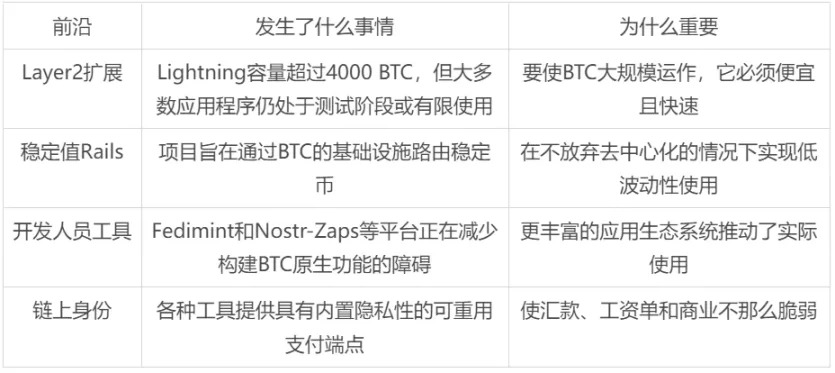
"BTC is no longer niche," WisdomTree analyst Dovile Silenskyte said in January. That may be true in capital markets, but not yet in how people actually use money. Today, one BTC costs over $100,000—more than the average American household's net worth excluding home equity. As BTC becomes increasingly collectible, its usability may decline unless Layer 2 solutions and broader access reverse this trend.
To turn hype into real financial inclusion, BTC advocates should reframe their focus around the following:
-
Prioritize real-world use cases: Highlight actual stories like freelance income in Argentina or Lightning Network remittances in East Africa, rather than just ETF inflows or celebrity endorsements.
-
Adopt meaningful metrics: Adoption shouldn’t be measured by market cap alone. Track active wallet usage, Lightning Network liquidity, and merchant integration instead.
-
Design for marginalized users: The most critical user base lives in economically unstable, underbanked regions. BTC’s promise must be tested there—not on stages in Las Vegas.
-
Clarity in policy: Regulatory consistency matters more than political spectacle. Frameworks like Europe’s Markets in Crypto-Assets (MiCA) regulation or targeted mining incentives can accelerate adoption.
The real work begins after the celebration
BTC may have broken through in headlines and hedge funds, but the real test is just beginning. Just as the internet’s 1990s promise wasn’t fulfilled until the 2000s with mobile phones, broadband, and user-friendly apps, BTC’s global impact will depend on innovation after the hype.
Total BTC wallet numbers keep growing, but Lightning Network usage, active wallet counts, and daily on-chain transactors have yet to return to historical highs. BTC’s price surges, but on-chain activity does not follow. We cannot declare victory while the battle is still far from over.
So while we might celebrate BTC breaking $100,000 like the dot-com bubble of 1999, remember: the internet went mainstream thanks to smartphones—especially the iPhone. What equivalent breakthrough has BTC seen?
The Las Vegas summit was a celebration. But BTC’s revolution in payments, savings, remittances, and financial sovereignty won’t be televised. It will unfold quietly, one step at a time.
Join TechFlow official community to stay tuned
Telegram:https://t.me/TechFlowDaily
X (Twitter):https://x.com/TechFlowPost
X (Twitter) EN:https://x.com/BlockFlow_News
 @CryptoSlate