








Crypto Morning Brief: GENIUS Stablecoin Bill Passes Senate Procedural Vote, Asset Management Firm Blackstone Enters Crypto Market for the First Time
TechFlow Selected TechFlow Selected
Crypto Morning Brief: GENIUS Stablecoin Bill Passes Senate Procedural Vote, Asset Management Firm Blackstone Enters Crypto Market for the First Time
SEC delays rulings on XRP and Dogecoin ETFs.
 Navigating Web3 tides with focused insights
Author: TechFlow
Yesterday's Market Dynamics
GENIUS Stablecoin Bill Passes Senate Procedural Vote 66 to 32
According to Eleanor Terrett, the GENIUS stablecoin bill passed a motion to end debate by a vote of 66 to 32, marking the official start of the legislative review process. However, the bill itself has not yet been enacted.
Texas House Passes Strategic Bitcoin Reserve Bill (SB 21) in Second Reading
As reported by Cointelegraph, the Texas House has passed the Strategic Bitcoin Reserve Bill (SB 21) during its second reading, advancing the legislation one step closer to becoming law. The bill aims to establish a "Texas Strategic Bitcoin Reserve," a special fund through which the state government would invest in cryptocurrencies, managed by the State Comptroller.
K33 Research: Global Bitcoin ETP AUM Hits Record High, Net Inflows Exceed 80,000 BTC Since April 10
According to Vetle Lunde, Research Director at K33 Research, following strong inflows yesterday, the assets under management (AUM) of global Bitcoin exchange-traded products (ETPs) have reached an all-time high. Data shows net inflows into Bitcoin ETPs have totaled 81,466 BTC since April 10.
SEC Delays Decisions on XRP and Dogecoin ETFs
According to The Block, the U.S. Securities and Exchange Commission (SEC) announced on May 20 that it is delaying its decision deadlines for ETF proposals submitted by 21Shares and Grayscale regarding an XRP trust, as well as Grayscale’s Dogecoin trust. The SEC stated in filings that the delays are due to legal and policy issues involved in the proposals and emphasized this does not indicate the commission has reached conclusions. The SEC also delayed its decision on Bitwise’s proposal for staking-enabled Ethereum ETFs. Bloomberg Intelligence ETF analyst James Seyffart noted that regardless of leadership, the SEC typically uses its full review period, with approvals potentially coming as early as late June or early July, but more likely in early Q4.
Standard Chartered: Based on SEC Data, Predicts Bitcoin Could Reach $500,000 by 2028
According to Walter Bloomberg, Geoff Kendrick, Head of Digital Assets Research at Standard Chartered, said recent SEC 13F filings suggest Bitcoin could rise to $500,000 by the end of 2028.
Kendrick noted that although direct Bitcoin holdings via ETFs declined slightly in the first quarter, government entities increased their stakes in Strategy shares—a company considered a proxy for Bitcoin investment. This may reflect continued efforts to gain Bitcoin exposure despite regulatory constraints.
Giza Announces Tokenomics: 1 Billion Total Supply, 22.21% Allocated to Community
Giza, an AI + crypto smart contract platform, has released the tokenomics for its GIZA token, with a fixed total supply of 1 billion:
· 22.21% allocated to community
· 22.10% allocated to treasury (linear unlock over 4 years)
· 31.44% allocated to early supporters and investors (linear unlock over 3 years)
· 18.25% allocated to project team (linear unlock over 3 years)
· 6% allocated to ecosystem partners
At TGE, all investor, team, and treasury allocations will have zero initial unlock. First-quarter airdrop eligibility includes early Arma users, social contributors, community leaders, and early Giza contributors.
Binance Alpha Points: 193 Points Required to Claim 1,000 MERL Tokens
Official page shows that users can claim 1,000 MERL tokens upon reaching 193 Binance Alpha points, requiring a cost of 15 points.
Asset Manager Blackstone Makes First Foray Into Crypto Market
According to The Block, asset manager Blackstone has made its first move into the cryptocurrency market by purchasing approximately $1 million worth of BlackRock’s spot Bitcoin ETF (IBIT). As disclosed in SEC filings on Tuesday, as of March 30, the firm—managing over $1 trillion in assets—has allocated only a minimal portion of capital to crypto. This cautious step aligns with the historically conservative stance of Blackstone co-founder and CEO Stephen Schwarzman, who in 2019 called Bitcoin “hard to understand” and expressed concerns about its potential use in criminal activities.
U.S.-Listed Company KULR Adds 83.3 Bitcoins, Total Holdings Reach 800
Michael Mo, co-founder of U.S.-listed company KULR, disclosed that KULR recently purchased 83.3 bitcoins for approximately $9 million, at an average price of around $103,234 per BTC. As of May 20, 2025, KULR’s total bitcoin holdings have reached 800 BTC, with cumulative investment of about $78 million, averaging $97,597 per coin. The company’s bitcoin portfolio has achieved a year-to-date return of 220%.
Ethereum Co-Founder Jeffrey Wilcke Transfers Over 100,000 ETH to Kraken, Worth ~$262 Million
According to ARKHAM monitoring, Ethereum co-founder Jeffrey Wilcke transferred 105,736 ETH (~$262 million) to Kraken exchange approximately three minutes ago.
Circle Co-Founder’s New Venture Catena Labs Raises $18M Seed Round Led by a16z
According to Fortune, Catena Labs, a new venture founded by Circle co-founder Sean Neville, has raised $18 million in seed funding led by Andreessen Horowitz’s crypto fund, with participation from Breyer Capital, Circle Ventures, Coinbase Ventures, and American football player Tom Brady.
Catena Labs plans to build an "AI-native bank." Investors will receive equity and rights to future unissued crypto tokens. Sean Neville stated the company currently has no plans to issue any cryptocurrency or stablecoin.
Catena Labs has already developed an open-source protocol for AI-powered payments and identity verification. The company will integrate—but not be limited to—stablecoin technology, aiming to modernize existing financial infrastructure for future AI agent-driven financial transactions.
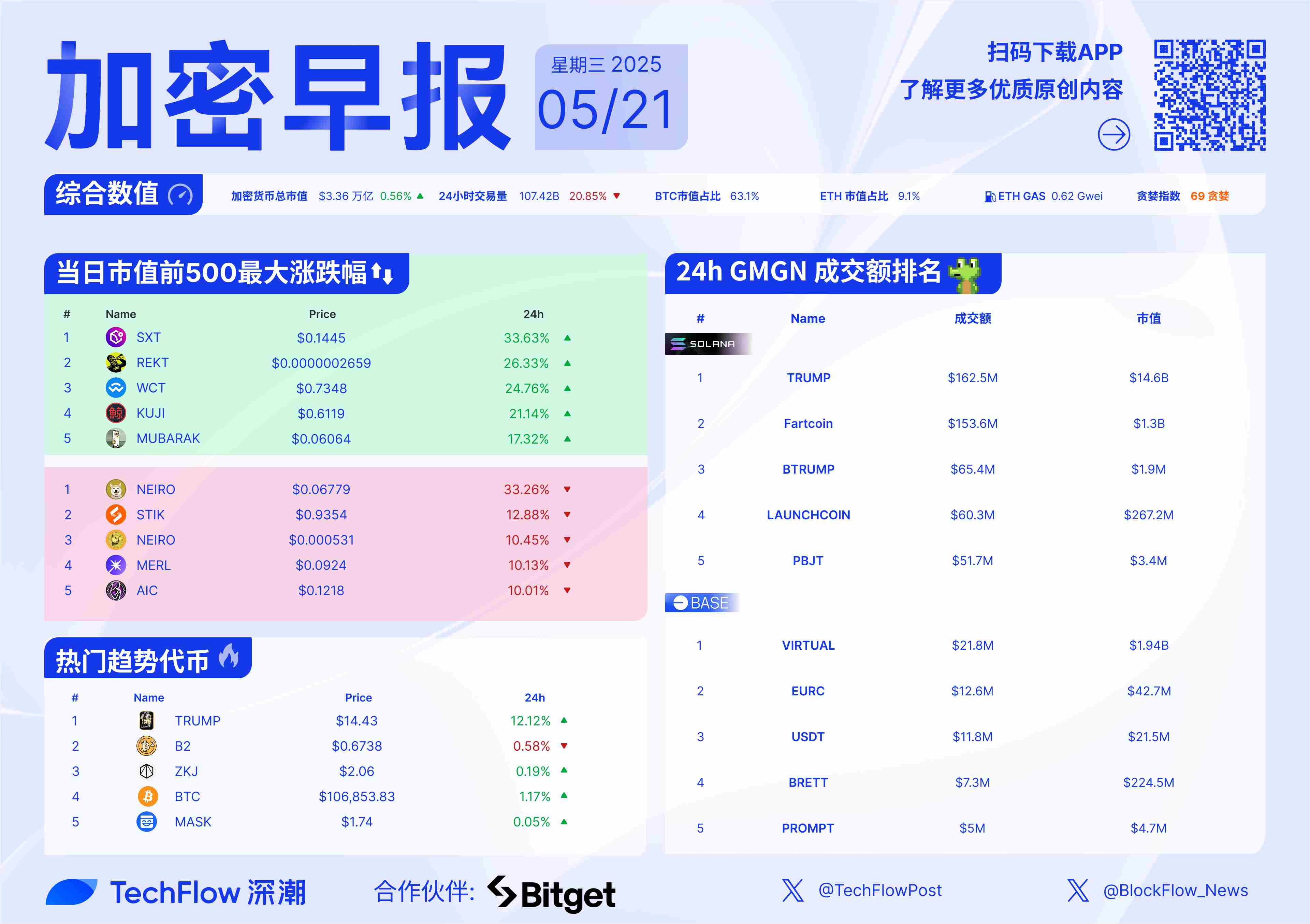
Market Trends
Suggested Reading
GENIUS Act Stablecoin Bill Passes Vote—Which Crypto Assets Will Benefit?
This article discusses the passage of the U.S. Generative and Emerging Innovation in United States Stablecoins Act (GENIUS Act), marking the establishment of the nation’s first comprehensive federal regulatory framework for stablecoins. The act aims to regulate the stablecoin market, reinforce the dollar’s dominance in global digital finance, and promote growth in the crypto ecosystem. Key provisions include reserve requirements, regulatory tiering, transparency, and compliance. Its impact spans stablecoins, DeFi, Layer 1 blockchains, and payment sectors, injecting new momentum into related crypto assets while also bringing potential risks and uncertainties.
Never Underestimate the Significance of the U.S. Stablecoin 'Genius Act'
This article examines the profound implications of the U.S. "Genius Act" (GENIUS Act) for the stablecoin industry and its potential transformative impact on the broader crypto sector. It analyzes the bill’s key components, significance, and possible consequences, arguing that it will remove obstacles to stablecoin development, set industry standards, and accelerate blockchain adoption and application.
This article explores the potential of the Believe platform as a new type of memecoin launchpad, comparing it with other platforms and analyzing its market positioning, token issuance model, and user experience enhancements. It also discusses the role of memecoins in capital markets and the challenges of regulation and market standardization.
MCP: The Core Engine Powering Next-Gen Web3 AI Agents
This article explores the application and potential of the MCP (Model Context Protocol) in the field of Web3 AI agents. MCP is an open protocol designed to standardize interactions between large language models and tools, addressing current limitations in real-time data access, local file handling, and external software integration. The article also covers MCP’s technical advantages, integration with blockchain, and future development trends.
The Future of Scaling: A Comprehensive Landscape of Web3 Parallel Computing
This article provides an in-depth analysis of the Web3 parallel computing landscape, exploring the future direction of blockchain scalability and examining the technical characteristics, core mechanisms, and representative projects of different parallel computing architectures, such as EVM-enhanced chains, native parallel chains, and Actor models.
Join TechFlow official community to stay tuned
Telegram:https://t.me/TechFlowDaily
X (Twitter):https://x.com/TechFlowPost
X (Twitter) EN:https://x.com/BlockFlow_News
 深潮TechFlow






