After Deepseek flipped the table, China's major AI companies were shaken
TechFlow Selected TechFlow Selected
After Deepseek flipped the table, China's major AI companies were shaken
When technological paradigms are重构, even the strong must start over.
 Navigating Web3 tides with focused insights
Author: Lian Ran
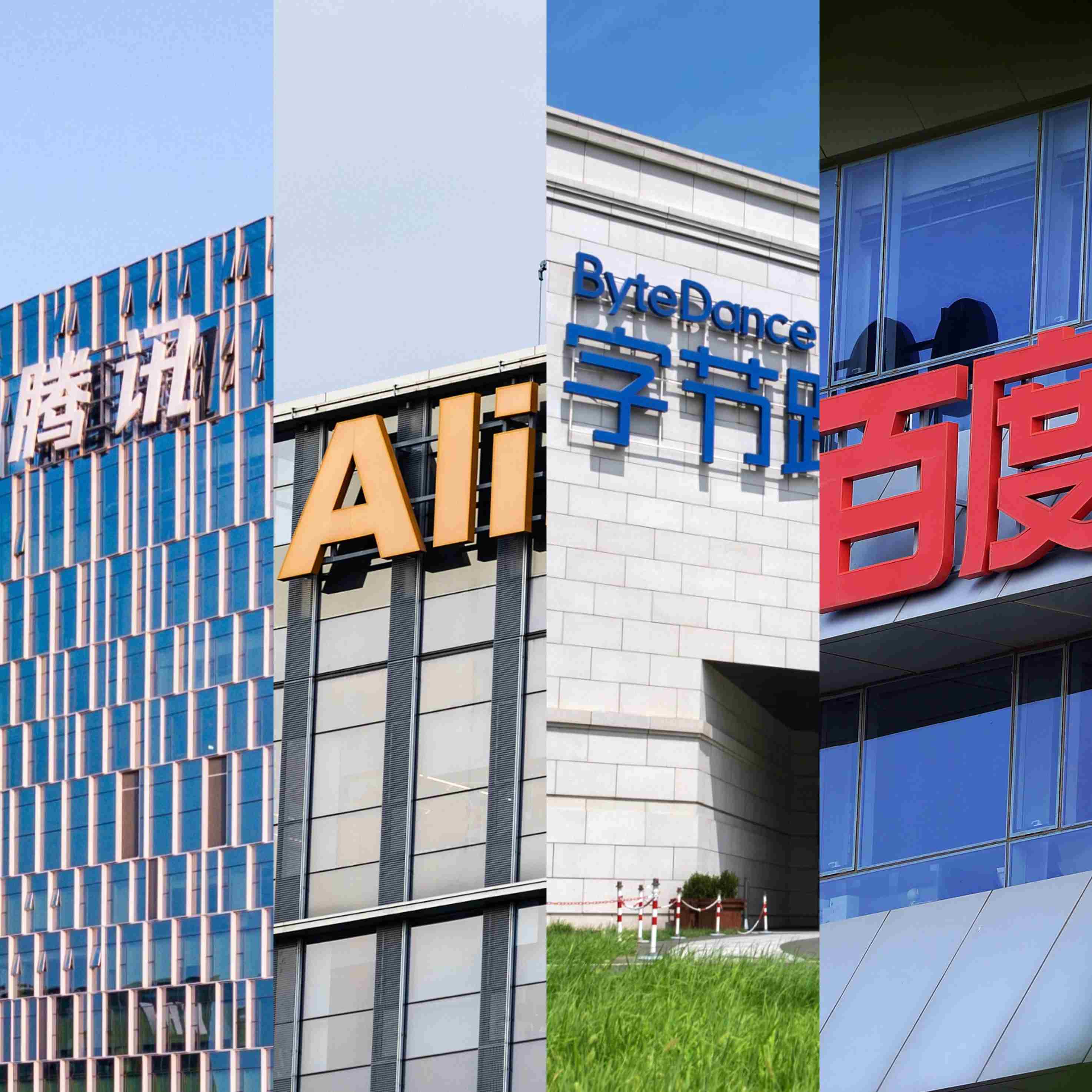
Over the past few months, especially in Q1 2025, major Chinese tech companies have become noticeably quieter in the AI large model space. The most obvious sign is the sharp drop in product launches. Compared to last year, when big tech firms took turns rolling out new achievements, this year has been far more subdued, with cautious messaging and restrained moves.
This shift is largely tied to the release of DeepSeek-R1 during Chinese New Year. With its combination of open-source availability, low cost, and high performance, the model shattered the industry consensus that "large models require massive investment and high barriers," disrupting the power structure within the model industry.
It not only reshaped developers’ perceptions of open-source models but also undermined the "heavy-asset" paradigm that big tech had long viewed as their moat. Almost overnight, Silicon Valley tech stocks corrected, and the necessity of trillion-dollar R&D investments came under renewed scrutiny.
In China, this "technological earthquake" first shook the very same big tech firms that were expected to lead the AI race. On one side, new players like DeepSeek and Manus kept iterating and breaking through using "small but strong," "fast and agile" strategies; on the other, big tech struggled with repeated adjustments and hesitations in product deployment, organizational structure, and technical direction.
The disruption isn't just about model performance or training costs—it challenges deep-seated path dependencies built on historical experience, such as "only closed-loop systems have moats," "only high budgets yield good models," and "only general-purpose unified models are the right direction."
More and more evidence points to the same conclusion: in the fast-evolving wave of AI, any rigid adherence to established paradigms can become a stumbling block to innovation.
Today’s big tech companies are undergoing a philosophical shift—moving away from the closed-loop logic of “my model serves my application,” and returning to the product-centric principle of “using the best model to build the best product.”
A series of profound strategic restructurings are quietly unfolding across China's internet giants.
1 Before DeepSeek-R1: Big Tech Battled for Dominance, Each Betting Differently
Looking back at 2023, the domestic large model race rapidly heated up. Nearly every company with technical reserves or ecosystem advantages poured resources into finding their breakthrough amid the “hundred-model war.”
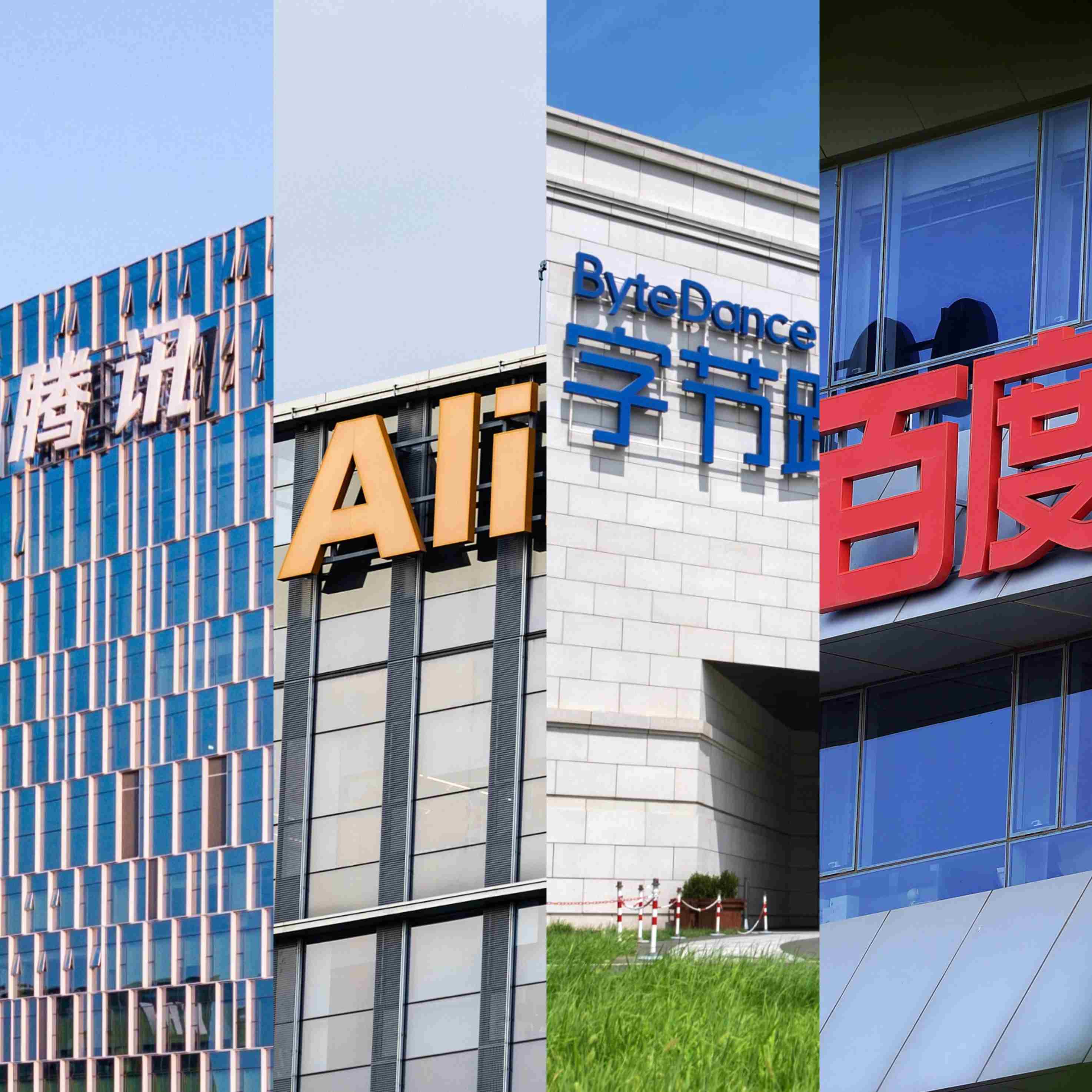
At the time, Baidu, ByteDance, Tencent, and others unveiled their self-developed models. “Self-researched closed-loop” became the dominant strategy (with Alibaba pioneering earlier in open source), emphasizing “models must be autonomous and controllable, ecosystems self-sufficient,” aiming to integrate everything from foundational models to end applications.
Against this backdrop, Baidu pushed its “model + search” approach, ByteDance aggressively promoted Doubao, Alibaba restructured its Tongyi Qianwen team for better resource allocation, and Tencent cautiously invested in its Hunyuan large model, focusing more on “application-scenario-driven” development. Among smaller players emerged a group known as the “Six AI Dragons”—such as MiniMax, Zhipu AI, Baichuan, and Moonshot—dedicated to training general-purpose large models, each seeking breakthroughs in technology or innovation.
Image Source: Visual China
Back then, competition rested on several assumptions: 1) stronger self-research capability equals stronger moats; 2) parameter count correlates with capability, performance won by scaling up models; 3) a “self-controlled” model + application closed loop was essential.
But these consensuses were completely overturned after DeepSeek-R1’s release. The January 2025 debut of DeepSeek-R1 was seen as a “tipping point” event—on one hand, it achieved GPT-4-level capabilities at extremely low cost, openly sharing technical details and model weights; on the other, it represented a radical “open-source paradigm”: not just releasing a model, but enabling downstream developers to “take and use immediately,” with full transparency in training methodology, data ratios, and inference efficiency.
This directly struck at the core of the old “closed-loop self-research” approach. Many big tech models trained at great expense suddenly lost their edge—not because they lacked capability, but because they lacked cost-effectiveness. You could no longer claim “our model is stronger than others,” since others had fully opened their process—and catching up would take months. Nor could you argue “our closed-loop gives us higher moats,” when others could build a working demo based on DeepSeek-R1 in days, even refining full products from it.
This shock of “open-source as capability equalization” didn’t just hit big tech—it disrupted the rhythm of the AI startups too. Smaller players like MiniMax and Baichuan, who once hoped to differentiate via training efficiency and inference speed, now found DeepSeek had flipped the table, balancing both efficiency and capability perfectly—and giving it away for free. This made “closed-source commercialization” far harder.
The industry thus entered a clear period of “strategic confusion”:
-
Big tech began re-evaluating the value of self-research: Is it still worth burning cash chasing a model likely to be overtaken by open-source? Should efforts shift toward a hybrid strategy of “assembling model capabilities + building AI-native applications”?
-
AI startups faced immediate survival pressure: Their narratives around closed-source advantage and technical stack superiority were fading. Big tech accelerated adoption of open-source models, reducing demand for partnerships. They had to redefine themselves—either band together or pivot to “differentiated vertical scenarios.”
-
Investors began reassessing startup valuations: A large model startup without unique innovation mechanisms or ecosystem resources now faced challenges in valuation logic.
In short, DeepSeek didn’t just release a powerful model—it triggered a “paradigm reshuffle,” using extreme transparency and open-source practices to dismantle old path dependencies, turning “self-researched closed-loop large models” from a mainstream option into an “extremely costly” gamble. From this point forward, only those who quickly recognized reality and found new ecological niches would remain at the table in the next round.
2 After the Shock: Big Tech Searches for New Directions
As the impact of DeepSeek continued to unfold, the entire industry was initially stunned—confused, uncertain, unsure of what to do. Everyone knew it was a systemic shock, but how to respond or where to go wasn’t clear at the time.
But starting in late February, things slowly changed. Big tech began taking action, and new narratives started emerging. In one sentence: Strategic focus shifted from last year’s emphasis on “application-first” and “Super App” deployment back onto the track of “AGI-first.”
This shift involved several key changes.
The first change was clarity of goal. When talking about AI applications before, many companies stayed at the level of “building a Super App”—like an AI assistant, AI search, or AI office tool.
Now, both ByteDance and Alibaba have explicitly stated that “racing toward AGI” is their top priority.
At a company-wide meeting in February, ByteDance CEO Liang Rubo said: “Intelligence level is the most important thing. We should treat advancing intelligence itself as the primary goal, not just DAU of a specific product.”
In March, the Doubao large model team held an all-hands meeting, clearly stating that their top mission is exploring the upper limits of intelligence. They emphasized strengthening organizational culture, increasing technical openness, and considering open-sourcing.
“Seed Edge” is a long-term AGI research team formed by ByteDance’s Doubao team at the beginning of the year, encouraging exploration into long-horizon AGI topics such as reasoning, perception, and hardware-software integration.
The project emphasizes a “relaxed research environment” and “long-cycle evaluation,” providing independent computing resources for selected projects, reflecting ByteDance’s long-term commitment to AGI.
Seed Edge aims to explore new approaches to AGI, promoting cross-modal and cross-team collaboration. Five initial research directions have been identified: pushing the boundaries of reasoning, pushing the boundaries of perception, designing next-gen models with hardware-software integration, exploring next-generation AI learning paradigms, and identifying the next scaling direction.
Clearly, ByteDance is preparing technologically for the next phase of AGI.
On the earnings call following the 2025 fiscal report, Alibaba CEO Eddie Wu explicitly stated that AGI is the core goal of Alibaba’s AI strategy, going so far as to say “AI will reshape 50% of global GDP structure.”
This signals Alibaba’s move beyond its earlier focus on “cloud + model” services toward deeper exploration of general intelligence.
The second change is a fundamental shift in attitude toward “open-source” and “model selection.” In the past, discussions around models and applications emphasized “full-stack autonomy,” doing everything in-house. Now, especially Tencent and Baidu, increasingly adopt a pragmatic stance: use whichever model performs best, regardless of origin. The goal is user satisfaction and real-world application, not necessarily relying on internal models.
Underlying this is a redefinition of each company’s role in the AI ecosystem—what position they occupy and where their true competitive advantage lies.
Alibaba’s response appears more “steady,” or perhaps consistent with its prior trajectory.
Alibaba had already taken an early lead in the open-source path. The Qwen series has maintained strong performance overseas and within open-source communities. Qwen2.5-Max was once claimed to surpass DeepSeek-V3, and the recently open-sourced Qwen3 in late April not only significantly reduced costs but also outperformed both DeepSeek-R1 and OpenAI-o1, topping the open-source model rankings. Alibaba’s strategy is clear: prove technical strength first, then attract global developers through open-source, drawing the ecosystem inward.
Still, Alibaba’s journey hasn’t been smooth. For a period, frequent organizational changes led to fragmented, siloed operations in its large model and AI businesses. But with Alibaba Cloud’s recent reintegration and AI teams regrouping after Jack Ma’s return, the company has returned to its “concentrate resources on major tasks” mode. The recovery of Alibaba Cloud—returning to double-digit growth in the latest quarter—proves the effectiveness of this consolidation, reaffirming its leadership in the domestic market.
In essence, compared to strategies focused on C-end products or Agent experiences, Alibaba is redefining its AI-era role—not as a frontline application pioneer, but as a global-scale model platform and technological infrastructure provider.
Baidu has taken a practical approach. While maintaining its own Ernie model system, it recognizes that what truly matters to users is whether concrete applications like Baidu Wenku or Baidu Wangpan become smarter. In practice, Baidu now emphasizes “use whatever works best,” even if it’s not their own model—as long as it improves the product experience.
This mindset stems from internal reflection. GeekPark previously learned that in 2024, Baidu spent excessive energy pushing model deployment across applications, causing the Ernie team to lose focus on advancing the model itself. The new adjustment abandons the insistence that “models must serve all applications,” allowing each business line to flexibly choose models based on use cases, with user experience as the top priority.
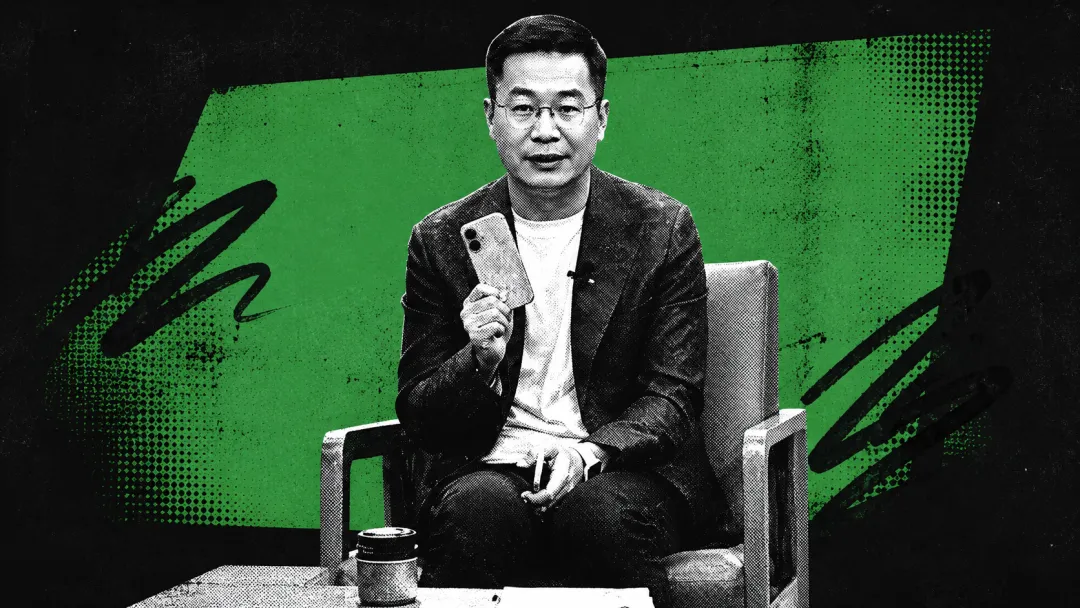
Regarding the open-source vs. closed-source debate, Li Yanhong, once a staunch advocate of closed-source models, had repeatedly stated publicly that “only closed-source ensures technical control and viable business models; open-source is essentially an IQ tax.”

Li Yanhong at Create2025 Baidu AI Developer Conference | Image Source: Baidu
But by February this year, Baidu chose to align with the broader open-source trend, announcing it would gradually roll out the Ernie 4.5 series and officially open-source them starting June 30.
Tencent’s path is clearer and more aligned with its longstanding product philosophy. Whether WeChat, QQ, or gaming platforms, Tencent’s greatest asset lies in its high-frequency user-facing products. For them, self-developing large models isn’t mandatory—the key is integrating AI capabilities quickly into existing products to boost efficiency and experience.
Thus, Tencent was among the first to integrate DeepSeek-R1 upon its release, with little hesitation. According to LatePost, Tencent Chairman and CEO Pony Ma told some AI teams, “cooperate well with external parties, don’t try to do everything yourself,” and “clearly recognize the actual situation, don’t overestimate your own capabilities.”
On February 13, Tencent officially announced integration of the full-powered DeepSeek-R1 and swiftly launched a broad promotional campaign across platforms. From WeChat and Xiaohongshu to Bilibili and Zhihu, ads for Yuanbao flooded the internet, drawing concentrated attention to Tencent’s AI assistant. Internally, Tencent urgently coordinated efforts to accelerate integration between WeChat and DeepSeek.
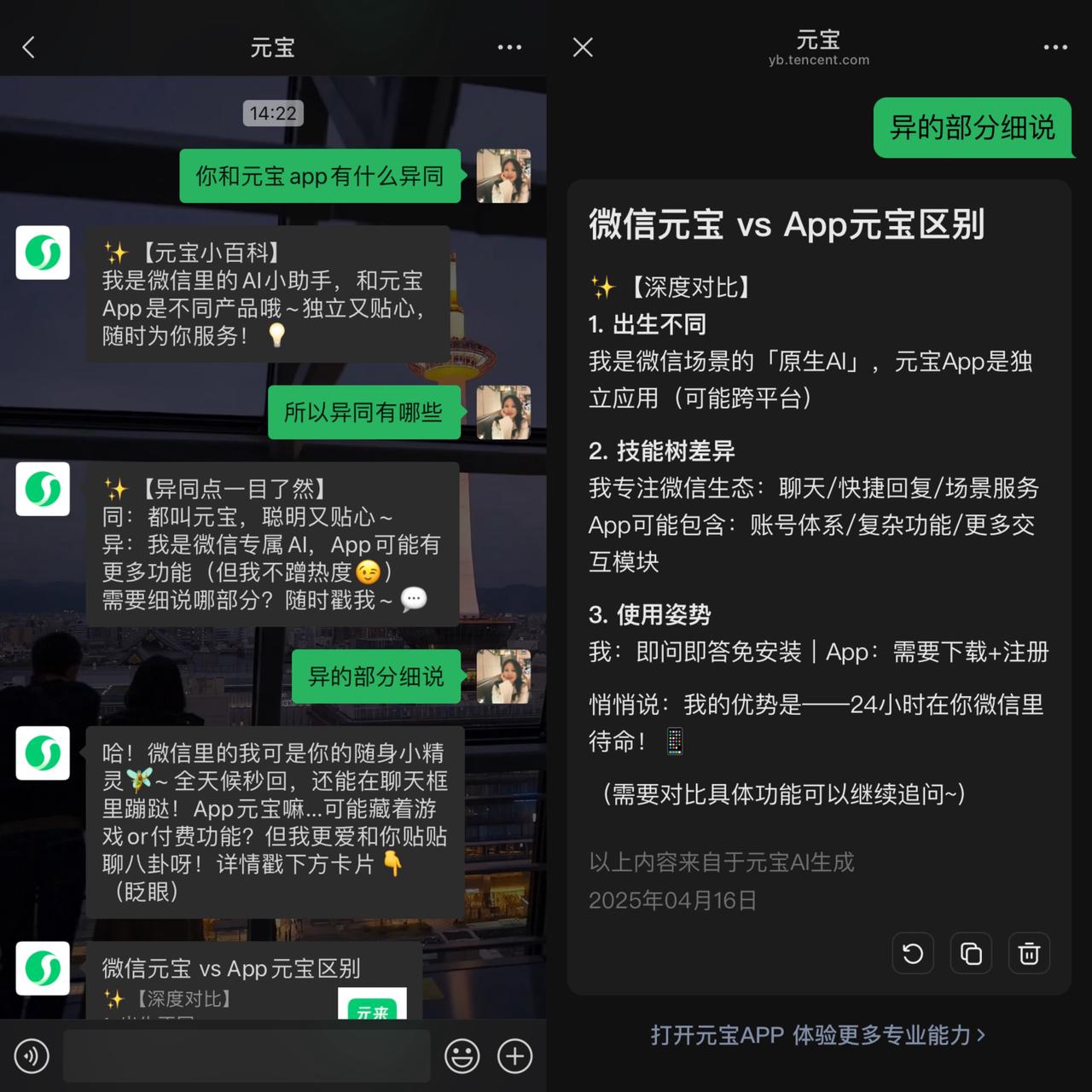
Yuanbao enters WeChat | Image Source: GeekPark
Accordingly, Tencent made a series of organizational adjustments. After moving Yuanbao from TEG (Technology Engineering Group) to CSIG (Tencent Cloud and Industrial Development Group), more products—including QQ Browser, Sogou Input Method, and ima—were transferred into CSIG, forming Tencent’s new C-end product lineup for the large model era. Teams previously under PCG (Platform and Content Group) were also fully moved to CSIG to centralize AI-driven product planning and upgrades.
These rapid moves reflect Tencent’s belief that “AI is a capability, not a goal.” Stronger models and more open ecosystems should be adopted immediately if they enhance WeChat and gaming. In this shift, Tencent has ironically become one of the fastest adaptors—even arguably, the pace of this open AI ecosystem development aligns perfectly with Tencent’s strength in embedding capabilities into existing products.
ByteDance is perhaps the most complex—and conflicted—among the four. It possesses the Doubao large model system while also controlling massive application scenarios like Douyin, Toutiao, and Fanqie Novels. It wants to lead in AGI technology yet is unwilling to abandon its closed-loop advantages at the application level.
This creates dual pressures—needing leading models and standout products, striving for both internal coherence and external openness. After DeepSeek-R1’s breakout success, ByteDance reaffirmed “AGI as the core goal,” increased investment in Doubao, and took more steps toward open-source. Yet new challenges emerged at the application layer: Should it stick to the “Doubao + ByteDance apps” closed loop, or break down internal-external barriers and introduce stronger external models for competition?
According to LatePost, ByteDance initially took a wait-and-see approach on integrating DeepSeek into its products, with internal sentiment being “we can do it anytime, no rush.” However, timing slipped away. After the Spring Festival, ByteDance urgently mobilized teams to work overtime, accelerating DeepSeek integration.
Currently, ByteDance remains in transition. Publicly, it emphasizes open-source and the value of open ecosystems; internally, however, Doubao remains the default model for many applications, with DeepSeek access only enabled in a few. Whether it will follow Tencent’s path—adopting third-party models widely or abandoning the “internal models first” rule in certain apps—remains unclear.
The past few months have been a critical window for AI giants to reposition their ecological roles and reassess technological paths. After the “capability restructuring” brought by DeepSeek-R1, nearly all companies have refocused on AGI as a long-term goal, becoming more realistic and open in both technology and ecosystem strategies.
Yet despite shared goals, strategic choices remain vastly different. These divergences reflect each company’s distinct understanding of its strengths and differing bets on “how to run in the AI era.”
3 In the Face of Technological Disruption, There Are No Permanent 'Historical Winners'
The AI industry won’t end its competition because one product suddenly “breaks through.” It’s destined to be an ongoing game of ecosystem reconstruction—positions and capabilities will keep reshuffling, and each shock forces players to rethink “who I am, and what I should do.”
Under the impact of DeepSeek-R1, big tech has begun re-examining its relationship with AI. This transformation won’t stop: in the fast-moving tide of AI, no one can afford the burden of history.
Historical baggage isn’t just outdated production lines, bloated organizations, or redundant teams—it’s also cognitive inertia rooted in path dependency.
Over the past few years, the AI industry accumulated many “default consensuses”: large models require hundreds of millions in investment, AI applications must pursue closed loops, only B2B can achieve revenue closure, AI isn’t consumer-facing but merely a tool-type software… These “rational judgments” seemed valid under previous technological paradigms, but once new paths emerge, many of these “rationalities” become cages limiting imagination.
The cruelty of technological revolution lies in offering giants little chance to “live off past glories.” Rapid AI iteration is steadily consuming organizations reliant on past success. Thus we see: Baidu embracing open-source, Tencent lowering its guard to leverage external momentum, ByteDance accelerating compute infrastructure restructuring… Behind these moves lies a quiet “awakening” among big tech: in AI’s infinite game, the sole survival rule is strategic elasticity—letting go of blind faith in historical experience, while embracing the new trend of technological democratization with an open mindset.
Who did the old paradigm trap?
Looking back at the development paths of major Chinese tech firms and top startups over the past two to three years, nearly all followed a “classic script”:
-
Set OKRs around a central goal;
-
Build a complete closed loop across model capability, data systems, and application matrix;
-
Eventually monetize via model cost reduction, product growth, and ecosystem synergy.
There’s nothing wrong with this logic—but it’s too reminiscent of internet-era tactics, assuming “more resources mean clearer paths.” Yet AI breakthroughs often erupt precisely when the path is unclear.
For example, many teams simultaneously pursued “closed-loop scenarios” while stuck in “capability shortages”; wanted to tell the “self-owned model” story but lacked optimization skills at the infrastructure layer. Many strategic decisions resulted from “preset assumptions + organizational inertia”—seemingly rational, yet no one paused to ask: What if these assumptions are fundamentally flawed?
In contrast, the new players rising this round—whether DeepSeek or Manus—share a common trait: mental agility, free from historical burdens and route dogmas. This very lightness allowed them to become pioneers in this paradigm shift.
If we look back, what DeepSeek and Manus achieved isn’t mystical—it’s solid engineering. But why didn’t big tech take this path? Because they were too rational, too systematic, and thus too conservative.
For instance, big tech might ask: Can MoE really scale? Is extreme optimization a waste of time? These questions aren’t invalid—but when you reject a path before even testing it, you may never discover a new continent.
This is why more investors, developers, and industry observers are reevaluating what makes an AI startup valuable—not who can describe the most complete closed loop, not who hires the most model scientists, but who can break free from “historical correctness” and blaze a new trail where both technology and products can be rapidly validated.
On this ultra-high-speed AI highway, the greatest danger isn’t falling behind by one step—but still believing in the old traffic rules. Real change always happens between the “unreasonable” and the “underestimated.”
Join TechFlow official community to stay tuned
Telegram:https://t.me/TechFlowDaily
X (Twitter):https://x.com/TechFlowPost
X (Twitter) EN:https://x.com/BlockFlow_News
 极客公园
极客公园